Chips Bounce, Oracle Takes the Hit
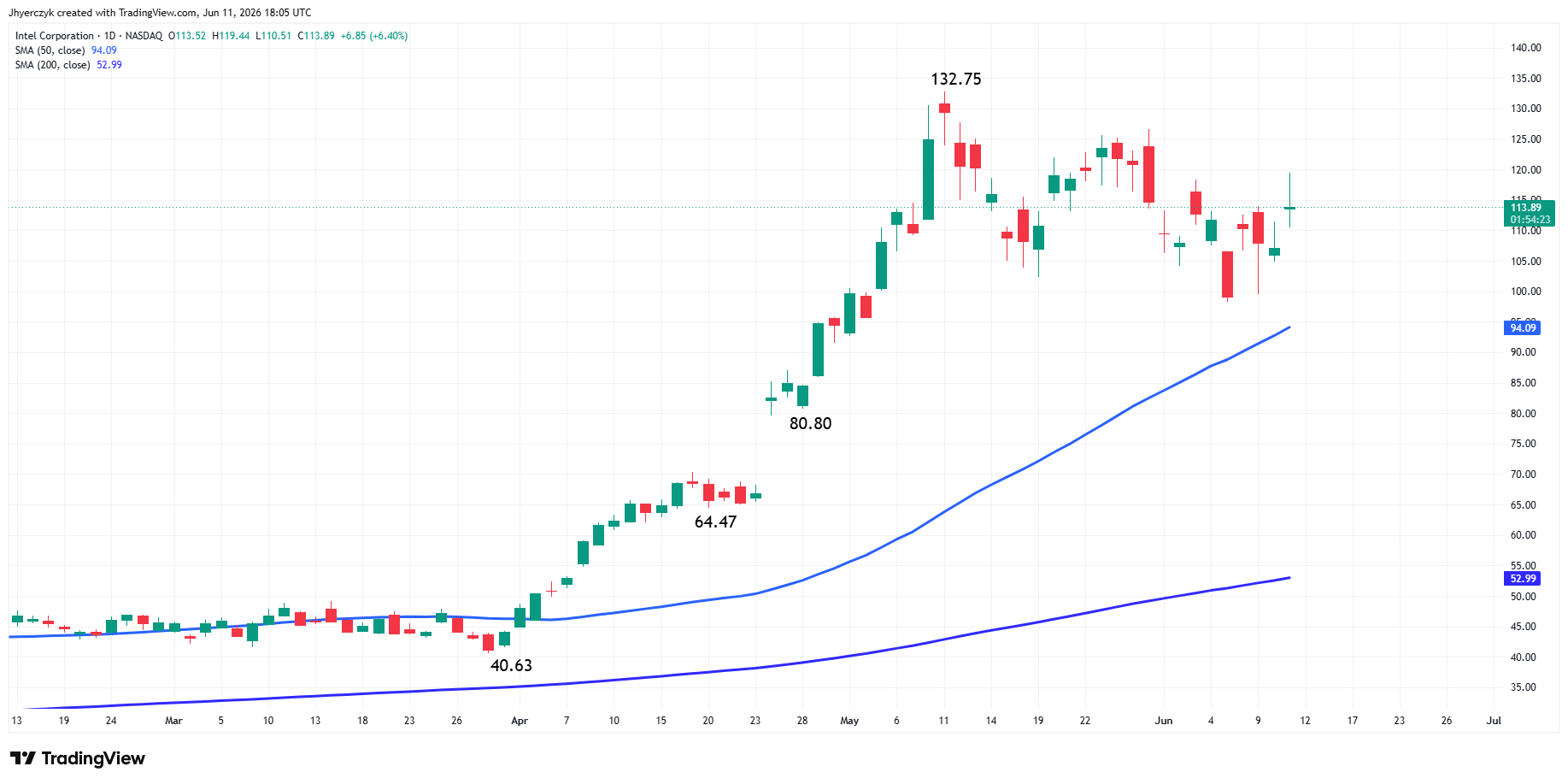
Semiconductor stocks are carrying the market higher Thursday afternoon after a week of selling. The Philadelphia Semiconductor Index has gained 3.5%. Intel is up 6% after Bank of America upgraded the stock from underperform to buy. Micron Technology has advanced 3.2%. NVIDIA has added 0.5%. The bid is broad across the chip space after Wednesday’s correction pushed technology stocks down 10% from recent highs. Oracle is going the other direction.
The Dow Jones Industrial Average is up more than 300 points Thursday afternoon. The S&P 500 has added roughly 0.2%. The Nasdaq Composite has gained about 0.4%.
Daily Nasdaq Composite Index (IXIC) Technical Analysis
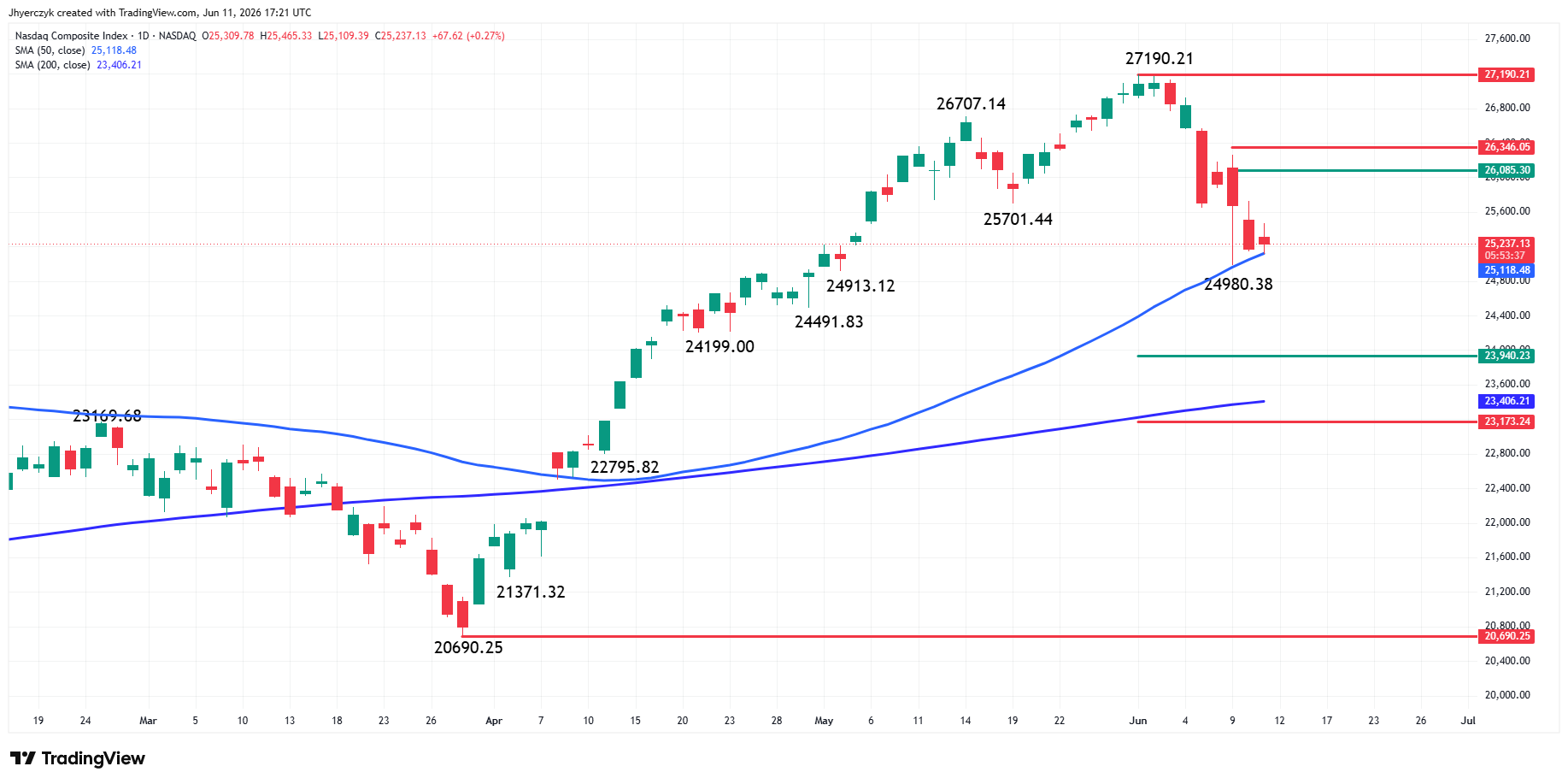
The Nasdaq Composite is edging higher late in the session on Thursday, but the market is well off its intraday high at 25465.33, suggesting that investors were not willing to chase the market higher despite a strong opening.
The main trend is down according to the daily swing chart. This puts the market in “Sell the Rally” mode. With the short-term range at 27190.21 to 24980.38, the ideal move to think about shorting would be a rally to 26085.30 to 26346.05. This would create a potentially bearish secondary lower top. If 24980.38 gets taken out with conviction then the rally could extend further, nearing the record high.
The main range is 20690.25 to 27190.21. Its retracement zone at 23940.23 to 23173.24 is the primary downside target and potential value zone.
Currently, the 50-day moving average at 25118.37 is providing support. It actually stopped Tuesday’s sell-off at 24980.38. The Nasdaq could plunge if this indicator is taken out with conviction. The downside momentum created by the move could trigger an acceleration into the 200-day moving average at 23405.99, which currently sits inside the retracement zone at 23940.23 to 23173.24.
At its current level, traders are being offered two opportunities: short weakness under the 50-day moving average and swing bottom and play for a move into the support cluster formed by the 200-day moving average at 23405.96 and the Fib level at 23173.24, or, wait for a strong rally back to 26085.30 to 26346.05, and new short sellers to emerge.
Dow Jones Price Forecast
Every new Dow Jones analysis as it publishes, today's technical signal and key levels, live price — on one page.
See all Dow Jones forecastsOracle’s $70 Billion Bet Spooked the Software Sector
Oracle is not just hurting itself Thursday. The selloff is spreading across enterprise software. ServiceNow has fallen between 3% and 5%. Salesforce and
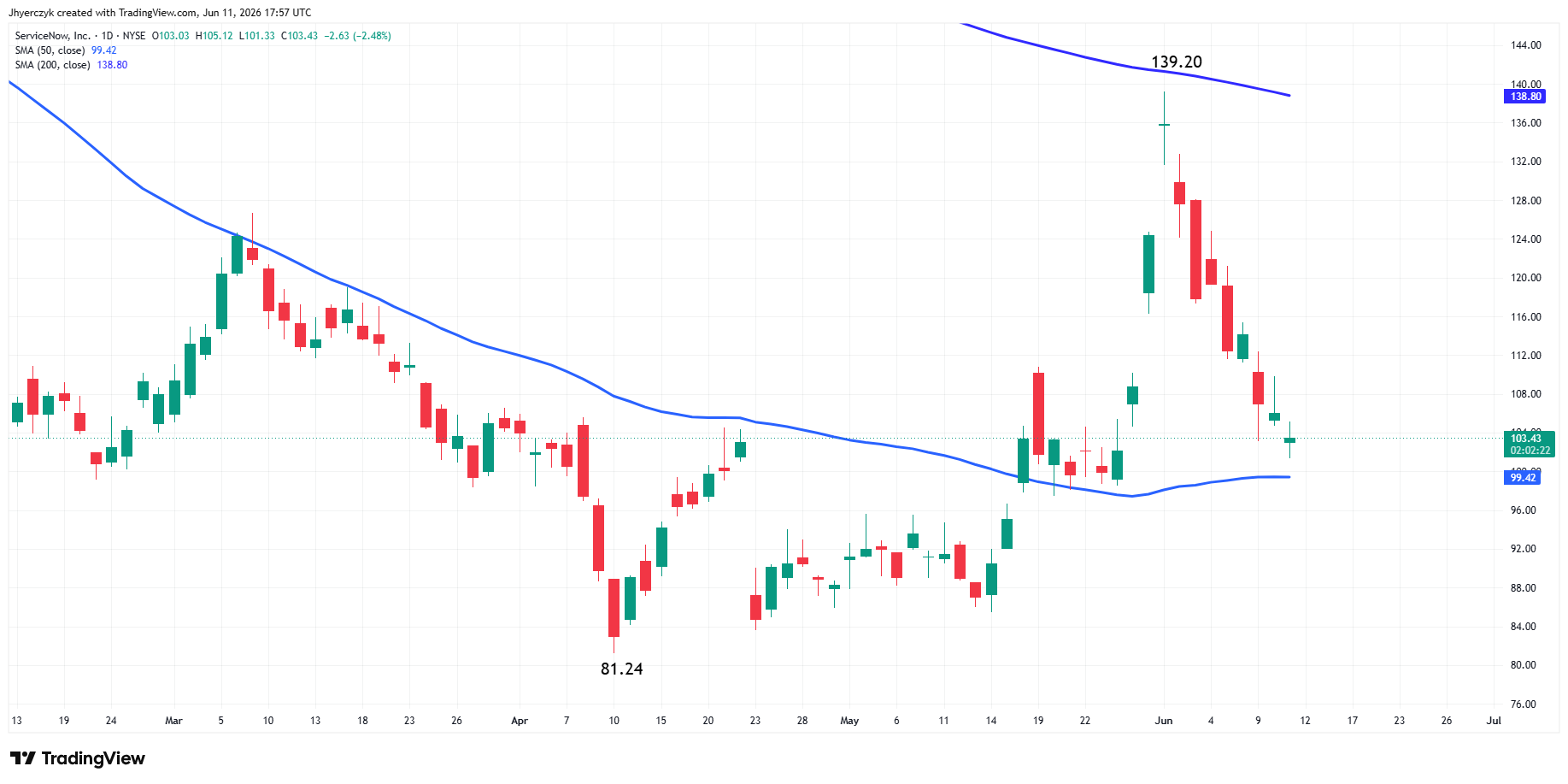
Adobe are both lower. AppLovin and Atlassian are trading down. The market is asking one question across the entire group. Can companies that do not generate cash like Amazon and Microsoft afford to spend like them on artificial intelligence infrastructure?
Oracle secured data center agreements with OpenAI and Meta Platforms. The ambition is real. The problem is the balance sheet. Citizens JMP Securities said the accelerated buildout is pressuring near-term margins while raising questions about funding and returns. Oracle does not have the cash generation to self-fund a $70 billion capital expenditure plan. That is why it needs $40 billion in external financing. The market is telling Oracle the cost of that financing at current interest rates makes the math harder than management is acknowledging.
The Chip Rebound Has Limits
The S&P 500 has fallen roughly 4% since hitting a record high earlier this month. Thursday’s bounce is encouraging but the Nasdaq is already well off its intraday high of 25465.33. Buyers showed up at the open. They did not chase it higher through the afternoon. That is a pattern worth watching.
Phil Blancato, chief market strategist at Osaic Wealth, said recent losses may have been excessive and that contributed to Thursday’s rebound. The counter-argument is that every bounce this week has faded by the next session. Monday’s semiconductor recovery was gone by Tuesday. Wednesday’s selling pushed technology into correction territory. Thursday’s 3.5% gain on the Philadelphia Semiconductor Index has to hold through Friday to mean anything.
SpaceX is expected to debut Friday at a valuation near $1.75 trillion. That event either frees up the capital that accounts have been holding back for the allocation, or it pulls more money out of existing positions if institutional demand runs higher than expected.
PPI Confirmed the Inflation Problem
Producer prices rose more than expected in May with the largest annual gain in over three years. Weekly jobless claims edged higher, showing some softening in the labor market. Not enough to change the Fed’s posture.
Kevin Gordon, head of macro research and strategy at the Schwab Center for Financial Research, said inflation remains a bigger concern for markets than slowing growth. Future pullbacks are more likely to come from renewed price pressures than from economic weakness. The Fed is expected to hold rates steady next week. Investors are still pricing in at least one quarter-point hike before year-end.
The core Producer Price Index came in below expectations at 0.4% against a 0.5% forecast. The headline ran hot on energy. The distinction between headline and core is what kept equities from selling harder Thursday. A hot headline with soft core gives the Fed one less reason to act aggressively. That is the thin lifeline bulls are holding onto.
Trump Threatened Iran but Crude Oil Did Not Move
President Donald Trump warned that Washington could take aggressive action against Iran and target the country’s oil and gas infrastructure. West Texas Intermediate crude oil futures traded near unchanged around $89 a barrel. The crude oil market is either discounting the threat or has already priced in a level of escalation that matches the rhetoric. Either way, flat crude oil on that kind of language is keeping the equity market from selling off harder.
If actual strikes hit Iranian oil infrastructure overnight, that changes. For now, the equity market is treating the geopolitical risk as background noise and letting the chip rebound run the session.
What to Watch
Semiconductor stocks are up 3.5% Thursday but the Nasdaq faded off its intraday high. The pattern this week has been bounces that do not survive the next session. Friday brings the SpaceX debut at $1.75 trillion. That event resolves the capital reservation question one way or the other. Oracle’s 12% decline and the spillover into enterprise software is a warning that the market is getting more selective about who gets to spend on artificial intelligence and who gets punished for it. Trump’s Iran rhetoric is the overnight wildcard. Crude oil is flat now. One strike on Kharg Island changes everything.
The way I see it, the Nasdaq Composite is holding the 50-day moving average at 25118.37. That level stopped Tuesday’s selloff at 24980.38. If it fails, the selling accelerates toward the support cluster at 23940.23 to 23173.24 where the 200-day moving average sits at 23405.99.
On the upside, a rally into 26085.30 to 26346.05 is where new shorts step in to form a secondary lower top. Thursday’s bounce is constructive but fading into the close is not a confidence builder. One more day of follow-through is the minimum before this bounce earns any trust.
More Information in our Economic Calendar.