
Storage Surplus Keeps Gas on Defense
August natural gas futures fell hard last week and the selling had nothing behind it that the bulls can wave off. Storage is building above the five-year average, summer heat forecasts are pulling back past mid-July, and El Niño is already taking winter premium out of the forward curve. Three bearish signals lined up at the same time and none of them are showing signs of reversing.
Last week, August Natural Gas futures settled at $2.498, down $0.257 or -8.02%.

Weekly August Natural Gas Technical Analysis
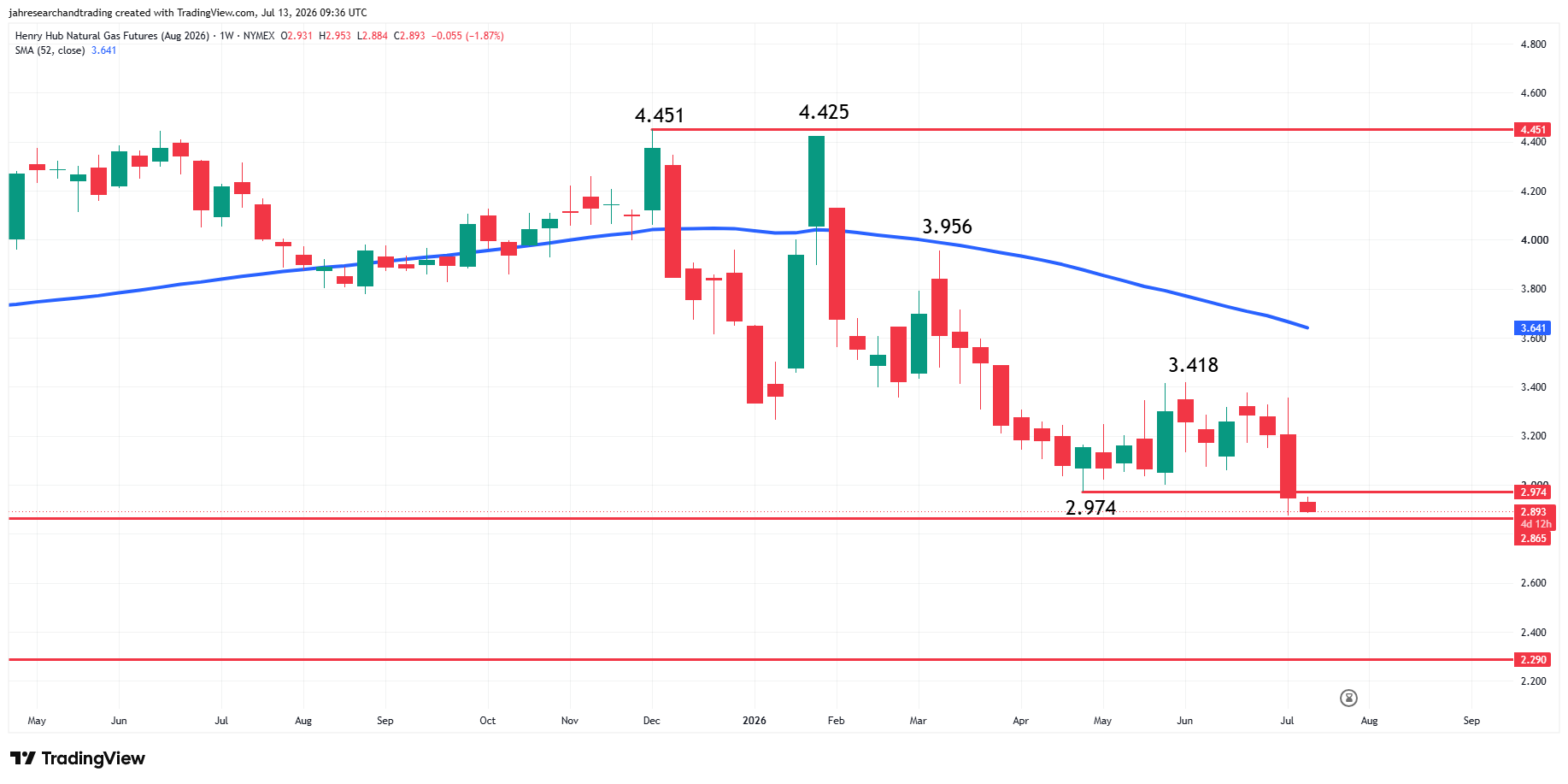
August Natural Gas futures settled sharply lower last week after breaking through the April main bottom at $2.974. The move reaffirmed the downtrend. For over two months, the market was building a support base with the bottom supported by expectations of steady LNG demand and the range built on seasonal expectations that summer heat would lead to a breakout to the upside.
The LNG demand is still there, which is probably why prices aren’t collapsing further. The short-term weather outlook is expected to continue to be the source of volatility, but the long-term outlook is being influenced by a potentially bearish Super El Niño, which could cap rallies throughout the summer and fall.
Since the possibility of a summer heatwave is still in play, traders could build a support base between the previous bottom at $2.974 and the long-term support at $2.865. If a new base begins to form then profit-taking and short-covering could lead to a near-term retracement with $3.146. Until the buying is strong enough to take out the swing top at $3.418, professionals are likely to sell the rallies. A rally could even extend into the 52-week moving average at $3.641 and they’re likely to remain bearish. This is because summer rallies don’t last like winter rallies and because of the impact of strong short-term production and the potential long-term impact of El Niño.
EIA Storage Builds Keep Bears in Control
Natural Gas Price Forecast
Every new Natural Gas analysis as it publishes, today's technical signal and key levels, live price — on one page.
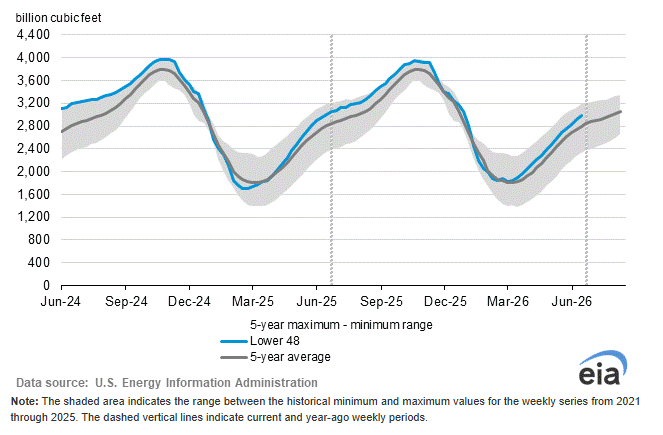
See all Natural Gas forecastsLast week’s EIA number set the tone against the bulls before the week even started. The 61 billion cubic foot injection beat most analyst expectations and ran above the seasonal average. Total working gas hit 2,983 billion cubic feet, roughly 185 billion cubic feet above the five-year average while still sitting slightly below year-ago levels. Production keeps covering summer cooling demand with room to spare and the injection pace shows no sign of slowing on its own.
Another oversized build Thursday invites fresh selling from a market already leaning short. A smaller number gives short-covering room to work but one friendly injection does not flip a trend this established.
Above-normal heat across the central and eastern United States through mid-July is keeping power burn elevated and that is the only thing standing between this market and a faster decline. Recent model runs have started pulling back on the heat past mid-July and every downward temperature revision takes power burn demand off the table. A hot week generates a bounce. Fading heat hands the surplus right back to the bears. The day-to-day forecast cycle will keep short-term traders busy but the trend in recent model runs is toward less heat, not more.
El Niño Is Stripping Winter Premium Now
The damage from El Niño is not waiting for winter. The signal out of the equatorial Pacific is strong enough that winter contracts are already pricing in less cold without waiting for official confirmation. Sellers are pressing the short side from summer through winter because the seasonal setup favors them on every timeframe. A summer that fades on heat followed by a winter that underdelivers on cold leaves storage bloated well into 2027. That is the trade the short side is making right now and the data keeps backing it up.
Summer rallies in natural gas do not hold the way winter rallies do, and this summer is fighting against a storage surplus that keeps growing week over week. Nothing on the schedule this week changes that unless Thursday’s injection comes in well below expectations and the temperature models reverse at the same time.
What to Watch
Thursday’s EIA number is the next event that matters and the bar is set against the bulls. Anything near or above the seasonal average injection confirms the surplus is still growing and gives sellers another week of cover. A below-average build would be the first one this season and would generate a short-covering bounce, but one number does not change the structure. The bulls need a string of below-average injections to shift the conversation and they start from zero.
The weather models between now and Thursday will move the daily trade but the bigger question is whether late July heat holds or keeps fading. Every downward revision past mid-July takes power burn demand off the table and makes the next storage number worse before the market even gets there.
A recovery above $2.974 would be the first signal that demand is catching supply. Below it, the downtrend holds and traders begin to press $2.865.
More Information in our Economic Calendar.