



Natural Gas Tests New Highs After EIA Report
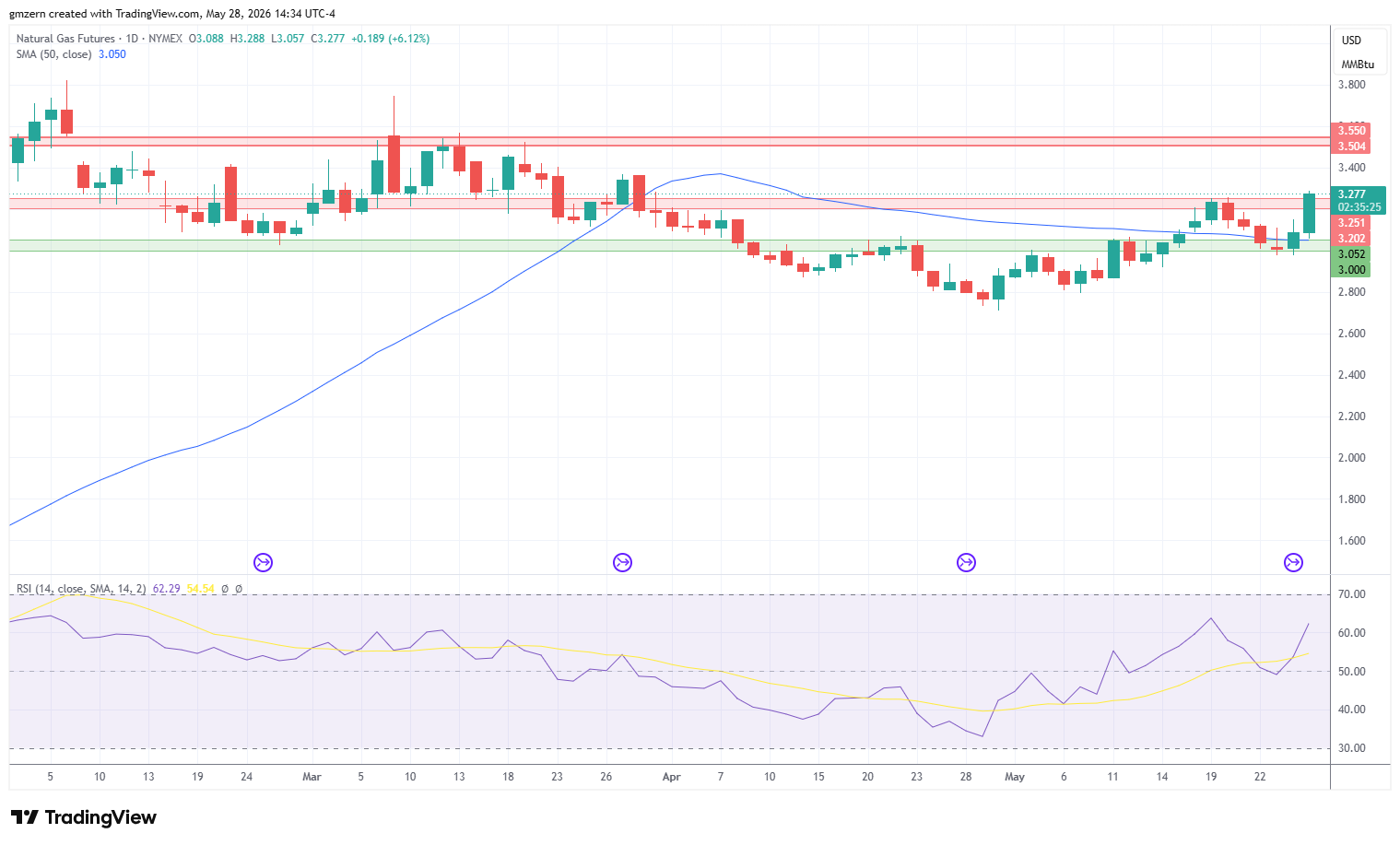
Natural gas rallied as traders reacted to the EIA Weekly Natural Gas Storage Report. The report indicated that working gas in storage increased by +92 Bcf from the previous week, compared to analyst forecast of +96 Bcf.
At current levels, stocks are +21 Bcf higher than las year and +144 Bcf above the five-year average for this time of the year.
Currently, natural gas is trying to settle above the resistance at $3.20 – $3.25. In case this attempt is successful, natural gas will head towards the next resistance level, which is located in the $3.50 – $3.55 range. RSI remains in the moderate territory, so there is plenty of room to gain momentum in case the right catalysts emerge.
WTI Oil Remains Under Pressure
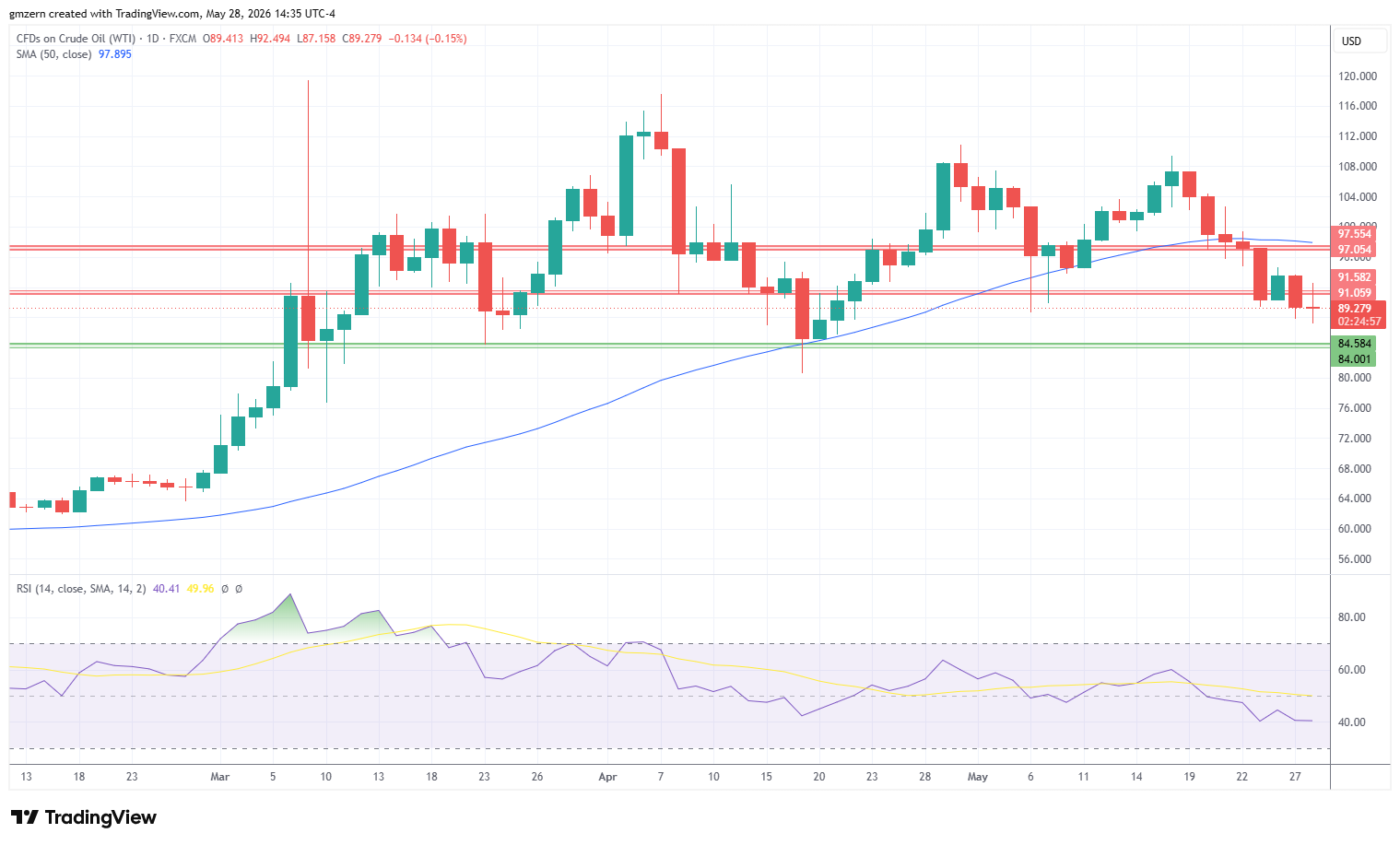
WTI oil pulled back amid reports indicating that U.S. and Iran have agreed to extend ceasefire by 60 days. According to the report, President Trump has not yet approved the deal.
In case U.S. and Iran agree to extend ceasefire, they will start to discuss Iran’s nuclear program, which was the key reason for the U.S. military operation in the Middle East.
Treasury Secretary Bessent said that Trump had three red lines, including the reopening of the Strait of Hormuz, the fate of Iran’s highly enriched uranium and the end of its nuclear program. He added that there would be no deal in case Trump’s demands are satisifed.
It is expected that Iran wil remove all mines from the Strait of Hormuz in 30 days in case the deal is reached.
Today, traders also had a chance to take a look at the EIA Weekly Petroleum Status Report. The report showed that crude inventories declined by -3.3 million barrels from the previous week, compared to analyst forecast of -4.1 million barrels.
Total motor gasoline inventories decreased by -2.6 million barrels, compared to analyst consensus of -2.4 million barrels. Distillate fuel inventories declined by -2.1 million barrels from the previous week.
Crude oil imports decreased by -804,000 bpd, averaging 5.2 million bpd. Over the past four weeks, crude oil imports averaged 5.7 million bpd.
Strategic Petroleum Reserve declined from 374.2 million barrels to 365.1 million barrels as U.S. continued to sell oil from reserves. Domestic oil production increased from 13.702 million bpd to 13.715 million bpd.
WTI oil made an attempt to settle below the $87.00 level but lost momentum and rebounded towards $89.00. In case WTI oil settles below $87.00, it will head towards the support level at $84.00 – $84.50.
Natural Gas Price Forecast
Every new Natural Gas analysis as it publishes, today's technical signal and key levels, live price — on one page.
See all Natural Gas forecastsBrent Oil Tests The $93.00 Level
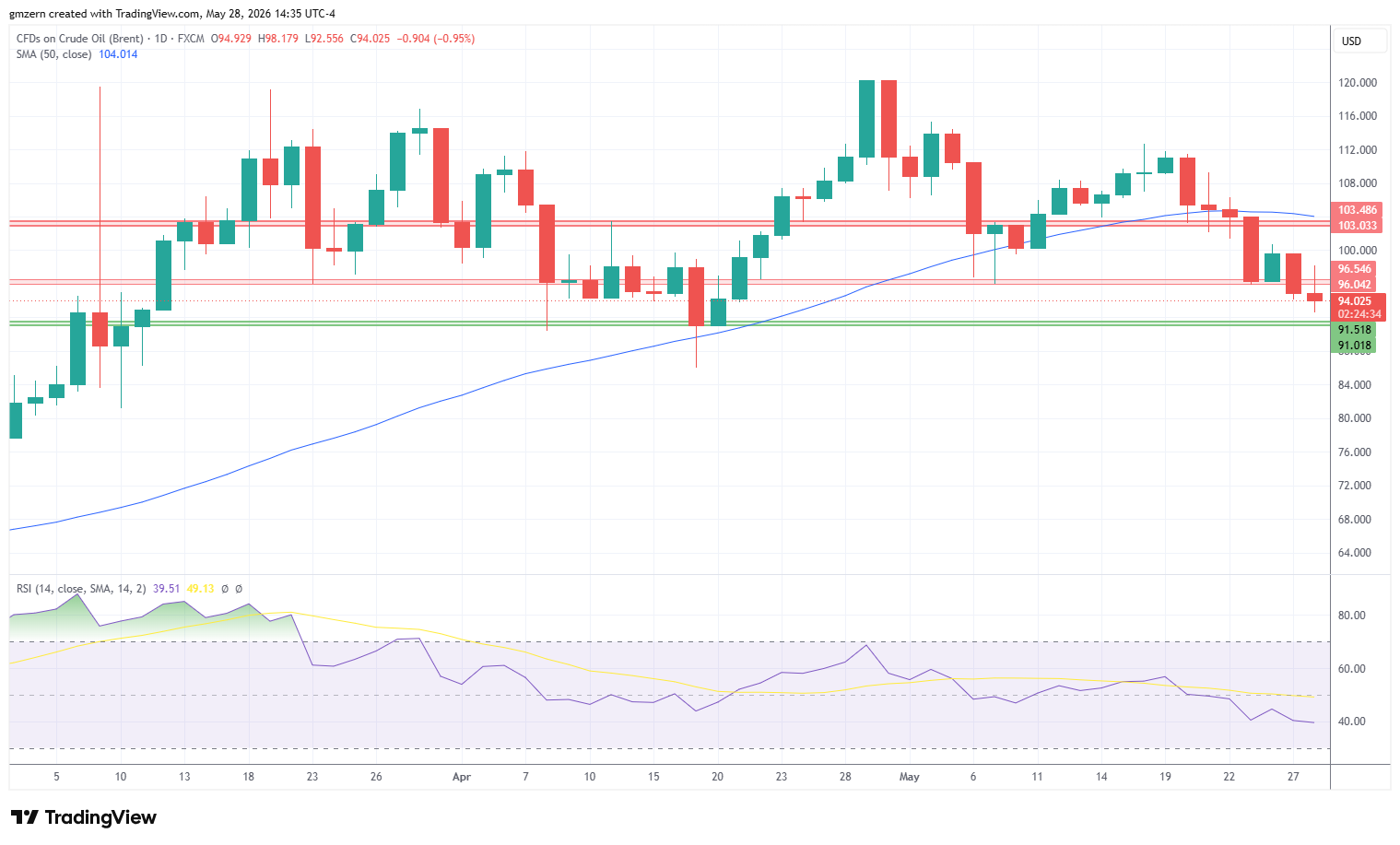
Brent oil moved lower as traders focused on the potential progress in U.S. – Iran negotiations. Traders ignore hawkish comments and bet that ceasefire will be extended.
In case Brent oil settles below the $93.00 level, it will head towards the nearest support, which is located in the $91.00 – $91.50 range. A move below the $91.00 level will provide Brent oil with a chance to gain additional downside momentum.
If you’d like to know more about how commodity markets work, please visit our educational area.