


Nikkei 225 consolidates on Tuesday and shows that investor confidence remains strong. The strong rally in the Nikkei index is driven by strong interest in technology and AI-related stocks. On the other hand, the softer oil prices also improved sentiment as markets watched second round of US-Iran peace talks in Islamabad. The ceasefire is important for Japan as it depends heavily on oil imports from the Middle East. Therefore any sign of lower energy risk supports the market.
Tech Strength and Lower Oil Prices Lift Nikkei 225
The Nikkei 225 got the biggest push from technology shares. The gains of stocks like Kioxia Holdings, SoftBank Group, Fujikura, Lasertec and Tokyo Electron were strong and helped push the overall index.
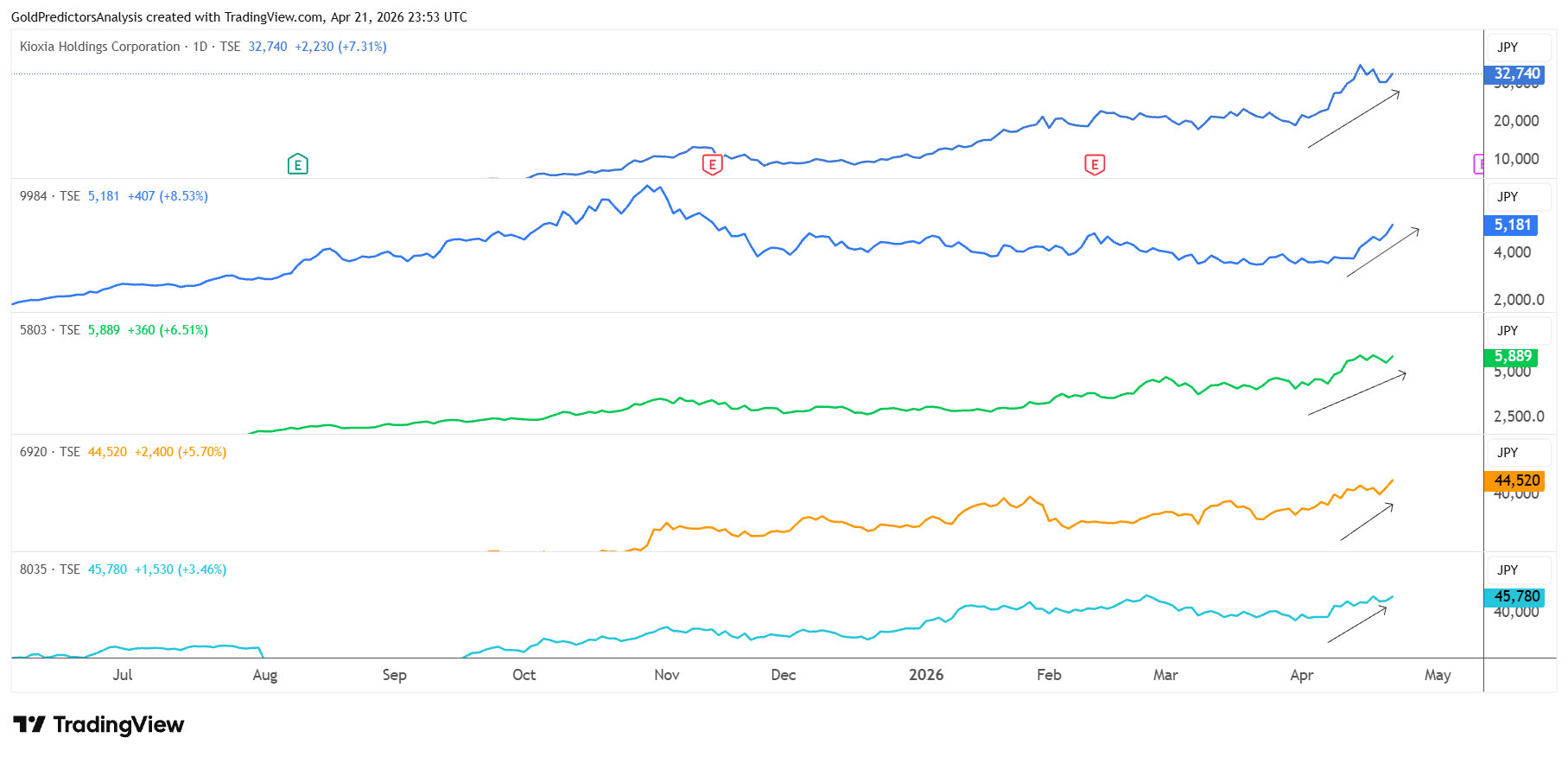
Similarly, the semiconductors, digital infrastructure, and automation are in demand worldwide. That still helps Japanese companies to have extensive exposure to these growth areas. The Topix index also rose which indicates broader market strength.
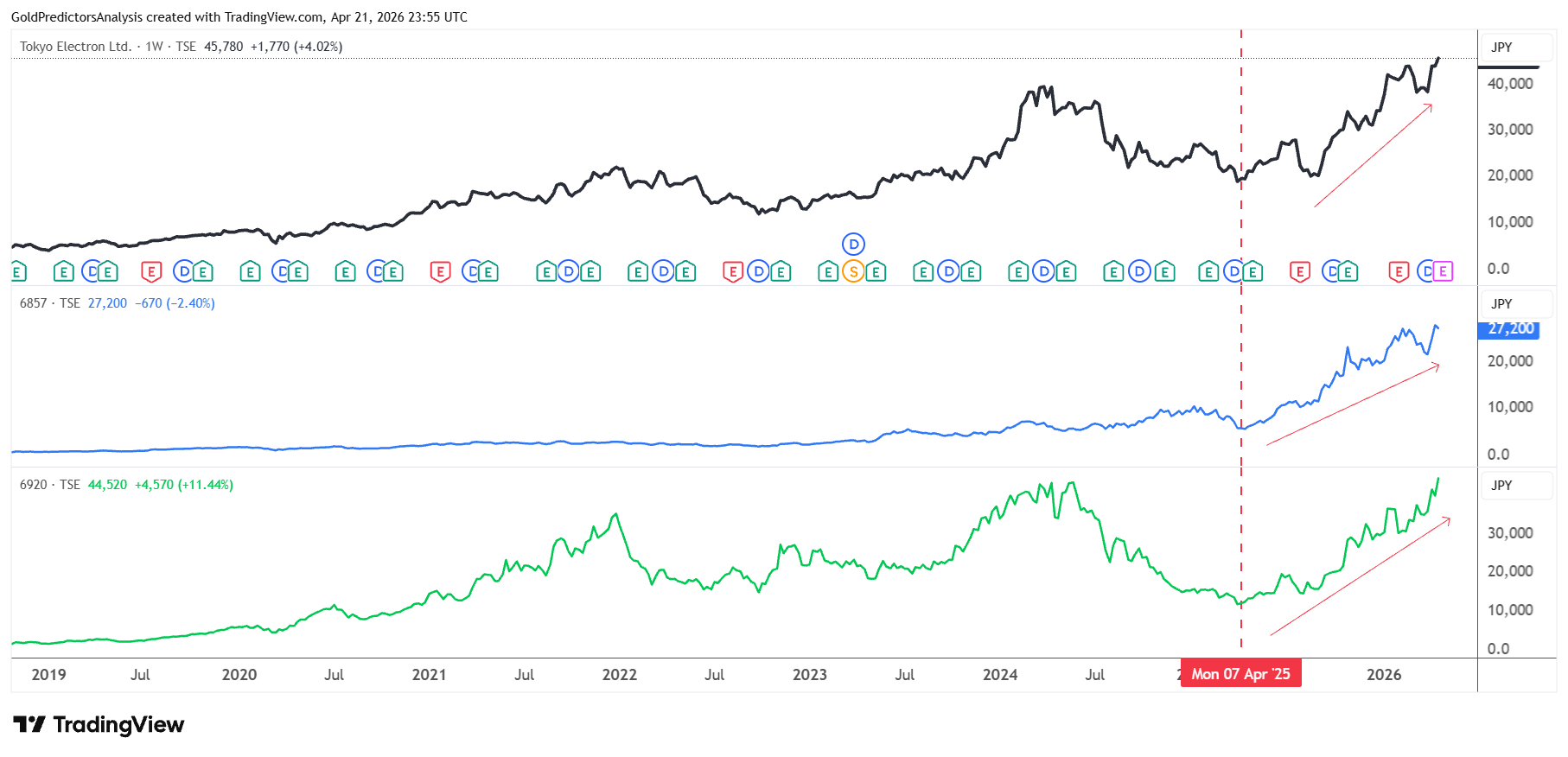
The lower oil prices further added support to the Japanese growth stocks. Investors were looking forward to renewed US-Iran peace talks and hoped that a decrease in tensions will stabilize the energy market. This is important for Japan as Japan economy depends on energy imports. Once the oil prices drop, the investors tend to be more optimistic about the corporate margins and consumer conditions. This assisted the Nikkei to hold steady throughout the day.
However, the oil prices are trading in a wide range due to strong uncertainty in the Middle East region. Further escalation in the conflict may boost oil prices again.
Nikkei Price Forecast
Every new Nikkei analysis as it publishes, today's technical signal and key levels, live price — on one page.
See all Nikkei forecastsAI Demand and Broad Buying Support the Rally
The recovery in the Nikkei 225 from the 50,000 key level is due to the strong support from the AI stocks in the Japanese market. Semiconductor-related, robotics, precision tools and automation companies are enjoying the growing demand for artificial intelligence around the world. Japan is also in a good position with this trend since it has a great experience in high technology and advanced manufacturing. That is why the Japanese stocks are interesting to investors seeking exposure to long-term growth sectors.
This strength also supported the gains in various sectors. The manufacturing and export oriented companies enjoyed the stable demand and improved supply chain conditions. Electronics companies gained customers because the demand for the sophisticated parts remained steady. There were also moderate gains in financial stocks and this contributed to the positive tone. A comparatively steady yen was also beneficial to exporters as it maintained the competitiveness of Japanese products in the foreign markets.
Nikkei 225 Technical Analysis – Ascending Channel Pattern
The daily chart for Nikkei 225 shows a strong bullish trend within the ascending channel. The index is consolidating within the ascending channel pattern at the record high level of 60,000. A break above 60,000 will open the door for a strong move towards the 65,000 level.
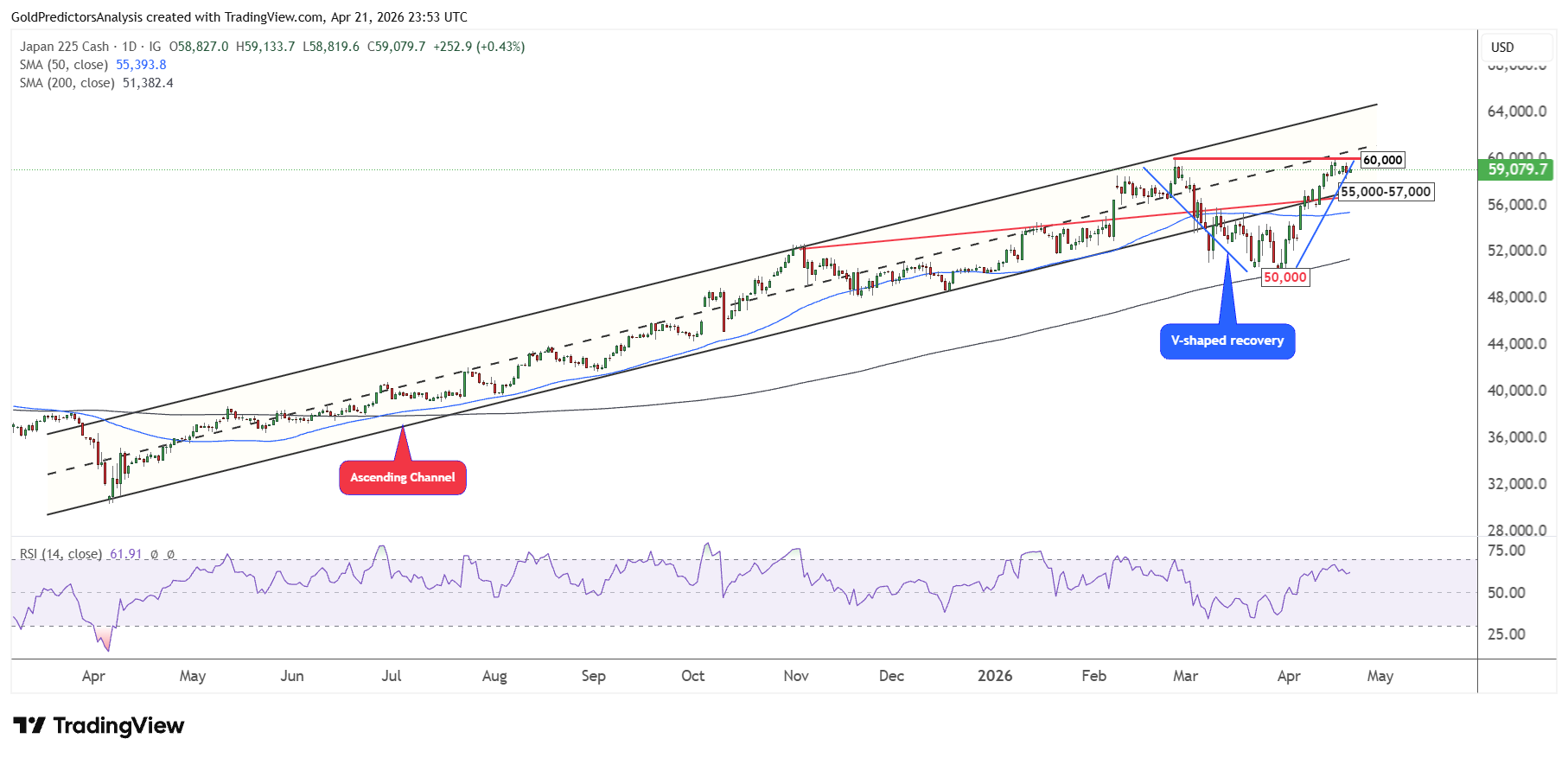
On the other hand, a correction towards the immediate support in the Nikkei 225 remains possible, with the ascending channel support line at the 55,000 to 57,000 level. As long as the index remains above the 55,000 level, the possibility of a breakout above 60,000 remains high.
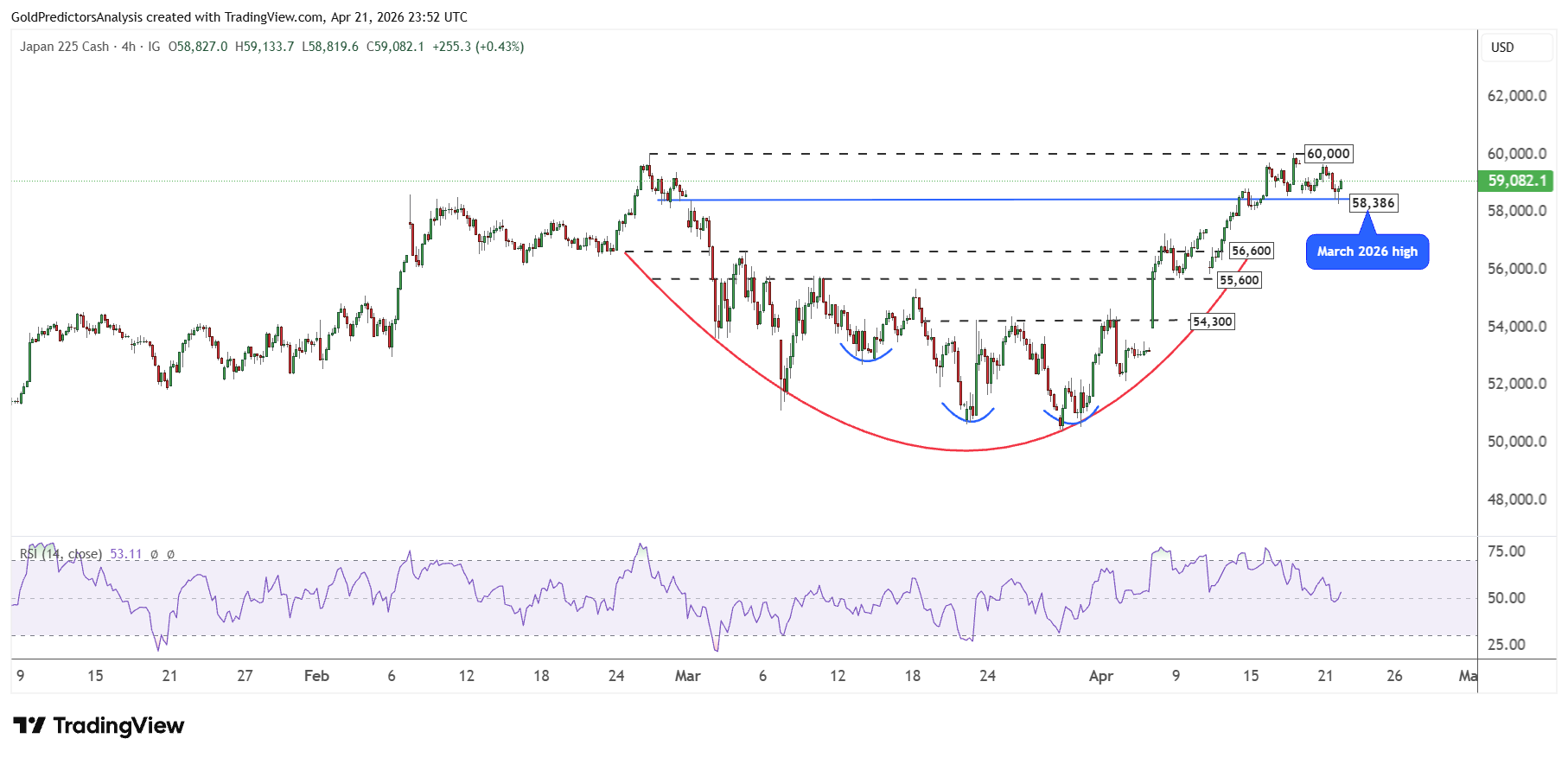
The 4-hour chart for Nikkei 225 shows strong bullish momentum as the index consolidates between the 58,000 to 60,000 level above the March 2026 highs. The formation of a rounding bottom indicates a bullish price structure and increases the possibility of an upside breakout.
Bottom Line
Overall, Nikkei 225 is in a good state because the technological and AI-related stocks keep gaining interest and the lower oil prices ease pressure on the Japanese economy. The strong support from the exporters, manufacturers, electronics and financial stocks is also an indication that the rally is not localized. Technically, the index remains bullish as long as it does not drop to below the 55,000 support zone. A decisive break above 60,000 would lead to the second powerful leg toward 65,000.