
Oil prices were on sharp swings on fears of supply disruptions from Iran following unrest and possible military actions. Brent crude oil (BCO) hit $67.10, while WTI crude oil (CL) reached $62.36 as traders priced in potential threats to Iranian exports and regional stability. However, this price gain was erased when President Trump said that the killings in Iran’s crackdown on protests were subsiding and that there was currently no plan for large-scale executions. Oil prices fell further from their respective technical resistance zones.
This means that the oil market is sensitive to geopolitical news. The surge in oil prices on fears of military confrontation, followed by decline on easing conditions, indicates that the market is trapped between supply disruption fears and general market fundamentals. Despite growing tensions between Iran and U.S., Trump’s comments sent prices lower.
On the other hand, data on inventories and supply flows weighed down on sentiment. U.S. crude and gasoline stocks are higher than anticipated, which indicates weaker demand or stronger supply. Higher stockpiles tend to put pressure on prices as pressure for tight markets is less urgent. This bearish influence has been limiting force on the upside even when geopolitical worries are in the air.
In addition, Venezuela has resumed substantial crude exports that help to allay fears of worldwide shortages. The renewed flows from Venezuela and growing inventories have been a stabilizing force against the risks from Iran.

Oil Technical Analysis
The daily chart for WTI crude oil shows that the price has hit the 200-day SMA at $62.20 and continues to trade to the downside. The immediate support is still the 50-day SMA at the $58.60. A break below $58.50 will lead to another downfall to the $55 level.
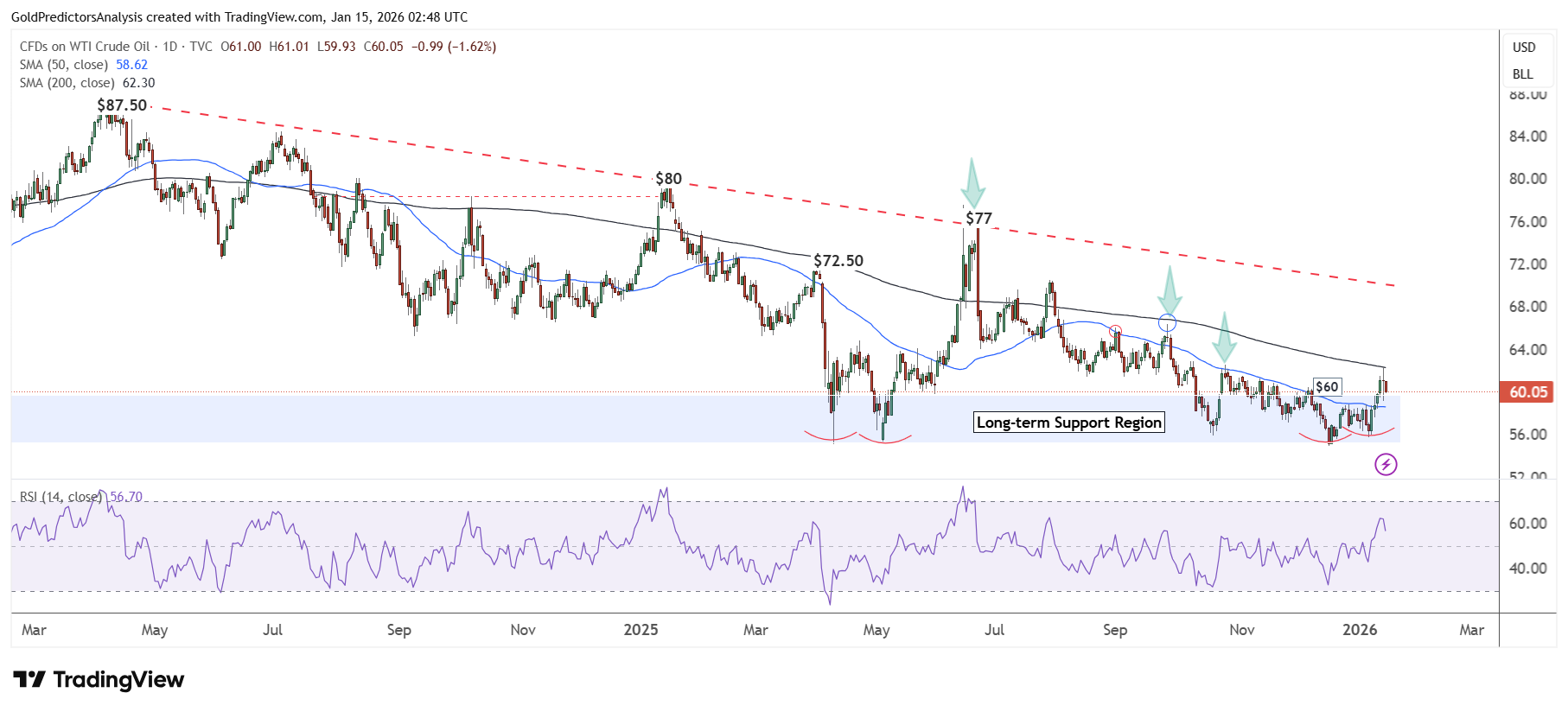
The rebound from the long-term support at $55 does not change the bearish outlook in the oil market. However, a break above $62.50 will confirm further upside in the oil market.
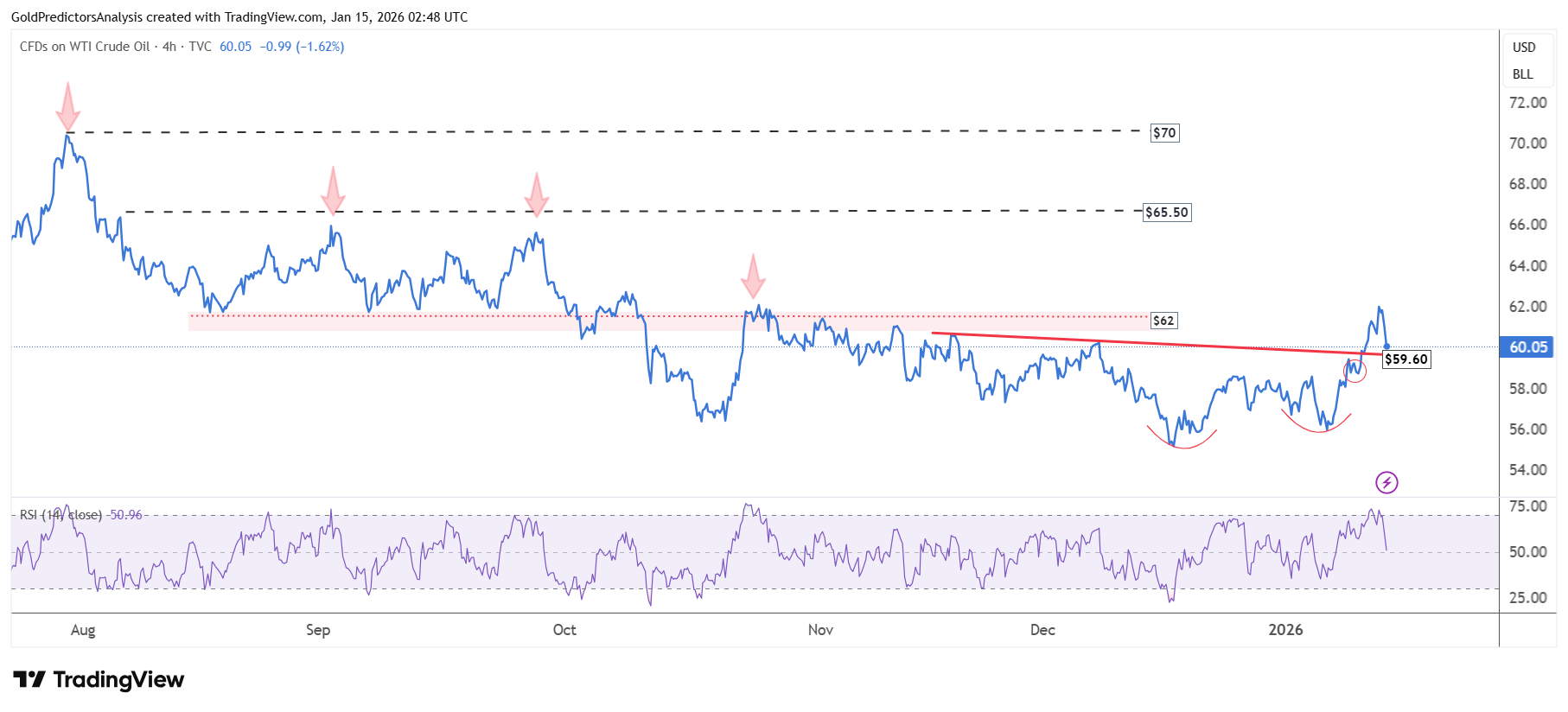
The 4-hour chart of WTI crude oil shows that the price has reached strong resistance around $62.0 after breaking higher. The immediate support is still at $59.60 as shown by the red trend line. And as long as $59.60 holds, WTI crude oil can rebound higher. However, a break below $59.60 would cause further downside to $55.
Brent Oil Price Forecast
Every new Brent Oil analysis as it publishes, today's technical signal and key levels, live price — on one page.
See all Brent Oil forecastsNatural Gas Technical Analysis
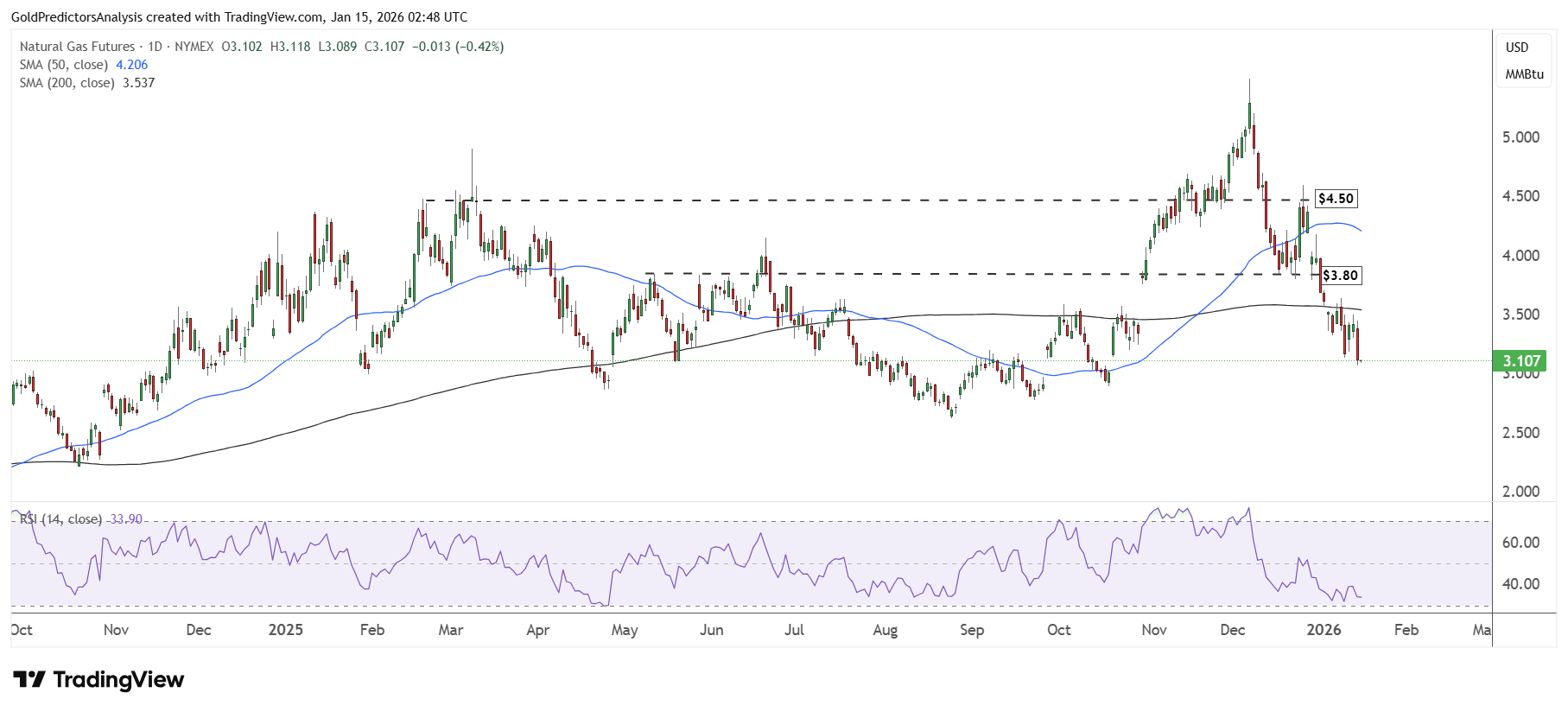
Natural gas (NG) prices continue to fall as the price has broken the 200-day SMA. The RSI is also moving lower and signals more downside in the next few days.
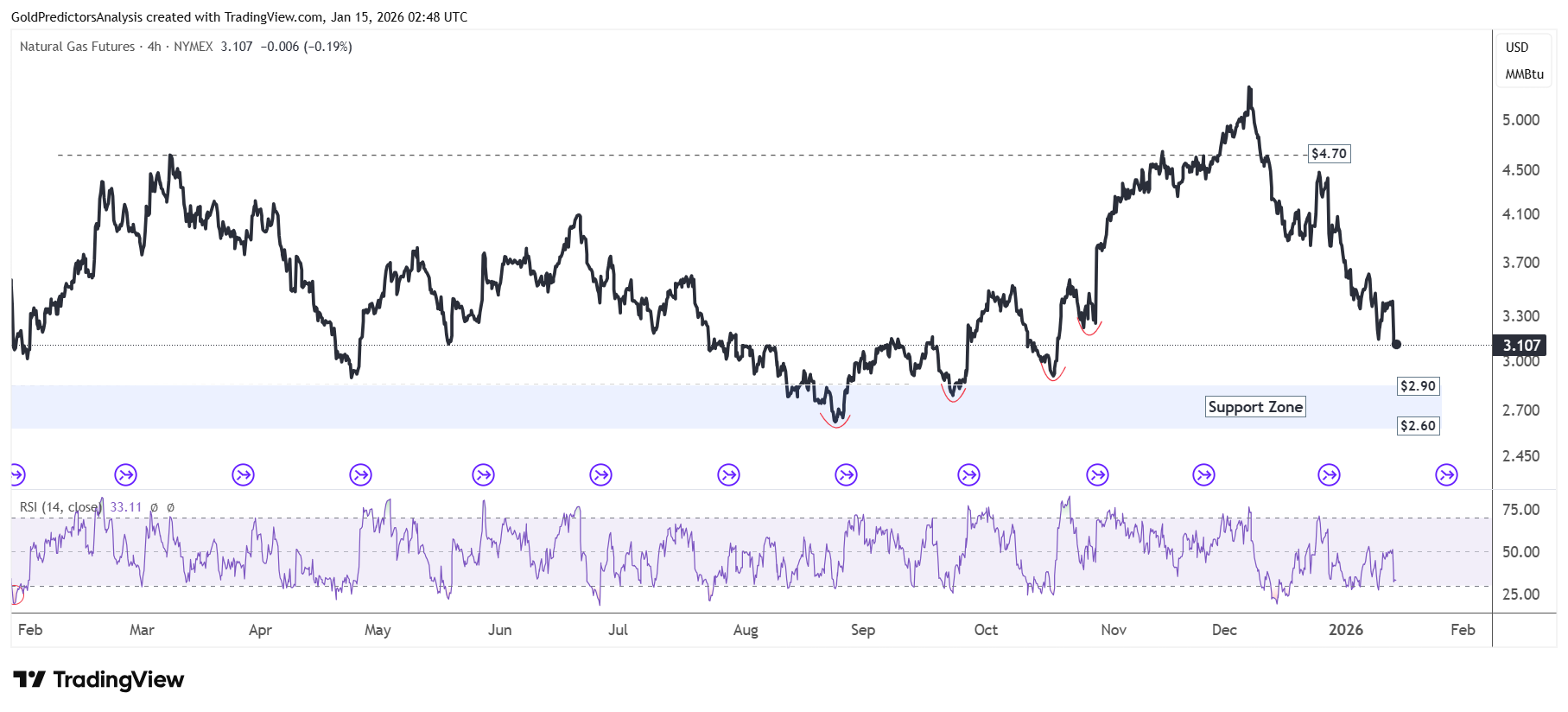
The 4-hour chart for natural gas also shows negative trend after failure to break above $4.70. The immediate support is still the long-term support zone of $2.60 to $2.90. A break below this zone will bring more downside to natural gas prices.
US Dollar Index Technical Analysis
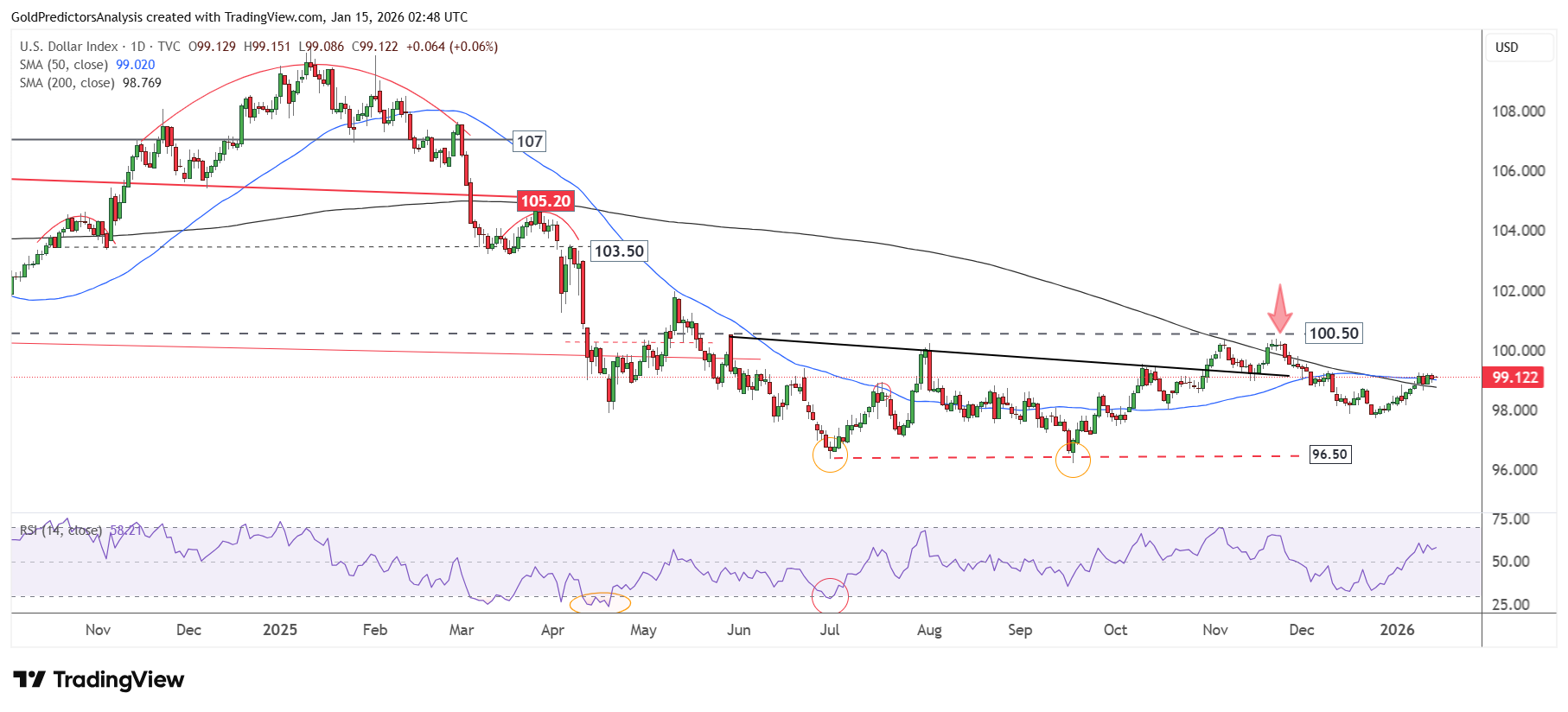
The daily chart of the U.S. Dollar Index shows that the index is forming a consolidation around 50-day and 200-day SMA and is looking for its next move. The inability to trend higher above 99.50 suggests uncertainty of U.S. dollar. As long as the index stays between 96.50 and 100.50, there is likely to be further consolidation.
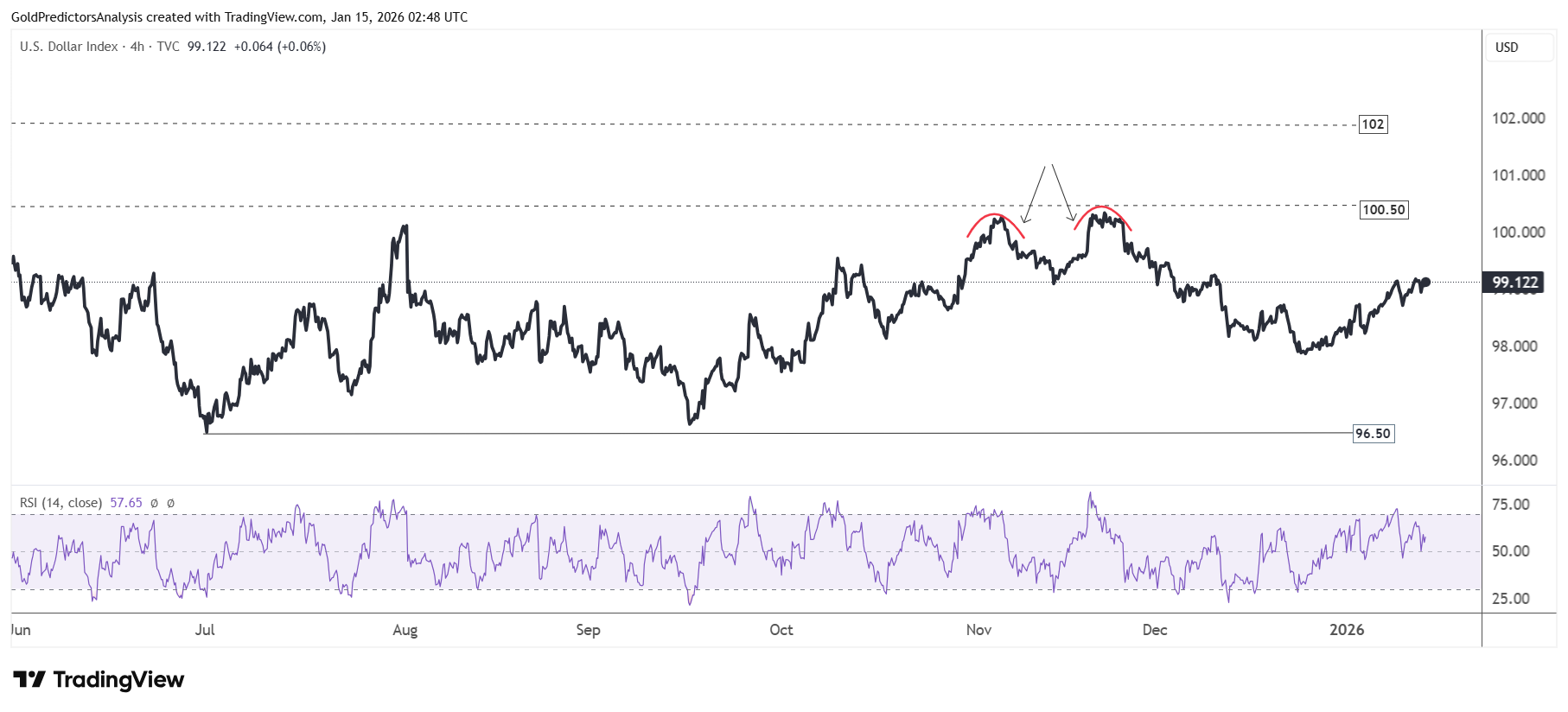
The short-term price action for the U.S. Dollar Index remains uncertain as index consolidates around the 99.00 resistance level and searches for direction. The overall picture for the U.S. Dollar Index is also neutral.
If you’d like to know more about what drives oil prices, please visit our educational area.