
WTI Crude Oil Navigates Key Technical Levels Amid Supply Uncertainty
WTI crude oil futures are putting in a mixed performance on Tuesday as traders continue to straddle the 200-day moving average at $60.51. Gains are being capped by oversupply, while the market remains underpinned by worries over a potential supply disruption in Iran. The result is a more neutral tone as competing forces offset each other.
At 11:03 GMT, March WTI Crude Oil futures are trading $60.97, up $0.34 or +0.56%.

Bullish Setup Awaits Catalyst as Dip Buyers Emerge
The set up is there for an upside breakout, but the move needs a good catalyst to get it going. Traders are also coming in on the dips which suggests real buyers have been coming in since the first week of the new year.
Kazakhstan Production Resumption Threatens Price Support
Overnight, attention shifted to the resumption of supply from Kazakhstan. According to reports, the country is poised to resume production from its biggest oilfield, its energy ministry said on Monday, though industry sources said volume was still low, Reuters reported.
Near-term supply is expected to improve now that the CPC, which operates Kazakhstan’s main exporting pipeline, has returned to full loading capacity at its terminal on the Russian Black Sea coast, after maintenance was completed at one of its three mooring points. This should put downward pressure on prices.
Extreme Weather Creates Conflicting Supply Signals
A few outside factors are also impacting prices on Tuesday. Some traders are reacting to profit-taking in the heating oil market, which spiked higher due to the cold weather hitting the East Coast. However, some of the selling in crude oil was being offset by a loss of production in the U.S. as severe cold and snow impacted the country from Texas to Maine, straining energy infrastructure and power grids. According to reports from traders and analysts, U.S. producers lost up to 2 million barrels per day, or roughly 15% of national production over the weekend.
Brent Oil Price Forecast
Every new Brent Oil analysis as it publishes, today's technical signal and key levels, live price — on one page.
See all Brent Oil forecastsRefinery Disruptions and Stock Drawdowns May Support Prices
Daniel Hynes, an analyst at ANZ, raised concerns about fuel supply disruption, saying several refineries along the U.S. Gulf Coast reported issues related to the freezing weather. Meanwhile, Reuters is reporting that analysts are predicting significant drawdowns in oil stocks in the coming weeks, which may boost prices.
Middle East Tensions Provide Underlying Price Support
Despite the subdued trade the last couple of days, supply risks caused by tensions in the Middle East after President Trump dispatched naval assets to the region, continued to underpin prices. Essentially, geopolitical risks exist, but they don’t appear to be simmering or in a position to escalate.
Technical Analysis Points to Uptrend with Critical 200-Day Level
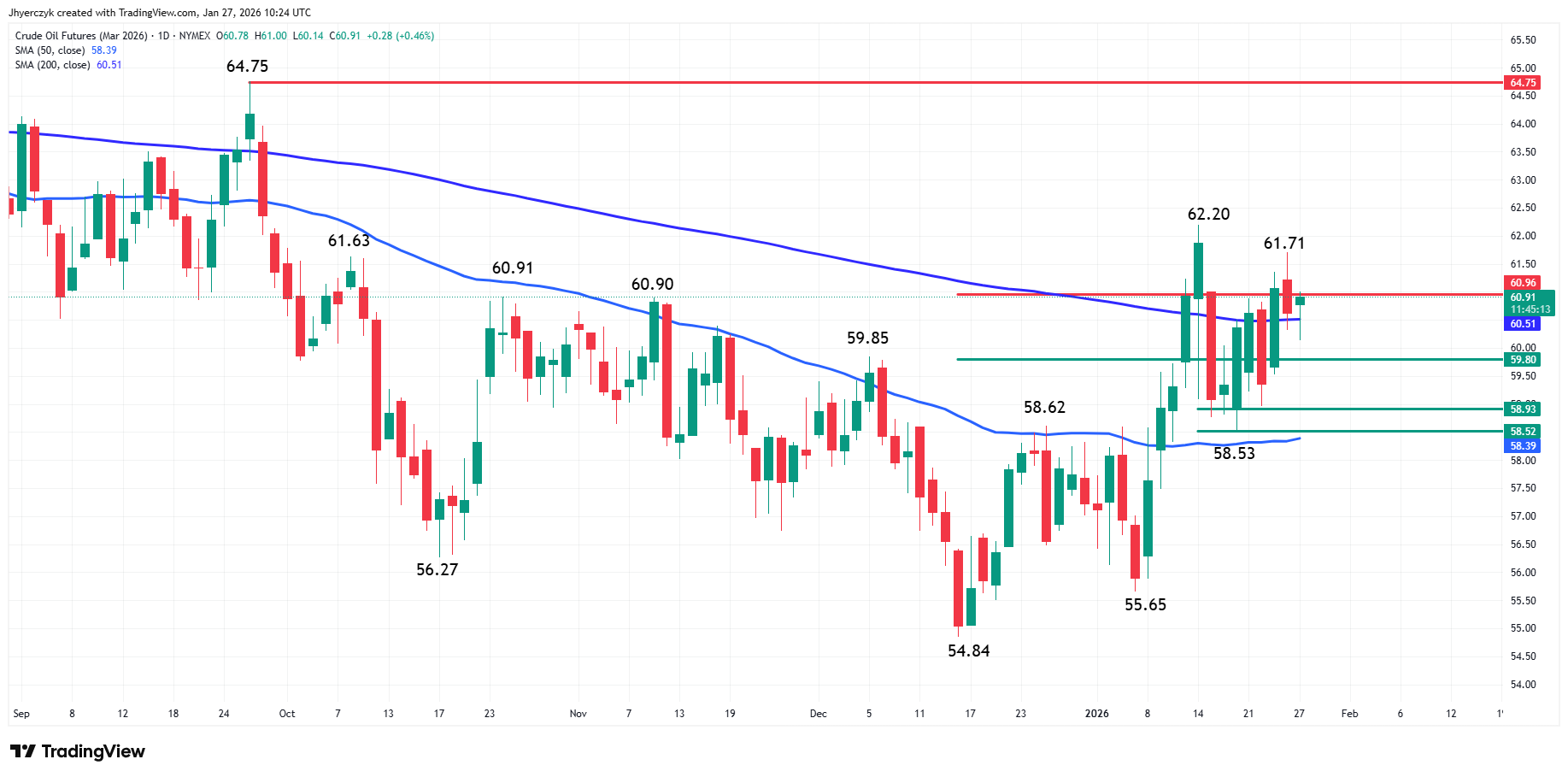
Technical analysis reveals an uptrend based on both swing charts and moving averages. The swing charts show a pattern of higher tops and higher bottoms, which is the classic definition of an uptrend. The market is also trading on the strong side of both the 50-day moving average at $58.39 and the 200-day moving average at $60.51, although it is struggling to maintain bullish momentum above the latter.
The 200-day moving average appears to be the level to watch. Look for the bullish tone to continue on a sustained move over this indicator, and a neutral tone under the 200-day and above the 50-day.
More Information in our Economic Calendar.