Gold Straddles Key Pivot as Dollar Strength and Rate Cut Delays Cap the Rally
Spot Gold is lower at the mid-session on Thursday, while straddling a key pivot price that could make or break the market. The stronger U.S. Dollar is the reason for the pressure on this dollar-denominated asset. It’s actually not just the dollar that is exerting the pressure. Several factors are involved including higher oil prices, rising yields and an anticipated delay in the first Fed rate cut in 2026.
At 17:20 GMT, XAUUSD is trading $5119.35, down $57.13 or -1.10%.

Gold Is an Investment, Not a Safe-Haven
As a gold trader, I think it’s important to know the order of events driving the price action. First of all, I think that gold is an investment, not a safe-haven. That term is used too loosely.
The longer-term view is bullish because of the narrative that central banks are buying the precious metal in order to weaken the U.S. Dollar. That strategy may work well if we’re in a clearly defined, lower-interest rate environment. But conditions changed in late January when the Fed revealed its not so-dovish outlook, leading to a top in the gold and silver. Since then, gold has struggled to regain its previous upside momentum even with the start of a war between the United States and Iran.
Long-Term Investors Can Wait, Short-Term Traders Cannot
Long-term investors have the time to ride out the interest rate cycles. Short-term traders do not. Some long-term investors even choose to lighten up on the long side during the process. This is what is happening now.
The Chain of Events Driving Gold Lower
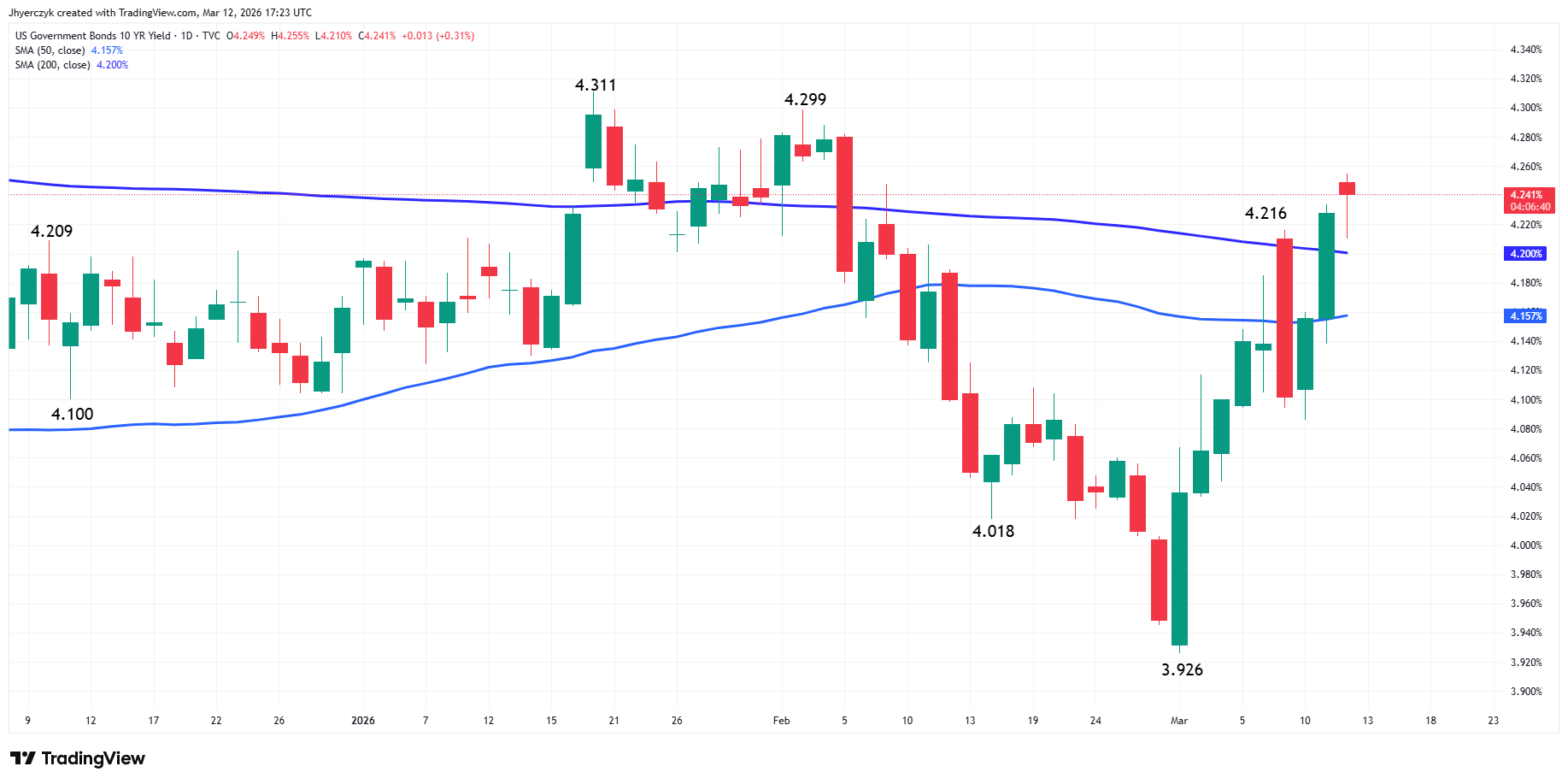
The Fed initially balked at a January rate cut because inflation was just not right at the time to make the move. Conditions didn’t improve in February and investors took a March rate cut off the board. Then on February 28, the war started. The following Monday, gold prices rallied sharply higher but sellers came in before the market could make a new all-time. Traders sold gold because oil prices rose sharply and they started to anticipate higher inflation.
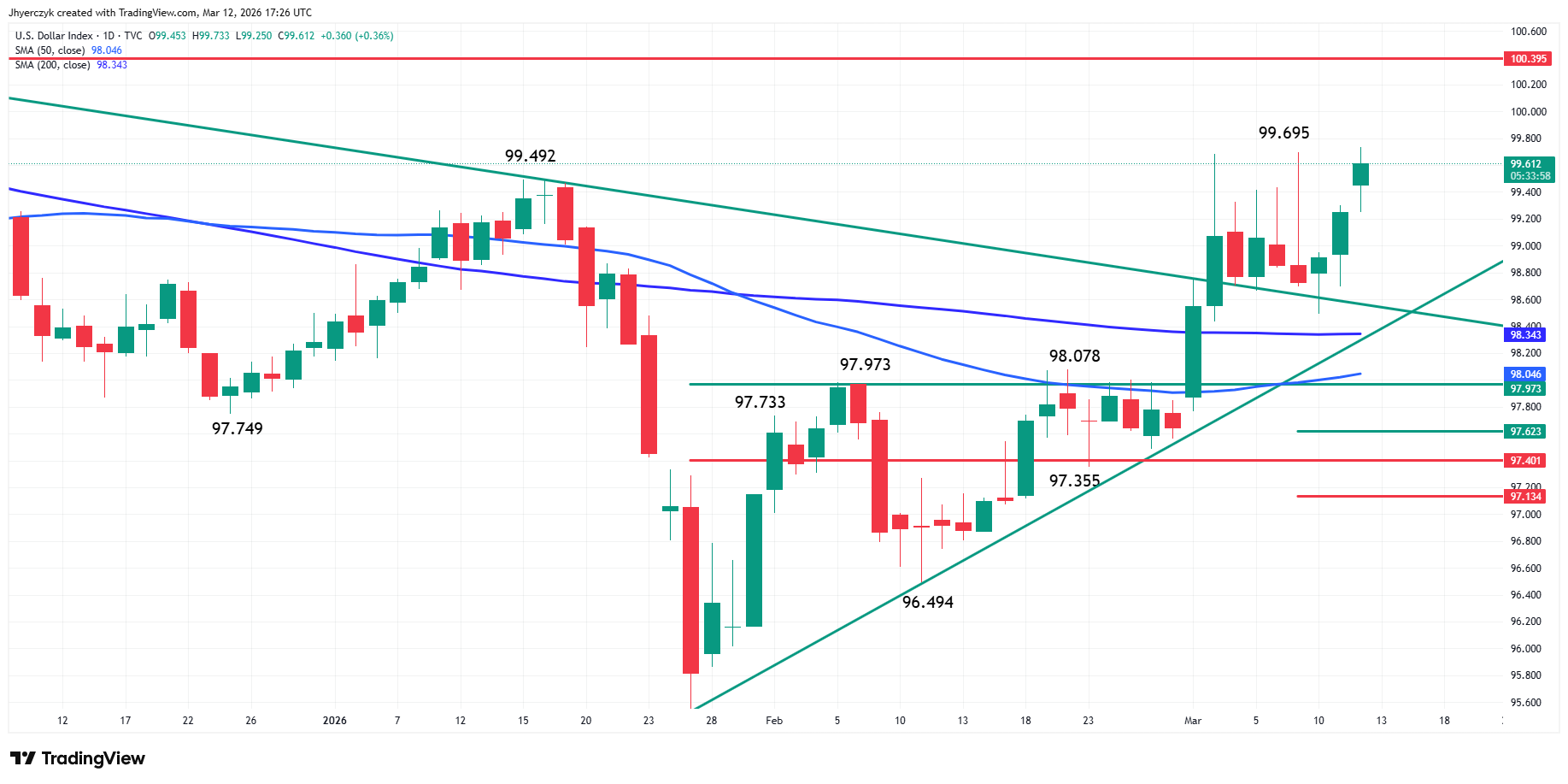
Not only did oil prices rise along with inflation, but Treasury yields also jumped as traders priced in the possibility of further rate cut delays by the Fed. At first March was taken off the board and June was put on. After the first week of the war and higher oil prices, a June rate cut became less than a 50/50 proposition and traders increased the odds of a rate cut to July. After crude oil jumped again on Wednesday on expectations of a prolonged war, Goldman Sachs revealed it was now looking for the first Fed rate cut in September. This helped drive the U.S. Dollar higher for a third straight day, putting it in position to overtake 100.000.
Gold Stuck in a Tight Range
While the dollar has been rising, gold has stayed in a tight range, inside the outlier move on March 3. The price action suggests gold is seeing some so-called safe-haven demand, while being capped by the fear of more Fed rate cut delays.
Oil Is the Key Catalyst
Essentially, gold’s direction will likely be determined by the price of crude oil. A sustained move over $100 per barrel, for example, could be inflationary, devastating to the U.S. economy and central bank rate decisions. The combination of these events will be bearish for gold prices.
The Bullish Case
If somehow, the war ended quickly, damage to oil infrastructure was repaired in a timely manner and prices fell back to reasonable levels then gold could rally because this would put the Fed back on its rate cut schedule.
More Information in our Economic Calendar.