
Oil prices dropped after the remarks by Donald Trump that raised hopes of potential U.S. exit from the Iran conflict. The markets soon discounted that tensions would subside and supply risks would fall. But that hope was soon lost. The situation on the ground is not improving. Traders are now reassessing whether the conflict is near the end. Therefore, the oil prices are rebounding as the risks return to the market.

Oil Drops on Exit Hopes but Market Questions the Reality
The oil prices dropped as traders responded to news that United States might withdraw from the conflict. The oil market interpreted this news as potential turning point that could reduce geopolitical risk. Therefore, oil prices dropped on lower risk. This decline in oil prices reflected positioning rather than real improvement in supply conditions as the Strait of Hormuz was still closed.
However market quickly realized that the comments alone do not resolve the ongoing geopolitical conflict. There was no agreement to secure energy flows. The structural resolution has not yet been met which keeps the risks elevated. Therefore, the initial drop in prices looks more like short term reaction rather than a shift in the broader trend.
Supply Risks Keep Oil Supported Despite Exit Signals
The Strait of Hormuz process 20% of the world’s energy and is now the biggest problem for the global economy. If the US withdraws its participation in the war, it is not certain that shipping routes to the Middle East will reopen. This situation keeps the uncertainty high in the energy market. The continued attacks on energy infrastructure keep the risk premium alive in the oil markets. Thus, oil prices surged again on Thursday following decline on Wednesday.
Moreover, the end of the war does not resolve the supply shortages globally in March 2026. The long term effects of these disruptions on the global economy are huge. The effects will probably be experienced in the coming few weeks. This will likely have the greatest effect on the European economy. If tensions remain prolonged, the flows could tighten the market further. This situation may keep oil prices elevated even if the US exits Iran.
Brent Oil Price Forecast
Every new Brent Oil analysis as it publishes, today's technical signal and key levels, live price — on one page.
See all Brent Oil forecastsWTI Crude Oil Technical Analysis
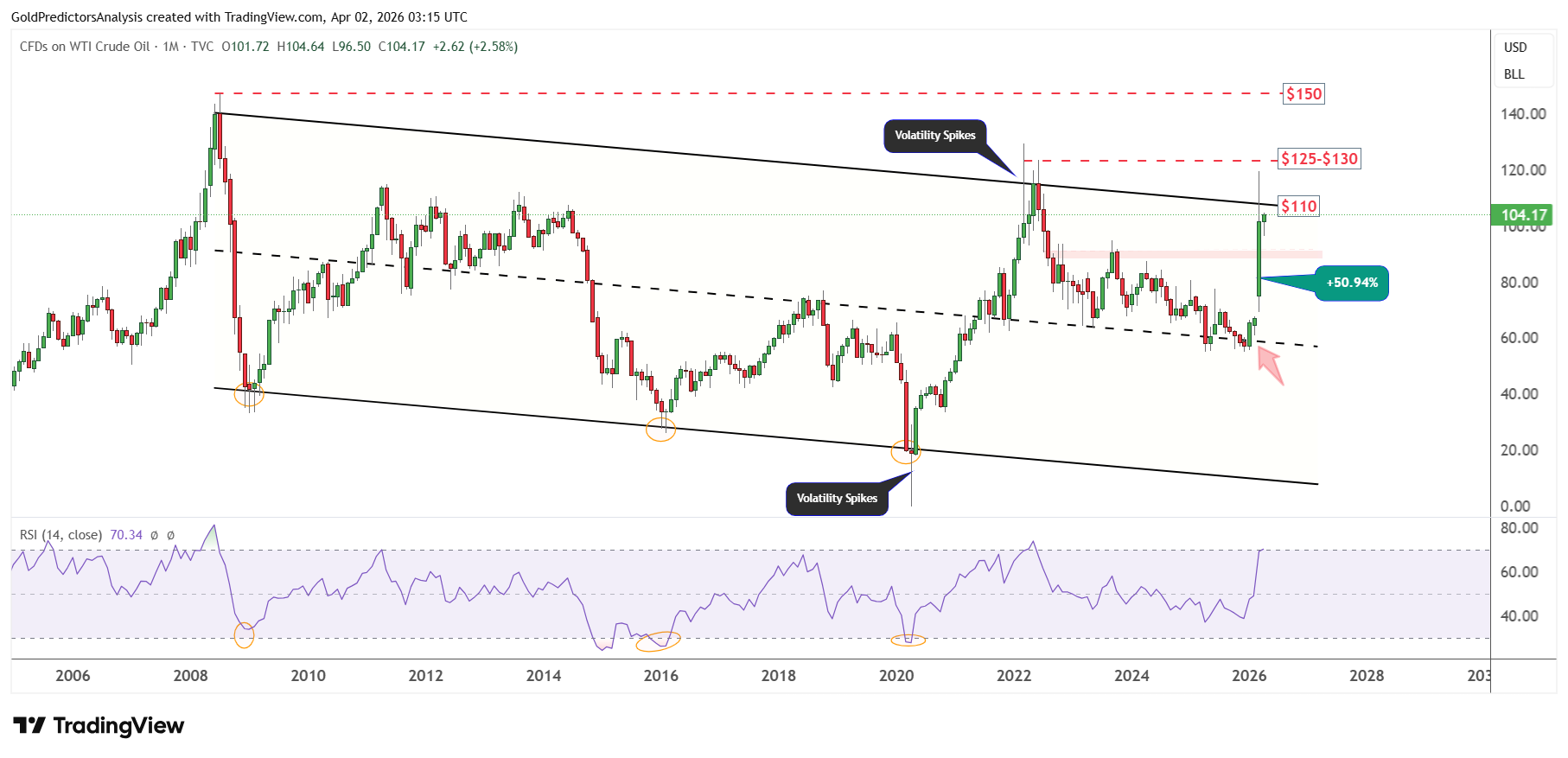
The monthly chart for WTI crude oil shows that prices surged in March and hit strong resistance of $119.48 that was defined by the resistance of a descending channel pattern. However price pulled back from the resistance and closed the month at $101.55.
Despite the strong correction from $119 to $90, WTI crude oil gained 50.94% in March 2026. From technical perspective, the market must break above $125–$130 in order to gain further upside to $150. The energy crisis globally indicates that next few weeks will be critical for energy market.
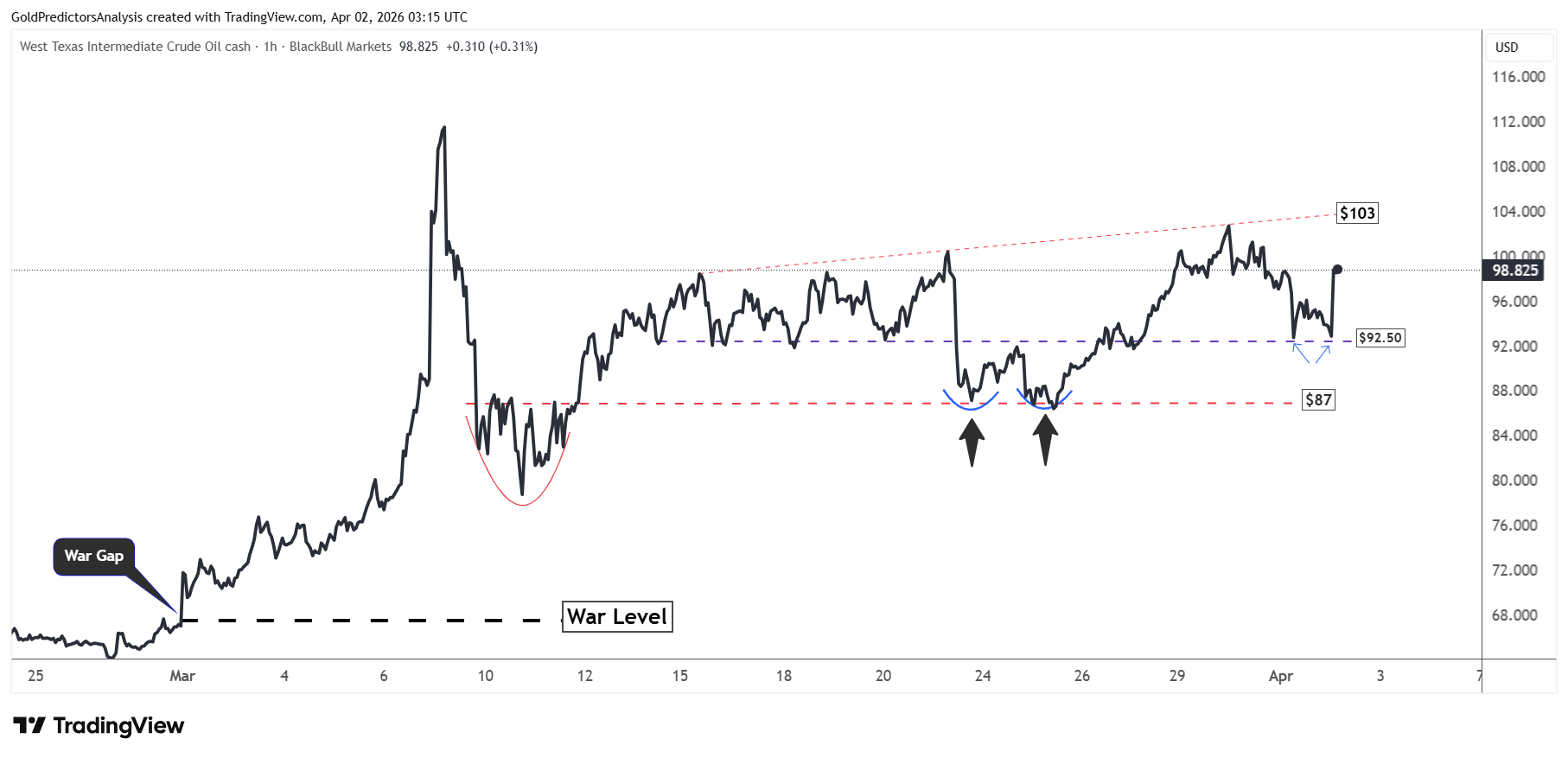
The short-term outlook for WTI also remains constructive. The price drop from the red-dotted trend line has formed a double bottom at $92.50. This double bottom formation indicates that the price will likely break higher. This bullish price action indicates that the price is building energy for a move to $125–$130 in April 2026. The formation of double bottom patterns multiple times indicates that buyers are in the market and prices are pushing higher.
Bottom Line
Oil prices can remain volatile due to the response of the markets to political news and changing expectations. The remarks of the U.S. exit momentarily drove prices down, but the absence of decisive solution keeps supply risks in place. The market will continue to exhibit risk premium as long as disruptions persist, which will support prices despite temporary pullbacks. A break above $105 in WTI crude oil will probably open the door for further upside to $125-$130. On the other hand, Brent oil (BCO) keeps targeting the $125-$135 zone as long as the $100 holds.
If you’d like to know more about how to trade gold and silver, please visit our educational area.