


Silver Consolidates as Traders Wait for Wednesday’s CPI Report
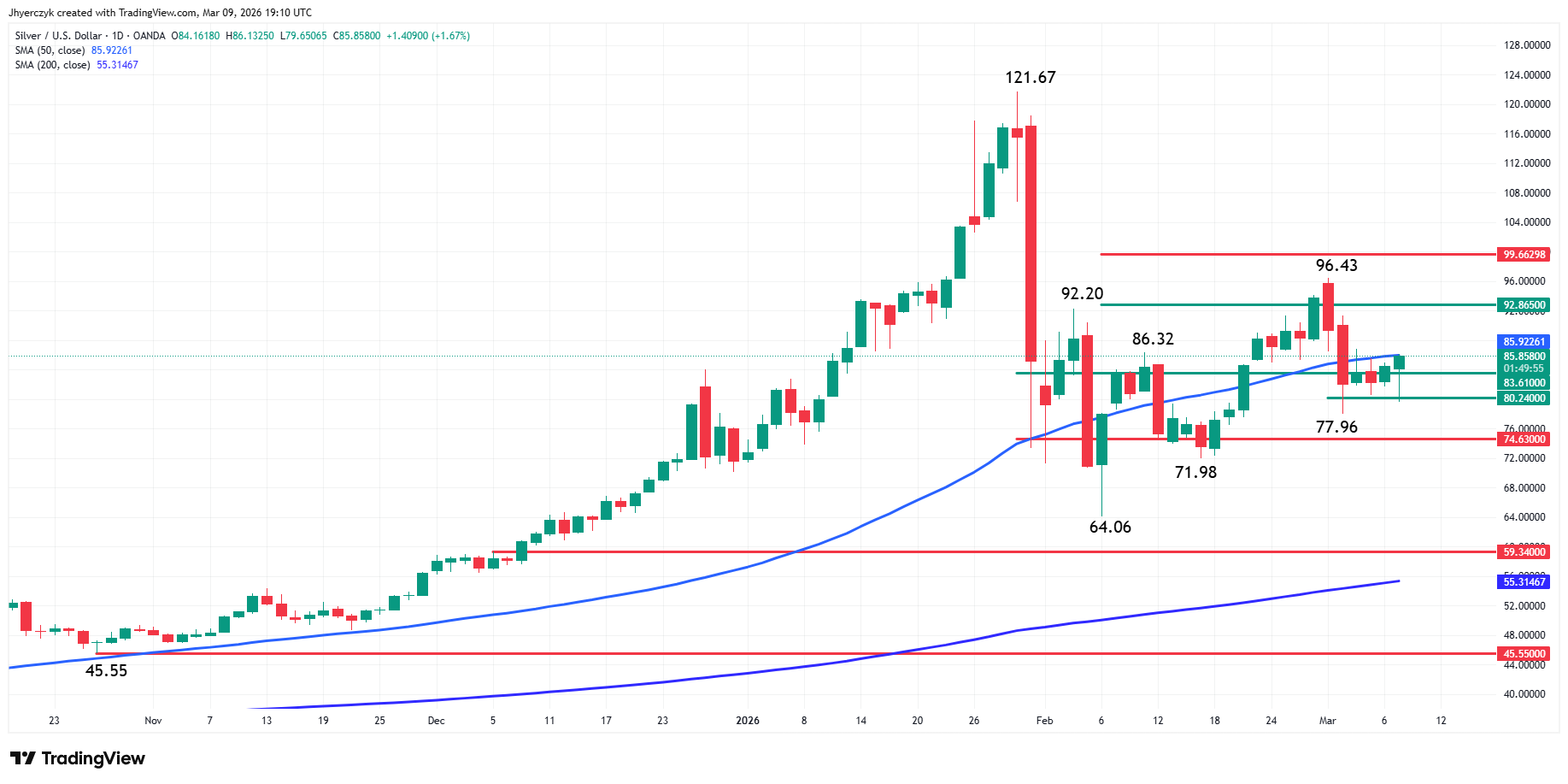
Spot Silver is edging higher late in the session on Monday as prices continue to consolidate inside a tight range ahead of Wednesday’s U.S. Consumer Price Index report (CPI). It’s hard to get a read on whether this report will have any meaningful impact on silver prices since it will not include the influence of higher crude oil or gasoline prices.
Both have skyrocketed since the start of the U.S.-Iran war February 28, which was after the deadline for the February CPI report. Nonetheless, inflation will continue to be the hot topic as the war drags on and crude oil flirts with the psychological $100 level.
One Week of Oil Volatility Was Manageable
Not only are silver traders monitoring the price of crude oil, but also how long it remains elevated. A price spike here and there is acceptable because seasonality is factored into the CPI equation. One week seemed to be acceptable. We had some volatility in the stock market, but the benchmark S&P is only about 4% below its record high.
Last Week Was a Repositioning, Not a Trend Change
Silver, Treasury yields and the U.S. Dollar were also susceptible to volatile, yet controlled movement last week. The price action in those markets suggests it was all about repositioning, rather than posting dramatic changes in trend. I looked at the activity as a “do over.” Traders in those markets reworked their positions based on what the CME FedWatch Tool was telling them about the chances of a Fed rate cut in the future.
What the FedWatch Tool Is Saying Right Now
Currently, the CME FedWatch Tool is telling us that there is a 97.3% chance the Federal Reserve will hold interest rates steady at its March 18 meeting. For the June meeting, the chances are 62.5% for a hold and 33.7% for a 25-basis point cut. These figures are pretty close to where they were last week. The odds of a hold, however, are up from before the war started. For July, traders are pricing in a 46.5% chance of a hold and a 41.1% chance of a cut.
From Safe-Haven Buying to Selling in One Week
The Monday after the war started, silver prices soared on so-called safe-haven demand. Then financial market traders started to price in all of the different scenarios including the baseline quick end to the war with minimal exposure to the economy. Conditions started to move toward a worst-case scenario rather quickly when Iran started damaging neighboring infrastructure and tanker traffic through the Strait of Hormuz was halted.
Silver Price Forecast
Every new Silver analysis as it publishes, today's technical signal and key levels, live price — on one page.
See all Silver forecastsInvestors reacted accordingly, driving Treasury yields and the dollar higher, while dumping risky assets like silver, gold and stocks.
Rate Cut Delays Are the Real Threat to Silver
For silver prices, it all comes down to the impact of oil prices on numerous parts of the global economy. The silver market could feel the impact of higher, for longer, crude oil over $100 per barrel if it influences inflation so much that it leads to further postponements of the Fed rate cuts in 2026 that had been priced in for months. In silver, we have industrial demand and speculative demand. If rates are going to remain elevated then those major players betting on rate cuts will move their money elsewhere. I think that’s what silver investors are doing, just adjusting positions to the current period of uncertainty.
With the session winding down, the technical picture is straightforward. It’s all about the reaction to the 50-day moving average.
More Information in our Economic Calendar.


