Spot Silver Breaks Hard as Rate Expectations Shift
Spot Silver (XAGUSD) dropped from $89.38 on May 13 to $73.86 on May 18 and Tuesday is not looking any better. Trading at $76.02, down $1.64 or 2.12% at 10:38 GMT. This was not profit-taking after a big run. I’ve seen profit-taking and it does not look like this. Inflation expectations flipped, the Federal Reserve story reversed, and the dollar came back all at once. Silver absorbed every bit of it.
The Inflation Story Flipped
Trace it back and it starts with oil. The Middle East situation kept Spot Brent crude oil near $110 and June West Texas Intermediate crude oil between $100 and $105 all week. That is not an energy problem anymore. That is an inflation problem. Transportation costs are up. Manufacturing is paying more. Consumer goods are following. The April inflation data came in at 3.8% or higher, hotter than expected for the third consecutive month. Markets had spent months positioned for inflation to keep cooling and give the Federal Reserve room to ease. That position is now wrong and traders are unwinding it fast. Silver is one of the first places that shows up.
Why Higher Rates Hurt Silver
Silver does not pay interest. It does not generate income while you hold it. Some traders view precious metals as a long term inflation hedge and that view is not wrong. But in the short term the market works differently.
Rising inflation creates expectations for higher rates and higher rates make Treasuries more attractive against metals.
The 10-Year U.S. Treasury yield has moved above 4.63% and the 30-year has climbed above 5.1%. When investors can earn returns like that holding government debt, silver has to compete for the same money and right now it is losing that competition.
The Fed Story Reversed Fast
Silver Price Forecast
Every new Silver analysis as it publishes, today's technical signal and key levels, live price — on one page.
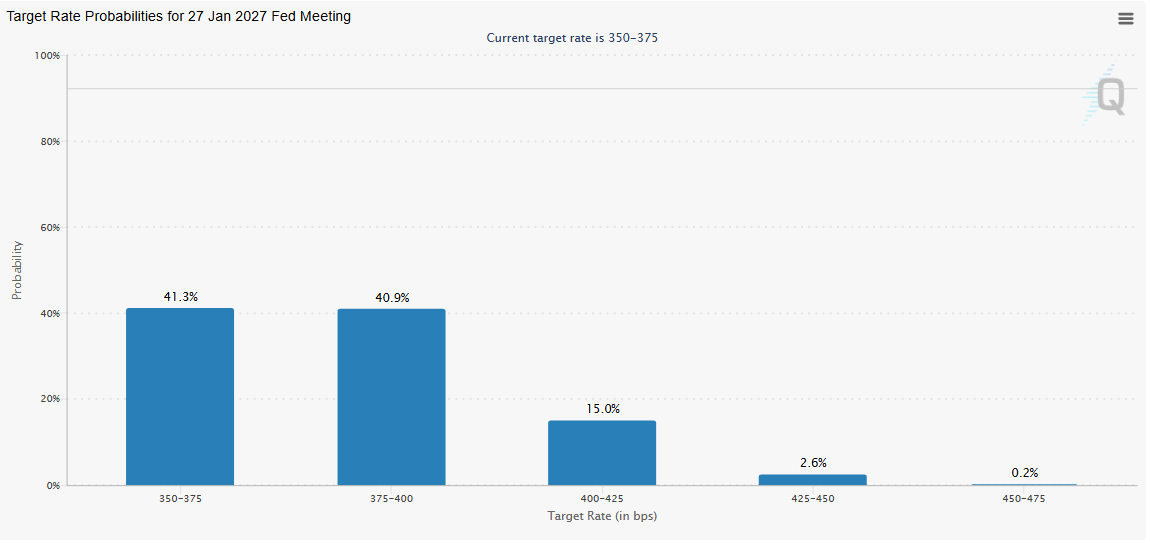
See all Silver forecastsMy read on this is that the Fed shift is what broke silver’s momentum more than anything else. Earlier this year the market was positioned for rate cuts. That positioning supported silver and helped drive the run to $89.38. Now futures markets are pricing roughly a fifty-fifty chance of a rate increase by the end of the year and some estimates push that probability higher going into next year.
Traders do not wait for policy to change before repositioning. They price what they think is coming and right now what they think is coming is higher rates for longer. Silver had been built on the opposite assumption and that assumption is being unwound.
The Dollar Is Adding Pressure
Higher rate expectations have pulled money into dollar-based assets and the U.S. Dollar Index has recovered from a recent multi-month low at 97.625 back toward the 100 level. Silver is priced globally in U.S. dollars. When the dollar strengthens, buyers using euros, yen, or other currencies pay more for the same amount of silver. That weakens international demand and adds another layer of selling pressure on top of what yields are already doing. Spot Silver (XAGUSD) was not dealing with one problem Monday. It was dealing with three running in the same direction at the same time.
Positioning Made It Worse
I’ve watched this setup before. Silver runs hard, the bull case looks airtight, and everyone piles in. That is exactly what happened between March and May.
Artificial intelligence spending, energy transition demand, technology manufacturing, every theme pointed the same direction and traders stopped questioning the price targets.
Then the rate story flipped and the exit was instant. It is not that the longer-term supply deficit is wrong. It is that when that many people are in the same trade, sentiment does not have to reverse permanently to cause real damage. It just has to move fast enough that nobody wants to be last out the door. That is what happened here.
The Supply Picture Has Not Changed
Silver markets are still running a deficit and industrial demand from solar panels, electronics, and technology manufacturing is still outpacing production growth. None of that changed last week.
The problem is the market is not trading the supply story right now. Traders are watching the Federal Reserve and until that picture clarifies, deficit data is not moving prices. Policy expectations drive short-term moves. Supply deficits support prices over time. Right now we are in the short-term and the Fed is the only story that matters.
Spot Silver (XAGUSD) Technical Analysis
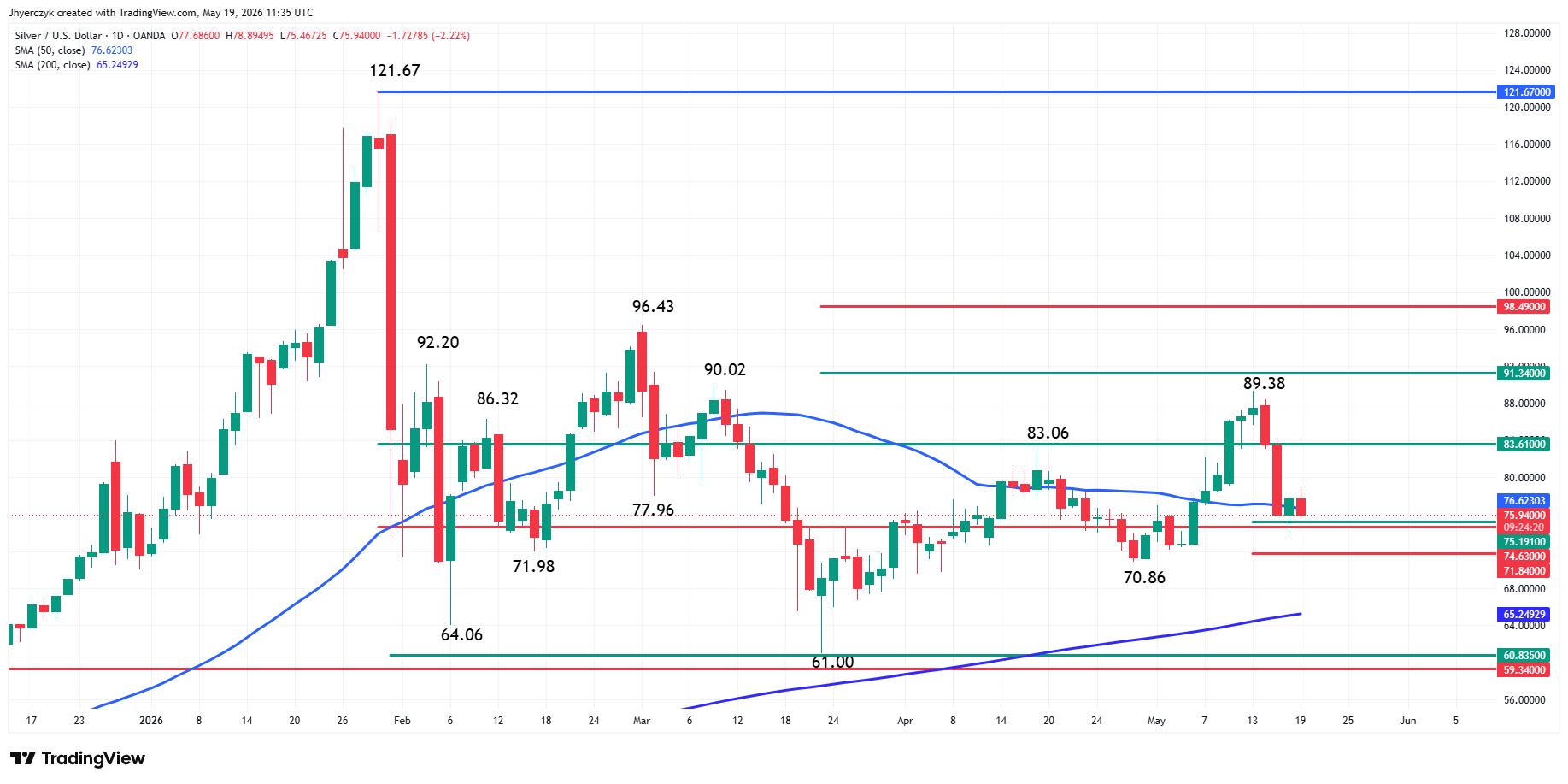
According to the main swing chart, Spot Silver (XAGUSD) is still in an uptrend due to the higher-top, higher-bottom formation which started at $61.00 on March 23. A trade through $89.38 will signal a resumption of the uptrend, while a trade through $70.86 changes the main trend to down.
The 50% to 61.8% retracement zone of the main range is $75.19 to $71.84. This area overlaps a long-term Fibonacci level at $74.63. On Monday, XAGUSD tested this area and buyers stepped in at $73.86, turning the market positive into the close.
Following this move, a new swing was created at $89.38 to $73.86. If buyers generate any near-term momentum, we could see a quick pop to this swing’s retracement zone at $81.62 to $83.45. Trader reaction to this area will determine the near-term direction of the market.
Moving average analysis tells us that the key level to watch today is the 50-day moving average at $76.63. Trader reaction to this indicator will set the tone into the close. While this short-term indicator is acting like a pivot, the 200-day MA is our long-term trend indicator. It supports the uptrend we’re seeing on the swing chart.
As for today, trader reaction to the 50-day MA will tell us if the bulls or the bears are in control. If the bulls are then look for a near-term surge into $81.62 to $83.45. If the bears are then the market could retest $75.19 to $71.84. A failure at this zone makes the swing bottom at $70.86 and the 200-day MA at $65.25 vulnerable to attack.
What to Watch
The Federal Reserve outlook is the driver that determines where silver goes from here. Inflation staying elevated keeps rate hike odds on the table. Rate hike odds keep yields elevated. Elevated yields keep the dollar supported. A supported dollar keeps pressure on Spot Silver (XAGUSD). That chain is intact right now and nothing in the near-term data calendar is likely to break it cleanly.
The 50-day moving average at $76.63 is the level that sets the tone today. Bulls need to hold it. Lose it and the retracement zone at $75.19 to $71.84 gets tested again. A failure there puts the swing bottom at $70.86 and the 200-day moving average at $65.25 in play. On the upside $81.62 to $83.45 is the first area where sellers are likely to reassert themselves if buyers regain control.
More Information in our Economic Calendar.