
Spot Gold Breaks Key Level as Yields and Dollar Take Control
Spot Gold (XAUUSD) is under pressure early Tuesday and the chart is not giving bulls much to work with. Five straight sessions of lower highs and lower lows. Monday’s low at $4480.41 briefly pierced $4481.78, the price level that separates the bull market from the bear market by classic technical analysis standards. That is not a random number. That is the line the algorithms are watching and Monday’s bounce off it does not mean the problem is solved.

Oil Started This
I keep coming back to oil as the place where this chain began. Spot Brent crude oil near $110 and June West Texas Intermediate crude oil trading between $100 and $105 kept inflation fears alive all week. The Strait of Hormuz is still largely blocked and every day that passes without a resolution is another day energy costs stay elevated.
Higher oil means higher gasoline. Higher gasoline means higher shipping. Higher shipping means higher everything. That pressure worked its way into the April inflation data which came in at 3.8% or higher, hotter than expected. When three consecutive inflation prints run above expectations the bond market stops waiting and starts moving.
What the Bond Market Did to Gold
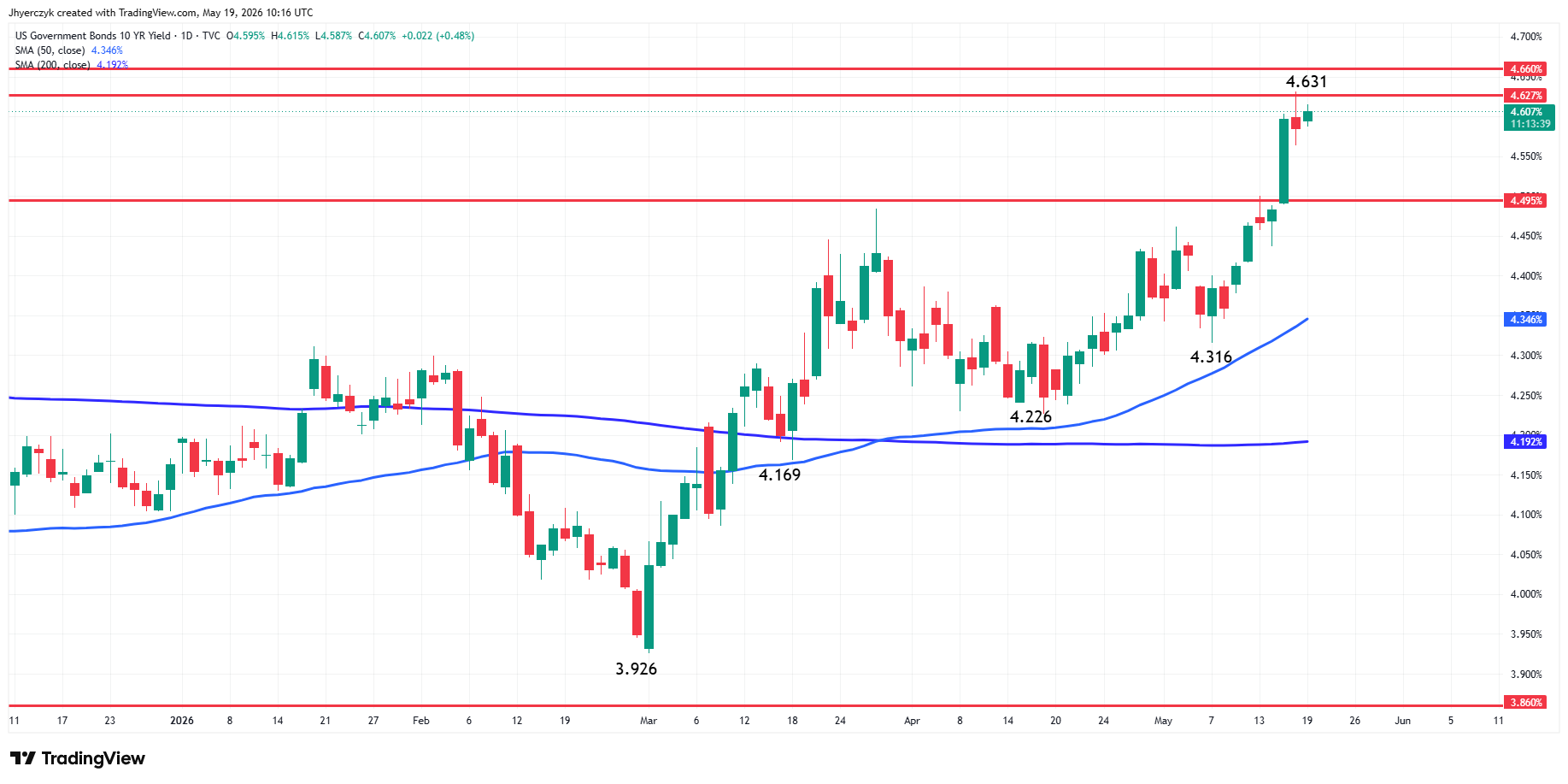
The 10-Year U.S. Treasury yield hit 4.631% Monday, its highest level since February 12, 2025. The 30-year Treasury bond yield climbed to 5.159%, a level not seen since October 2023. Those are not minor moves. That is the bond market repricing the entire rate outlook in real time. Gold does not pay interest. It does not generate income while you hold it. When Treasury bonds start offering yields at those levels, some of the money that was sitting in gold has somewhere else to go. That rotation is exactly what has been pressuring Spot Gold (XAUUSD) for the past five sessions.
Some traders still view gold as a safe haven during periods of geopolitical uncertainty and they are not wrong to think that way. But in the current environment the rate story is overriding the safe haven bid completely. War escalation means higher oil means higher inflation means the Fed stays on hold means yields stay elevated means gold goes lower. That chain ran all week and it is still running.
Gold Price Forecast
Every new Gold analysis as it publishes, today's technical signal and key levels, live price — on one page.
See all Gold forecastsThe Dollar Added Another Layer
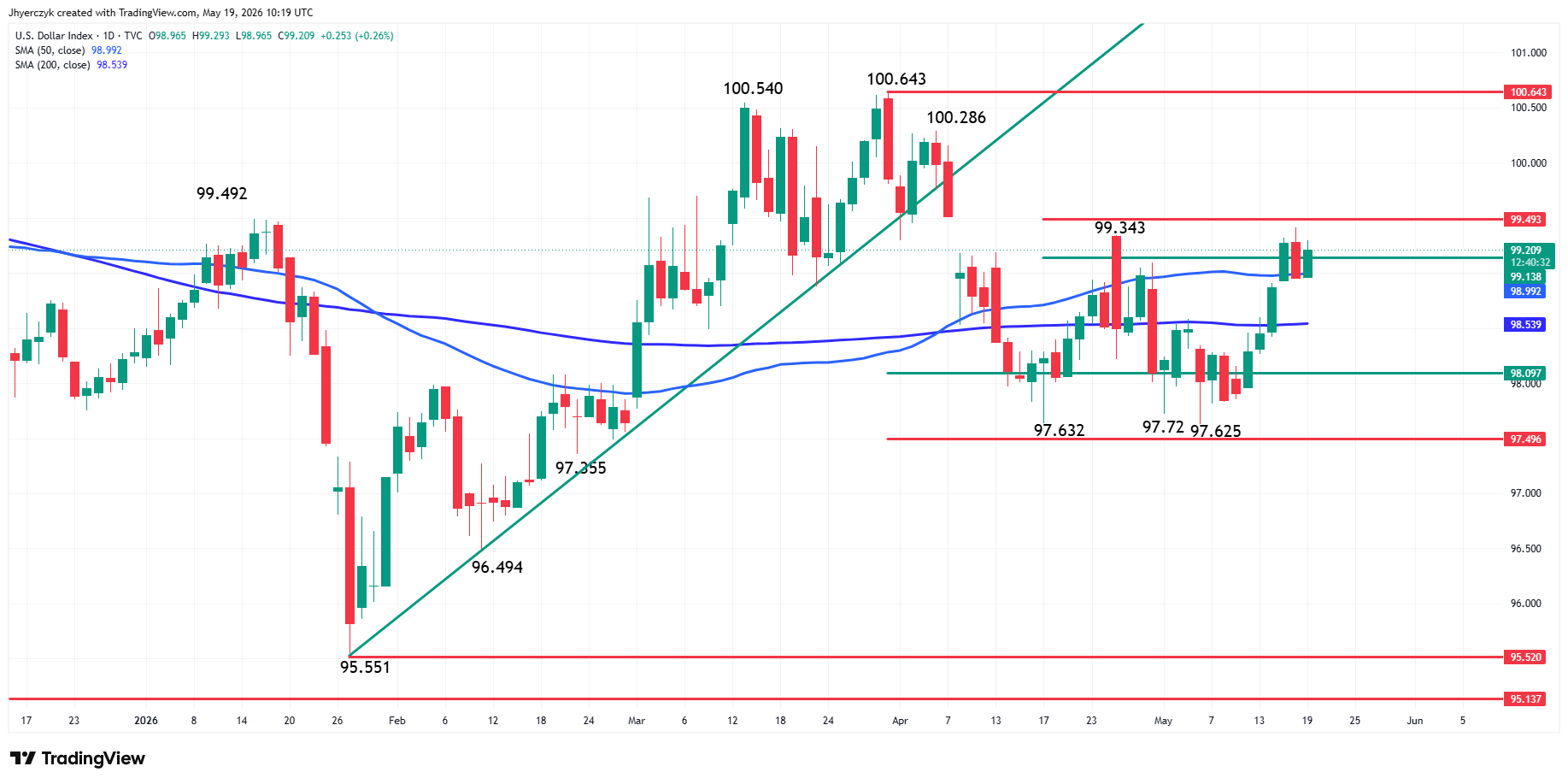
The U.S. Dollar Index recovered from a recent multi-month low at 97.625 and pushed back toward the key psychological level at 100. Gold is priced in U.S. dollars globally. When the dollar strengthens, buyers using euros, yen, or other currencies pay more to buy the same amount of gold. That slows international demand and adds selling pressure on top of what yields were already doing. Spot Gold (XAUUSD) was not dealing with one headwind Monday. It was dealing with two running simultaneously and in the same direction.
The Fed Is Sitting in the Middle of All of This
Traders had been pricing in rate cuts earlier this year and that expectation was one of the main supports under gold’s record run above $5,602.23 in late January. Hotter inflation data changed that calculus fast. The Federal Reserve held rates steady in recent meetings and three consecutive upside inflation misses have pushed the rate cut timeline out further.
Traders are now pricing in more than a 40% chance of a rate hike by January. A month ago that number was near zero. For gold that matters because lower rates reduce the appeal of cash and fixed income and push money toward non-yielding assets. Higher rates for longer does the opposite. The Fed story that was supporting gold earlier this year is now working against it.
Where Demand Is Still Showing Up
The pullback has not wiped out all the buyers. Bargain hunters showed up when Spot Gold (XAUUSD) briefly pierced $4481.78 on Monday and the technical bounce confirmed that traders are still defending key levels on the first test. Earlier this year buyers stepped in at $4099.12 on March 23 and the rally that followed ran all the way to $4891.54 on April 17 before sellers capped it. That tells you demand has not disappeared. It tells you the market is repricing what gold is worth in a higher rate environment, not abandoning it entirely.
Spot Gold (XAUUSD) Technical Analysis
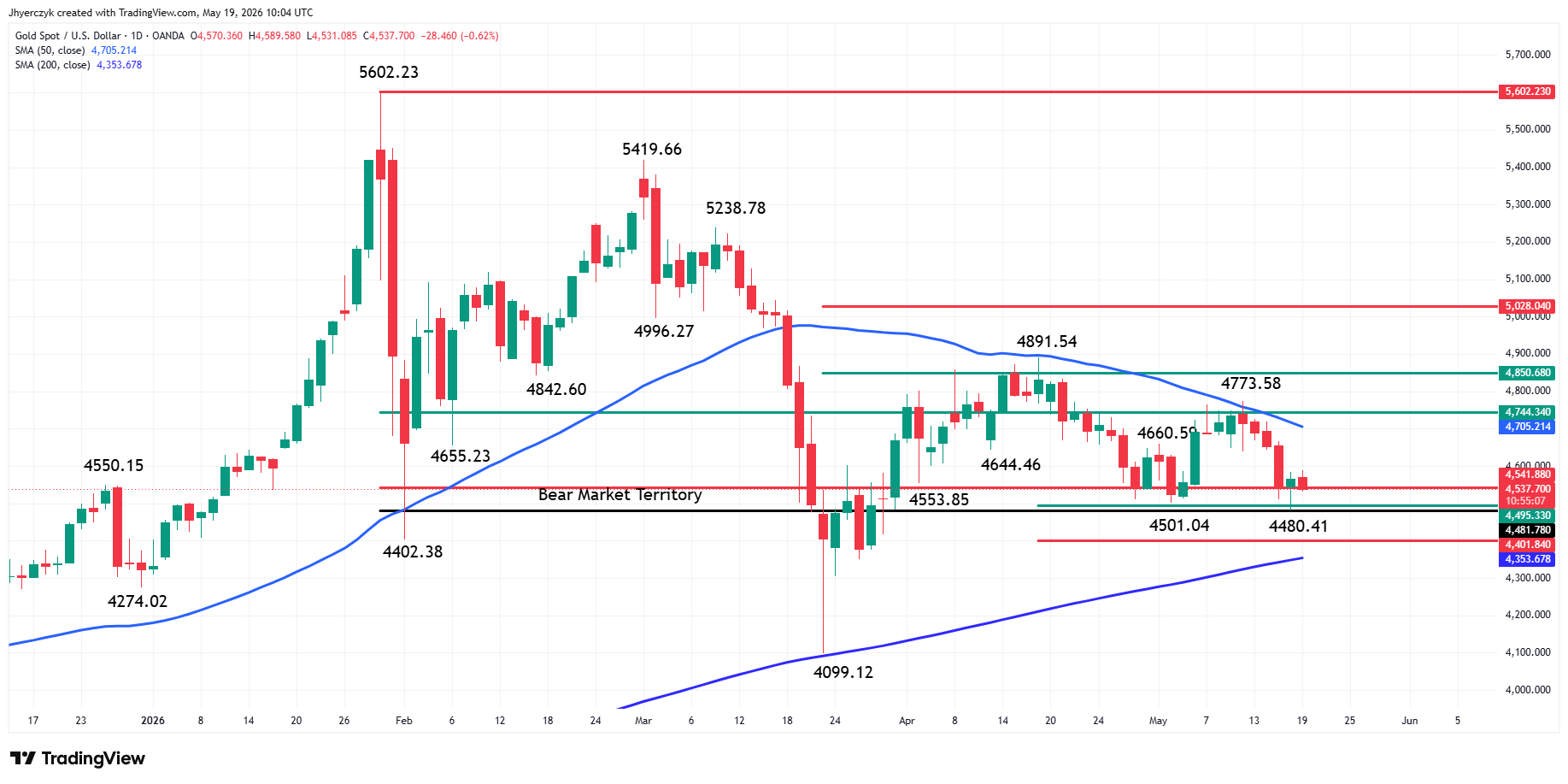
The spot gold downtrend was reaffirmed on Monday when traders broke the recent bottom at $4501.04. However, bargain hunters recognized an opportunity when prices briefly pierced $4481.78, inside a key short-term retracement zone at $4495.33 to $4401.84.
I think we can look at the charts several ways because ultimately it comes down to personal preference.
If you believe that the 200-day moving average at $4353.69 is the major support and trend indicator then current price levels should be attractive to you because it’s an easy exit if you are wrong.
If you believe the 50-day moving average at $4705.25 is the trend indicator and resistance then you are leaning toward the short side of the market, looking for a breakdown under the 200-day MA.
I think this current moving average setup explains why the market has been trading mostly sideways for nearly two months. However, we’re going to find out within a relatively short time who is right because the 50-day MA is rapidly falling toward the slow rising 200-day MA, which indicates a potentially bearish crossover is coming.
Another way to look at the market is by watching trader reaction to $4481.78. This price is 20% below the all-time high at $5602.23, which by classic technical analysis measures, separates the bull market from the bear market. So the real question is will the technical algorithms start buying heavily at $4481.78 to defend the bull market, or will they flip to dumping positions on the weak side of that level.
Monday’s low at $4480.41 and subsequent technical bounce shows that traders are still buying dips at key levels, but will it hold a second or third time if tested again.
What to Watch
The oil and rate story are the two drivers that are still live and still pointed in the same direction against gold. If Middle East tensions ease and Spot Brent crude oil pulls back meaningfully, inflation concerns start cooling. A softer inflation picture eventually pulls the 10-Year U.S. Treasury yield back below 4.5%, the U.S. Dollar Index weakens, and Spot Gold (XAUUSD) has room to recover toward $4,700 or higher. None of that is happening right now.
The 50-day moving average at $4705.25 is falling toward the 200-day moving average at $4353.69 and that potential bearish crossover is the technical story defining this market right now. $4481.78 is the line that matters most. It held Monday. Whether it holds a second or third test is the question traders are sitting with going into the rest of the week.
If you’d like to know more about how to trade gold, please visit our educational area.