Over the past year, the company behind ChatGPT has renegotiated aspects of its complex relationship with longtime partner Microsoft, secured approval for its evolving for-profit structure, and strengthened its position despite rising competition from rivals. The company also completed a record-breaking $122 billion fundraising round, lifting its valuation above $850 billion and fueling growing speculation that OpenAI could eventually target a valuation close to — or even above — the symbolic $1 trillion mark in a future IPO.
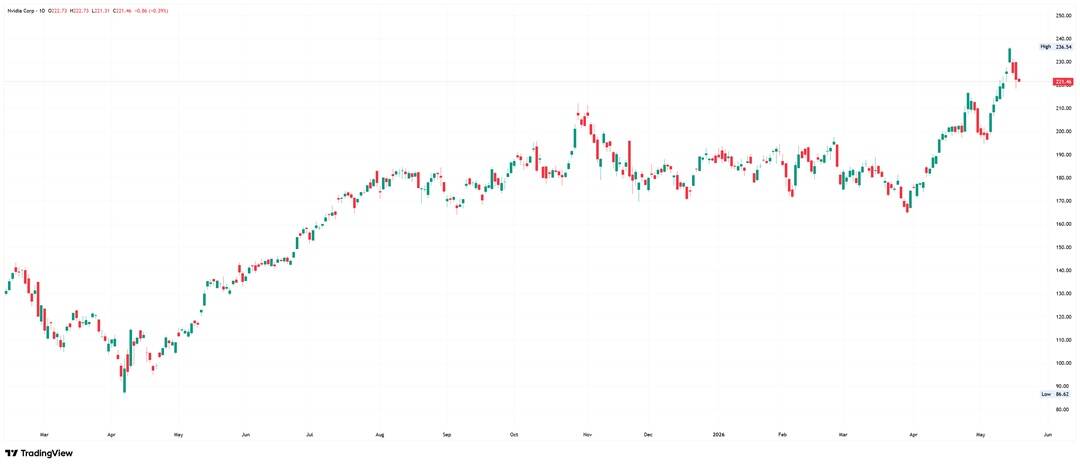
If such a listing occurs, it would likely become one of the defining moments of the modern AI boom, comparable to the market impact of past technology giants such as Meta, or NVIDIA. But unlike previous tech revolutions, the AI race is unfolding in an environment where infrastructure costs, energy consumption, and computing power have become just as important as software innovation itself.

Hypergrowth Meets Massive Spending
OpenAI’s financial trajectory remains extraordinary by almost any historical standard. In less than four years, the company reportedly grew from virtually no revenue to nearly $25 billion in annualized sales, driven largely by subscriptions and enterprise adoption of generative AI tools.
Corporate demand is becoming increasingly important to OpenAI’s strategy. Businesses are no longer simply experimenting with AI assistants to improve productivity. Many are beginning to integrate autonomous AI agents into operational workflows, customer service systems, software development, legal research, and data analysis.
This rapid expansion is tightly linked to computing capacity. As OpenAI dramatically increased its access to processing power between 2023 and 2025, revenue growth accelerated at a nearly identical pace. The relationship highlights one of the defining realities of the AI industry: demand may not be the primary constraint. Infrastructure is.
Yet behind the explosive revenue growth lies a far more difficult financial reality: artificial intelligence remains one of the most capital-intensive industries ever created. OpenAI must continuously spend enormous amounts on model training, semiconductors, GPUs, cloud infrastructure, energy, and data centers simply to maintain its technological lead.
Even profitability remains highly debated. Some internal financial metrics reportedly suggest OpenAI could approach operational break-even within a few years if training costs are excluded. But when the full cost of developing and maintaining frontier AI models is included, meaningful profitability may remain many years away.
This creates the central question for future public investors: are markets willing to tolerate massive cash burn in exchange for the possibility of long-term dominance in artificial intelligence?
Sam Altman’s Trust Problem
The lawsuit brought by Elon Musk also revived longstanding questions surrounding the credibility and leadership style of OpenAI CEO Sam Altman.
During the trial, Musk’s legal team repeatedly challenged Altman’s trustworthiness, pointing to testimony from former OpenAI executives and board members who accused him of being misleading or evasive in past business dealings. In one of the most striking courtroom exchanges, Altman was directly asked whether he always tells the truth. He responded that he believed himself to be “a truthful person,” while acknowledging he could not speak for how others viewed him.
The issue matters because OpenAI’s future increasingly depends not only on technological leadership, but also on investor confidence. Altman has become one of the most influential figures in Silicon Valley, leading the company that triggered the global generative AI race with ChatGPT. Supporters view him as a visionary capable of building one of the most important technology platforms of the century. Critics argue that OpenAI’s rapid transformation from a nonprofit laboratory to a highly commercialized AI giant raises deeper governance concerns.
The tension reflects a broader contradiction at the heart of OpenAI itself: the company was originally founded around ideals of openness, AI safety, and public benefit. Today, it sits at the center of an aggressive global race for capital, infrastructure, and market dominance.
Will Market Participants Invest in OpenAI?
An eventual OpenAI IPO would likely become more than just another technology listing: it could serve as a referendum on the entire economics of artificial intelligence. At current private-market valuations, OpenAI trades at revenue multiples that many analysts already consider extremely aggressive, even for a hypergrowth technology company.
Supporters argue the company is building foundational infrastructure for the next era of computing, justifying unprecedented investment levels. Skeptics counter that markets may already be pricing in perfection before the long-term economics of generative AI are fully proven.
The challenge is that AI companies operate differently from traditional software firms. Scaling AI requires continuous infrastructure investment at a pace rarely seen in previous technology cycles. Success depends not only on software adoption, but also on securing access to semiconductors, energy supplies, cloud infrastructure, and advanced data centers.
For now, investor enthusiasm remains powerful. But if OpenAI eventually enters public markets, the company may become the first true test of whether Wall Street is prepared to fund artificial intelligence not as a speculative trend, but as a permanently capital-intensive industry whose profits may take far longer to arrive than the market currently expects.
Sources: OpenAI, TechCrunch, The Information, Bloomberg, The Washington Post, Reuters, The Wall Street Journal, CNBC, BBC, Forbes, Yahoo Finance, Medium, The Guardian
This article is for informational purposes only and does not constitute investment advice.