


Solana (SOL) was a notable laggard during last year’s rally compared to Ethereum (ETH) and BNB Coin (BNB) as it failed to make a new all-time high during this bullish cycle.
We have been mentioning in previous Solana forecasts that network activity had been experiencing a steep decline since July 2025.
Now, concerns over excess centralization could further depress network activity as it creates a perception problem that may hurt Solana’s reputation down the road.
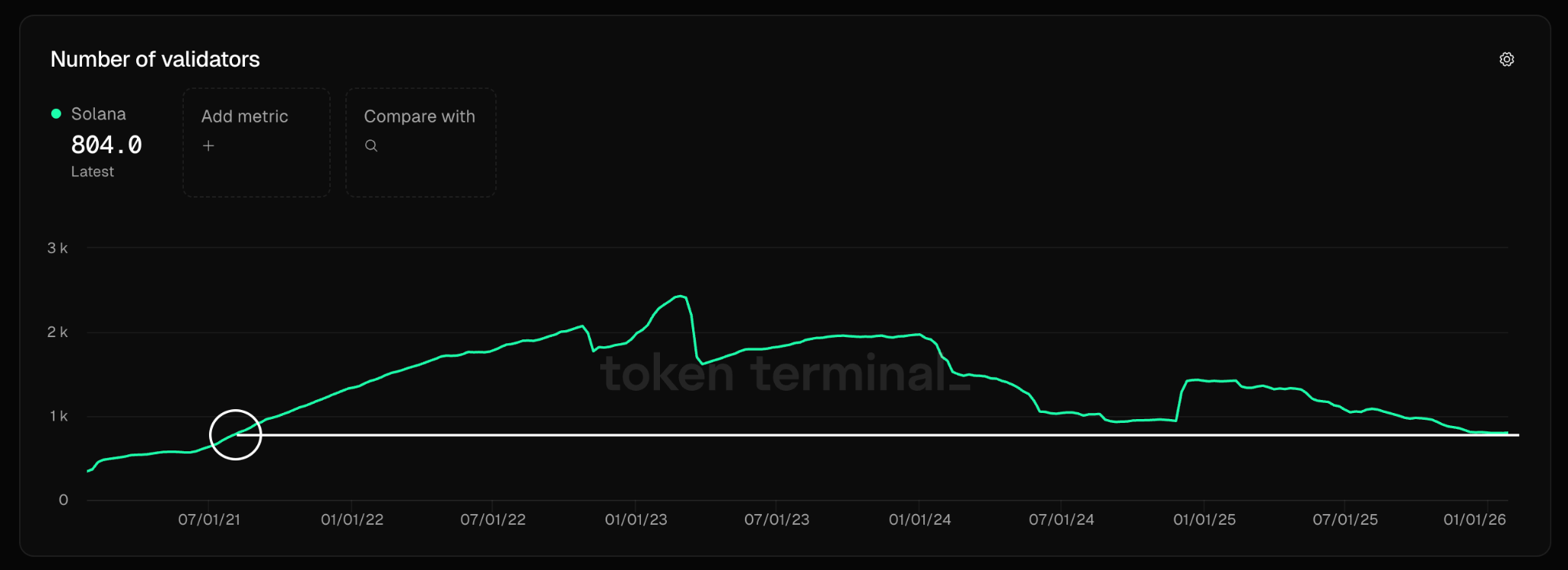
Solana’s Validator Count – Source: Token Terminal
Data from Token Terminal shows that validator’s count, a metric that tracks the number of active nodes processing voting transactions, has been steadily dropping since December 2024.
However, the metric reached its lowest level since August 2021 last week, reflecting a significant shift in a core aspect of the network’s architecture.
Smaller Nodes Have No Incentive to Keep Things Running
The higher the number of nodes, the more decentralized a network is perceived to be – as long as these entities are unaffiliated.
What this downtrend says about Solana is that the blockchain is becoming increasingly centralized. Compared to Ethereum, whose validator count exceeds 970,000, Solana’s biggest validators are becoming increasingly influential in the consensus process.
Comments from independent validators who run Solana nodes indicate that a change in the rewards distribution scheme has made smaller operators unprofitable, which ended up pushing some out of the network entirely.
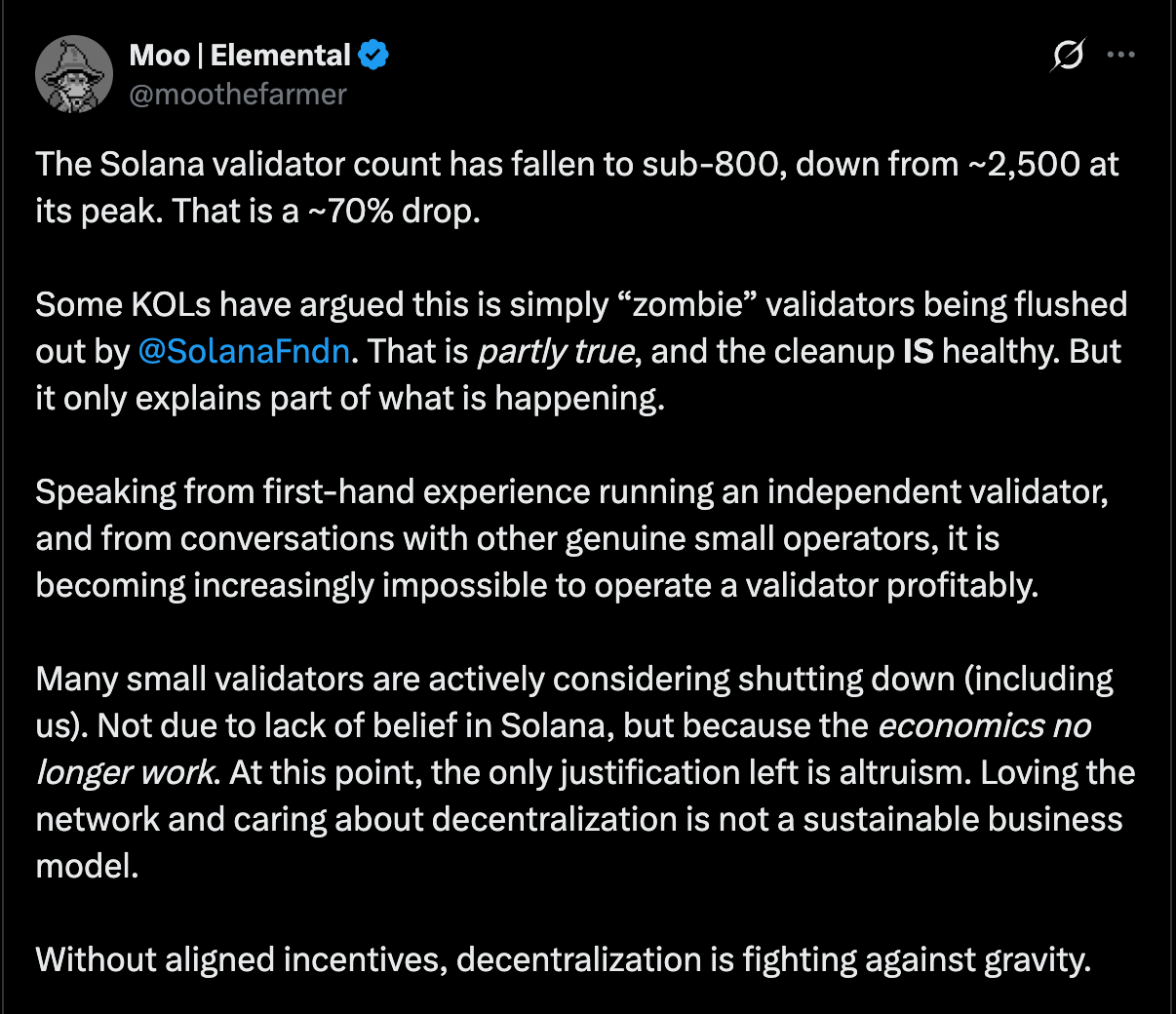
Moo the Farmer X Account – Source: X.com
Solana validator Moo the Farmer on X shared an interesting take on what’s happening. He indicated three issues that are leading to increasing concentration.
The first is associated with large operators’ ability to run nodes while charging zero fees. This leads to another issue – users prefer these nodes as they charge no fees when staking Solana.
Finally, Moo claims that the Solana Foundation has been progressively cutting “matching” fees, which gave smaller operators an incentive to participate in the network’s consensus. Without this “lifeline”, these smaller operators will no longer be able to run profitable nodes.
All of this plays against the long-term outlook for SOL, especially when one compares this network’s architecture to Ethereum’s significantly more decentralized blockchain.
Solana Price Forecast
Every new Solana analysis as it publishes, today's technical signal and key levels, live price — on one page.
See all Solana forecastsThings Could Get Ugly If SOL Losses the $100 Support
The weekly chart shows a worrying trend line breakout for SOL after it moved below $150 recently.
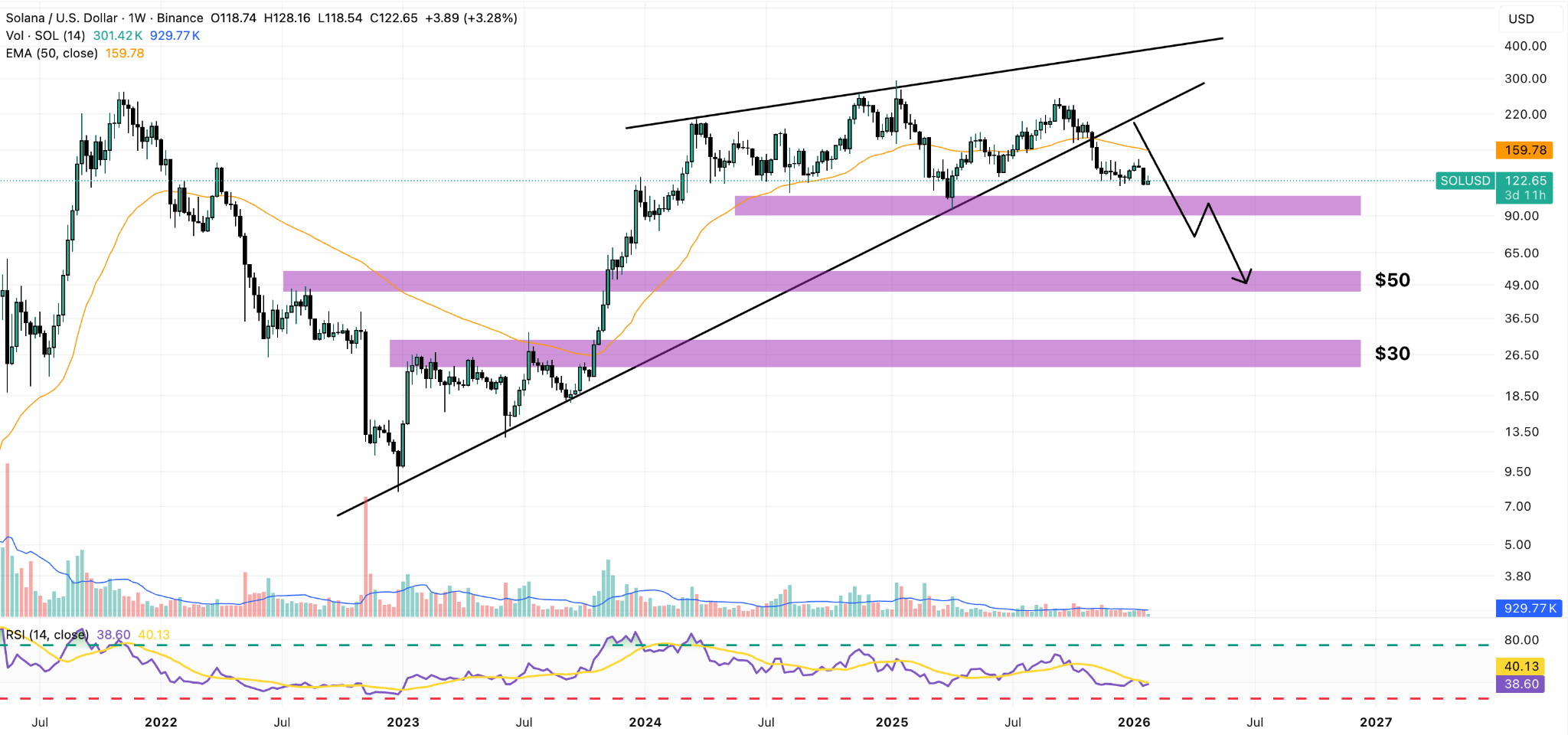
SOL/USD Weekly Chart (Binance) – Source: TradingView
This trend line had been respected by the market for three years now, and it is now gone. This could be an early signal of a significant shift in traders’ and investors’ interest in the token.
The key support to watch, both from a technical and psychological standpoint, would be the $100 level. If we get a break below that mark, things could get ugly for SOL in the long run, as the next landing zone could be $60 first and then $30.
That means a huge downside risk if the $100 mark falters. Ethereum is beating Solana as the most decentralized network of the two, and it is also winning the fee war with the launch of recent network upgrades.
If this trend persists, SOL could suffer a dramatic decline at a key juncture when big institutional players are choosing which blockchain will power the next era for TradFi and DeFi.