After a bruising Q1 2026, the S&P 500 Index (SPX) seems to be poised for a bit of a countertrend move. But the geopolitical uncertainty still looms and US household demand may not be so durable.
The SPX had a bit of a stumble with a 7% decline in the first quarter of 2026. As we enter the second quarter of 2026, April seems to be more positive over the last decade with 7 positive (excluding April 2026) and 3 declining months. So from a seasonality perspective the SPX is highly likely to be positive.
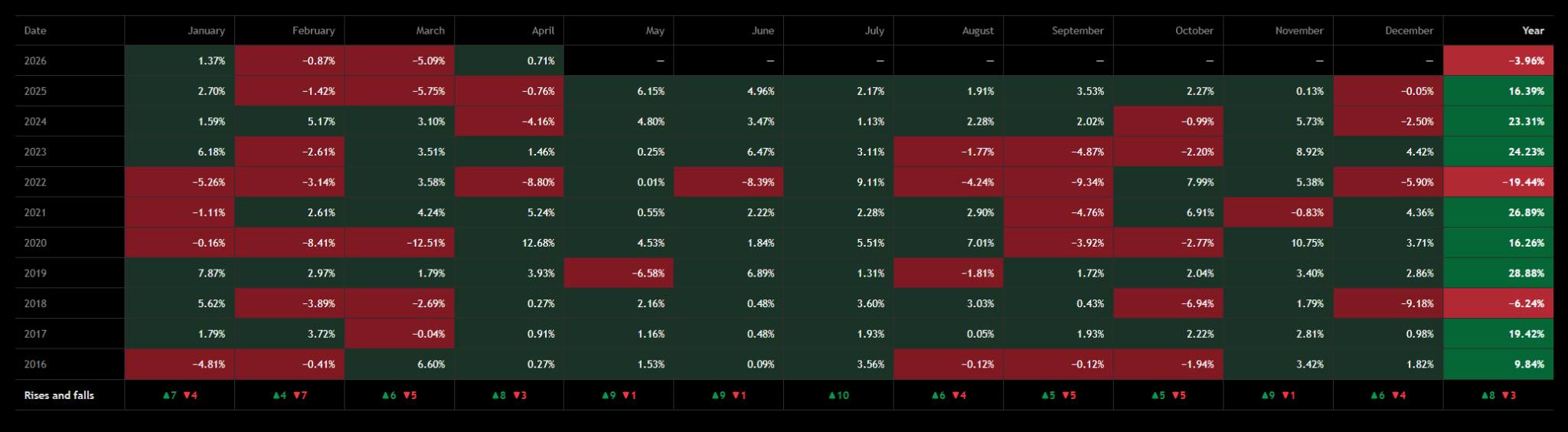
S&P 500 seasonality shows April has produced gains in seven of the last 10 years. Source: TradingView

S&P 500 Fundamental Outlook: ADP, Retail Sales, and Iran Headlines
Labor market and retail sales data were released today. The ADP print may be signaling a labor market that is still growing. April’s figure came in at 62K, comfortably above the 40K forecast. This is the 2nd month of exceeding forecasts but we still need to see whether these figures need to be revised.

ADP employment data beats forecasts again, signaling the labor market is still expanding. Source: TradingView
Additionally, retail sales show that the US consumer is still active but sporadic. April 2026 posted a 0.6% month-over-month increase, slightly ahead of the 0.5% forecast and notably rebounding from the weaknesses in March. The strength in retail sales were observed in motor vehicles/parts ( up 1.2%), department stores (up 3.0%), and non-store retail (up 0.7%).
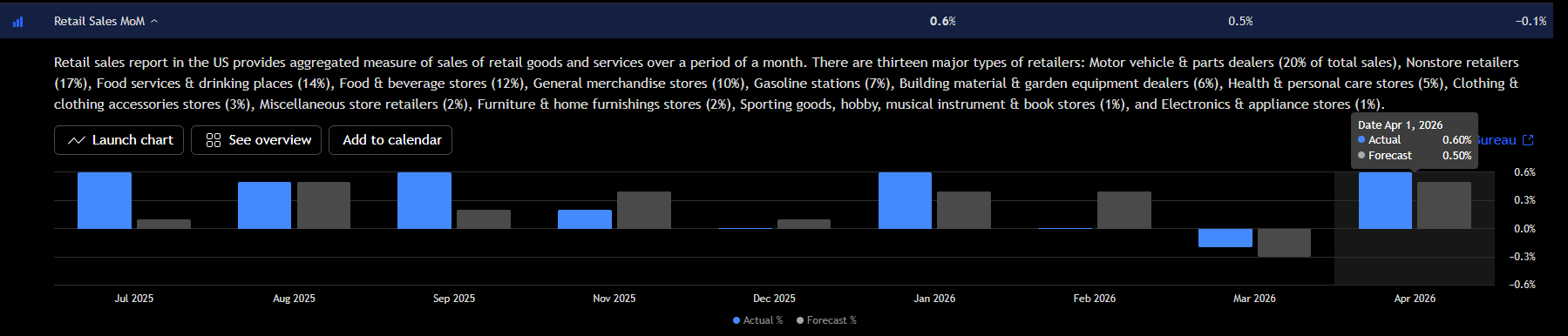
U.S. retail sales rebound in April, led by motor vehicles, department stores, and non-store retail. Source: TradingView
But can households maintain this spending as higher gasoline prices put pressure on their budgets as well as their confidence? The good news is that President Trump and Secretary of State Marco Rubio are saying that the Iran war’s end could be near. Further guidance is expected to be provided by the President where he will address the country at 9 p.m. E.T.
S&P 500 Medium-Term Technical Outlook: 6,700 Resistance in Focus
SPX broke below the longer-term support of 6,460 at the end of March 2026. The Index has declined 10% high to low, which is a back of the envelope correction. A more sturdier rule is from the high to the close (which is about 9.64%). So all in all it is a severe pullback.
Nonetheless, based on the Dual Supertrend the medium term trend of the SPX is negative. The Index needs to end the week above 6,700 to get lower ATR back into a positive trend. When taking into consideration the seasonality of April, this move seems likely during the month. The next observed levels of resistance for the Index in the medium term appears to be the 7,014 level and the higher ATR Supertrend of about 7,125.
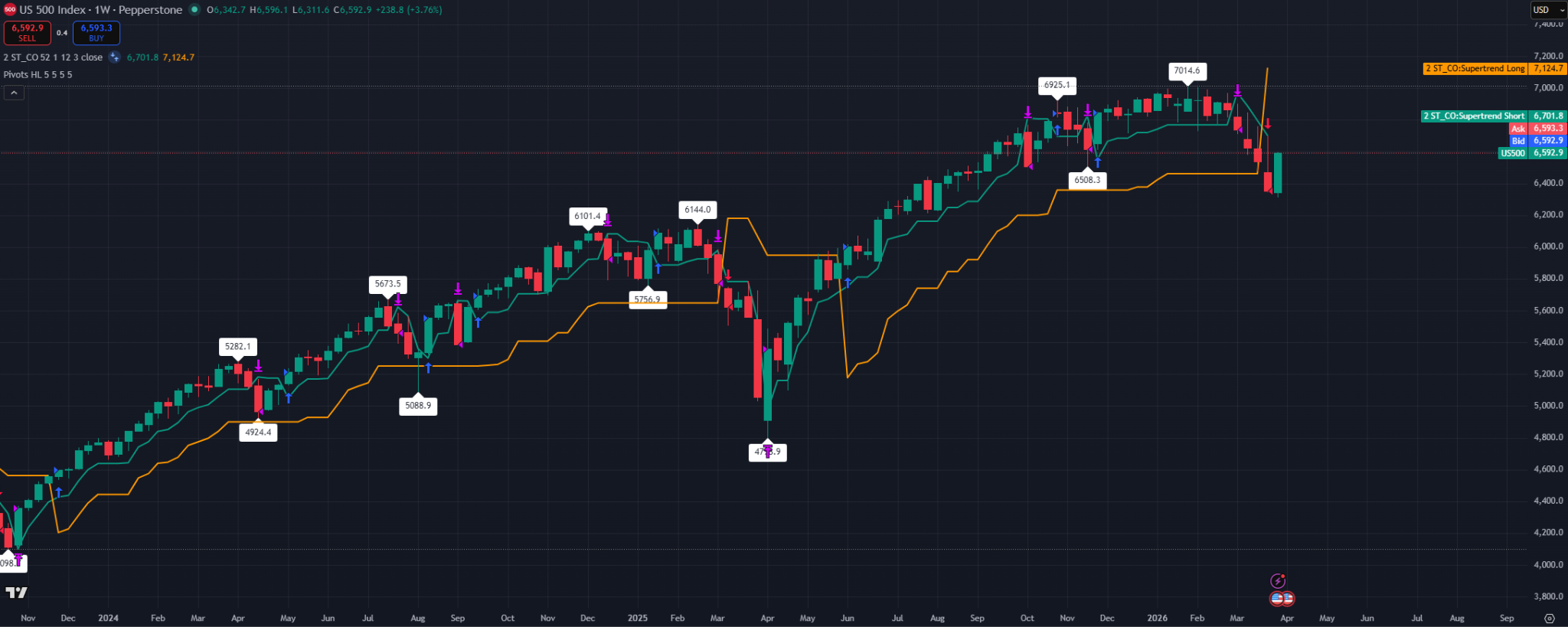
Medium-term SPX setup shows 6,700 as the key trigger level, with resistance near 7,014 and 7,125. Source: TradingView
On the daily timeframe momentum is clearly on the downside. However, at the time of writing the price is rebounding and is looking to test the 21-EMA at 6,614 which keeps the near-term technical tone cautious rather than fully constructive. The RSI came out of oversold and is aiming to cross over the bullish 50 level over the next couple of trading sessions.
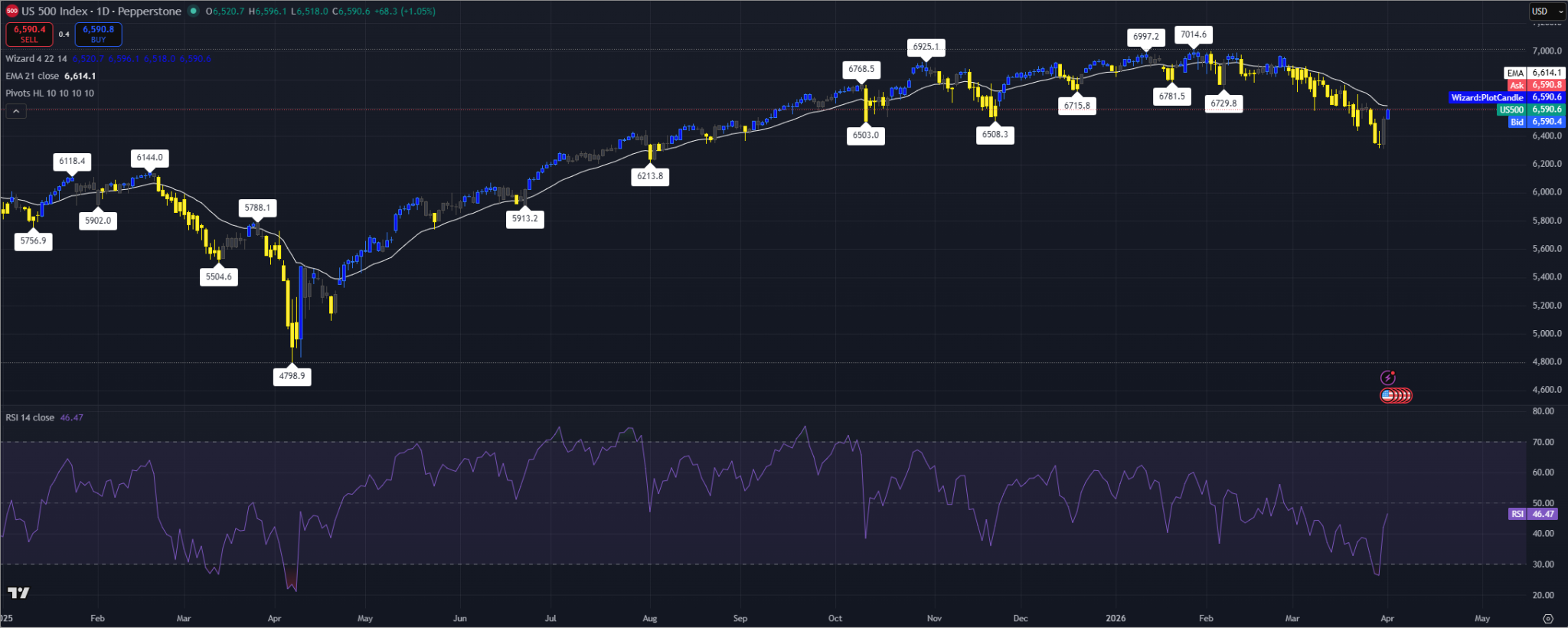
Daily SPX chart shows price rebounding toward the 21-EMA as RSI recovers from oversold territory. Source: TradingView
S&P 500 Renko Chart Analysis: Short-Term Rebound Looks Overextended
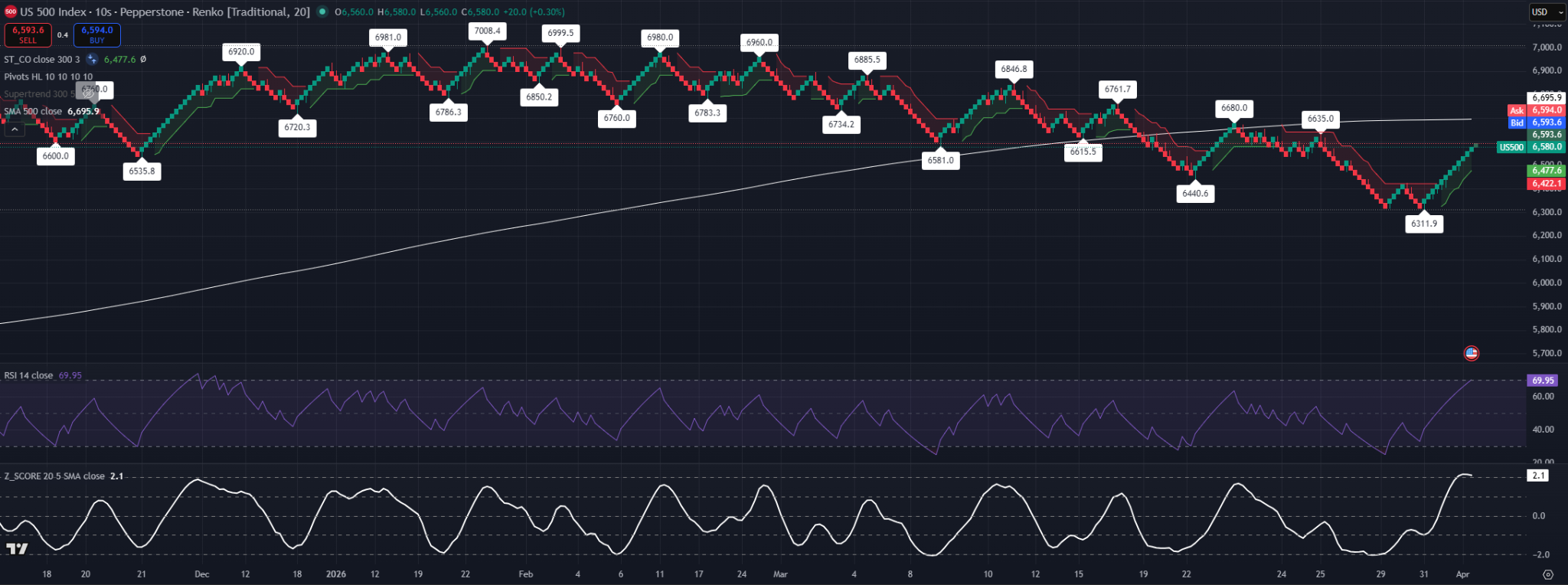
20-brick Renko chart shows SPX rebounding from 6,311.9 but nearing a stretched short-term zone. Source: TradingView
The 20-brick Renko chart also captures the SPX attempting to make a forceful short-term rebound back above trend after a pronounced downswing. Indeed, there was a sharp recovery from the 6,311.9 low and the Index is now pushing back toward the 6,700 area. But it seems that, from the RSI and the SMA of SPX’s Z-score, the upmove is very stretched in the near term and may lose some steam. Clearly the buyers have regained initiative, yet the test is whether this burst of momentum can mature into sustained control and not exhaust itself just as it approaches a meaningful resistance zone.
S&P 500 Forecast: Key Levels and the Medium-Term Path for SPX
New month and new upswing for SPX. Still, 6,700 needs to be broken above by the Index for a more sustainable move in the medium term.
- Current Trend: Bearish
- Bias: Negative
- Key Support Levels: 6,310, 6,210
- Key Resistance Levels: 6,700, 7,015
Medium-Term Path: SPX requires a weekly close above the 6,700 zone to change the bias from negative to neutral. If that level is rejected, the move likely remains a countertrend bounce within a still bearish medium term market structure, with downside risk rotating back toward 6,310 and then possibly 6,210.