


Dow Drops 600 Points on Iran and Inflation
The Dow Jones Industrial Average is down 494.32 points at the mid-session Wednesday, trading at 50,377.79, off 0.97%. The S&P 500 has fallen 55.88 points to 7,330.77, down 0.76%. The Nasdaq Composite is off 268.01 points to 25,410.82, down 1.04%.
President Donald Trump warned Iran that it had “taken too long to negotiate a deal” and “now they will have to pay the price.” West Texas Intermediate crude oil futures climbed more than 1% to around $89 a barrel on the threat.
The Consumer Price Index headline number crossed above 4% for the first time in three years. Chips are selling off for the fourth session in five. Three forces hitting the market at the same time and none of them are resolved.
Daily S&P 500 Index (SPX) Technical Analysis
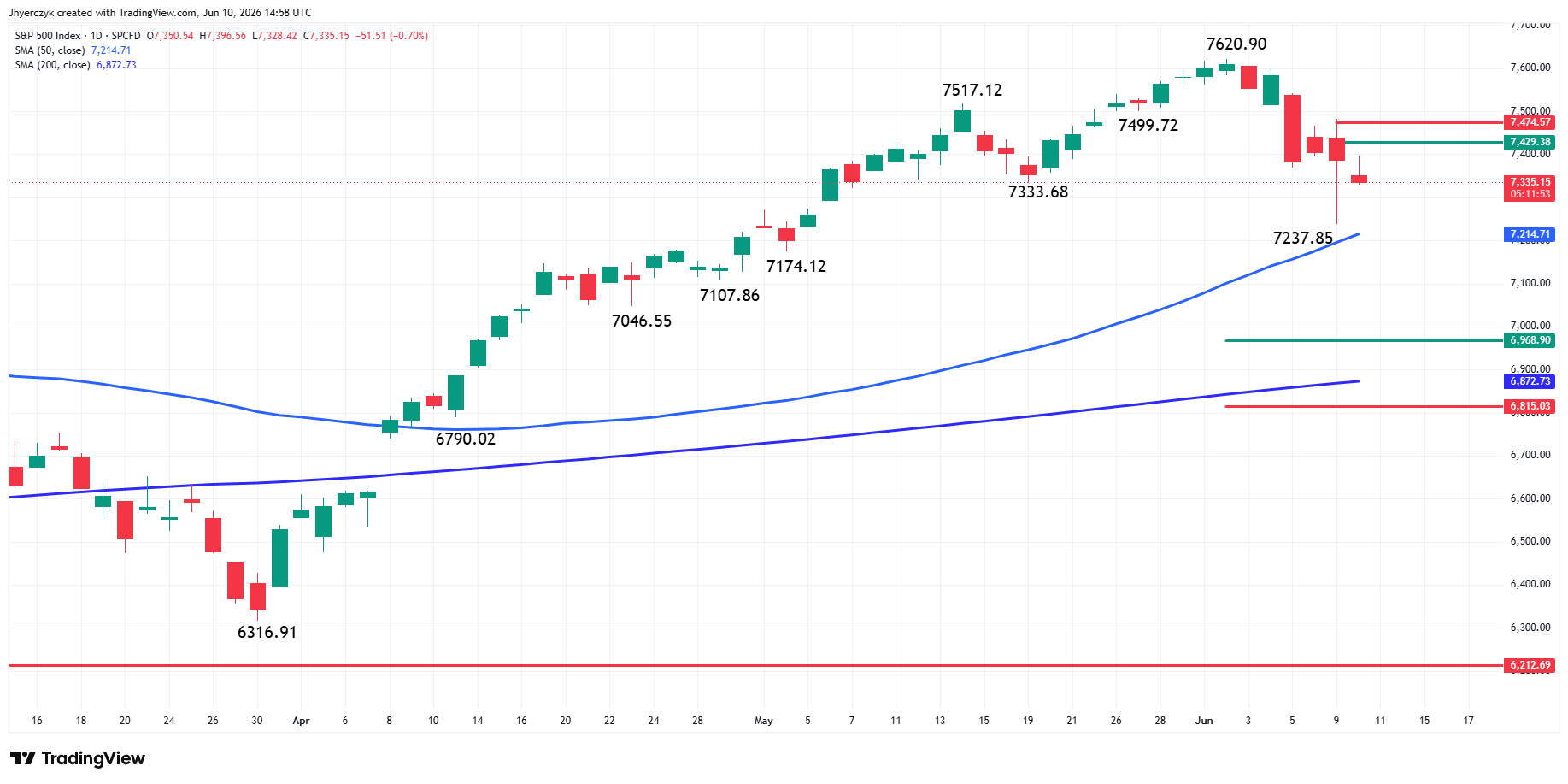
The benchmark S&P 500 Index (SPX) is in a downtrend now that it has taken out the swing bottom at 7333.68. But that doesn’t mean it can’t rebound, over the short run, in order to solidify the top with the formation of a secondary lower top.
The short-term range is 7620.90 to 7237.85. Its retracement zone at 7429.38 to 7474.57 is the primary upside target. With the main trend down, I expect to see new short-sellers emerge on a test of this area. If they do, then look for a subsequent break through 7237.85 to confirm the formation of a secondary lower top.
On the downside, the first target is the 50-day moving average at 7214.46. We could see a technical bounce on the first test of this indicator. But if it fails to hold, then look for a possible acceleration to the downside with the long-term retracement zone at 6968.90 to 6815.03 the primary downside target along with the 200-day MA at 6872.66.
On the upside, a sustained move over 7474.57 will be a sign of strength. It will also put 7620.90 on the radar.
S&P 500 Price Forecast
Every new S&P 500 analysis as it publishes, today's technical signal and key levels, live price — on one page.
See all S&P 500 forecastsTrump Escalation Pushes Crude Oil Higher
President Donald Trump posted on social media that Iran had “taken too long to negotiate a deal that would have been great for them” and warned they would “have to pay the price.” That came after U.S. forces carried out strikes against Iran in response to the reported downing of a U.S. Army Apache helicopter. Tuesday’s deal talk is gone. Wednesday’s tone is military, not diplomatic.
West Texas Intermediate crude oil futures are up more than 1%, trading around $89 a barrel. Rising crude oil adds to the inflation picture that is already running above the Federal Reserve’s comfort zone. The Consumer Price Index just printed above 4% on the headline. Higher energy costs feed into transportation, manufacturing, and consumer prices across the economy. The timing could not be worse for a market that needed the inflation story to improve, not deteriorate.
Chips Are Selling Off Again
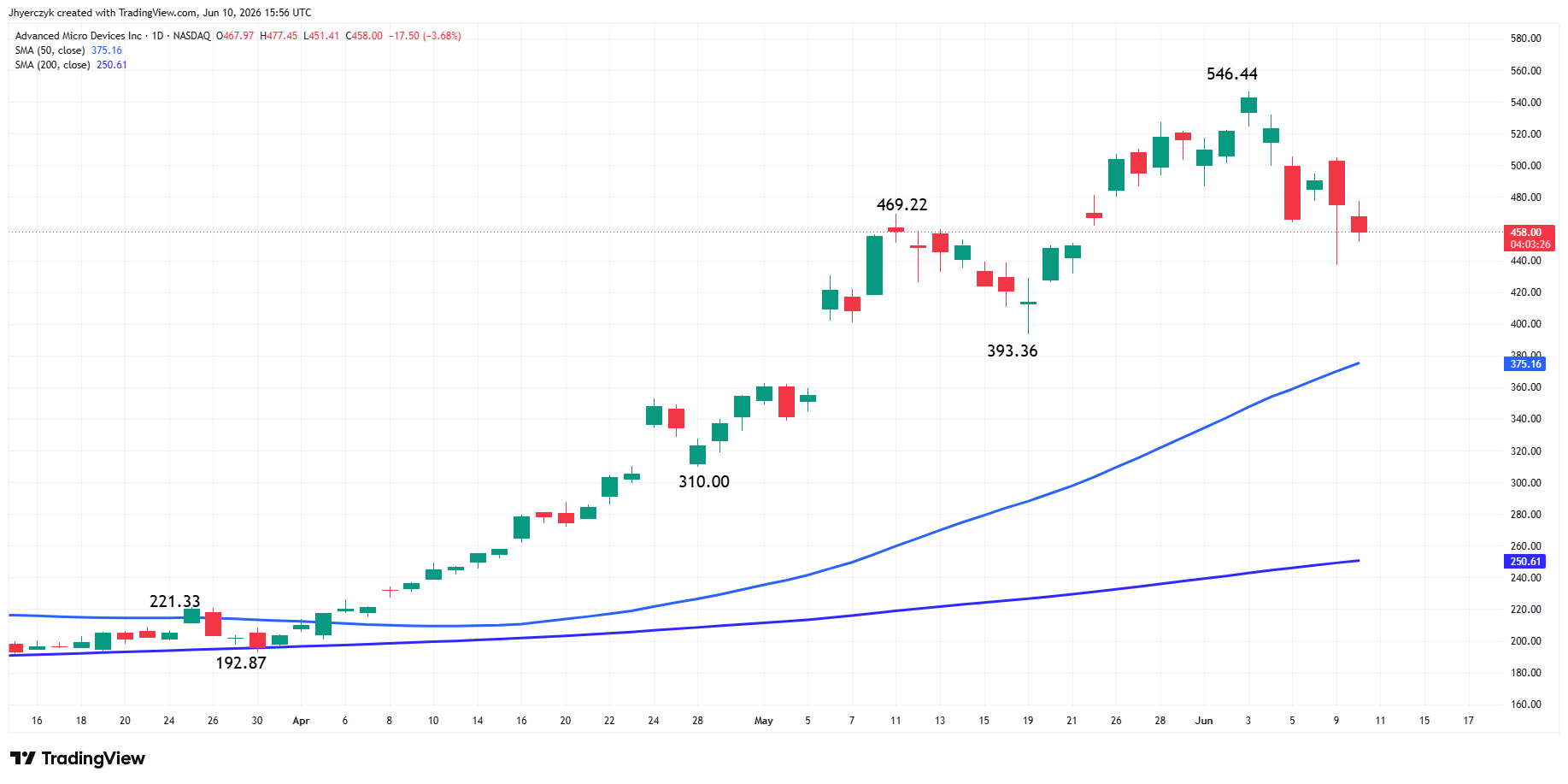
Advanced Micro Devices and Broadcom are both lower again Wednesday. That is four losses in the last five sessions for both names. The iShares Semiconductor ETF dropped 10% on Friday, bounced Monday, and has been giving it back ever since. The sector is up more than 87% on the year. The gains are still enormous. The selling is coming from traders who own those gains and are deciding to protect them.
SpaceX is expected to price its initial public offering Friday. Some of the chip selling is accounts raising cash for the allocation. Some of it is profit-taking after a rally that stretched valuations past what the next round of guidance can support. Both forces are working against semiconductor stocks at the same time. The artificial intelligence spending story has not changed. The willingness to pay these prices for it has.
Core CPI Gave the Market a Brief Reprieve
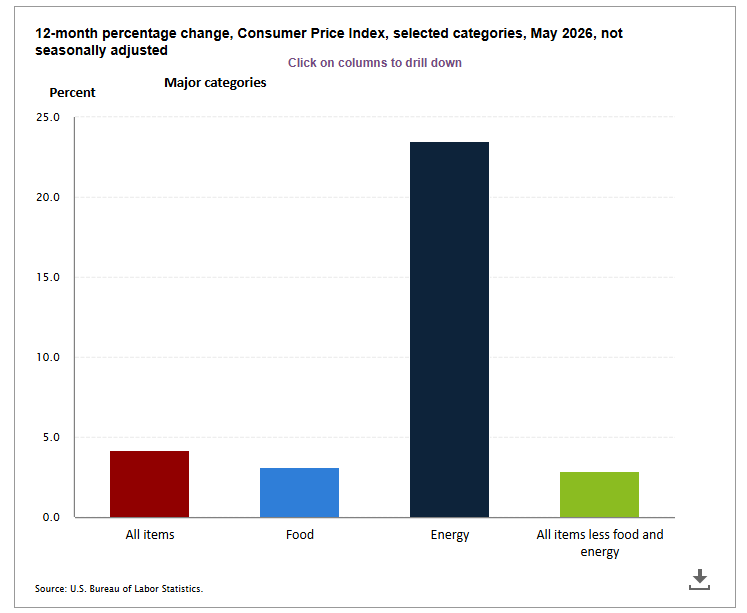
The S&P 500 bounced off its session lows after the core Consumer Price Index came in softer than expected. Core prices rose 0.2% in May. The Street expected 0.3%. Annual core inflation hit 2.9%, matching forecasts. That monthly number gave the market a reason to stop selling for a few minutes.
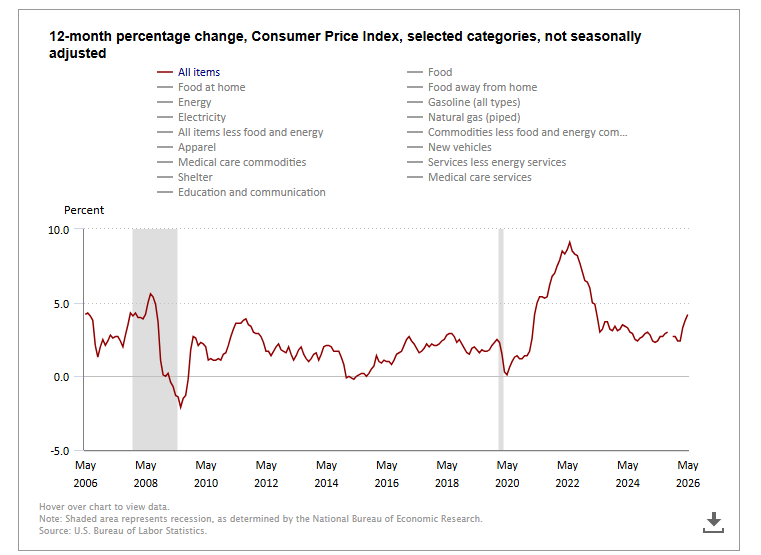
The relief did not last. Headline inflation crossed above 4% for the first time in three years. Energy costs drove it. The Federal Reserve watches core inflation closely but the headlines still move sentiment. Annual inflation above 4% with crude oil rising on military escalation is not a combination that supports risk assets. The rate hike trade at 70% probability for December is not going away on a 0.1% beat in the core number.
Stocks in the News
Cracker Barrel is surging nearly 11% after raising its full-year outlook. Quarterly results beat expectations. The stock is the best performer on the session.
Chewy gained 4% on a quarterly beat. Consumer spending at the pet retailer is holding up despite the broader market pullback.
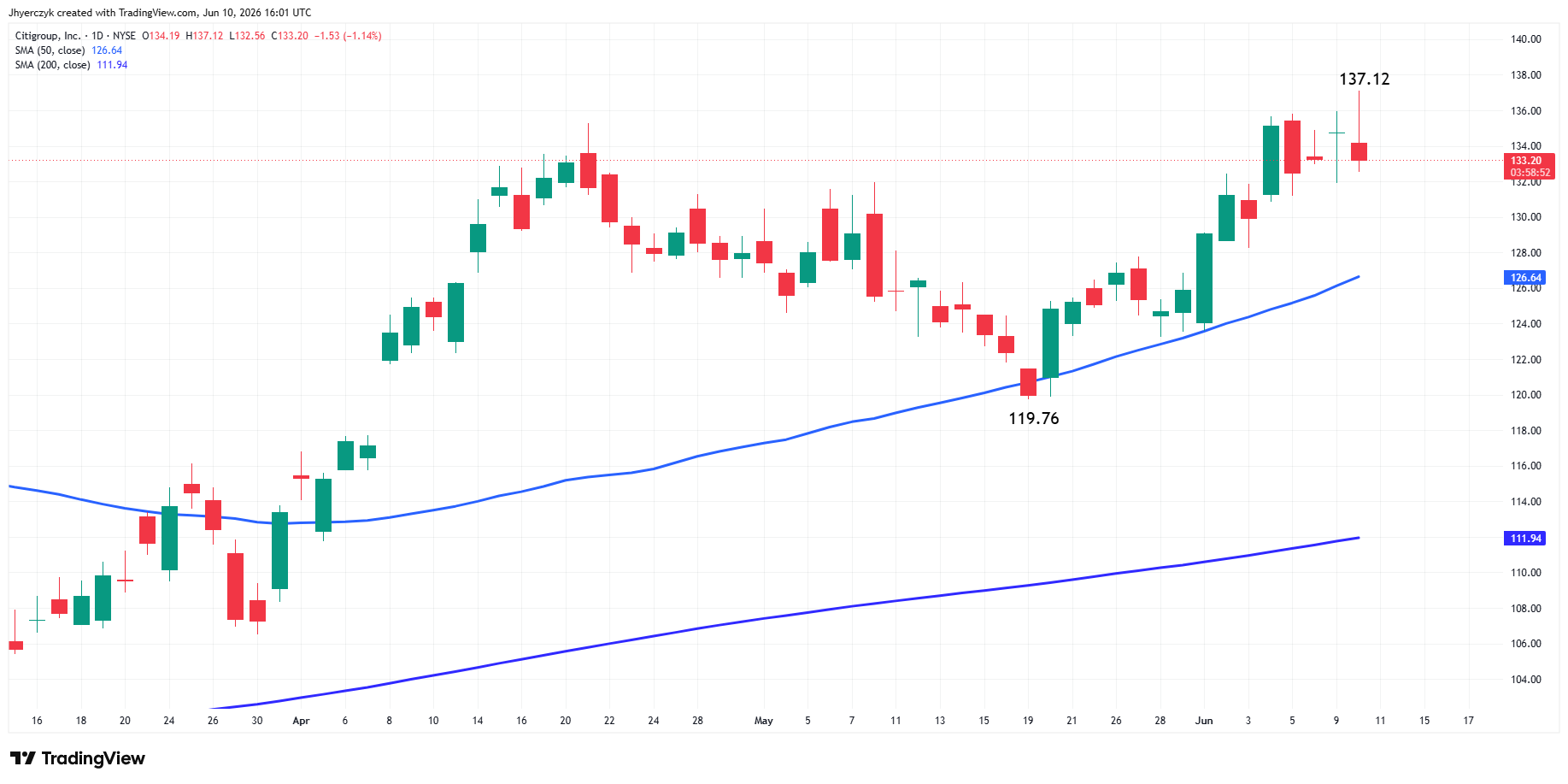
Citigroup is edging higher after President Donald Trump praised the bank and its leadership on social media. The endorsement is giving the stock a bid that its banking peers are not getting.
Super Micro Computer has dropped 12% after announcing plans to raise $7 billion through equity-related deals for hardware purchases. Dilution risk is driving the selling.
Nike is off nearly 2% after RBC downgraded the stock, citing a turnaround that is moving slower than expected.
Cava picked up 1% after UBS upgraded the fast-casual restaurant chain to a buy.
Oracle has fallen 3.3% ahead of its earnings report. Traders are reducing exposure before the numbers hit.
What to Watch
President Donald Trump’s warning to Iran has crude oil moving higher. The diplomatic path from earlier this week is gone. That puts inflation pressure back on a market that just saw the headline Consumer Price Index cross above 4% for the first time in three years. The core number came in below expectations but the headline is what traders are reacting to. The Producer Price Index Thursday is the next catalyst. A hot print on top of today’s number pushes the rate hike probability past 70%.
Semiconductor stocks are selling off for the fourth session in five. No sustained bounce has held. SpaceX pricing Friday is still pulling institutional capital to the sideline. The artificial intelligence trade is not broken. The willingness to pay current prices for it is fading.
The way I see it, the S&P 500 needs to hold above 7237.85 or the secondary lower top confirms and selling accelerates toward the 50-day moving average at 7214.46. Any bounce into the 7429.38 to 7474.57 zone is where new shorts step in. Until one of these three forces breaks in the bulls’ favor, rallies are exits.
More Information in our Economic Calendar.