


S&P 500 Tests Tuesday’s Low, Buyers Step In
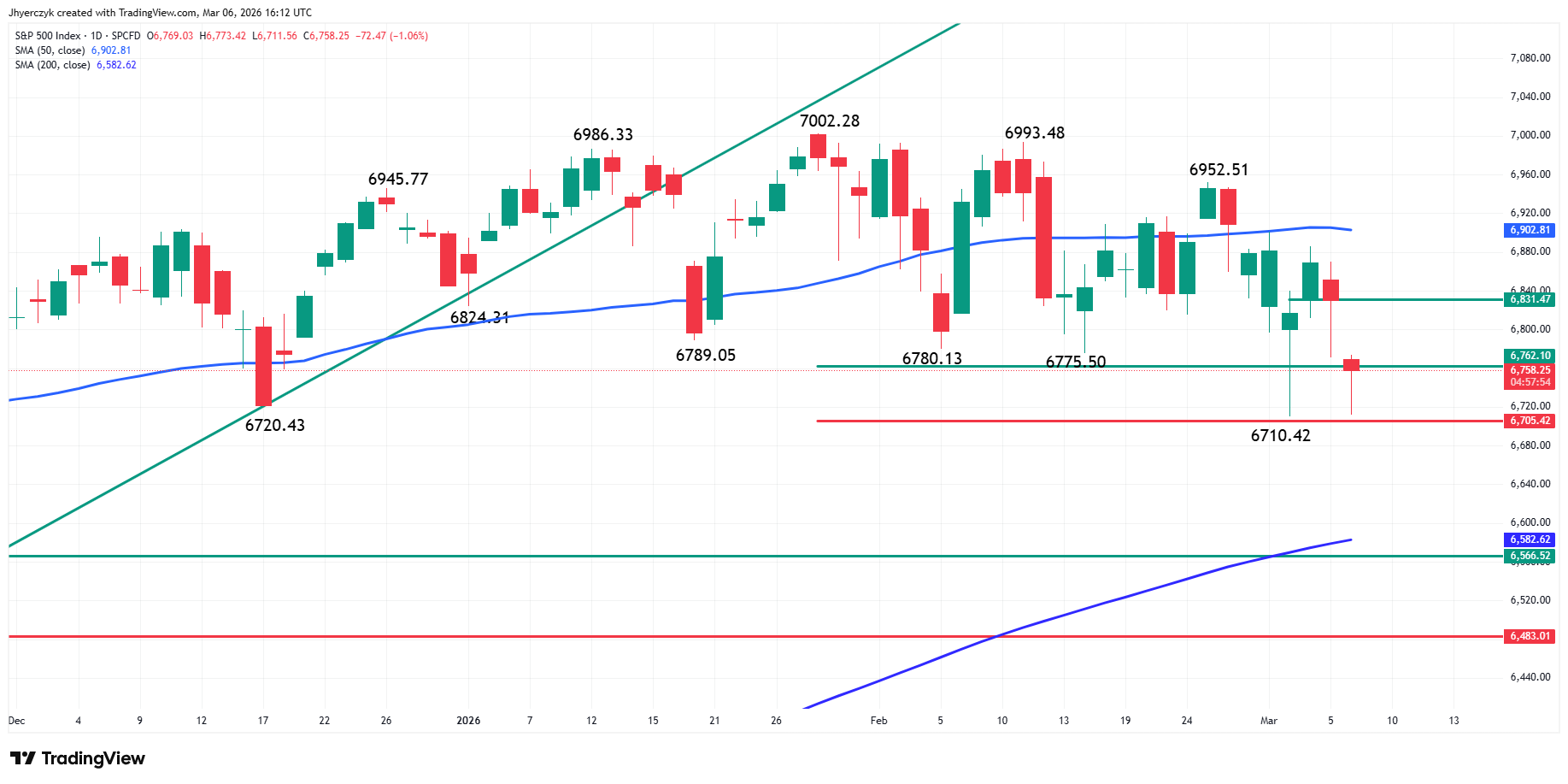
The S&P 500 Index (SPX) is lower on Friday, but attempting to rebound from early session weakness that successfully tested Tuesday’s low at 6,710.42. The intraday low of 6,711.56 also held the Fibonacci support at 6,705.42.
The early price action indicates once again that investors see value on these frequent dips. With the low of the day potentially in place, the focus now shifts to the 50% level at 6,762.10. Overcoming this level will shift intraday momentum to the upside. If it’s strong enough, we could see a drive toward another key pivot at 6,831.47.
Despite today’s attempted turnaround, there is still a lot of work to do before buyers will feel confident enough to overcome and sustain a rally on the bullish side of the 50-day moving average at 6,902.95. Meanwhile, if sellers regain control and push through 6,705.42 support, we could see an acceleration to the downside with the 200-day moving average at 6,582.61 the next major target and value area.
Nasdaq in a Similar Spot
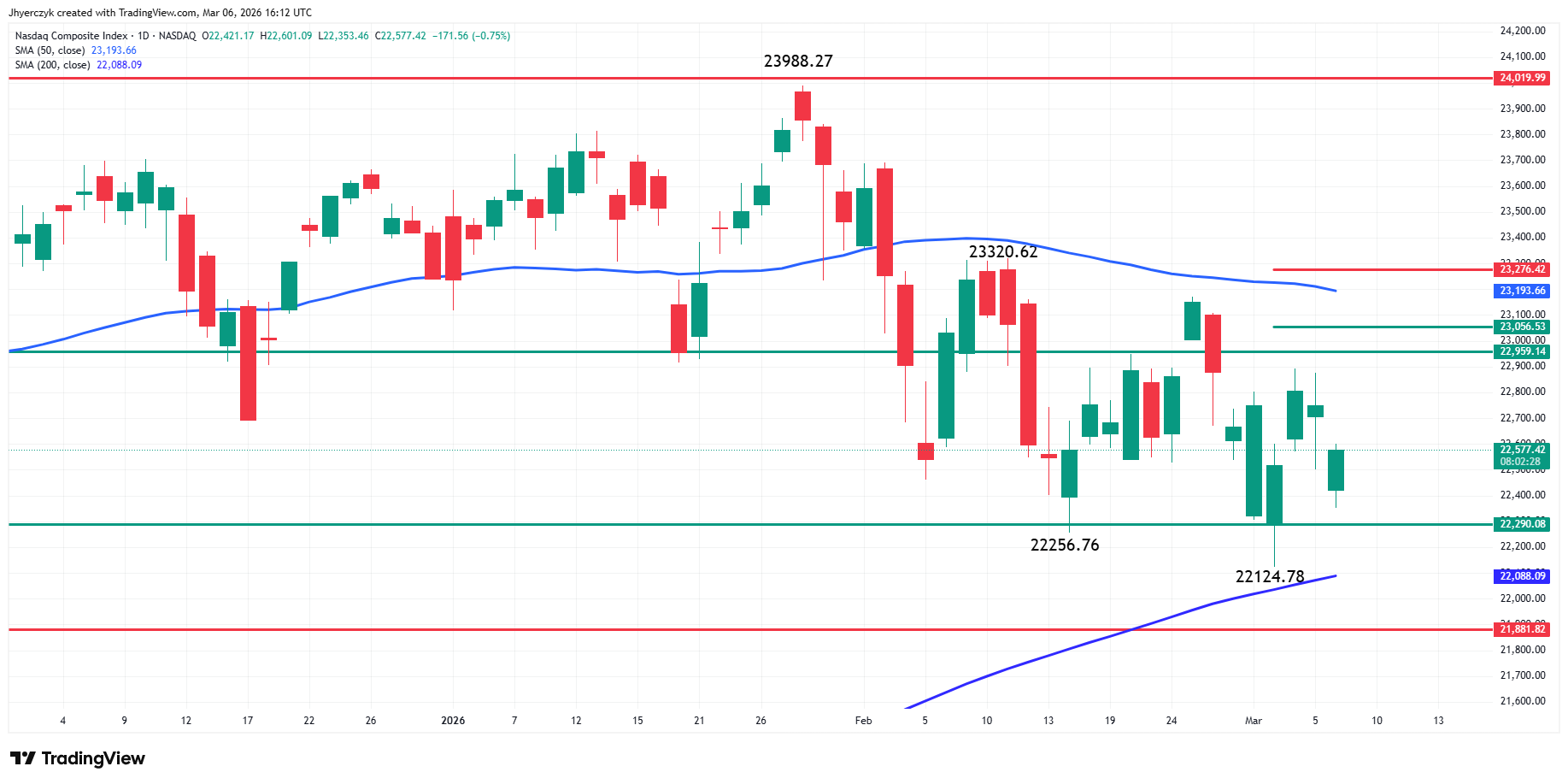
The Nasdaq Composite Index (IXIC) is in a similar position and nearly the same reaction to today’s early sell-off as the S&P 500 Index (SPX).
This morning’s break to 22,353.46 stopped short of the major support zone at 22,290.08 to 21,881.82, which was tested successfully on Tuesday at 22,124.78. Additionally, the 200-day moving average at 22,088.12 continues to serve as a critical downside target and potential support.
Quiet Accumulation May Be Underway
While I can’t call it accumulation yet, the price action suggests that since February 1, investors have been coming in on weakness. This indicates that they still believe in the long-term potential of AI technology stocks and that the Fed rate cuts will eventually generate the momentum needed to overcome resistance.
The index is currently being squeezed by a falling 50-day moving average and a rising 200-day moving average. The tighter this relationship gets, the greater the impact of an eventual breakout.
S&P 500 Price Forecast
Every new S&P 500 analysis as it publishes, today's technical signal and key levels, live price — on one page.
See all S&P 500 forecastsI’m currently leaning to the upside because accumulation may be taking place. I also think the long-term is still bullish and that any spike to the downside will be bought with both hands by the professionals because they have a long-term vision also.
Oil and the War Are Driving the Market Now
Looking ahead, the market appears to be laser focused on the price of oil and the war in the Middle East. Today’s sharp rise in oil prices coupled with President Trump’s comments about not accepting an “unconditional surrender” from Iran have moved the markets more than the weak Non-Farm Payrolls data. This suggests investors are more worried about a prolonged war than about the jobs market.
More Information in our Economic Calendar.