



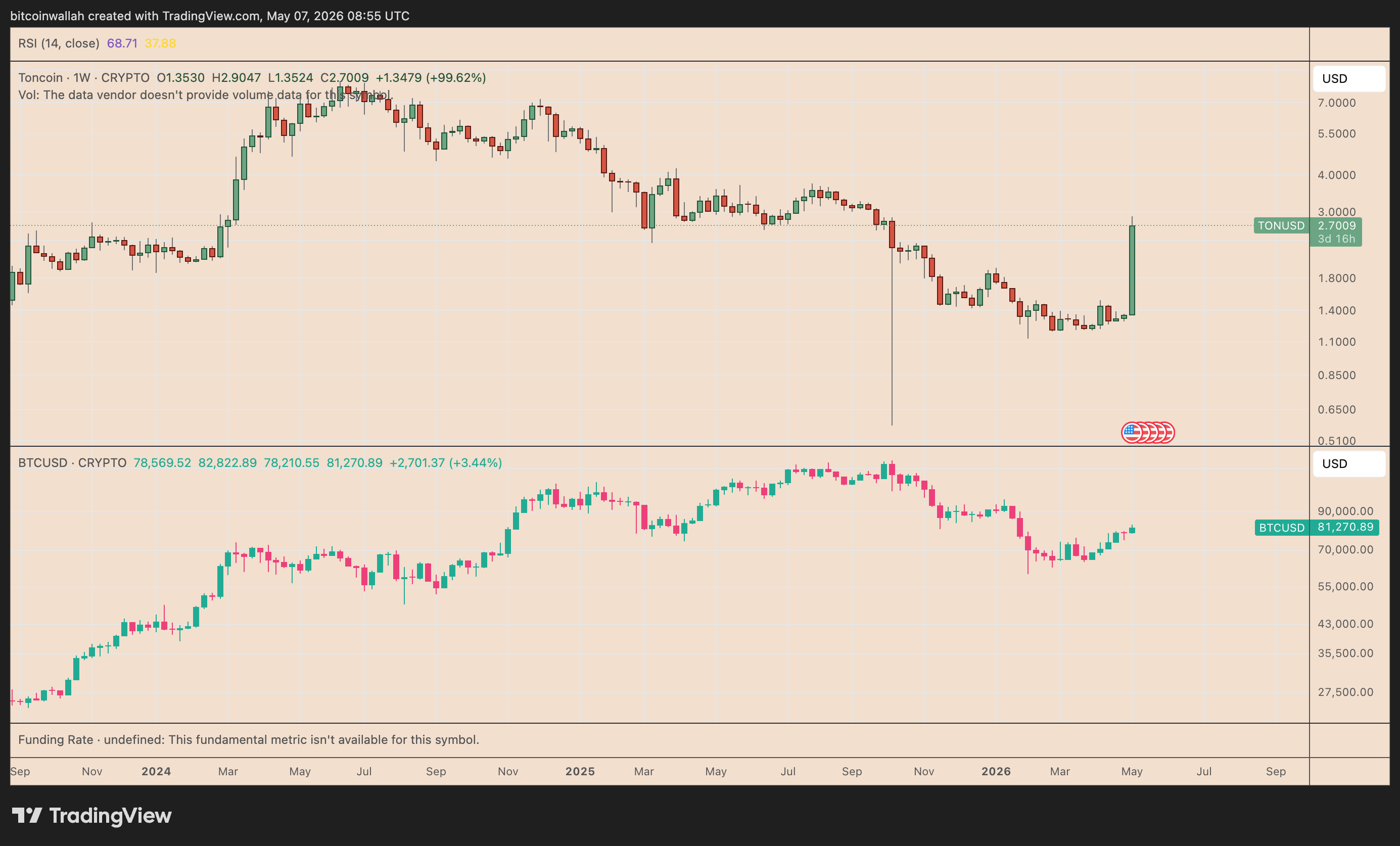
Primary Catalyst: Telegram Officially Takes Control of TON
On May 4, Durov posted that Telegram is replacing the independent TON Foundation as the main driving force behind The Open Network (TON) blockchain and will become its largest validator.
Telegram staked approximately 2.2 million TON to back this shift.
Telegram becoming TON’s largest validator strengthens decentralization.
It lets other major players join the validator pool without centralizing the network — with Telegram as the counterbalance.
📈 More and more TON gets locked in validation as everyone competes for 20%+ APR.
— Pavel Durov (@durov) May 5, 2026
Fees slashed 6x to near-zero (down to roughly $0.0005 per transaction, with many expected to become fee-less effectively). This massively boosts usability for mini-apps, games, payments, and everyday activity inside Telegram’s 950 million user base.
Focus also shifted to “tech superiority,” with a new ton.org website, improved developer tools, and performance enhancements (building on recent Catchain upgrades for faster blocks) rolling out in 2–3 weeks.
The market viewed this as Telegram going “all-in” on TON — turning it from a semi-independent project into one directly powered and validated by the messaging giant.
This removed governance uncertainty and signaled huge potential for real-world adoption among non-crypto users.
Risks remain (e.g., increased centralization concerns, reliance on one platform, and overall crypto volatility), but the announcement was priced in as a major positive governance and adoption signal.
TON/USD Weekly Price Outlook: Major Crash Warning
TON’s rally may be impressive, but the broader chart structure still leans bearish unless bulls reclaim key resistance levels soon.
The token remains trapped below a multi-year descending trendline that has capped every major recovery attempt since the 2024 peak.
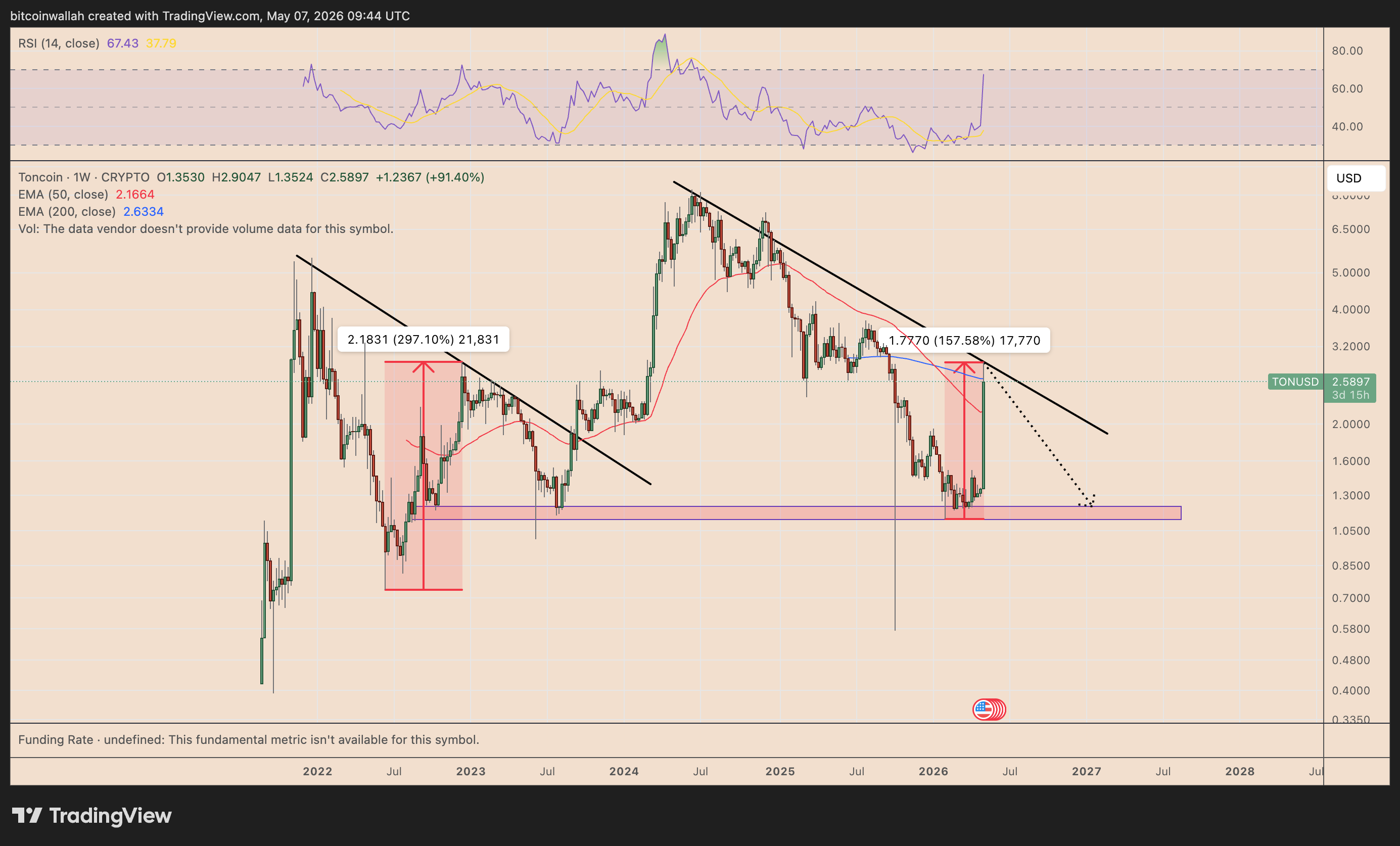
The current rebound has now pushed the price directly into this resistance area near $2.80–$3.20, while the 200-week exponential moving average (200-week EMA; the blue wave) around $2.63 is also acting as overhead pressure.
In technical analysis, such confluence zones often trigger profit-taking and renewed selling activity, especially during broader bear-market structures.
The setup resembles TON’s previous relief rallies that initially looked bullish but later rolled over into deeper declines.
If the descending trendline rejects price again, TON risks forming another lower high, a classic bearish continuation signal. That scenario could send the price back toward the long-term support zone near $1.05–$1.20, implying a potential 50% decline from current levels.
Conversely, a breakout above the descending trendline may invalidate the bearish setup altogether, sending the price toward $3.78, which aligns with the 0.382 Fibonacci retracement level.
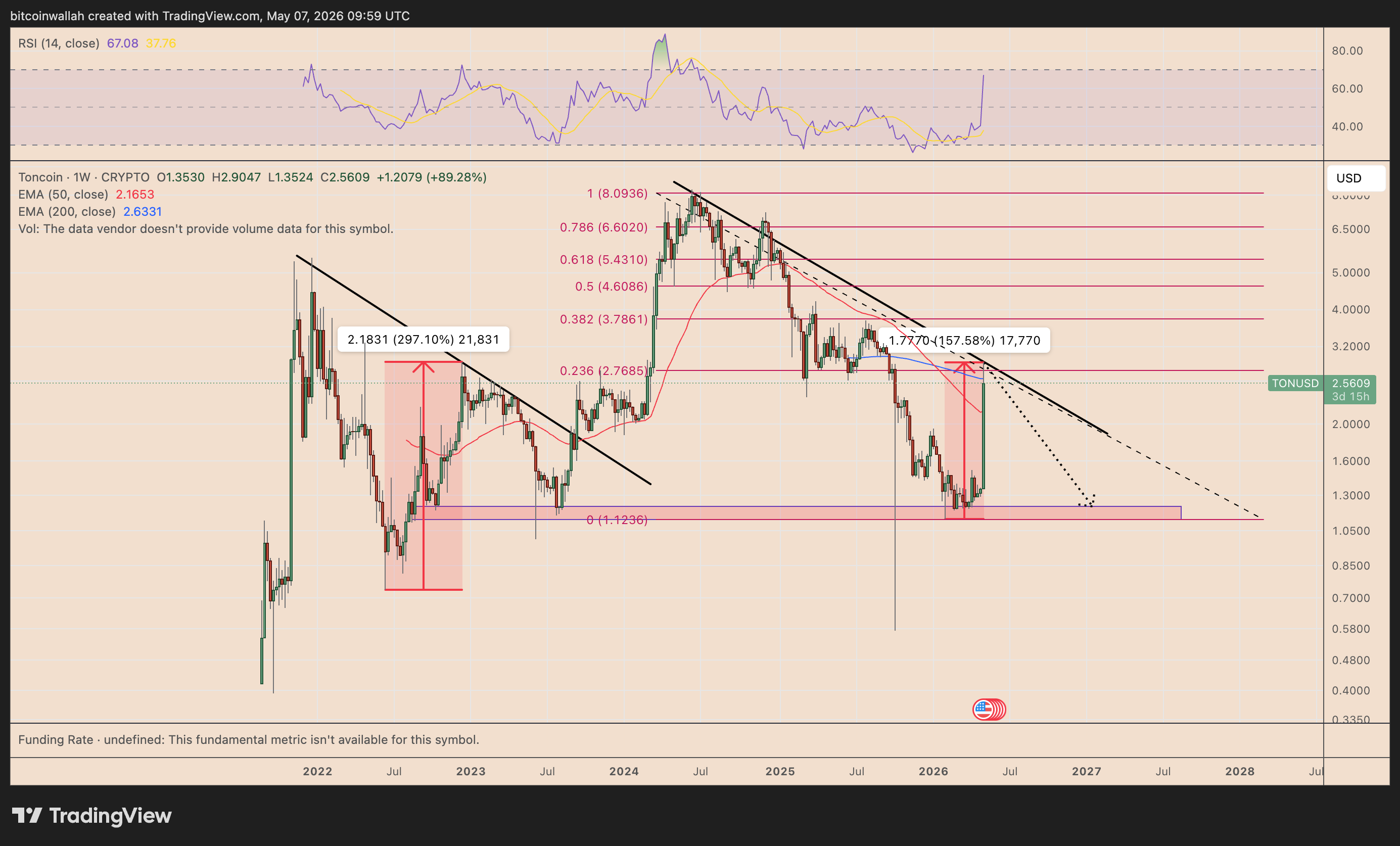
Analyst Karan Singh Arora said in a X post that TON must break above the $2.60-$2.80 resistance zone to extend its bullish outlook.
“A successful hold and retest above this area could open the path toward the next key level around $3.70,” he wrote, adding:
“If momentum weakens, first support sits near $2.35. Losing that level could send $TON back toward the broader demand zone around $1.90, which remains the key higher timeframe support.”
Can TON Outperform Bitcoin Any Further?
TON’s sharp rebound against Bitcoin may be losing momentum as the pair runs into a critical resistance zone near the 100-week EMA (purple wave).
The TON/BTC pair has already started weakening after touching the moving average, suggesting bulls are struggling to sustain the breakout.
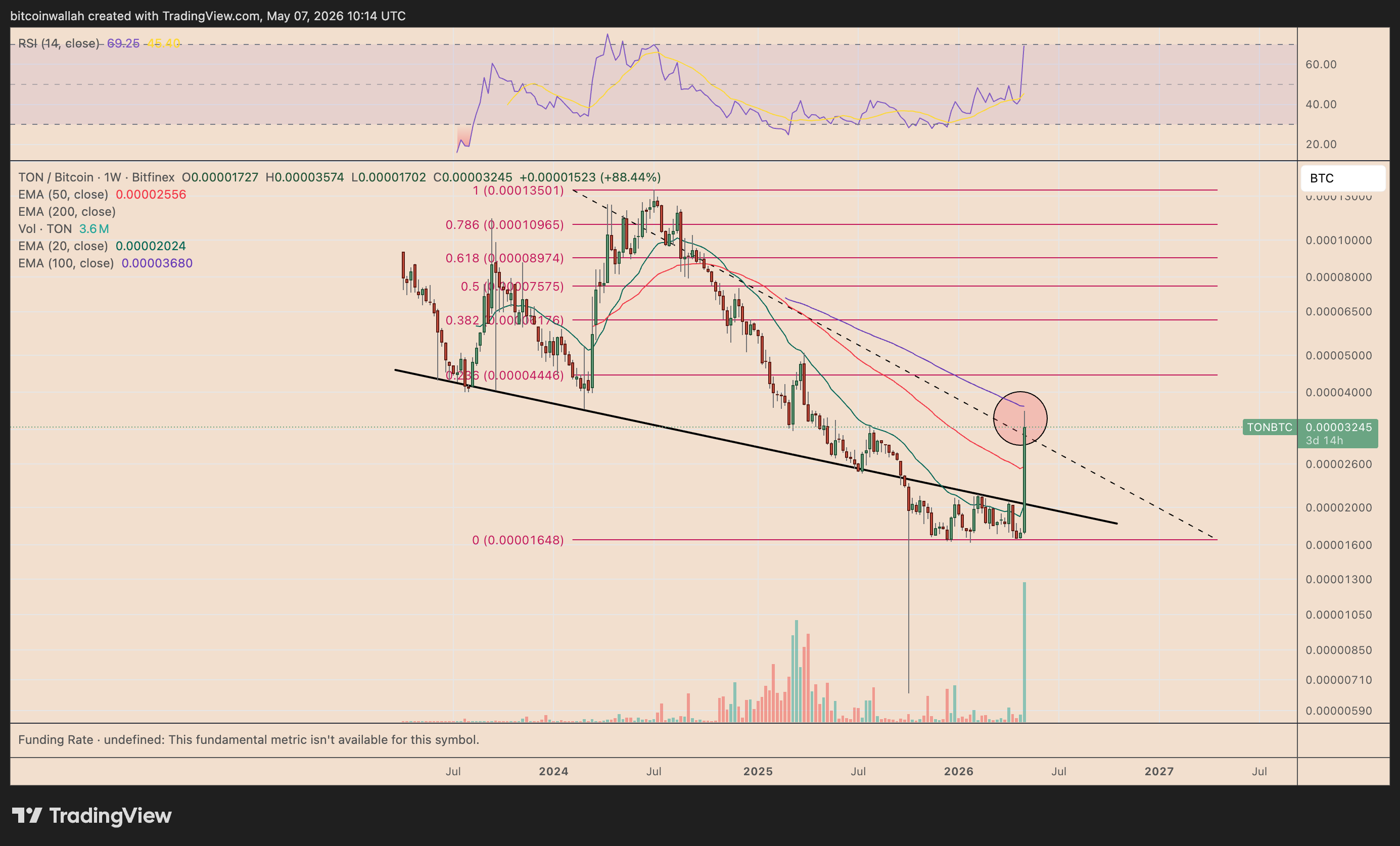
From a technical perspective, the rejection risks sending TON lower toward its prevailing descending trendline support, which aligns closely with the 0.0 Fibonacci retracement level near 0.00001648 BTC.
Such a move would imply that TON’s recent 88% rebound versus Bitcoin was merely a relief rally inside a broader downtrend.
Still, the bearish outlook could weaken if TON decisively breaks above the 100-week EMA resistance.
In that scenario, the pair may extend its recovery toward the 0.236 Fibonacci retracement line near 0.00004446 BTC, representing another major upside target for TON bulls.