
U.S. Dollar Index Drops for Fourth Straight Session as Bears Take Control
The U.S. Dollar Index is down for a fourth straight session on Tuesday after crossing to the bearish side of the 50-day moving average at 98.686 and the 200-day moving average at 98.512. Both indicators are now resistance. The trend is down based on three metrics, a failed uptrend line, the main swing chart and now the moving averages.

Technical Outlook
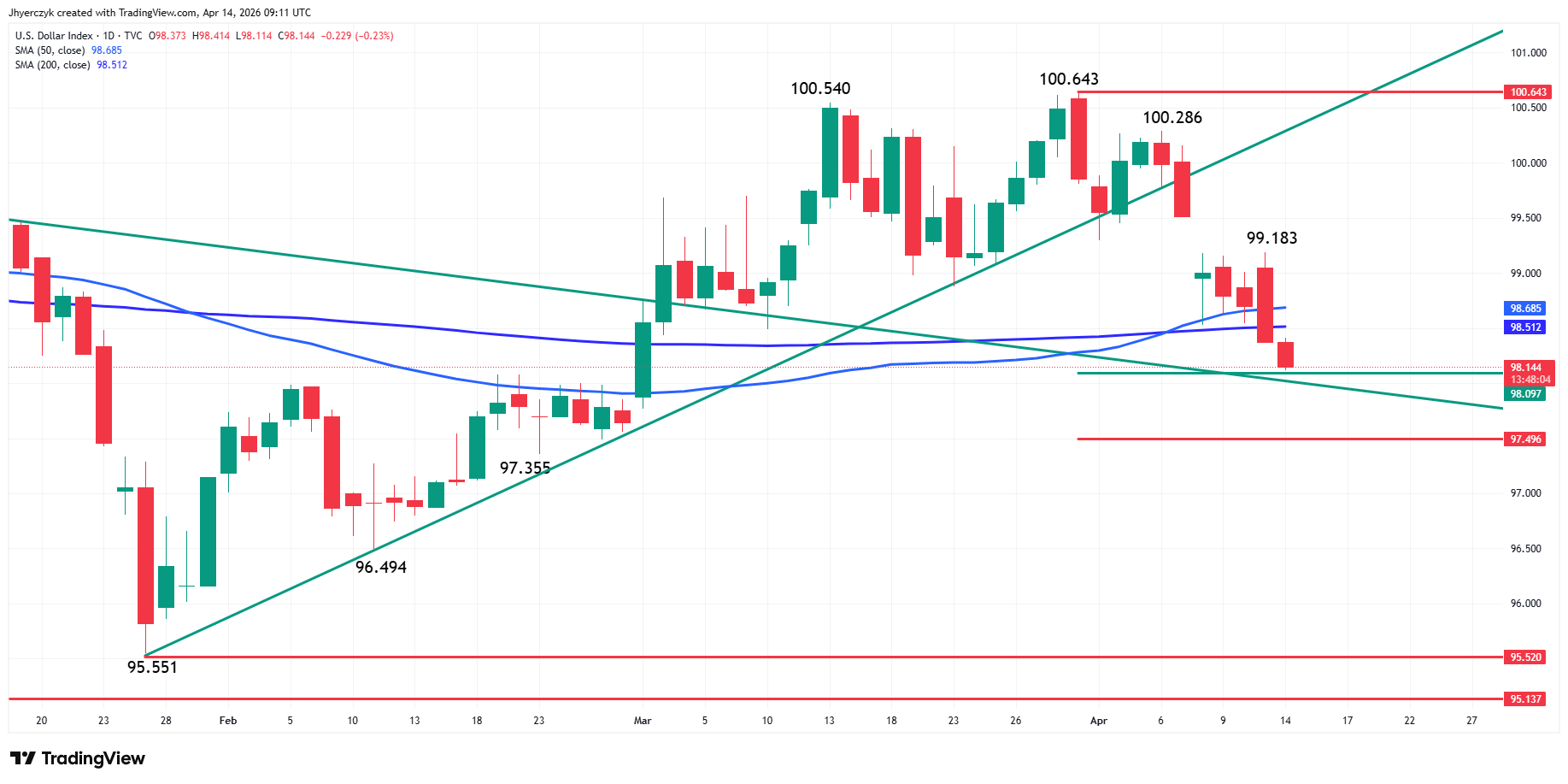
The main range was formed by the January 27 main bottom at 95.551 and the March 31 main top at 100.643. Its 50% to 61.8% retracement zone at 98.097 to 97.496 is the primary downside target. Today’s early session low is just above this area.
Trader reaction to this zone is likely to determine the near-term direction of the market. On the first test, we could see enough aggressive counter-trend buying to produce a strong short-covering rally. If there is enough upside momentum, traders could attempt to overcome the moving averages in an effort to try to resume the uptrend.
On the flipside, if the selling is strong enough to drive through the bottom of the retracement zone at 97.496, we could see an acceleration to the downside and an eventual move to at least 95.520 to 95.137.
Blockade Adds Pressure but Ongoing Talks Are Keeping the Fear Trade in Check
The U.S. Dollar Index moved lower Tuesday as traders balanced the naval blockade of Iranian shipping against the fact that talks between Washington and Tehran are still ongoing. The blockade raised supply concerns and conflict risk. The continued diplomacy took the edge off the safe-haven bid that would normally push the dollar higher in a situation like this. The result is a dollar that keeps drifting lower without the sharp spike you’d expect from a full-blown crisis.
EUR/USD Price Forecast
Every new EUR/USD analysis as it publishes, today's technical signal and key levels, live price — on one page.
See all EUR/USD forecastsEuro, Yen and Pound All Gaining Ground
The euro, Japanese yen and British pound all rose against the U.S. Dollar Index. The yen is attracting stability seekers even with reduced expectations for Bank of Japan rate hikes in the near term. When all three major pairs are gaining on the dollar at the same time, that’s broad-based selling and it’s what’s driving the index toward the key retracement zone.
Outlook
The short-term direction comes down to how the geopolitical situation develops and whether rate expectations shift. Right now both are working against the dollar. The retracement zone at 98.097 to 97.496 is the level to watch. How traders respond on the first test will tell you whether this is a correction or the start of a deeper move.
More Information in our Economic Calendar.