Dollar Edges Higher as Risks Return to the Middle East
The risks returned to the Middle East on Wednesday after a two-day reprieve and investors responded by buying U.S. Dollars. I don’t think we’re looking at clean safe-haven buying, however. I think that buyers are taking into consideration like higher inflation reduces the odds of a Fed rate cut and that the U.S. economy will fare better than other countries if there is an oil shock because the U.S. is the biggest exporter of crude oil.
At 19:25 GMT, DXY is trading 99.241, up 0.326 or +0.33%.

The Treasury Yield Connection
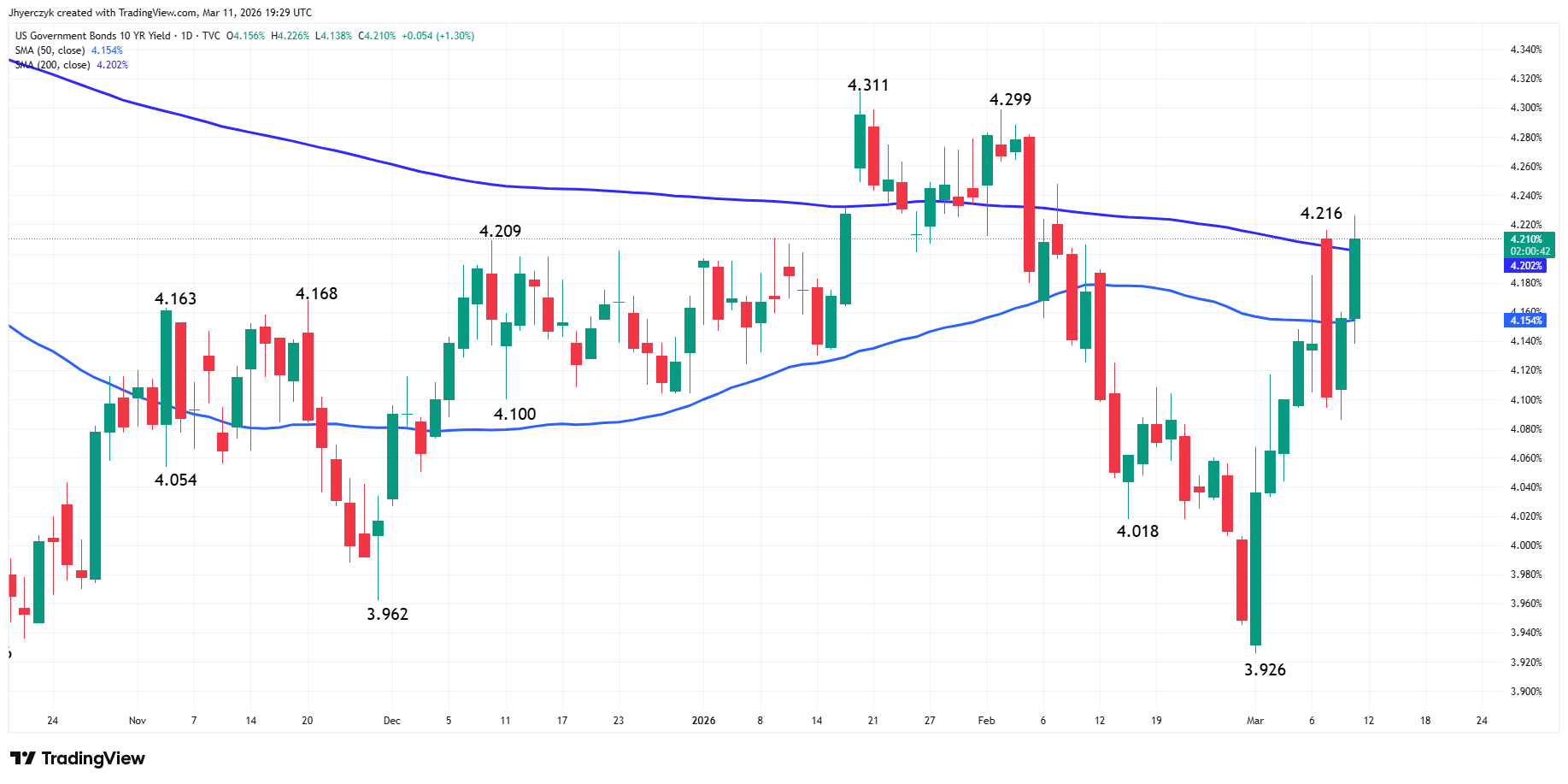
Since the war started on February 28, Treasury yields and the U.S. Dollar have risen, which is kind of unusual because if it was purely driven by safe-haven buying, yields would have gone down as demand for bonds rose. Global investors would’ve have also bought other traditional safe-havens like the dollar, Japanese Yen and Swiss Franc.
The rise in Treasury yields is being fueled by fears of higher inflation and future Fed rate cut delays. If inflation is rising or going to spike higher in the near future or even if inflation expectations rise, the Fed’s normal response would be to hike rates. But with the latest nonfarm payrolls report coming in weak with a drop in jobs and a rise in the unemployment rate, the Fed’s hands may be tied.
Rate Cut Pushed to July
The latest CME FedWatch Tool reading shows that traders have pushed the first rate cut in 2026 into July. This means Treasury investors are asking for higher rates and the dollar is rising because previous short-sellers are now dumping positions to reflect the later or perhaps a reduced number of rate cuts.
$100 Oil Is the Key Level
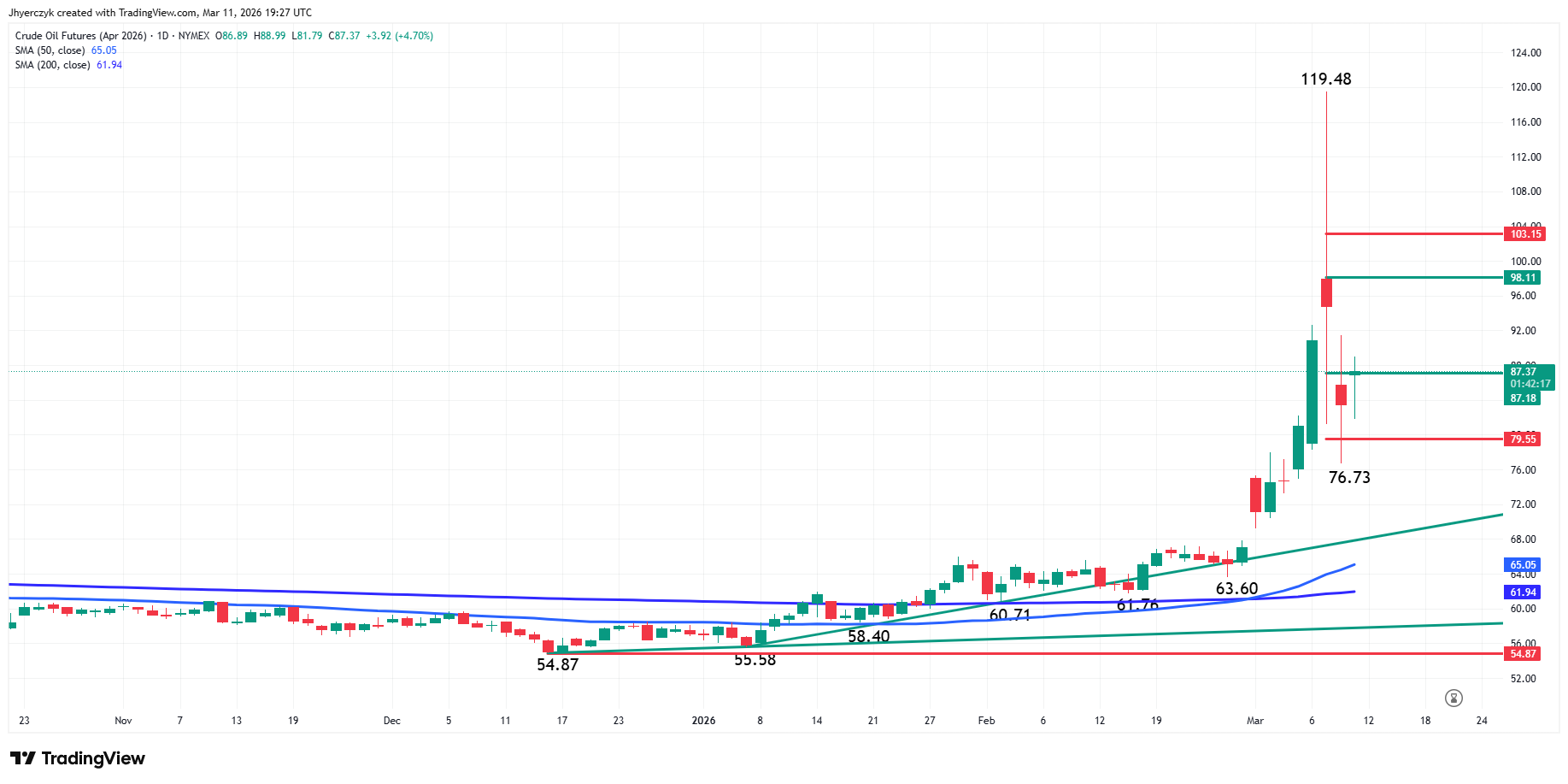
All of this is taking place because of the war in the Middle East and high crude oil prices. Monday’s sharp rally to nearly $120 per barrel by crude oil and subsequent sell-off has put crude oil back below the key $100 level. A prolonged move over this level will hurt the global economy. Growth will weaken, inflation will rise and some central banks will be forced to raise rates. These are all bearish influences, but the resilient U.S. Dollar is likely to attract buyers.
EUR/USD Price Forecast
Every new EUR/USD analysis as it publishes, today's technical signal and key levels, live price — on one page.
See all EUR/USD forecastsThe optimism that pushed crude oil prices lower on Monday and capped the U.S. Dollar appears to be waning, giving the greenback some support. The key level to watch today in crude oil is $87.18. Any late session surge above this level is likely to push the dollar higher into the close on Wednesday.
The Technical Picture
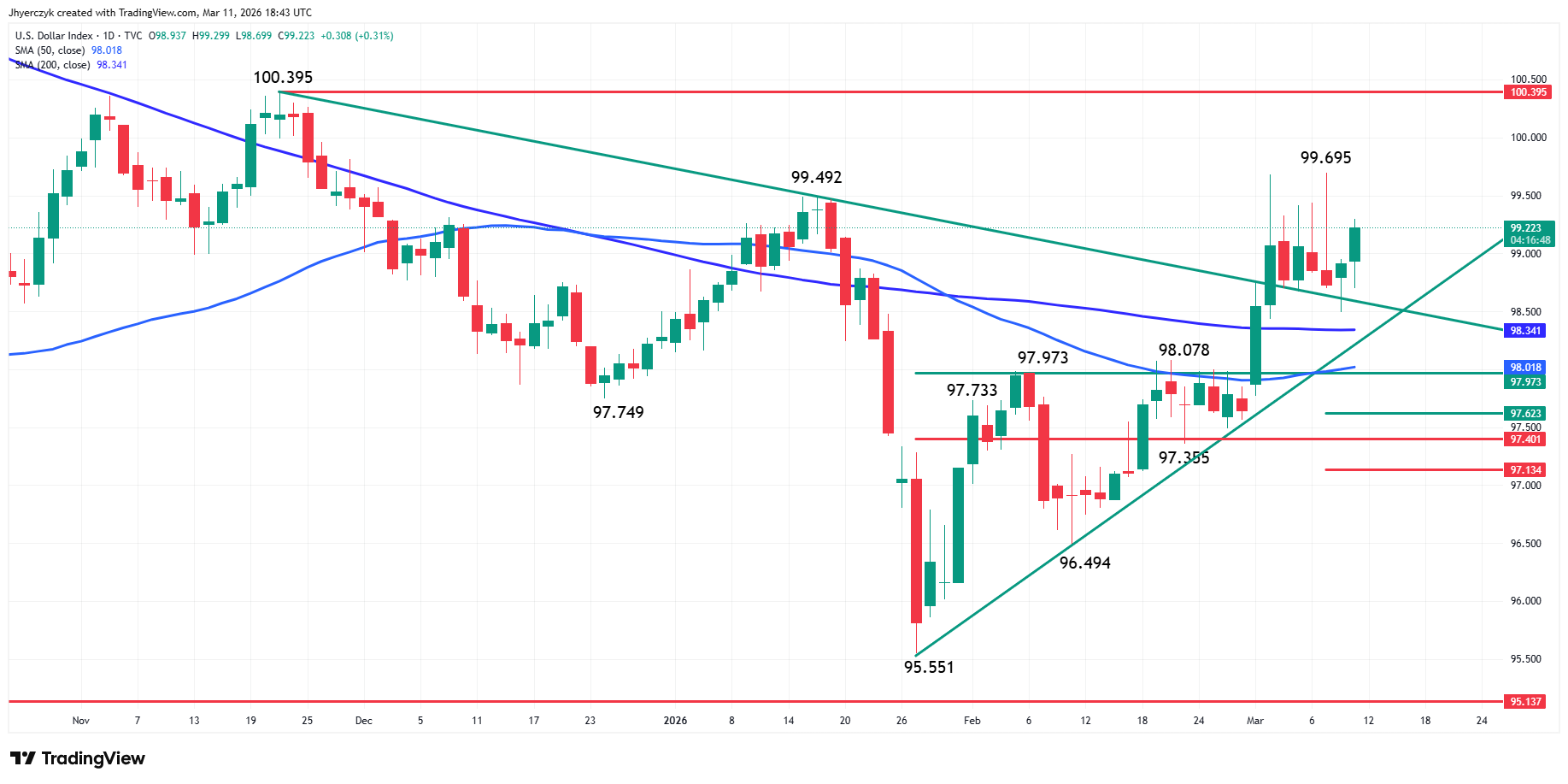
Technically, as long as the DXY holds above the 200-day moving average at 98.341 and the 50-day moving average at 98.019, dollar traders are going to be in buy-the-dip mode. This may be enough to hold the dollar in a range, but it’s still going to need a catalyst to breakout over 99.695 in its drive toward 100.000. That catalyst could be $100 crude oil.
More Information in our Economic Calendar.