
Dollar Holds Firm as Central Banks Chart Divergent Paths
The U.S. dollar, euro and pound sterling are trading amid the continuing effects of monetary policy divergence following the ECB’s 25-basis-point rate hike last week, as investors await the Federal Reserve’s highly anticipated decision. The ECB has been pushing for rate increases to offset second-round effects of energy price surges driven by the disruptions from Middle East conflicts, but growth in the euro zone has slowed while the impact of rate hikes has been uneven across the bloc. That, in turn, has kept rate increase expectations in check despite the ECB’s first rate increase since 2023.
The dollar remains supported by the U.S. economic recovery, deep U.S. capital markets and its reserve-currency status, with some downside risks from persistent inflation keeping near-term rate cuts in check for the U.S. Also supporting the greenback, fiscal deficits in the U.S. and safe-haven demand during periods of geopolitical uncertainty.
On the British front, there is widespread expectation that the Bank of England will keep interest rates unchanged in its upcoming decision. Services inflation remains sticky in the UK, where there is also mixed evidence regarding economic performance, and so the BoE is faced with balancing the need for tighter policy with the threat to the economic outlook. This means the pound is particularly vulnerable to any change in forward guidance.
Overall, with the dollar benefiting from economic recovery, capital market depth and reserve-currency status, while Europe is struggling with the energy crisis and the U.K. is facing a domestic economic and financial backdrop of its own, the Fed’s upcoming rate decisions and the ECB’s measured rate increase are key developments for the dollar and euro, respectively. For the pound, the Bank of England’s decision, as well as the UK’s fiscal stance, will remain in focus.

US Dollar Index (DXY) – Technical Analysis
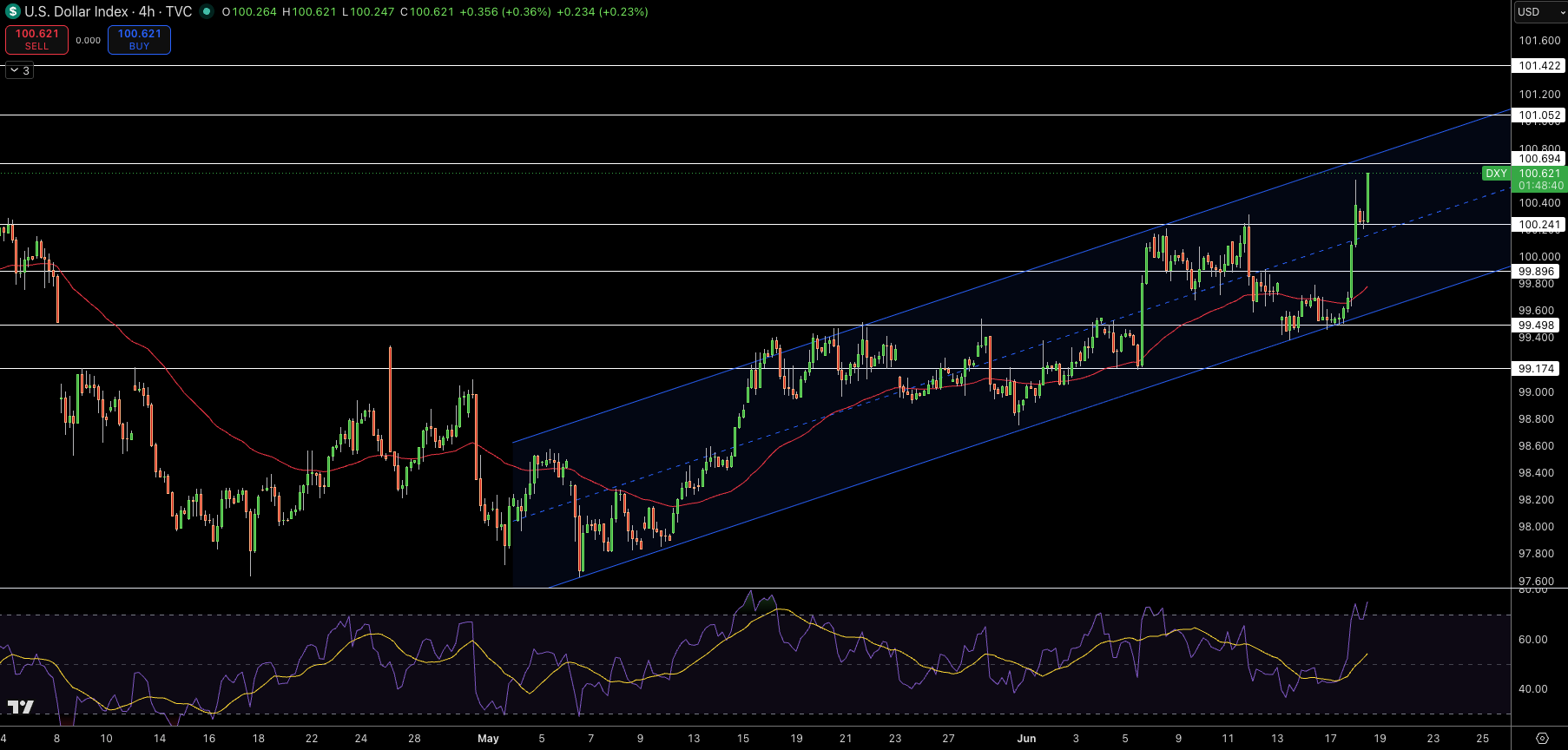
DXY is now at $100.62, as strong bullish candles on the 4H timeframe pierce through the 50MA, currently around $99.89. It also clears the upper resistance of the ascending channel. There has been consecutive higher highs from the $99.17 swing low. Higher lows keep forming to the bullish ascending trendline.
The RSI is over 55, supporting the strong bullish bias. The volume profile shows the $99.50 to $99.80 range as an area of high volume (dynamic support). The Fibonacci projections point us to the upside levels at $101.05 to $101.42. The higher high and higher low pattern is intact, and the bullish structure above $99.89 remains strong.
Trade Idea: Buy at $100.62, targeting $101.42, with a stop-loss at $99.89.
GBP/USD Price Forecast
Every new GBP/USD analysis as it publishes, today's technical signal and key levels, live price — on one page.
See all GBP/USD forecastsGBP/USD Holds at $1.3239 – Ascending Trendline Support Maintains Bullish Bias on the 4H Chart
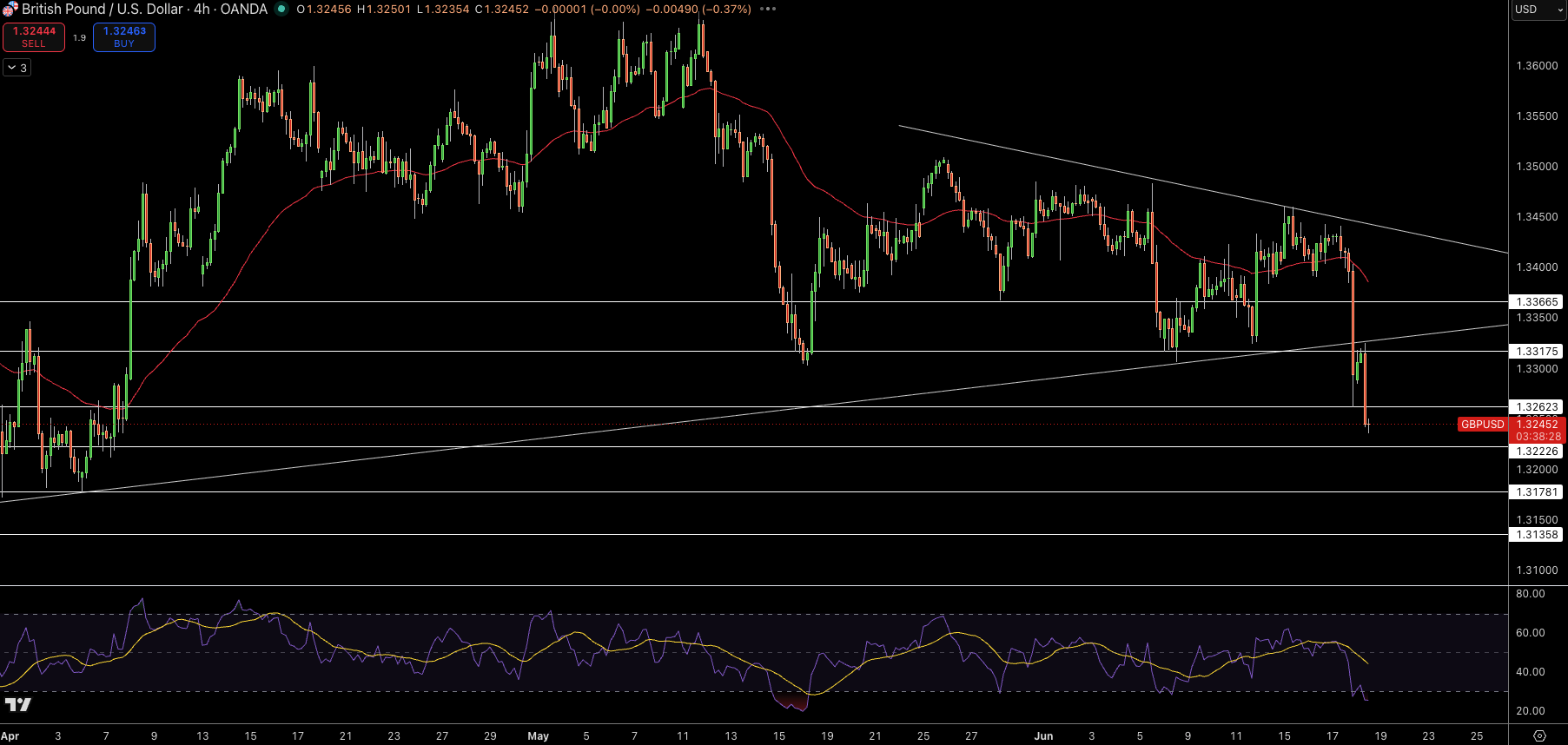
GBP/USD is trading at $1.3239 on the 4H timeframe. It defended the support at the $1.3170 ascending trendline and rejected resistance at the 50MA near $1.3320. The bullish reaction to this level is seen as long tails on the candlestick, with the higher lows being maintained within the channel and the trend.
The RSI near 50 implies neutral momentum levels. The level at $1.3200 is considered as support, while the resistance area of interest is $1.3320 to $1.3360. The higher lows within the channel are intact with the bullish trend.
Trade Idea: Buy at $1.3239, targeting $1.3320, with a stop-loss at $1.3170.
EUR/USD Dips to $1.1476 – Moving Average Rejection Reinforces Bearish Bias on the 4H Chart
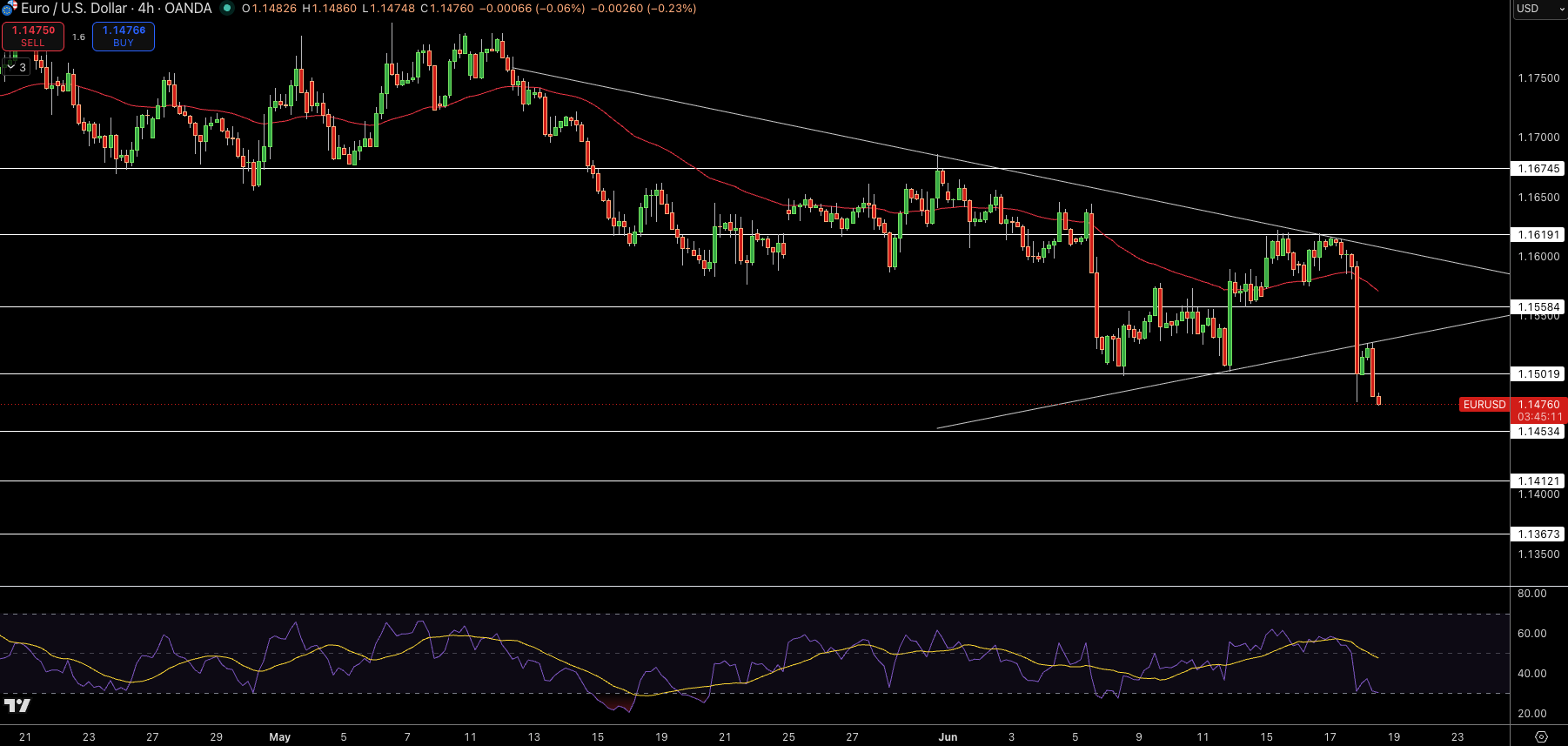
EUR/USD is currently trading at $1.1476 on the 4H timeframe. The price is below the 50MA, around $1.1580 as the candles on the 4H timeframe confirm bearish candles. The price has also broken the trendline support. The series of lower highs have formed, with the last high as the recent high, and sellers continue to take over the dominance.
The RSI is below 50, and it fell below 45, which is the negative momentum signal. The volume profile shows the range from $1.1550 to $1.1580 as the range in which buyers lost control (fair value). The levels at $1.1430 to $1.1400 were confirmed by multiple Fibonacci levels. The price is under pressure in the $1.1580 downtrend range, and the bearish pattern (lower highs and lower lows) is intact.
Trade Idea: Sell at $1.1476, targeting $1.1430, with a stop-loss at $1.1520.