
The Dollar, Euro & Pound Markets Today
A whole heap of uncertainty is swirling around the globe thanks to the ongoing US-Iran conflict and the Strait of Hormuz being all jammed up – and that’s still having a big say in where currency values are headed. The dollar’s doing pretty well for itself, mainly because it’s a safe bet and the US economy is still running pretty smoothly considering its reliance on oil exports ; even though oil prices are going up higher and higher, it’s still making the dollar a hot commodity in the global energy trade – despite a bit of a pull-back on the initial war premium going away.
It’s worth noting that the risk of inflation rising up due to all the pricey energy is making people less eager for the Federal Reserve to make any deep cuts to interest rates in the near term, which in turn is helping to keep the dollar looking pretty good compared to its mates. And to top it all off, there’s all that US asset demand and the healthy state of the US economy to keep giving the dollar a nice firm foundation.
Looking further out, all this policy divergence between the Fed, the ECB and BoE, not to mention all the de-dollarization trends and the breaking up of the energy trade into little bits and pieces – that’s all just a recipe for keeping volatility up there at a nice high level.

DXY Forecast: Bearish Rejection Below Trendline Keeps Pressure Intact
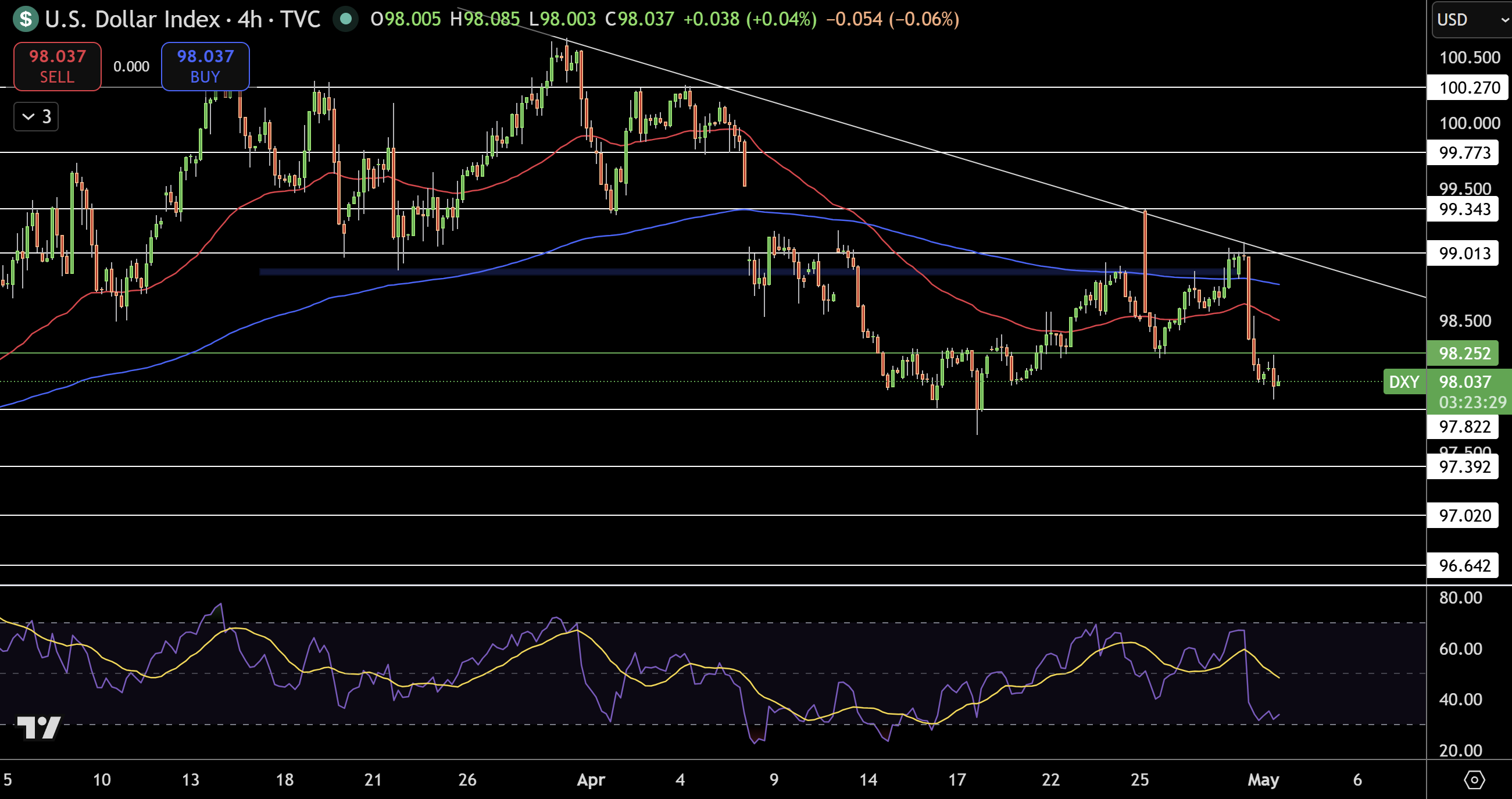
The US Dollar Index is stuck around 98.00, struggling to get back on track after another thud against that stubborn descending trendline resistance near 99.00. Look at this – price action is clearly forming a lower high, reinforcing the bearish vibe that’s been playing out. The 50 day EMA has flipped and is now acting as a bit of a wall, stopping price in its tracks, and with price still below the 200 EMA we’ve got a continued downside bias on our hands.
That sharp rejection wick at 99.30 though – that’s telling us there’s a whole lot of sellers out there with a strong hand at the table, and that resistance zone above 99.00 is still very much in control. The RSI has slipped below its midline and is trending downwards, which is a pretty clear sign that the bulls are starting to lose steam. Down at 97.80 we’ve got our first line of support, and if that gets broken 97.20 is the next target.
It’s only if we see a proper move above 99.00 that this bearish outlook is going to get blown to smithereens.
GBP/USD Analysis: Bullish Breakout Signals Momentum Continuation
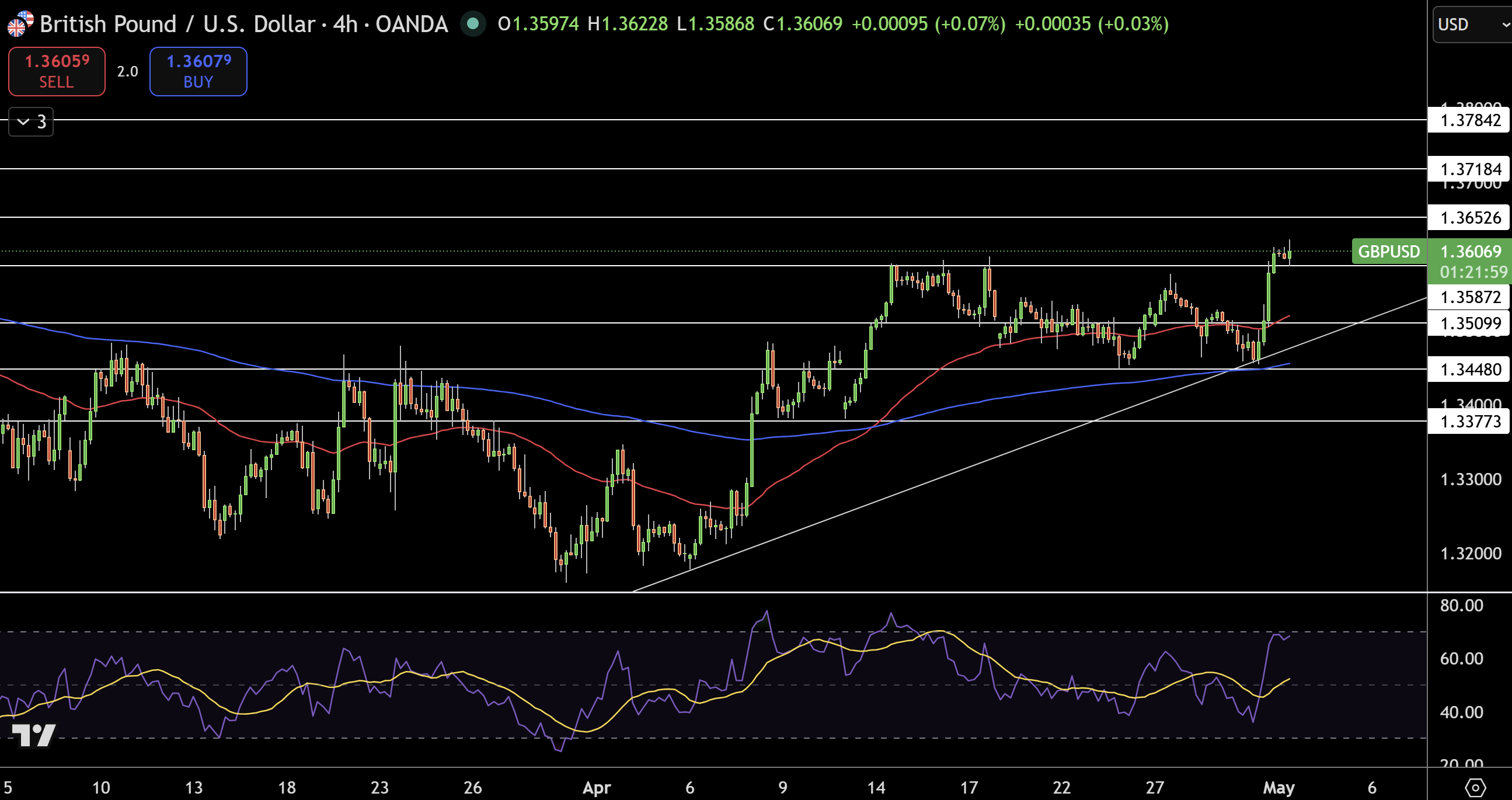
GBP/USD is trading around 1.3605, having just broken above a key resistance zone and taken its bullish trend to the next level. It’s been a while since we’ve seen these kind of higher lows in play, but the fact that price is now holding firmly above both the 50 EMA and the 200 EMA tells us that the uptrend is here to stay.
GBP/USD Price Forecast
Every new GBP/USD analysis as it publishes, today's technical signal and key levels, live price — on one page.
See all GBP/USD forecastsBreaking above 1.3580 has really got the buyers in control here, and RSI has now pushed above 60 – which tells us that we’re seeing some real momentum building. But don’t worry, we’re not in overbought territory just yet.
We’ve got our first line of resistance at 1.3650, and if that gets broken 1.3720 is the next one to look at. One thing to watch – 1.3500 is now our line of support – if we break down through that one all bets are off.
Trade Idea: If you can pick up a dip above 1.3500, then we’d be looking to target 1.3650 to 1.3720.
EUR/USD Outlook: Trendline Support Holds as Bulls Regain Control
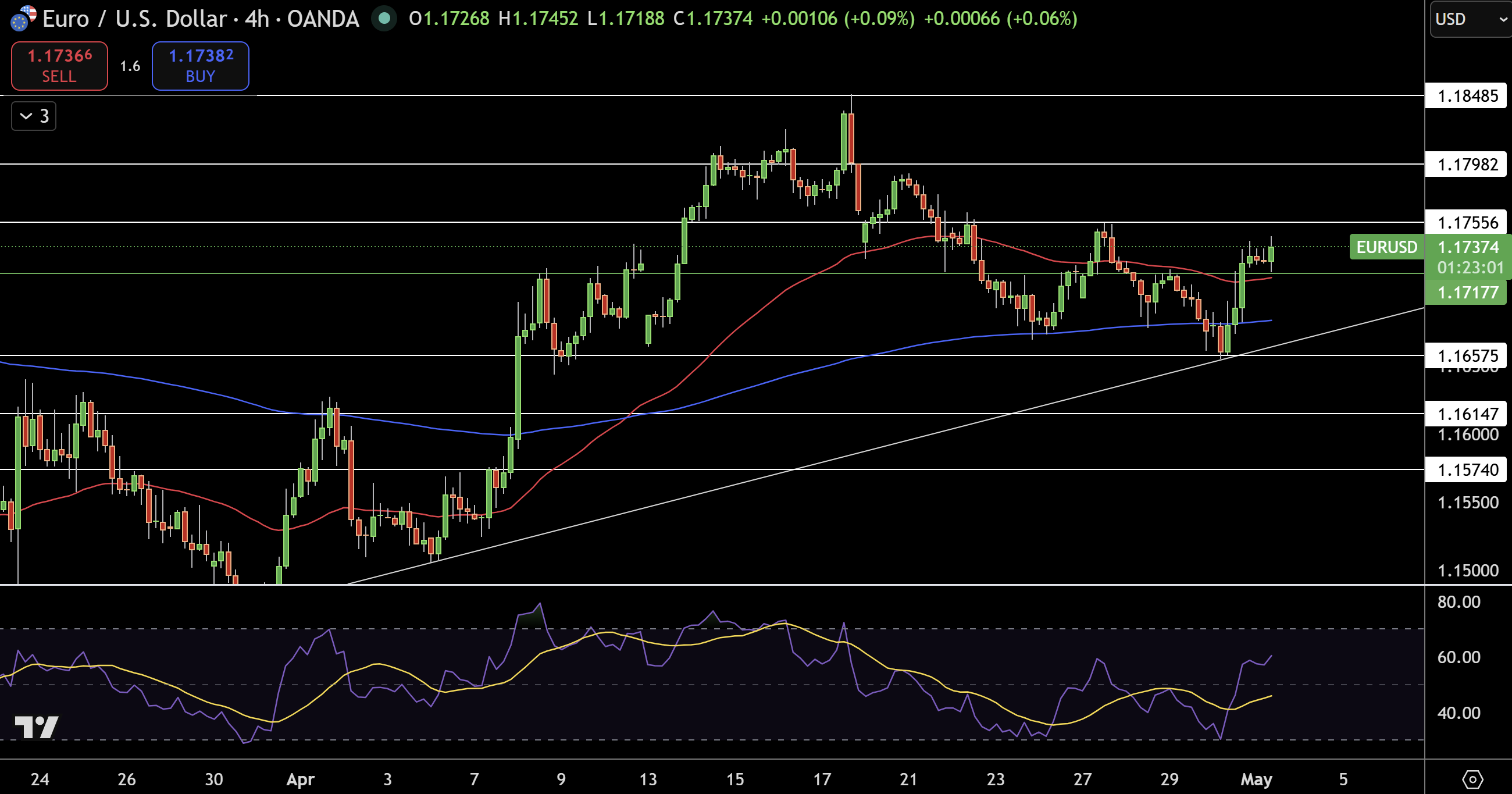
EUR/USD is hovering at 1.1735, having made a big bounce off the rising trendline support, and it looks like the bulls are back in charge. Price action here shows a bit of a recovery after we had a corrective pullback, with buyers coming in to the party around 1.1670. The last little push up towards 1.1750 has us thinking that the upside is back on the cards.
We’re also seeing the RSI climb back above its midline, which is a good sign that the bulls are getting their mojo back. If we can break above 1.1755 then 1.1800 and 1.1850 are the next ones to look at, but if we get a drop below 1.1680 then it’s going to be a pretty tough road ahead.
Trade Idea: If you can buy above 1.1700, then we’d be looking to target 1.1800, stop below 1.1670.