
Bitcoin (BTC) has been stuck in a tight sideways range for more than a month, oscillating between $85,000 and $95,000 as market participants wait for a potential “Santa rally.”
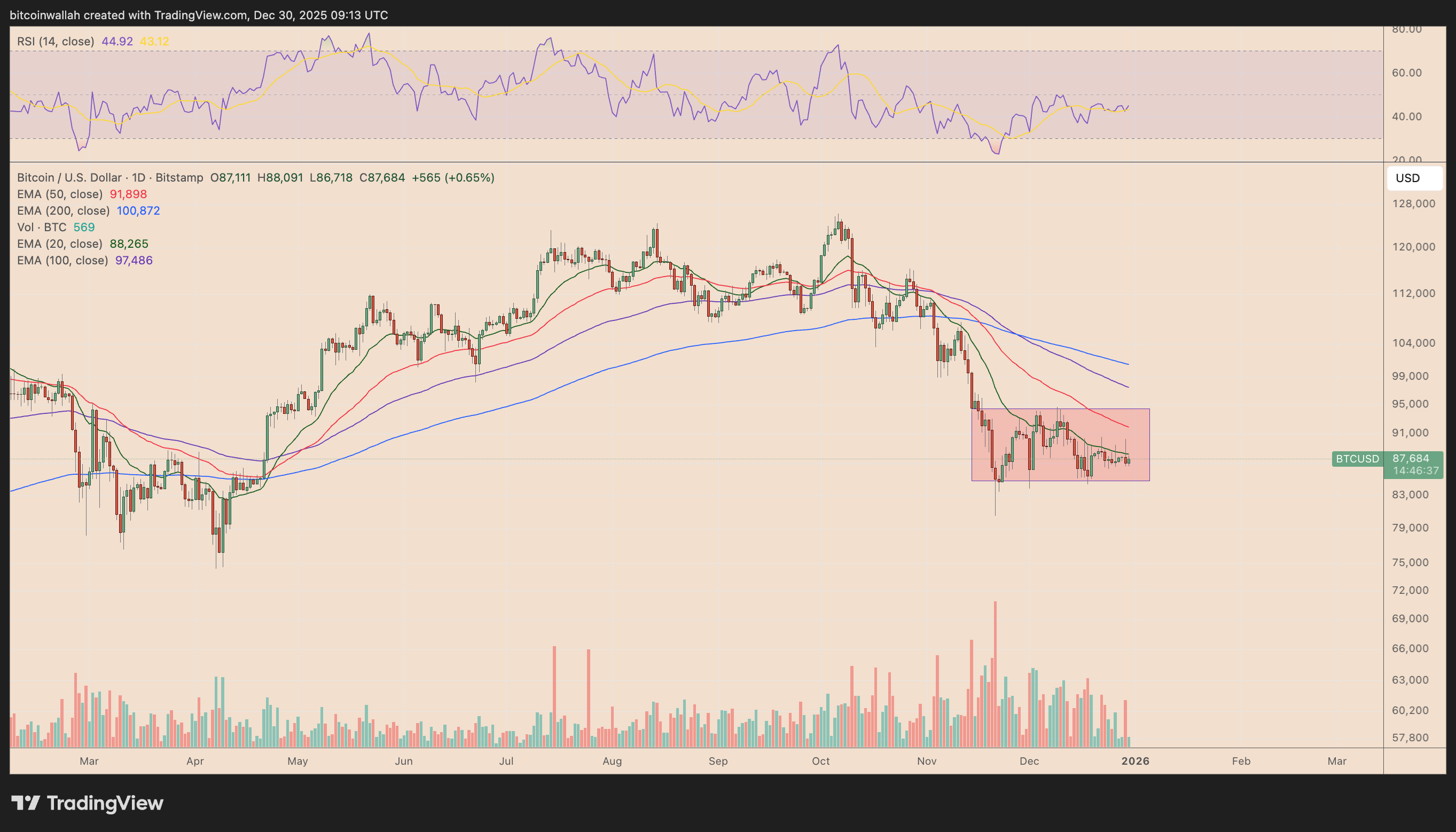
The seasonal surge, which helped push US equities to fresh record highs earlier in December, has so far failed to spill over into crypto, leaving BTC trapped in consolidation as traders look for a decisive catalyst to set the next trend.
Will the first quarter of 2026 be any different for Bitcoin? Let’s examine.

Bitcoin Could Hit $100,000 in Q1 2026
Crypto analyst Crypto Rover said the first quarter of 2026 could mark a bullish inflection point for Bitcoin and the broader crypto market, citing seasonal capital flows and improving technical structure.
🚨 Q1 2026 COULD BE BULLISH FOR BTC AND ALTS.
Here’s why:
1) Fresh capital gets deployed at the start of the year
Every January, hedge funds, asset managers, and institutions put new money to work.
That happens every single year.
Right now, most traditional assets already… pic.twitter.com/j9VfVcxG8c
— Crypto Rover (@cryptorover) December 27, 2025
Historically, January brings fresh allocations from hedge funds and asset managers as new capital is put to work.
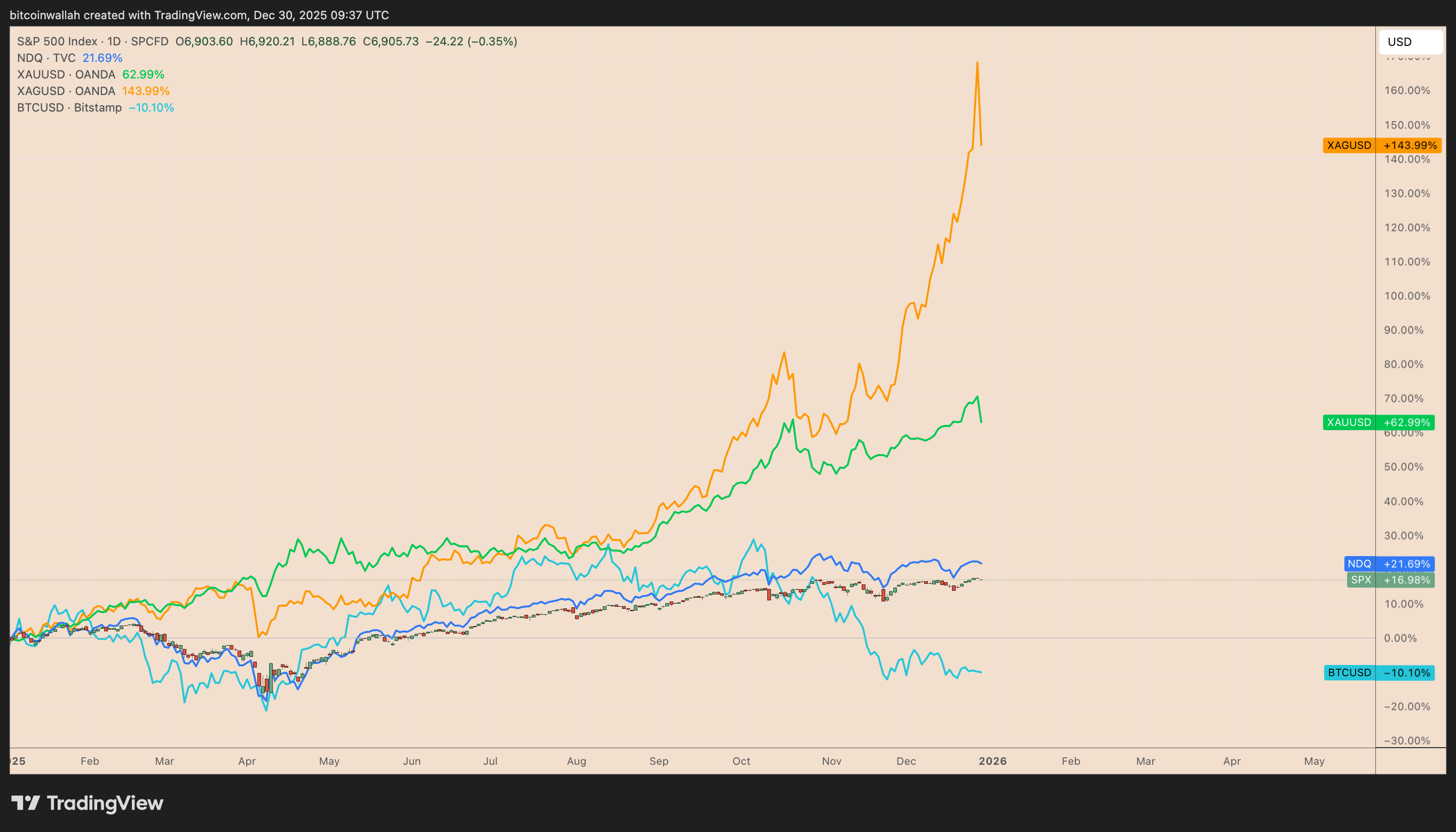
Even modest reallocations can have an outsized impact due to crypto’s smaller market depth.
Bitcoin’s market structure is also showing early signs of stabilization, according to an analysis shared by Ted Pillows.
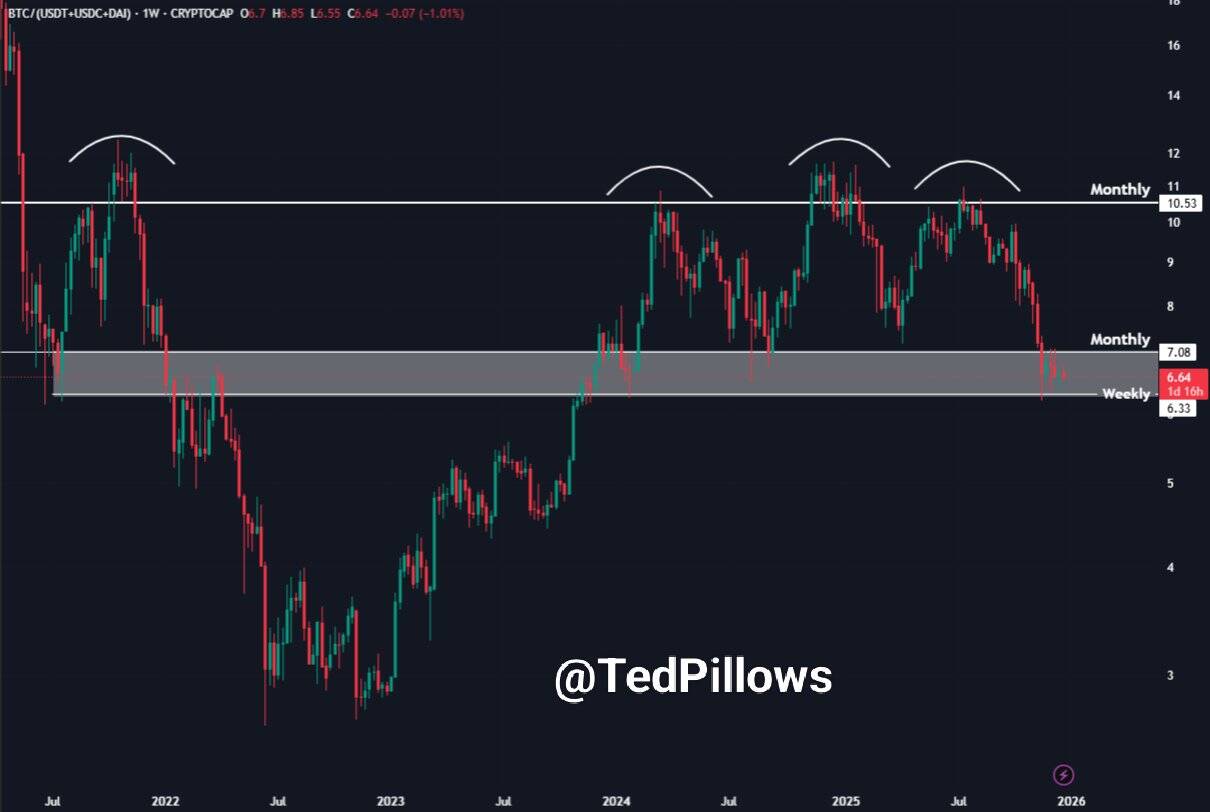
The BTC/stablecoin ratio has reached a strong monthly support zone, suggesting downside pressure is easing as capital rotates back into spot exposure.
At the same time, stablecoin supply continues to trend higher, signaling that liquidity remains inside the crypto ecosystem rather than exiting to fiat.
If these dynamics persist into January, a move toward the $100,000 level in Q1 becomes increasingly plausible.
Bitcoin Price Forecast
Every new Bitcoin analysis as it publishes, today's technical signal and key levels, live price — on one page.
See all Bitcoin forecastsFriedrich Warns About Dead Cat Bounce
Analyst Friedrich said Bitcoin could rebound toward the $100,000-108,000 area but warns that these bounces could trap bulls.
Historically, broad crypto bear markets have often begun after a sharp relief rally, not before one. These so-called dead-cat bounces tend to emerge in early-year periods, squeezing late short sellers as liquidity improves and sentiment briefly stabilizes.
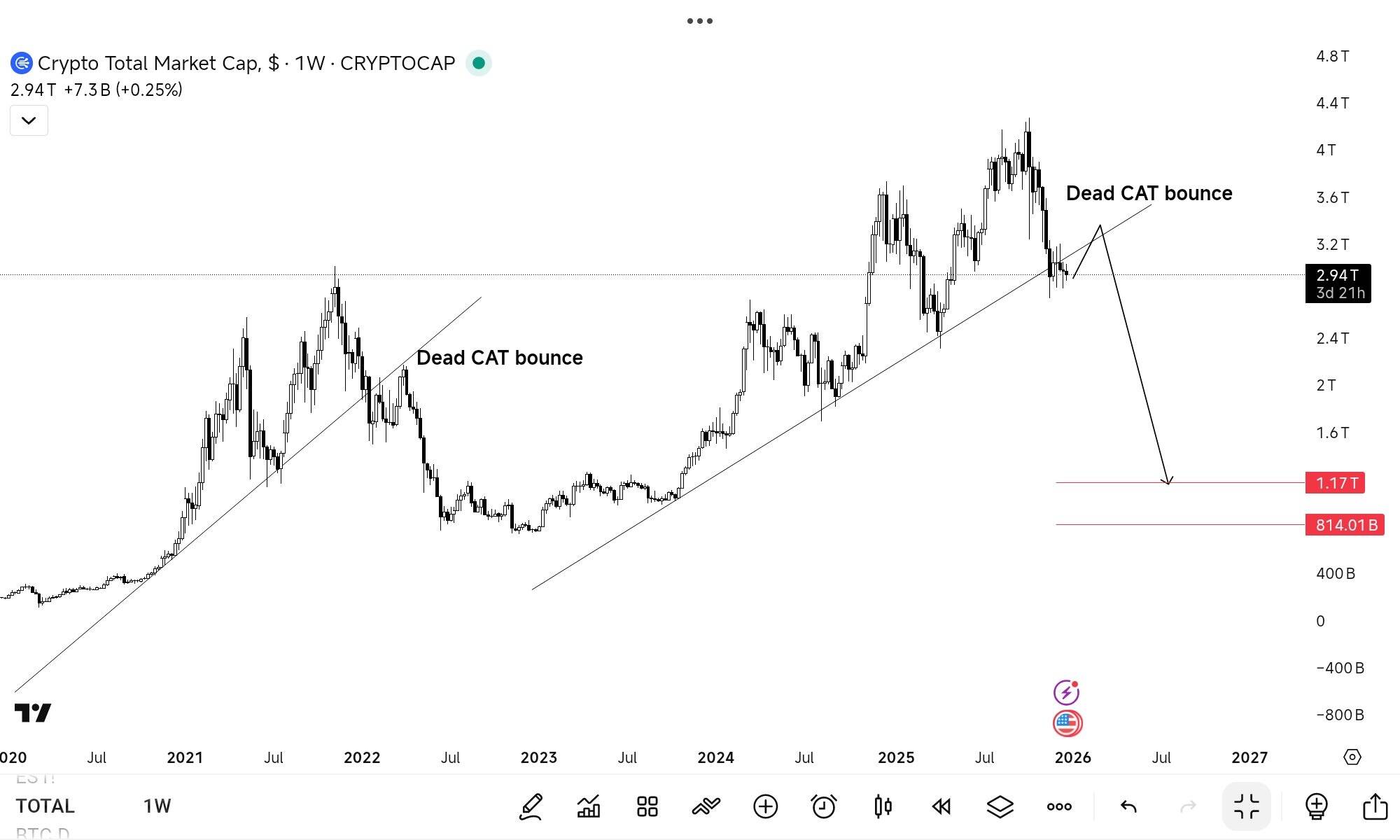
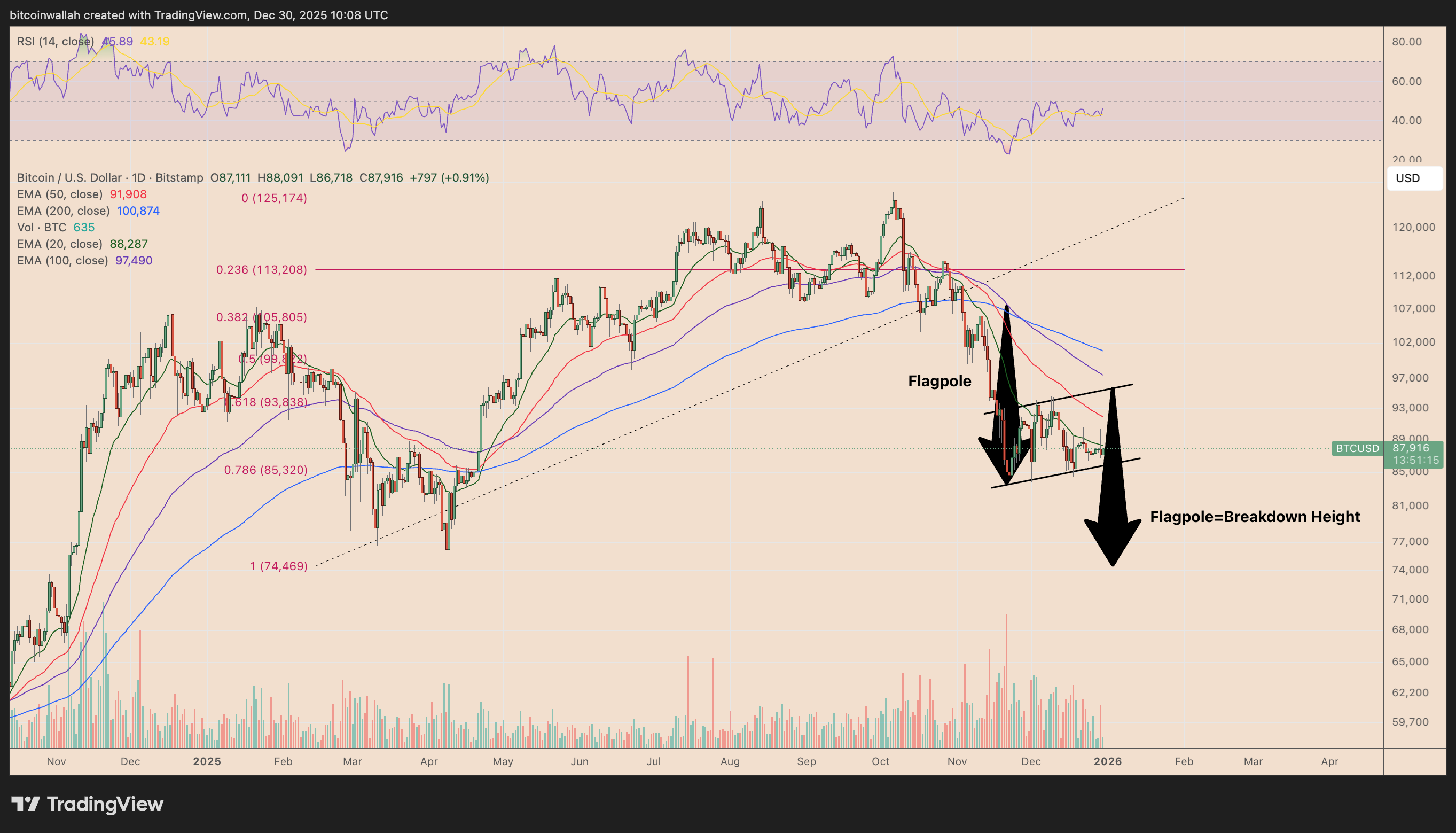
The pattern formed after BTC’s sharp drop from October highs, with price consolidating inside a downward-sloping channel below its key moving averages.
If the structure breaks down, the bear flag’s measured move points to a decline toward the $75,000–$78,000 zone, aligning with prior horizontal support and the lower boundary of Bitcoin’s broader uptrend.
A decisive close below that area could expose the $70,000 region next, suggesting that any Q1 rebound may still unfold within a wider corrective phase rather than a clean trend reversal.