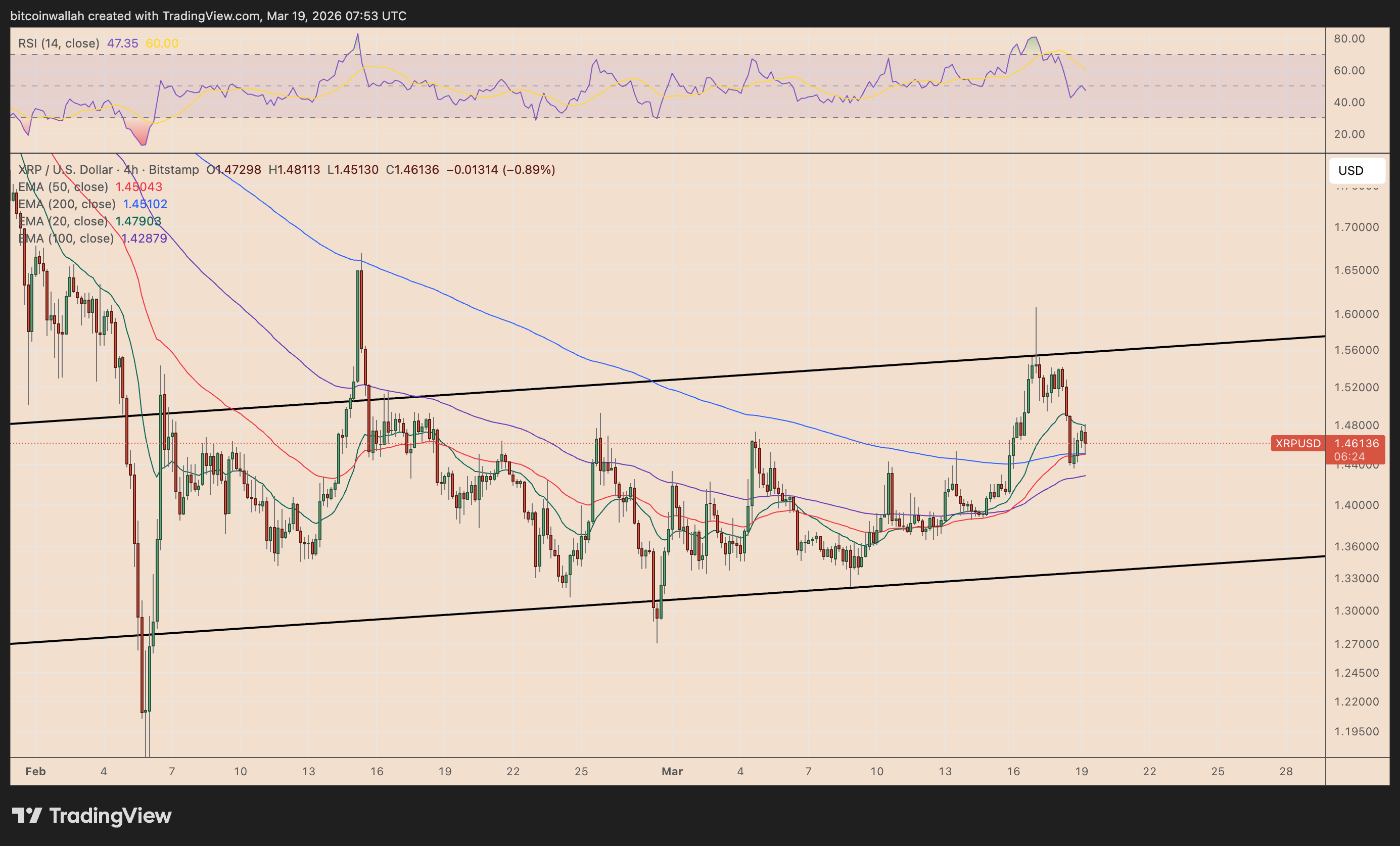
The decline came despite fresh fundamental support from Ripple’s Brazil expansion, where the company is rolling out payments, custody, RLUSD stablecoin services, prime brokerage, and treasury tools in a market it estimates at over $1 trillion across trade, remittances, and crypto activity.
Ripple Taps Brazil For Institutional Expansion
Ripple is expanding its institutional business in Brazil, targeting a combined payments and digital-asset market valued at more than $1 trillion annually.
Announced on March 17, the expansion includes cross-border payments, custody, RLUSD stablecoin services, prime brokerage, and treasury management. Ripple also said it plans to apply for a Virtual Asset Service Provider license with the Central Bank of Brazil.
🚨 RIPPLE IS GOING ALL IN ON LATAM 🇧🇷🔥
Payments. Custody. Treasury.
Ripple is building FULL financial infrastructure in Brazil 👀RLUSD adoption is SURGING across LATAM
👉 VASP license incoming
👉 Institutional rails being builtThis isn’t expansion… it’s a takeover of the… pic.twitter.com/fvMlyLFIPj
— 🥷XRP OFFICIAL ☮️ ♋️ (@xrpofficial24) March 17, 2026
The largest part of the opportunity comes from Brazil’s trade-related payment flows.
The country recorded about $765 billion in combined exports and imports of goods and services, giving Ripple a large market for cross-border settlement and FX-related infrastructure.
Brazil’s remittance corridor adds another $7 billion in annual inflows and outflows, based on World Bank data. While smaller than trade payments, it remains a direct use case for Ripple’s payment rails.
The crypto side is also significant. Brazil processed approximately $318 billion in crypto activity over the past year, with stablecoins accounting for most of those flows.
That aligns with Ripple’s push to expand RLUSD and related institutional services in the country.
Ripple is also introducing custody and tokenization infrastructure for financial institutions, while its Hidden Road unit brings brokerage, clearing, financing, and treasury services.
The expansion comes as Brazil’s crypto regulatory framework moves toward fuller implementation in 2026.
Ripple Price Forecast
Every new Ripple analysis as it publishes, today's technical signal and key levels, live price — on one page.
See all Ripple forecastsFOMC Keeps Interest Rates Steady
The Federal Reserve left interest rates unchanged at 3.50%–3.75% at its March 17–18 meeting, keeping policy steady as officials assess incoming data, the economic outlook, and risks to inflation.
The FOMC said it remains committed to returning inflation to its 2% target.
🚨FOMC MEETING & NO RATE CUT
“Jerome Powell is going to be very HAWKISH”
There is no reason for the federal reserve to be bullish and he hates President Trump.
PPI already came in extremely HOT today = NOT GOOD$BTC $TAO $SPY $QQQ $ETH $SOL $XRP $NVDA $KAS pic.twitter.com/tvpQR1EiuA
— Finance Freeman 🇺🇸 (@FinanceFreeman) March 18, 2026
Fresh projections showed the Fed still expects only one rate cut in 2026 at the median, but the meeting was read as cautious rather than dovish.
Chair Jerome Powell flagged tariffs and rising energy prices as key inflation risks, with the Fed closely watching whether the Middle East oil shock feeds into broader price pressures.
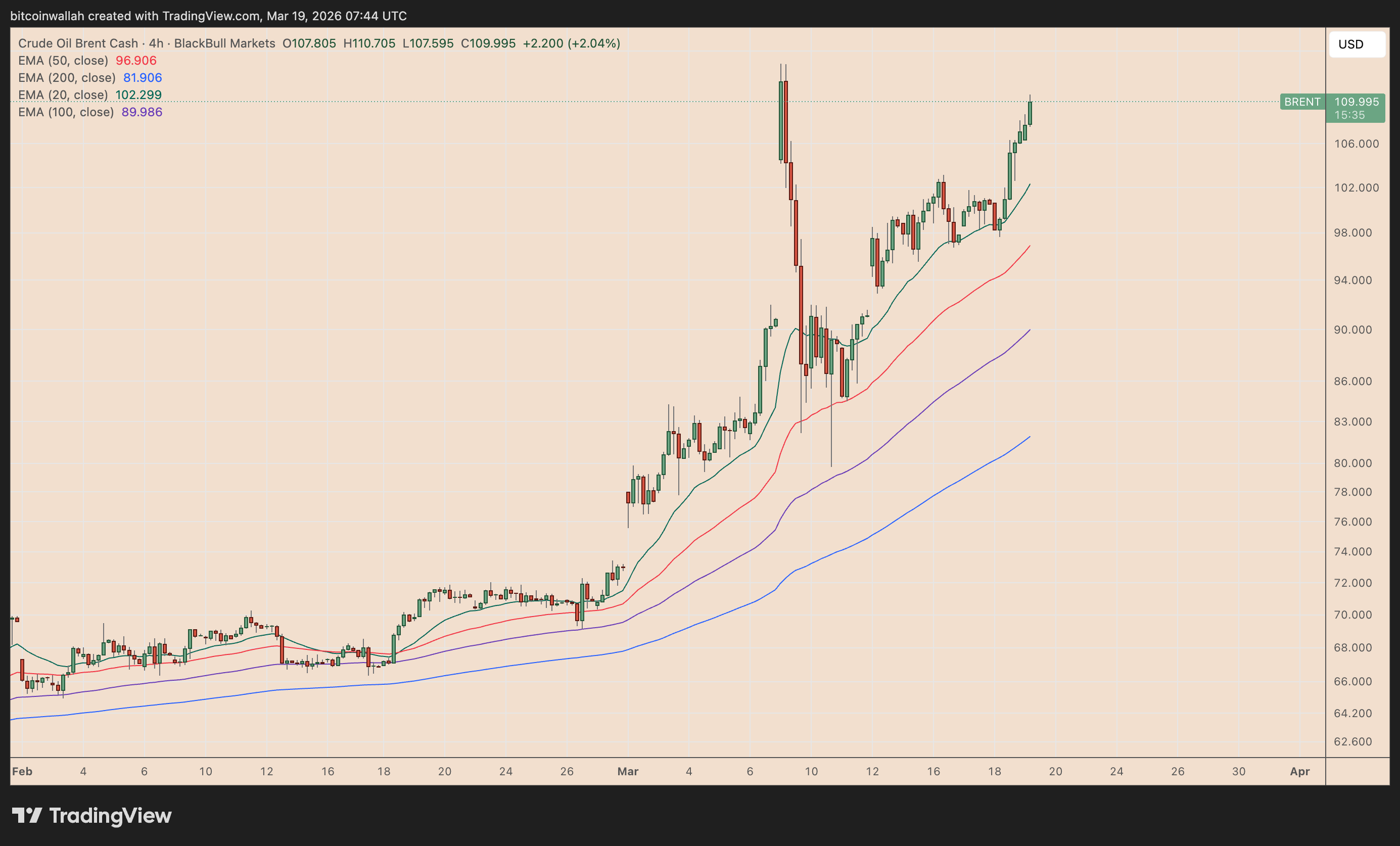
One policymaker now even sees a rate hike ahead, while the Fed’s median forecast puts both headline and core PCE inflation at 2.7% by year-end, above the December projections.
That leaves risk assets like XRP sensitive to oil, inflation data, and Powell’s “higher-for-longer” tone.
XRP Institutional Accumulation Weakens
Data from Binance indicates that the XRP Institutional Accumulation Model has slipped into negative territory, with a reading of around -0.14.
The divergence suggests limited participation from large investors. Historically, positive readings in the index have aligned with strong accumulation phases and price uptrends, while negative values point to reduced buying activity or early-stage distribution.
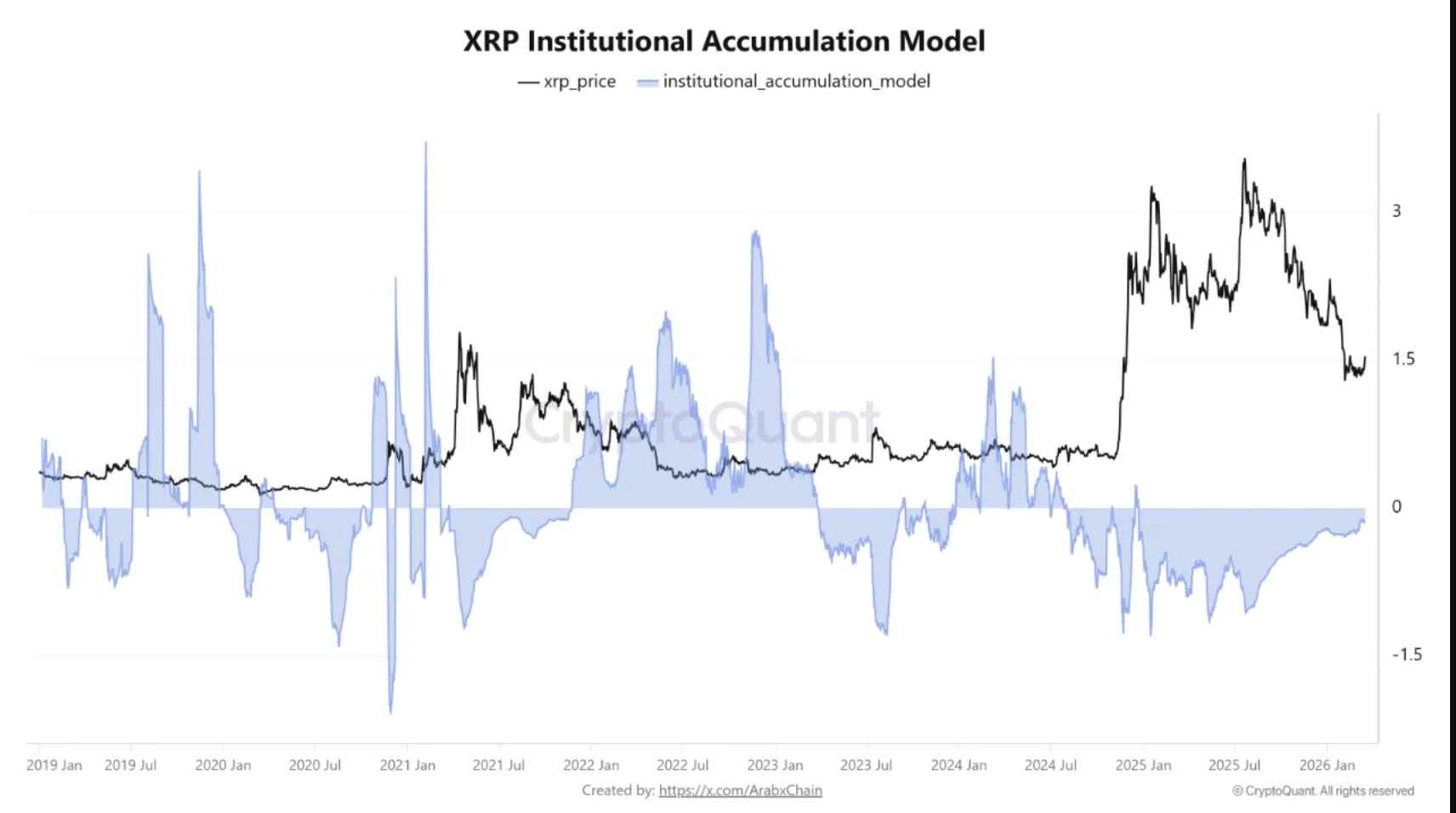
Despite this, XRP’s price stability indicates a lack of aggressive selling pressure, pointing instead to a temporary equilibrium in the market. Traders appear to be holding positions rather than actively building new ones.
The data imply that XRP may require fresh catalysts, such as improved macro conditions or renewed institutional inflows, to drive the next directional move.