China’s Services Sector Growth Eases: What It Means for the Economy
China’s services sector, now driving over half of its GDP, just delivered a surprise slowdown that could ripple across global markets.
On Wednesday, December 4, China’s economy remained under the spotlight after Monday’s Caixin Manufacturing PMI data. China’s service sector has gained prominence in recent years, now accounting for over 50% of GDP. The ongoing shift from manufacturing to services has amplified the importance of services sector data.
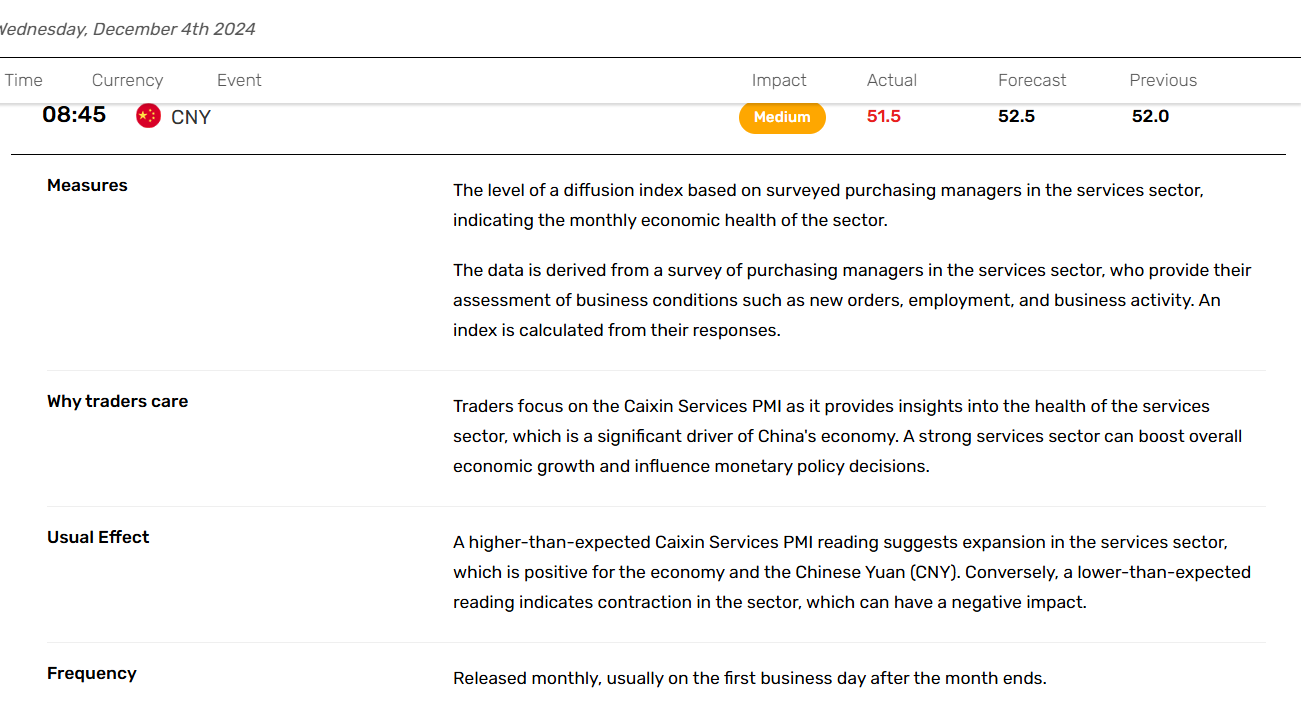
The Caixin Services PMI unexpectedly dropped from 52.0 in October to 51.5 in November. Economists expected the PMI to rise to 52.5.
According to the November survey,
- Export business increased at a faster pace relative to overall new business.
- However, new business growth moderated in November, impacting the headline PMI.
- Firms continued to increase staffing levels, though the rate of job creation was marginal.
- Average input costs rose moderately midway through Q4 2024.
- Intensifying competition within the services sector contributed to a decline in selling prices.
- Business sentiment improved on hopes of better economic conditions as well as government policy measures to boost demand.
- However, concerns about the global trade outlook and intensifying competition kept sentiment below the long-run average.
After Monday’s upbeat China Caixin Manufacturing PMI, the private sector PMIs underscored the effectiveness of Beijing’s stimulus measures in bolstering the economy.

Expert Views on China’s Economy and Stimulus Expectations
Economists and market analysts weighed in on the implications of the latest PMI data for China’s economic trajectory and policy outlook.
Caixin Insight Group Senior Economist Dr. Wang Zhe remarked on the November survey, saying,
AUD/USD Price Forecast
Every new AUD/USD analysis as it publishes, today's technical signal and key levels, live price — on one page.
See all AUD/USD forecasts“Market optimism improved. The indicator for future activity expectations grew for the second straight month to reach a seven-month high. Service providers generally expressed confidence in market improvement amid policy support, although some were concerned about the future trade environment.”
The Market Reaction to the China Caixin Services PMI
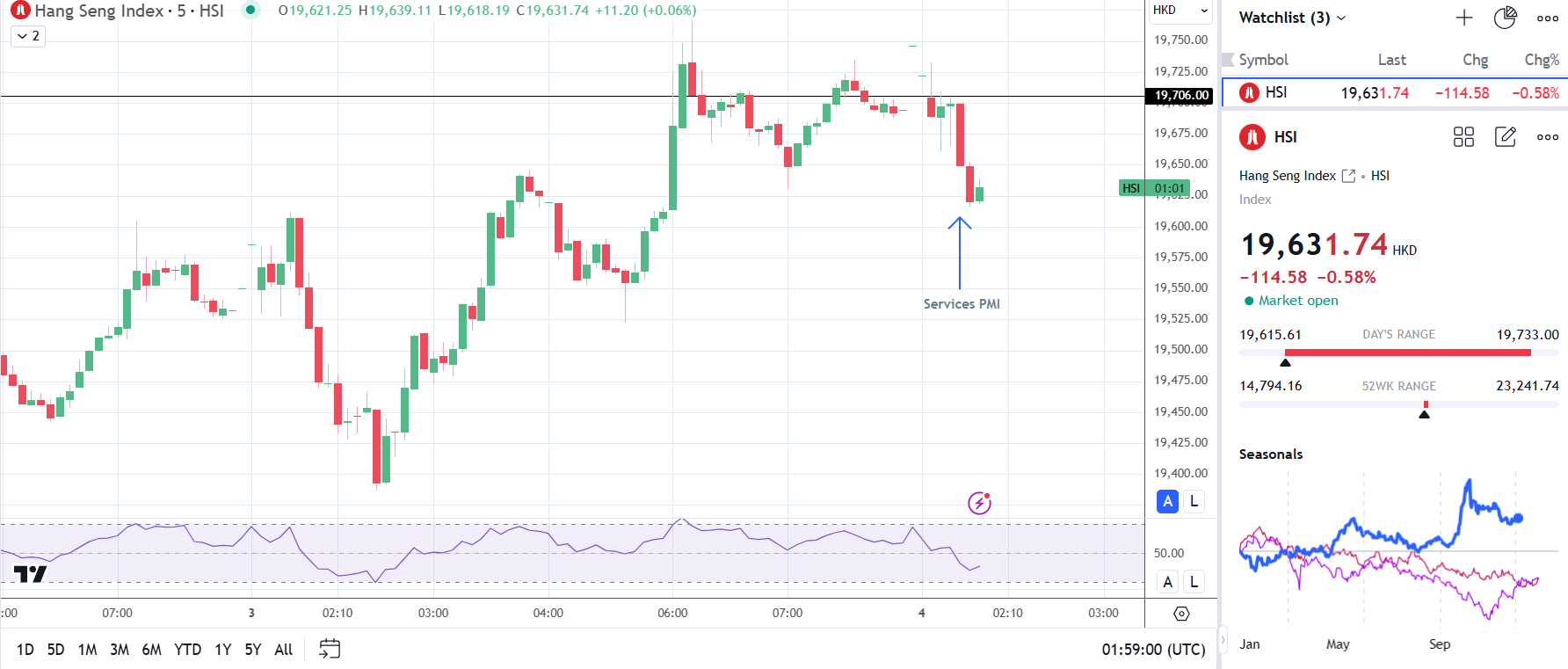
Ahead of the release, the Hang Seng Index was down by 0.31%. However, the Index extended its losses following the weaker-than-expected services PMI.
On Wednesday morning, the Hang Seng Index declined by 0.58% to 19,632.
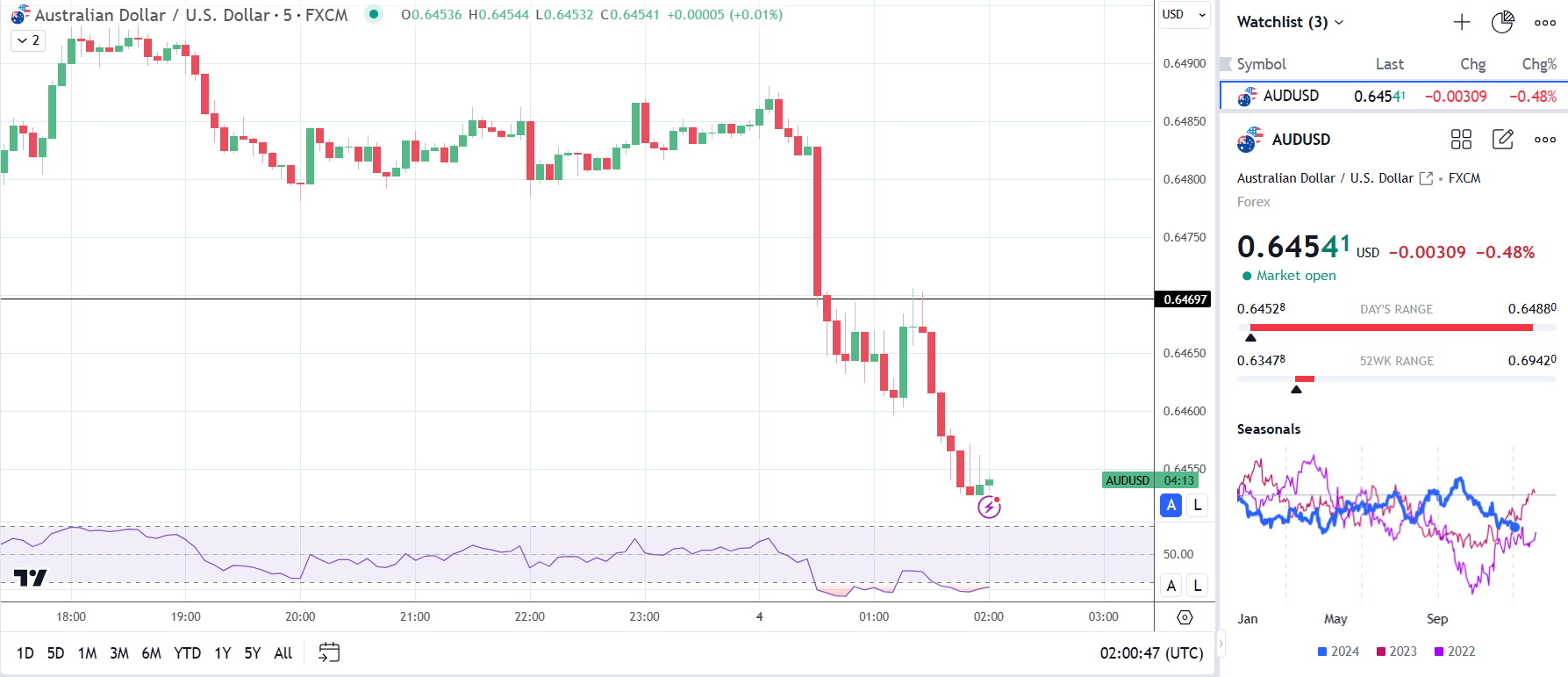
The PMI data also impacted the currency markets. The AUD/USD pair briefly climbed to a pre-report high of $0.64880 before falling to a low of $0.64572.
However, in response to the PMI data, the AUD/USD fell from $0.64566 to a post-report low of $0.64528.
On Wednesday, December 4, the AUD/USD was down 0.48% to $0.64541. Weaker-than-expected Aussie GDP numbers also weighed on the pair. The Australian economy expanded by 0.3% quarter-on-quarter in Q3 2024 compared with expectations of 0.4% growth.