Bitcoin (BTC) has dropped by 6% over the past 7 days as investors withdrew hundreds of millions from exchange-traded funds (ETFs).
Data from SoSoValue shows that, last week, net outflows accelerated to $1.8 billion following a break below the $60,000 support.
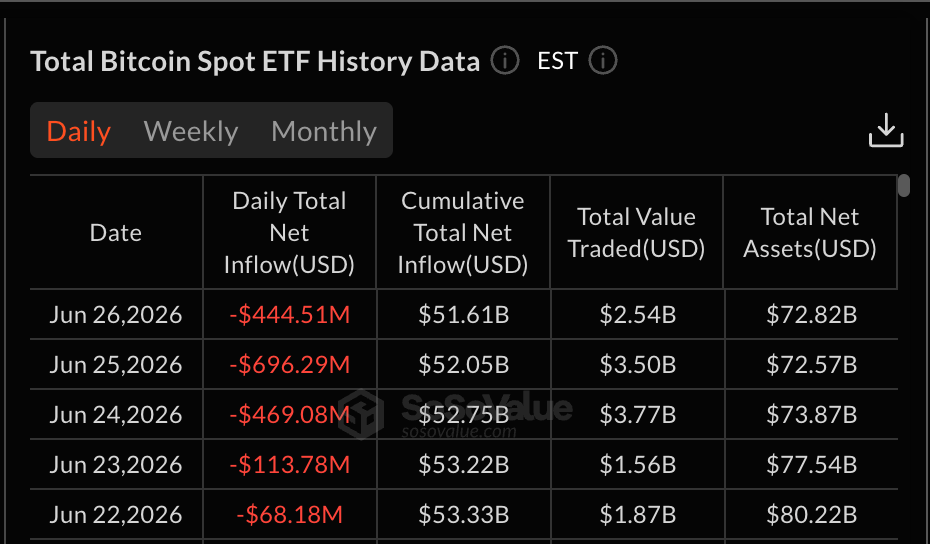
This price level has acted as a strong demand zone for BTC since February this year, but could now falter as macroeconomic conditions have deteriorated.
Bitcoin has recovered above this level in the past 24 hours, and it seems that the price would have to move to lower areas to trigger another long squeeze.

Whales Add 10,000 BTC Tokens in June
During the weekend, only $200 million or so worth of BTC long positions were liquidated even though the price hit a low of $58,000. Hence, this is the key level to watch for the week, as a significant volume of stop orders seems to be sitting below that mark.
Market sentiment remains heavily depressed as the Fear and Greed Index sits at 16, indicating that investors are in “Extreme Fear” mode. This complicates the picture for BTC at a point when a key support area is being tagged.
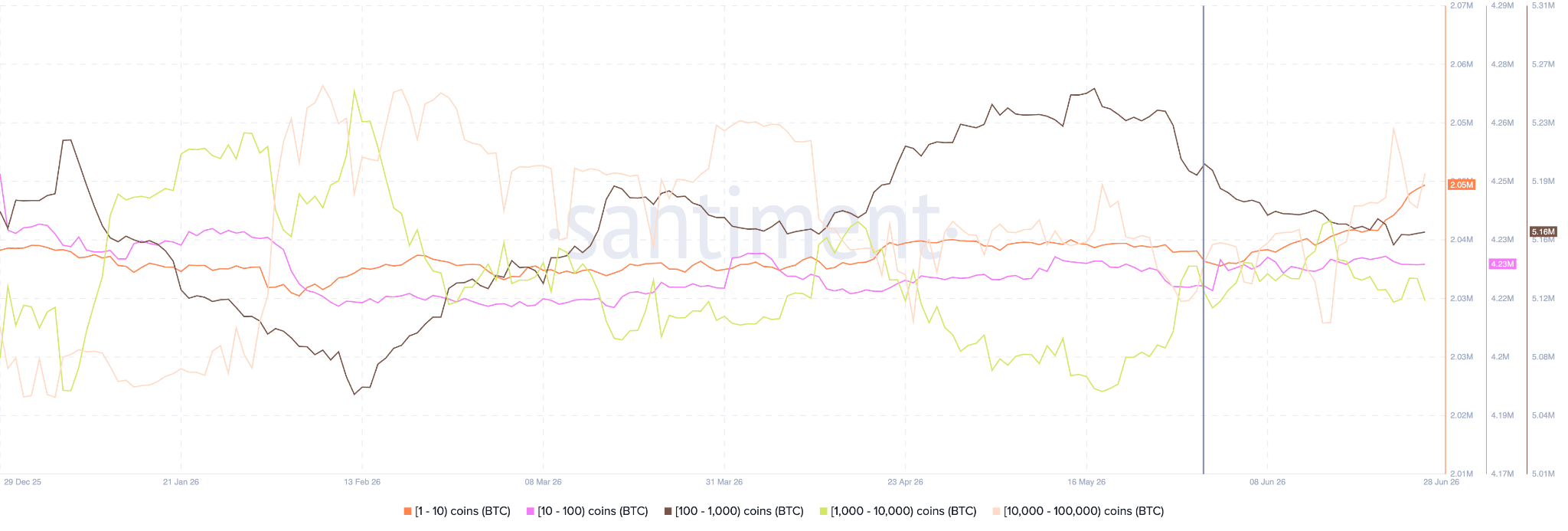
The biggest inflow came from whale wallets holding between 10,000 and 100,000, as this group added 30,000 BTC. Meanwhile, the biggest outflow came from the 100 to 1,000 BTC segment, as they dumped 40,000 tokens.
Whale accumulation is typically considered a good sign as it means that deep-pocketed participants are taking advantage of the drop to load up on BTC, which could create a short-term floor at key price levels like $60,000.
Bitcoin Price Forecast
Every new Bitcoin analysis as it publishes, today's technical signal and key levels, live price — on one page.
See all Bitcoin forecastsBTC Could Dip by Another 14% If This Happens
On Thursday, the United States will publish its jobs report for June. The unemployment rate is expected to remain unchanged at 4.3%. However, non-farm payrolls are expected to drop to 114,000 compared to 172,000 the month before.
Any indications that the economy is stronger than expected will probably contribute to the continuation of the current downtrend, as it will give the Federal Reserve additional justification to raise rates to lower inflation without endangering economic growth.
The odds of a rate increase of 25 basis points in September continue to sit at around 60%. This marks a significant shift from what the market expected at the beginning of the year.
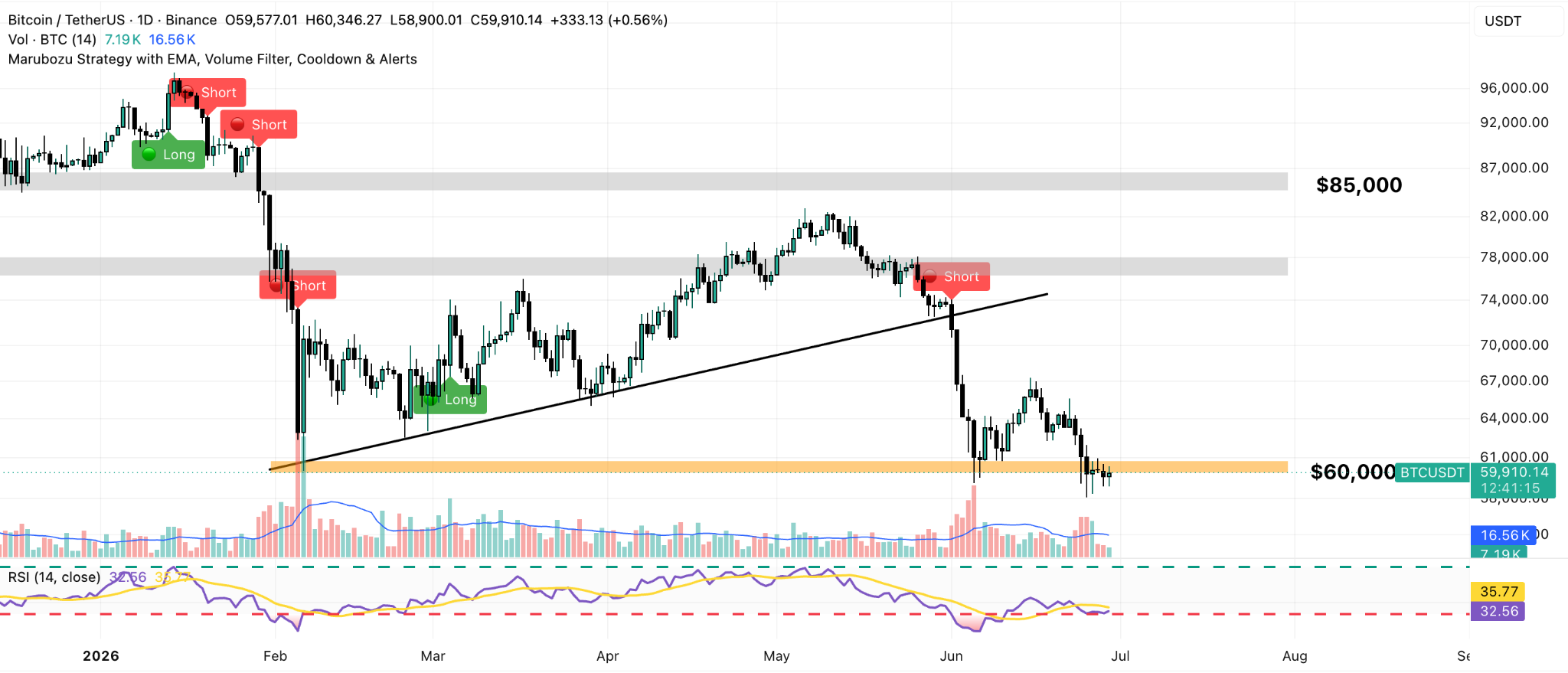
This unfavorable macroeconomic backdrop favors a potential drop to lower levels for BTC. Right now, the daily chart shows that the top crypto is retesting its key support area from below.
Losing the $58,000 mark could plunge BTC to $50,000, meaning a 14% downside risk. The Relative Strength Index (RSI) continues to sit below 40, indicating that sellers are still in control of the price action as negative momentum prevails.
Our signals system has not flashed another “sell”, meaning that the latest signal from June 1, back when the price action broke a long-dated trend line support, is still in play.