Iran warned deeper escalation in its war with the US and Israel could push oil to $200 a barrel, setting up a macro shock that may hit Bitcoin (BTC) and the broader crypto market hard.

Oil Shock Scenarios Point to $95–$220 Crude
Under a base-case escalation scenario, disruptions across Iran, Qatar, the UAE, and Saudi Arabia could remove roughly 8% to 12% of global oil supply, lifting crude to as high as $140 a barrel.
In a worst-case scenario, the supply hit could reach 15% to 20%, pushing oil to as high as $130–$220 and sharply increasing stagflation risks.
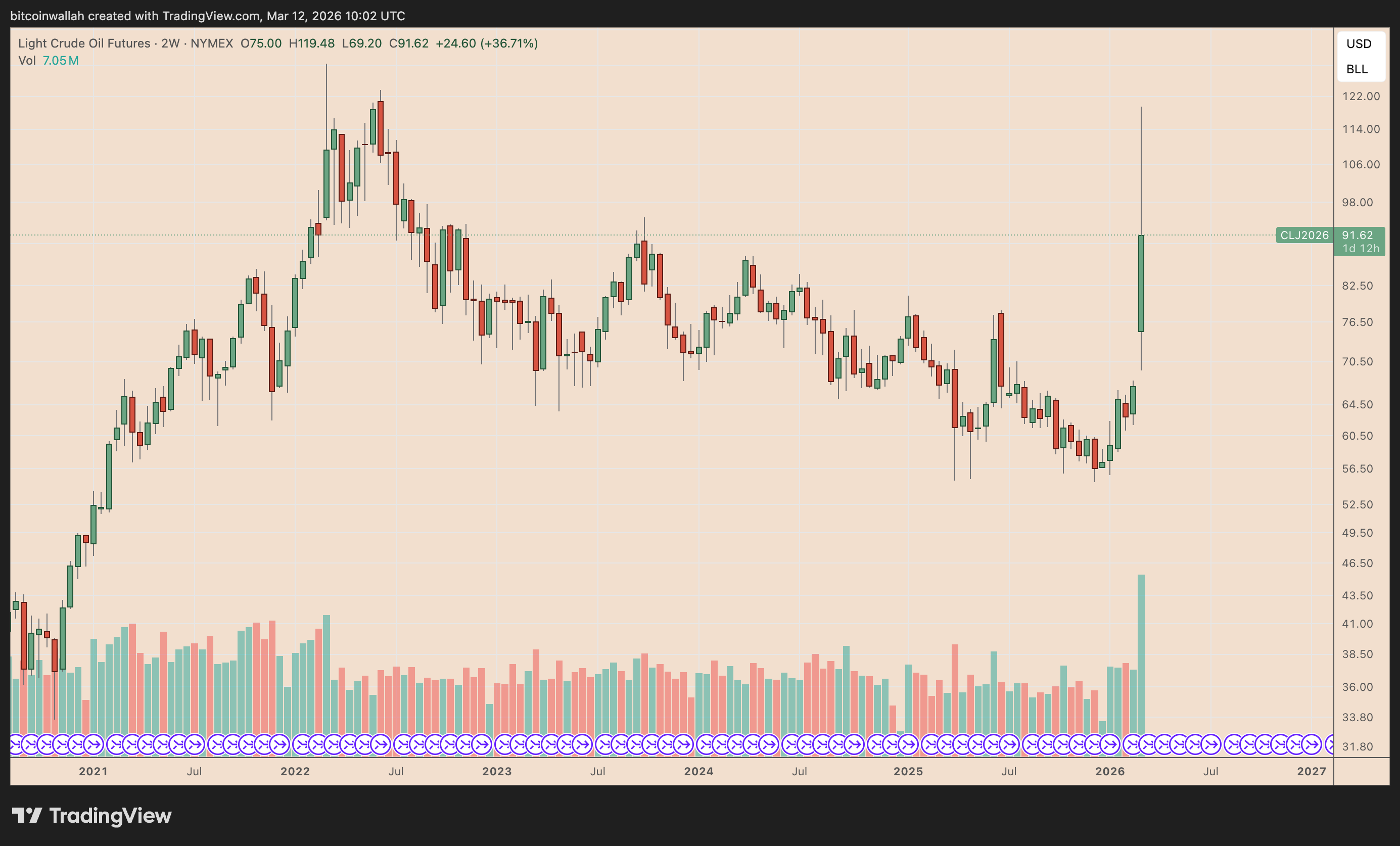
The estimates assume a one-year disruption and use 2023 or the latest available oil production data for Iran, Qatar, the UAE, and Saudi Arabia.
History shows that even relatively small oil supply disruptions can trigger outsized price spikes.
The 1979 Iranian Revolution and the 1990 Gulf War each removed roughly 4% to 5% of global supply and helped send crude sharply higher, while the 2019 Abqaiq-Khurais attack caused a near-20% intraday Brent spike on a temporary outage.
Against that backdrop, an 8% to 12% supply shock would already be bigger than the oil disruptions seen in past crises.
A 15% to 20% hit could push prices up much more sharply, even if weaker demand during a recession and emergency oil releases from governments help limit some of the upside.
Bitcoin Price Forecast
Every new Bitcoin analysis as it publishes, today's technical signal and key levels, live price — on one page.
See all Bitcoin forecastsHigher Oil Could Reignite Inflation and Raise Stagflation Risks
Federal Reserve research suggests that every 10% rise in crude oil prices can add roughly 0.35 to 0.40 percentage points to US headline CPI through higher energy costs, food prices, and second-round effects on core inflation.
Starting from a baseline oil price near $75 a barrel, the escalation scenarios imply a large enough move to add anywhere from about 1 to 7.5 percentage points to inflation, depending on how severe the oil supply shock becomes.
That would be a major problem for monetary policy. CPI is already above the Fed’s ideal target of 2%, so such an oil-driven inflation surge could leave policymakers with little room to cut interest rates and may even force them to consider tighter policy again.
If growth weakens at the same time, the economy could slip into a stagflationary setup marked by rising prices, slower demand, and tighter financial conditions.
Oil Rally Could Trigger Bitcoin’s Bear Flag Breakdown
Bitcoin’s chart is already flashing a possible bear flag, and a fresh oil rally could be the catalyst that confirms it.
After a steep drop, BTC has been moving inside a modest upward-sloping channel, a pattern that often marks a pause before the broader downtrend resumes.
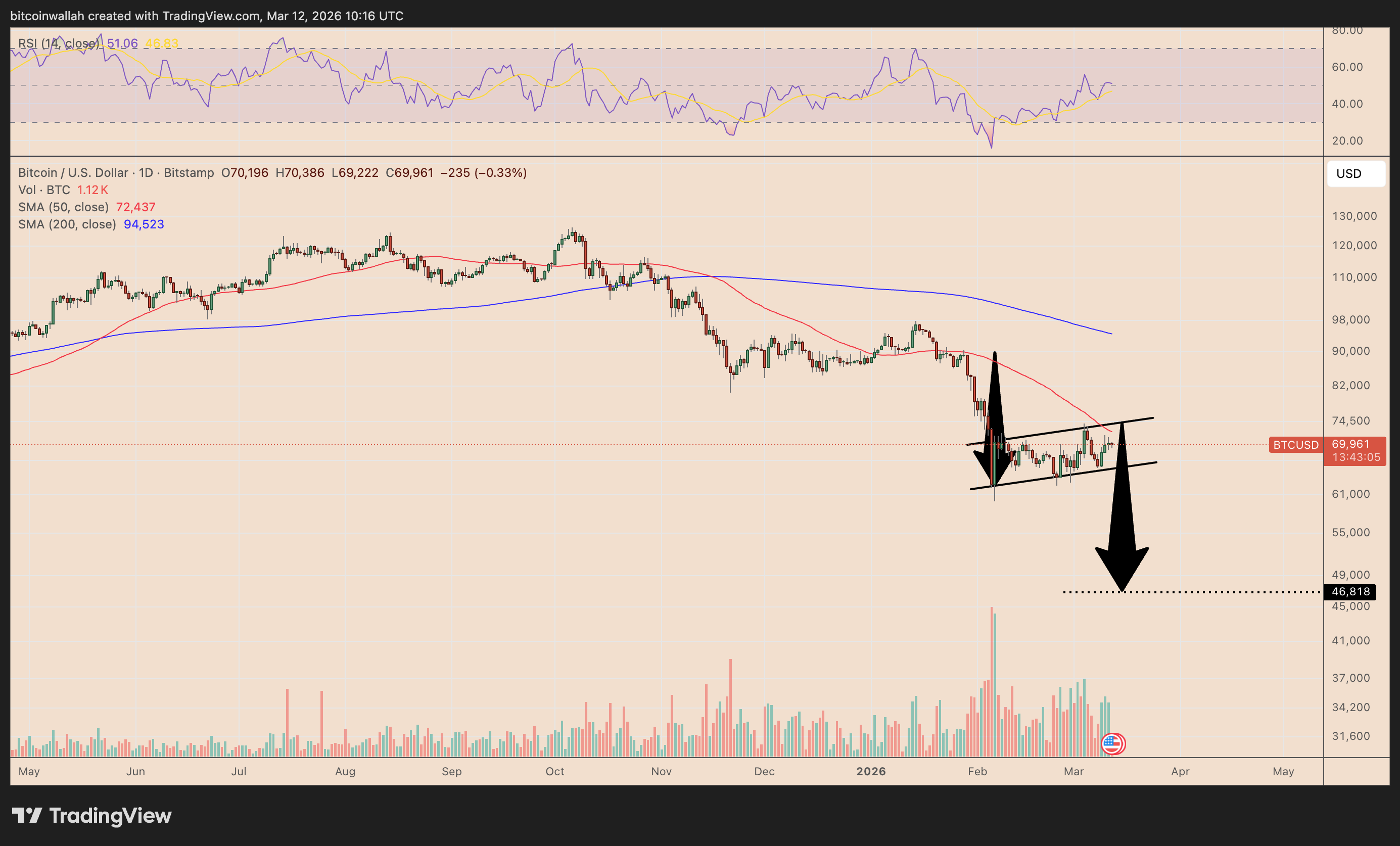
If oil surges and revives inflation fears, that macro pressure could weaken risk appetite enough to push Bitcoin below the flag’s lower support.
A confirmed breakdown would strengthen the bearish setup and shift focus toward the $46,800 area, based on the pattern’s measured downside target.