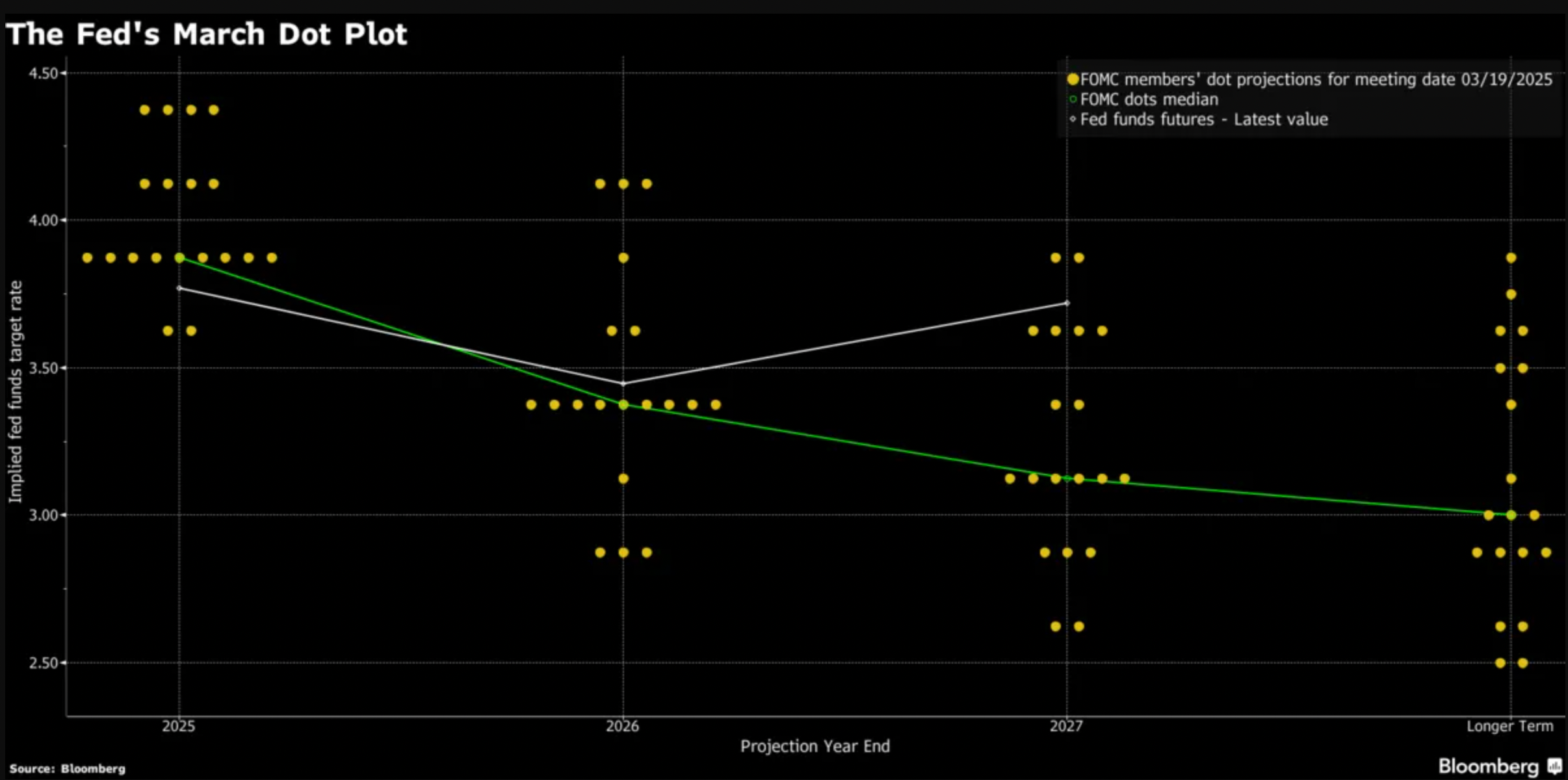
The Federal Open Market Committee (FOMC) voted to keep rates steady in the 4.25%-4.5% range and signaled only two rate cuts in 2025, consistent with its December outlook.
Here are five key takeaways from the Fed’s decision and its potential impact on Bitcoin.

1. Rate Cut Expectations Remain Limited
The Fed’s dot plot shows policymakers still anticipate two 0.25% rate cuts in 2025, keeping the federal funds rate above 4%. Markets had priced in three to four cuts earlier this year, meaning Bitcoin’s rally suggests relief that no additional hawkish surprises emerged.
Historically, Bitcoin has outperformed in easing cycles:
- 2019-2020: The last time the Fed cut rates, BTC surged from $3,000 to $12,000 before the COVID-induced market shock.
- 2020-2021: Bitcoin skyrocketed over 600% as rates hit near-zero levels.
Lower interest rates typically benefit risk assets like Bitcoin by reducing the opportunity cost of holding non-yielding investments.
2. Market Rallies on Slower Balance-Sheet Runoff
The Fed announced it would slow its balance-sheet reduction (QT) from April, cutting monthly Treasury runoff from $25 billion to $5 billion while keeping mortgage-backed securities (MBS) runoff at $35 billion per month.
Bitcoin Price Forecast
Every new Bitcoin analysis as it publishes, today's technical signal and key levels, live price — on one page.
See all Bitcoin forecasts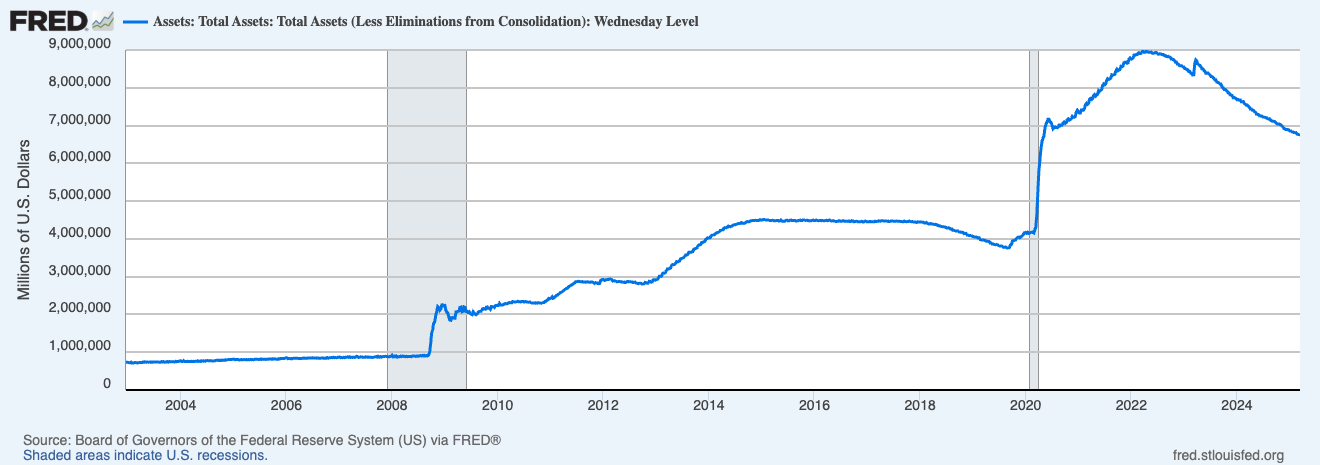
Historically, Bitcoin and other crypto assets tend to rally when liquidity flows back into markets.
- Before QT began, the Fed’s balance sheet peaked at $9 trillion in early 2022.
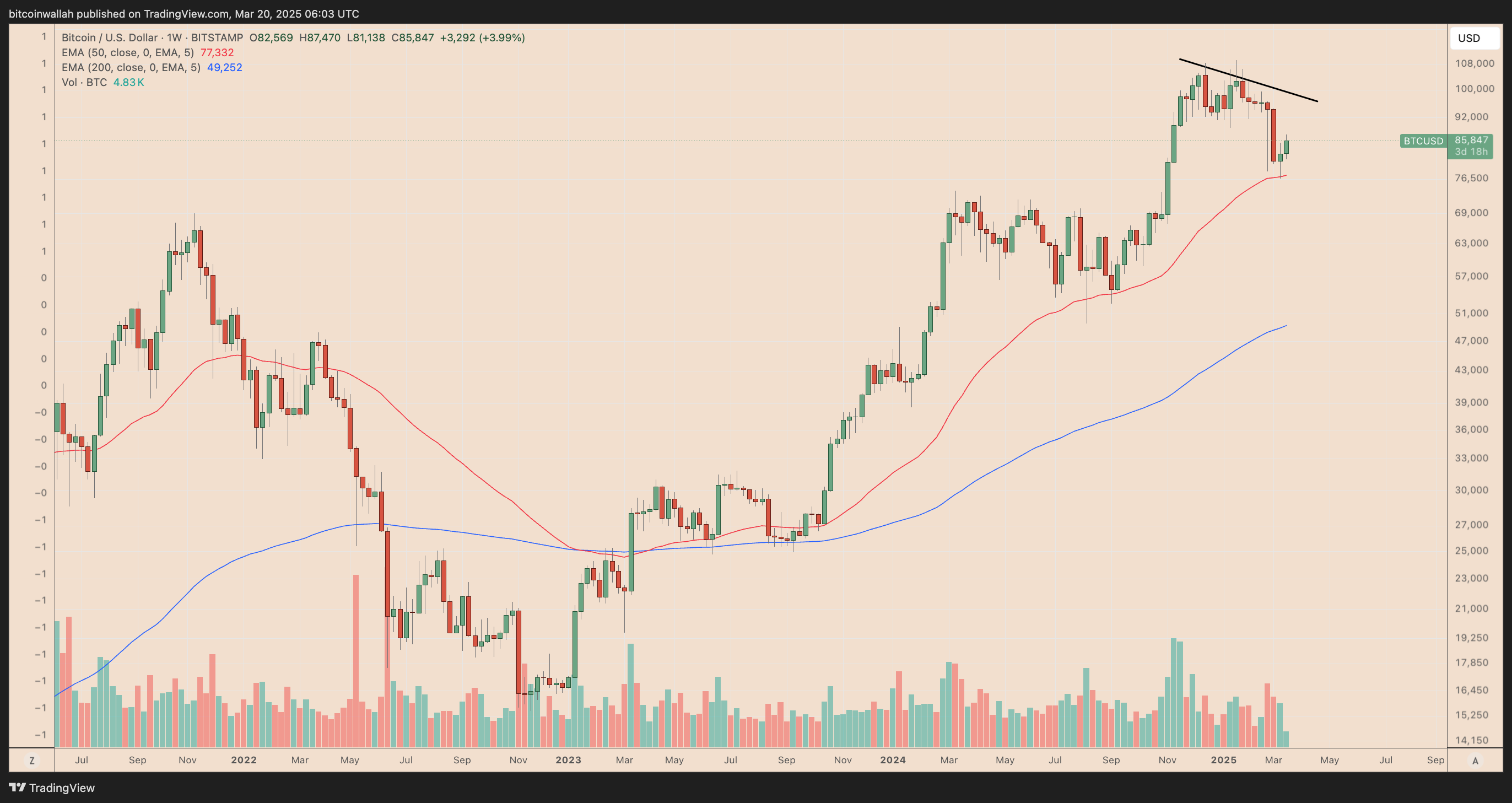
- Bitcoin dropped from $69,000 in November 2021 to $15,500 in November 2022 as liquidity tightened.
- Slowing QT signals a shift toward looser financial conditions, historically benefiting BTC.
3. Increased Uncertainty Could Fuel More Volatility
The Fed removed its previous statement that risks to inflation and employment were “roughly in balance,” instead acknowledging heightened economic uncertainty.
Bitcoin could experience increased volatility in the coming months as economic risks grow, including a potential trade war and stubborn inflation.
4. Bitcoin as a Hedge Against Inflation?
The Fed revised its 2025 inflation forecast up to 2.8% (from 2.5%), reinforcing concerns that price pressures remain sticky.
Bitcoin’s reputation as an inflation hedge remains mixed:
- During the 2021-2022 inflation surge, BTC dropped 75% as interest rates soared.
- However, in 2023-2024, BTC rebounded 200% alongside gold as inflation concerns persisted.
- Fed may change its dovish stance if inflation remains sticky due to the trade war and other unforeseeable factors.
If inflation remains elevated, investors may turn to gold as an alternative store of value. Bitcoin, for now, is behaving like a risk-asset, which may dampen its upside sentiment.
5. Institutional Demand Remains Strong
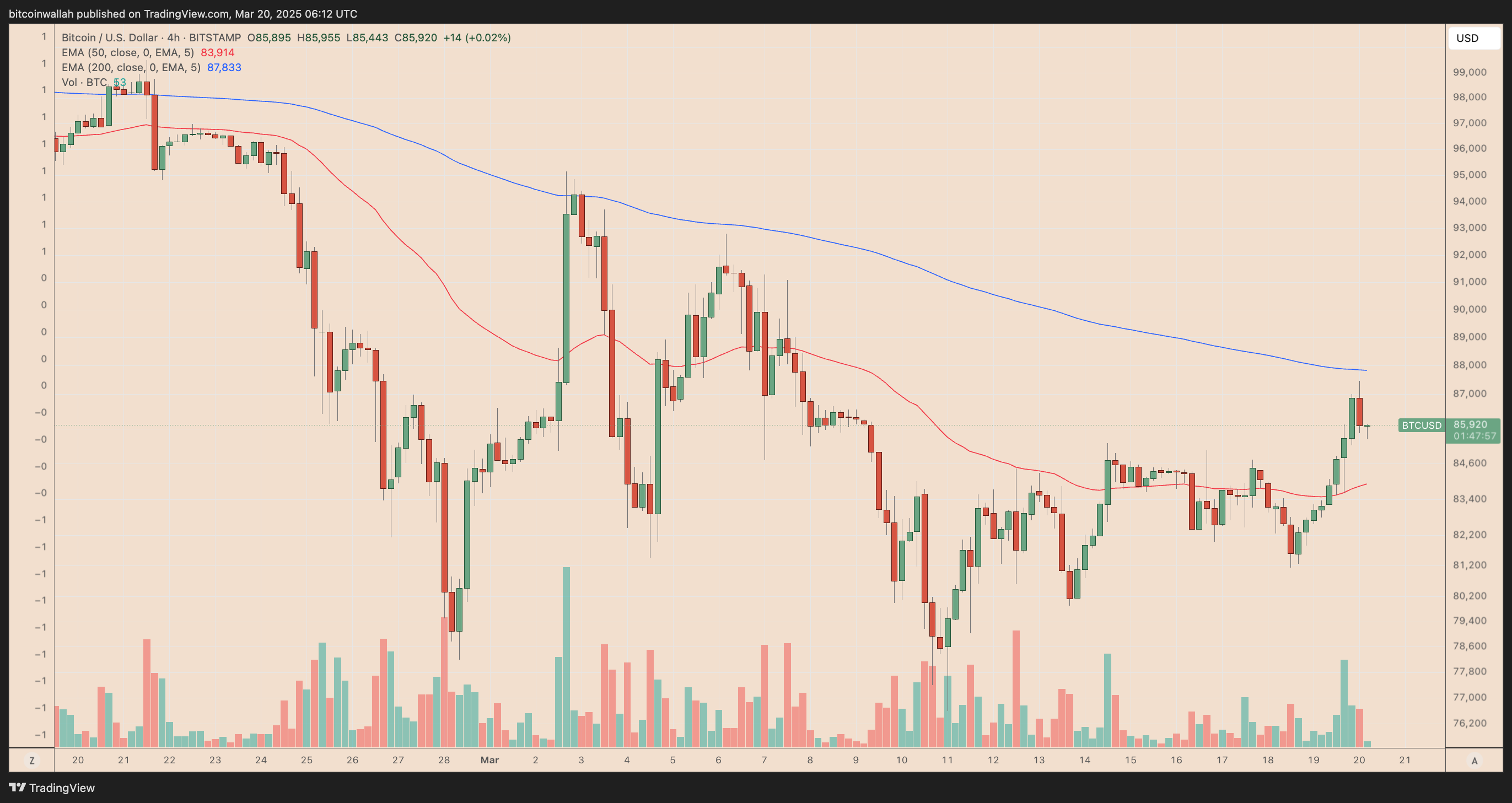
Bitcoin’s 4% rally post-Fed announcement aligns with its US-based spot exchange-traded funds (ETF) inflows.
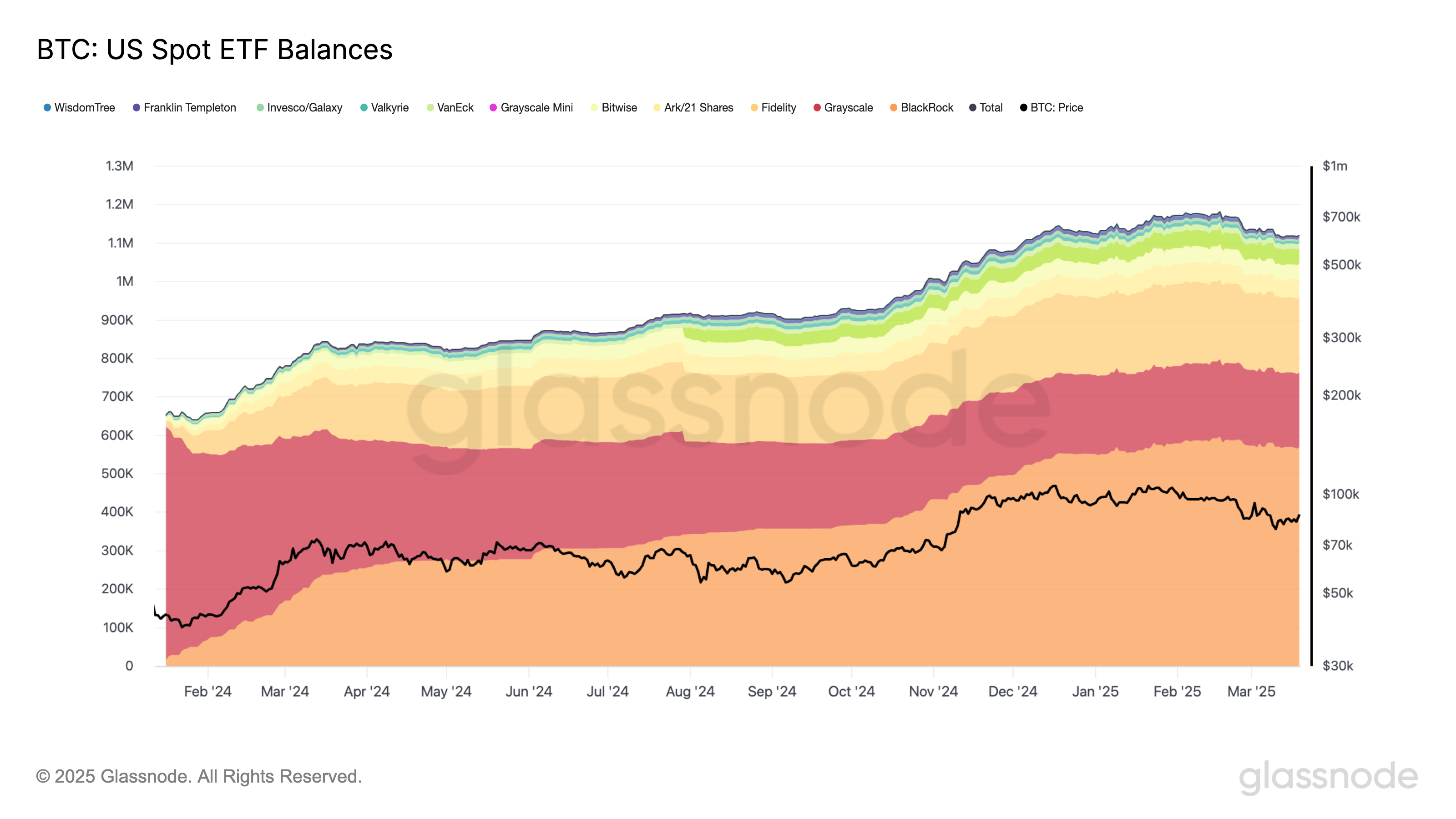
With liquidity conditions set to ease and potential rate cuts later in 2025, institutional interest in Bitcoin may continue to grow. However, it is important to watch for signs of persistent inflation, which may push investors toward safer bets like gold or even the Euro.