


Cardano (ADA) has shed 50% this year as this bear market has inflicted significant damage on the blockchain’s aspirations to grow its ecosystem and draw interest to its architecture.
Just two days ago, Cardano suffered yet another blow to its credibility as hackers managed to drain 515 million NIGHT tokens from the Wanchain bridge, valued at around $10 million when the incident occurred.
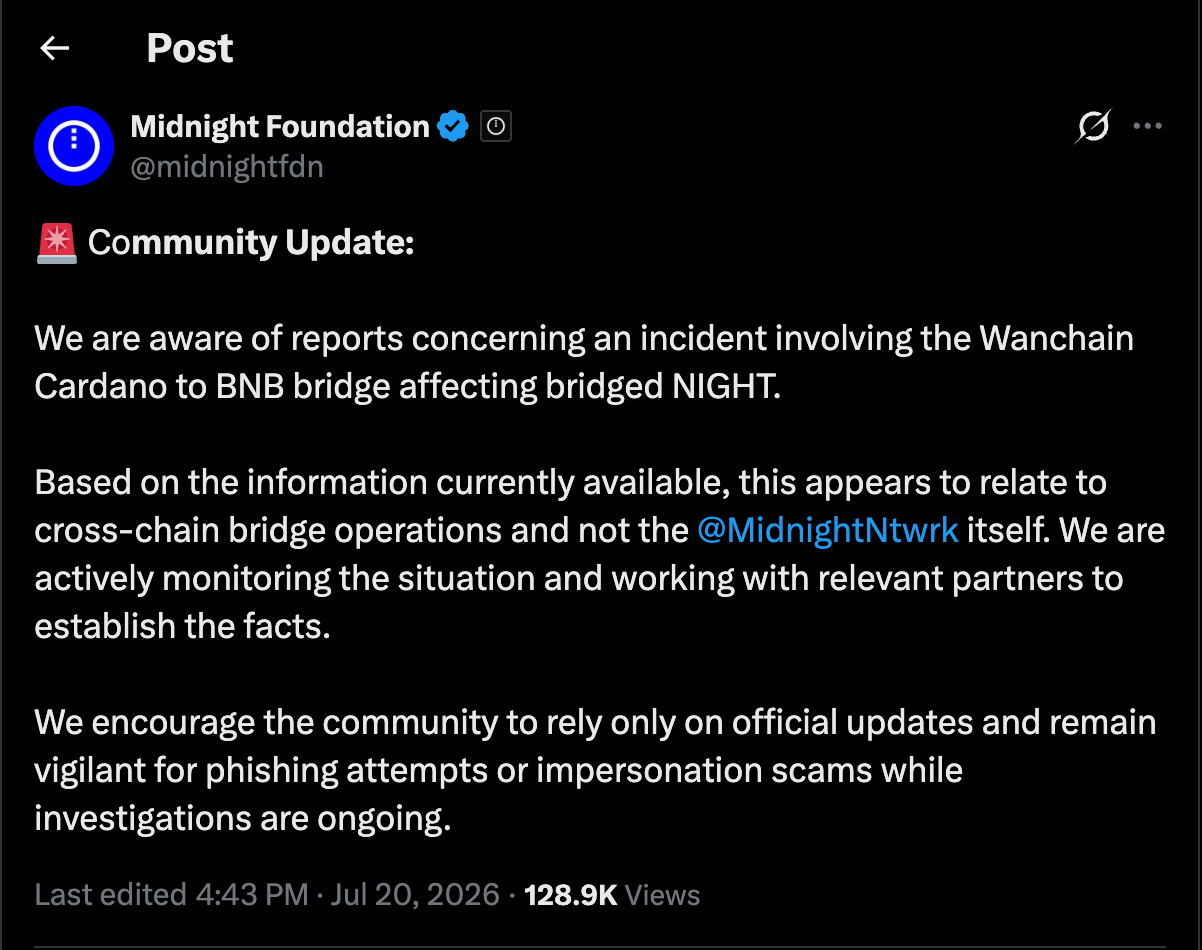
The hack highlighted the persistent vulnerabilities that the crypto space is exposed to, as third-party protocols used to connect different blockchains, in this case the BNB Chain and the Cardano chain, continue to be exploited by hackers via faulty code or governance protocols.
The price of NIGHT quickly plunged by around 30% after the news broke. This project is supposed to be a privacy chain associated with Cardano. However, this bear market obscured its launch and kept a lid on its market capitalization.
ADA Seems Overvalued Based on On-Chain Data
Cardano has been a zombie blockchain for months now, as the project has seen its transaction volumes, daily active addresses, and other on-chain metrics take a big dive.
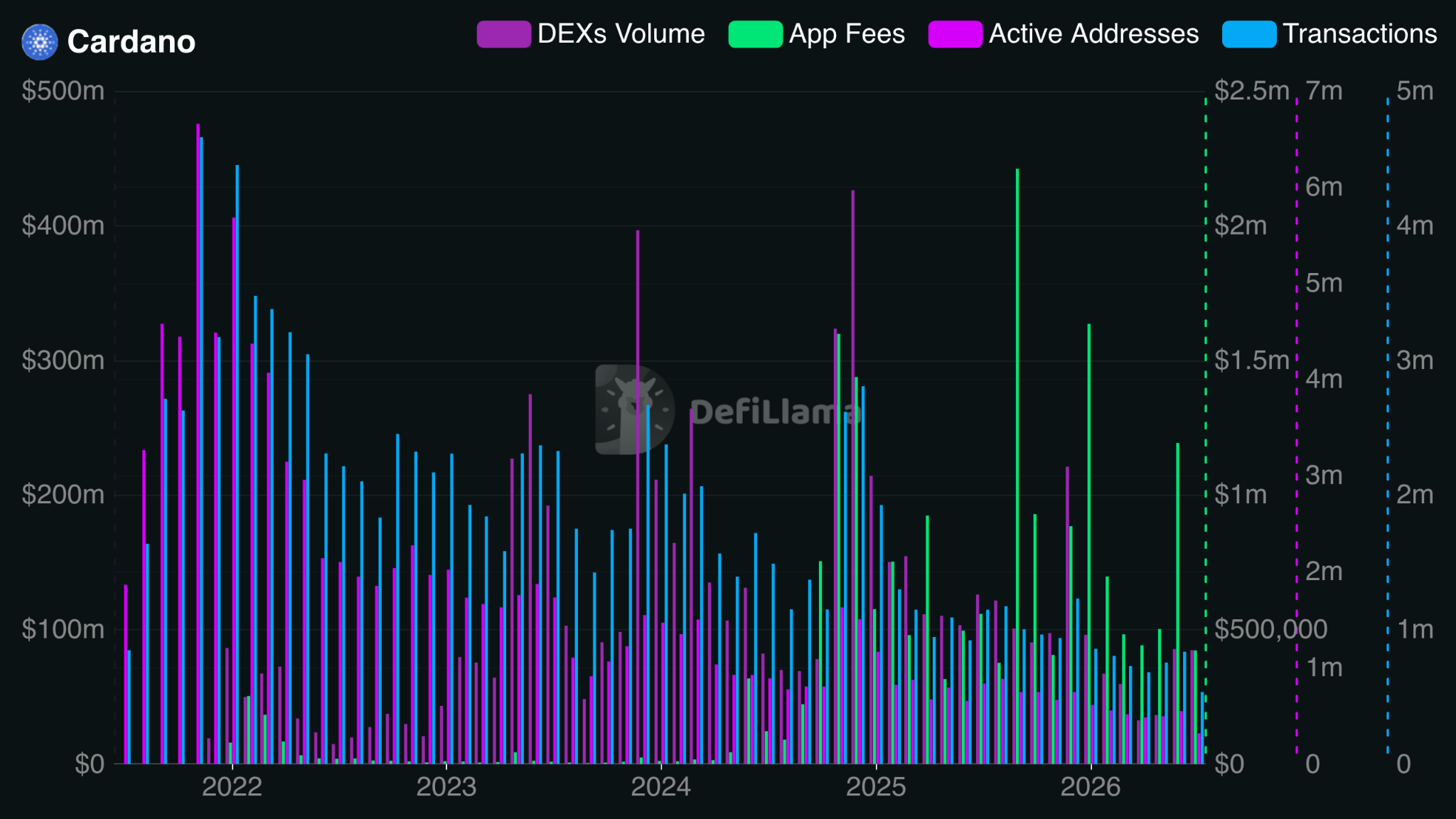
Last month, decentralized exchanges within the Cardano blockchain processed just $86 million in trading volumes while decentralized apps collected less than $1.2 million in fees, making this the fifth best month for these protocols in roughly 4 years.
The network’s total value locked (TVL) currently sits at $67 million, which is a dismal figure compared to Ethereum’s $41 billion and Solana’s $4.9 billion. Meanwhile, its daily active users stood at 550,000 in June.
Comparatively, during the same month, the Solana blockchain took in $183 million in application fees, processed $65 billion in DEX volumes, and had nearly 58 million active addresses, as per data from DeFi Llama.
Despite its heavily depressed on-chain metrics, Cardano is still being valued at $6 billion or 500 times its projected annual app fees using a very optimistic forecast of $12 million per year.
Meanwhile, Solana’s same valuation metric stands at a much more reasonable level of 180x its projected annual app fees, showcasing a significant disconnection between the blockchain’s ecosystem size and its valuation.
This increases the odds of a big correction in ADA’s price down the road, especially at a point when demonstrating a network’s real-world use cases is becoming a top priority for investors.
Weekly Pattern Showcases ADA’s Potential to Deliver a 180% Gain
Heading to the charts, we have been tracking an interesting pattern in the weekly chart that first showed up in 2022, back when market conditions were pretty similar to these.
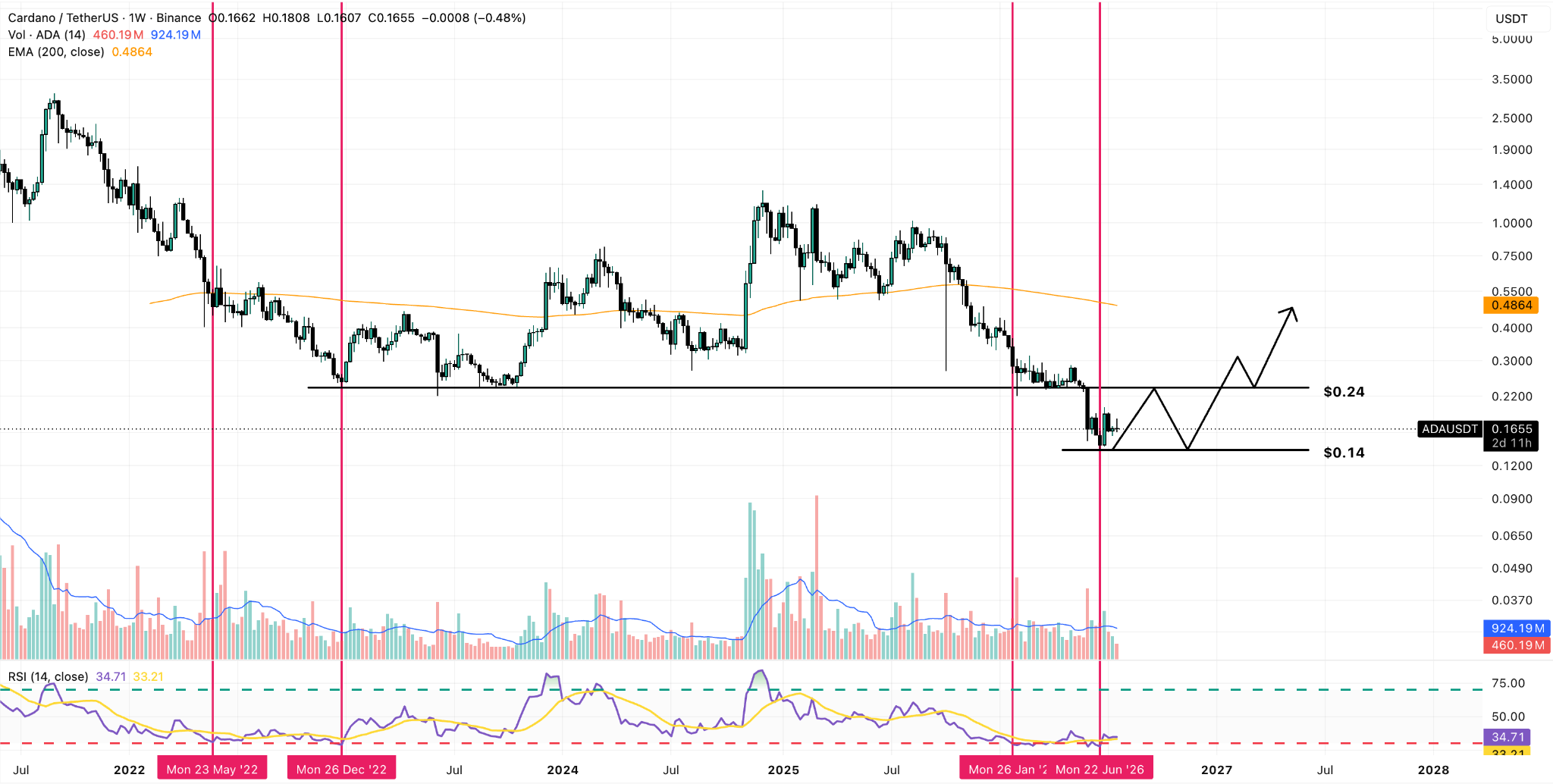
The price of ADA made a first bottom after the Relative Strength Index (RSI) dropped to 30 for the first time and then made a second and definite bottom around 7 months later.
We see a similar pattern potentially unfolding this time, with ADA making a first low at $0.24, and possibly hitting its definite cycle bottom at $0.14.
What we see is the potential for a strong recovery to $0.47 at least, which would result in a 183% gain in the near term.
However, as the blockchain’s on-chain metrics indicate, this is a zombie chain that has failed to demonstrate its real-world use cases and has missed most of crypto’s biggest trends — e.g., DeFi, meme coins, and RWAs.
Hence, its upside potential in the long term remains capped, as its valuation metrics seem heavily stretched despite its recent downturn.