


The Lithography Bottleneck
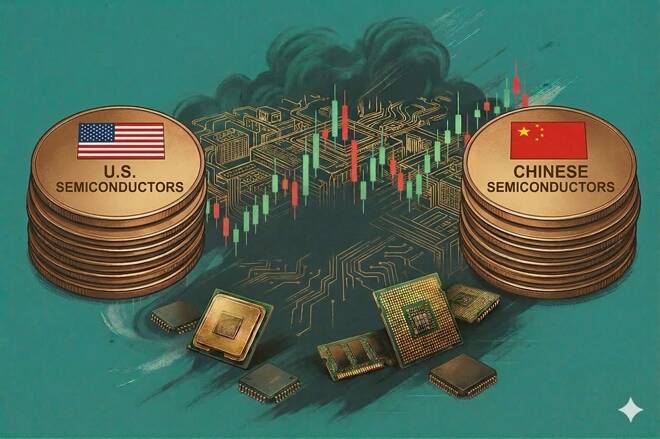
Since 2020, semiconductor manufacturing has become a central front in the technology rivalry between the United States and China. Washington’s policy framework has been explicitly designed to slow China’s progress in advanced chip production, particularly at process nodes below 7 nanometres. The most consequential constraint lies in lithography equipment, where access to cutting-edge tools has been systematically restricted.
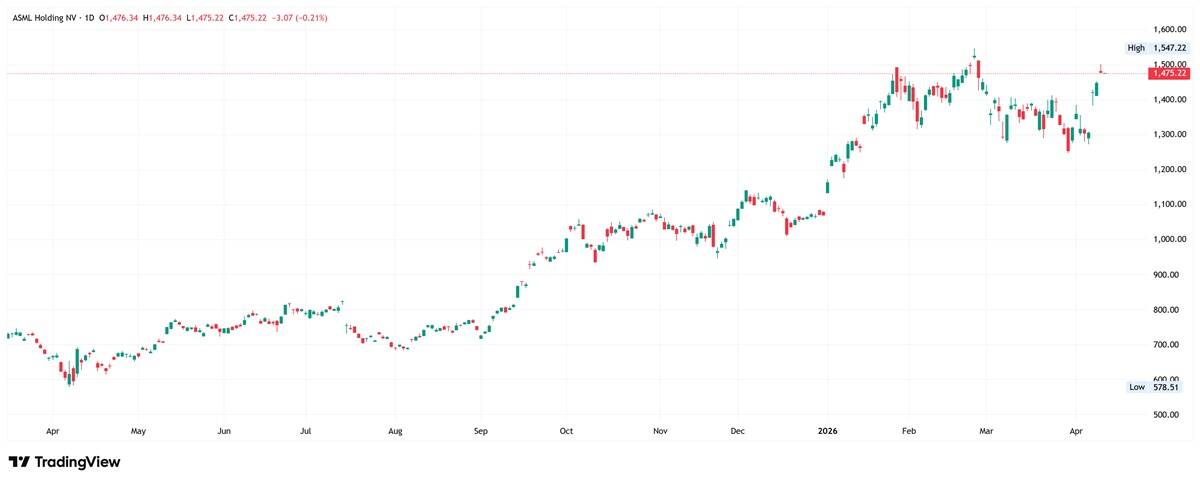
At the core of this bottleneck is ASML, the Dutch company that is the sole global supplier of extreme ultraviolet (EUV) lithography systems. These machines are indispensable for producing the most advanced chips used in AI, high-performance computing, and next-generation mobile devices. Because US technology is incorporated in ASML’s systems, Washington has barred the company from exporting EUV equipment to China. As a result, Chinese foundries such as SMIC and Hua Hong Semiconductor are unable to manufacture leading-edge chips at scale — in contrast to competitors such as TSMC (Taiwan Semiconductor Manufacturing Company).
This technological gap explains why revenue growth has not translated into comparable advances in capability. Chinese firms have been operating with older-generation equipment, limiting their ability to compete in the high-margin, advanced-node segments where the industry’s most significant profits are generated. Much of the recent expansion has been concentrated in mature-node production, where barriers to entry are lower but margins are structurally thinner.
Beijing’s Strategic Response
US restrictions have not produced a purely negative outcome for China’s semiconductor sector. On the contrary, they have accelerated a broad-based industrial policy response centered on technological self-reliance. Beijing has elevated semiconductors to a national strategic priority — alongside aviation and biotechnology — embedding them into long-term planning frameworks, including the recently published 15th Five-Year Plan.
Chinese industry leaders are now calling for a coordinated effort to develop domestic lithography systems between 2026 and 2030. While China has achieved incremental progress in key subsystems — including EUV light sources, wafer stages, and optical components — integrating these elements into a fully operational platform remains a formidable engineering challenge. Progress at the component level does not automatically translate into system-level capability, and this gap highlights the deep complexity of the semiconductor value chain.
The feedback loop here is notable: tighter restrictions incentivize faster development of domestic alternatives, but with significant time lags and efficiency costs. Each round of US export controls has been followed by accelerated domestic capacity expansion and increased investment in local toolmakers.
The Risk of Overcapacity
The policy-driven expansion carries its own risks. A significant proportion of current revenue growth is linked to import substitution rather than genuine technological upgrading. This raises emerging concerns about overcapacity in mature-node chips, where Chinese firms are scaling production aggressively despite weaker long-term pricing power. So the central question for the sector is whether it can transition from volume-driven growth to value-driven innovation, particularly in advanced memory technologies and next-generation logic nodes.
At the same time, domestic alternatives have become increasingly available across several subsystems — though not yet across the entire supply chain. This substitution has reduced dependency in certain segments, even as the most critical manufacturing technologies remain out of reach.
The Trade Policy Horizon: Could Controls Tighten Further?
Proposed US legislation — most notably the Multilateral Alignment of Technology Controls on Hardware Act (MATCH Act) — would extend restrictions to deep ultraviolet (DUV) lithography systems. These tools, also supplied by ASML, are less advanced than EUV but remain essential for producing a wide range of semiconductors currently manufactured in China. According to Bernstein Research, if enacted, such measures could significantly constrain China’s ability to expand even its existing production capacity, particularly in advanced logic and memory segments.
This evolving regulatory landscape is particularly relevant ahead of US-China discussions scheduled for May 14 and 15, 2025, where technology controls are expected to feature prominently. For market participants, these talks represent a potential inflection point: any escalation or easing of restrictions could have immediate implications for global semiconductor supply chains, equipment manufacturers, and the downstream industries reliant on advanced chips.
Bottom Line
China’s semiconductor sector remains caught between short-term resilience and long-term constraints. Revenue growth reflects genuine demand and effective policy support, but technological limitations continue to cap the industry’s position within the global hierarchy. The trajectory from here will depend on two variables: the extent to which US restrictions are tightened further, and China’s ability to close the gap in critical technologies — particularly lithography — where the engineering challenge remains formidable.
Sources: IBD, South China Morning Post, Congress, Reuters, CNBC