Dogecoin (DOGE) remains one of the biggest casualties of the post-memecoin boom, trading near $0.070 as of Aug. 17, down roughly 85% from its 2024 high of $0.48
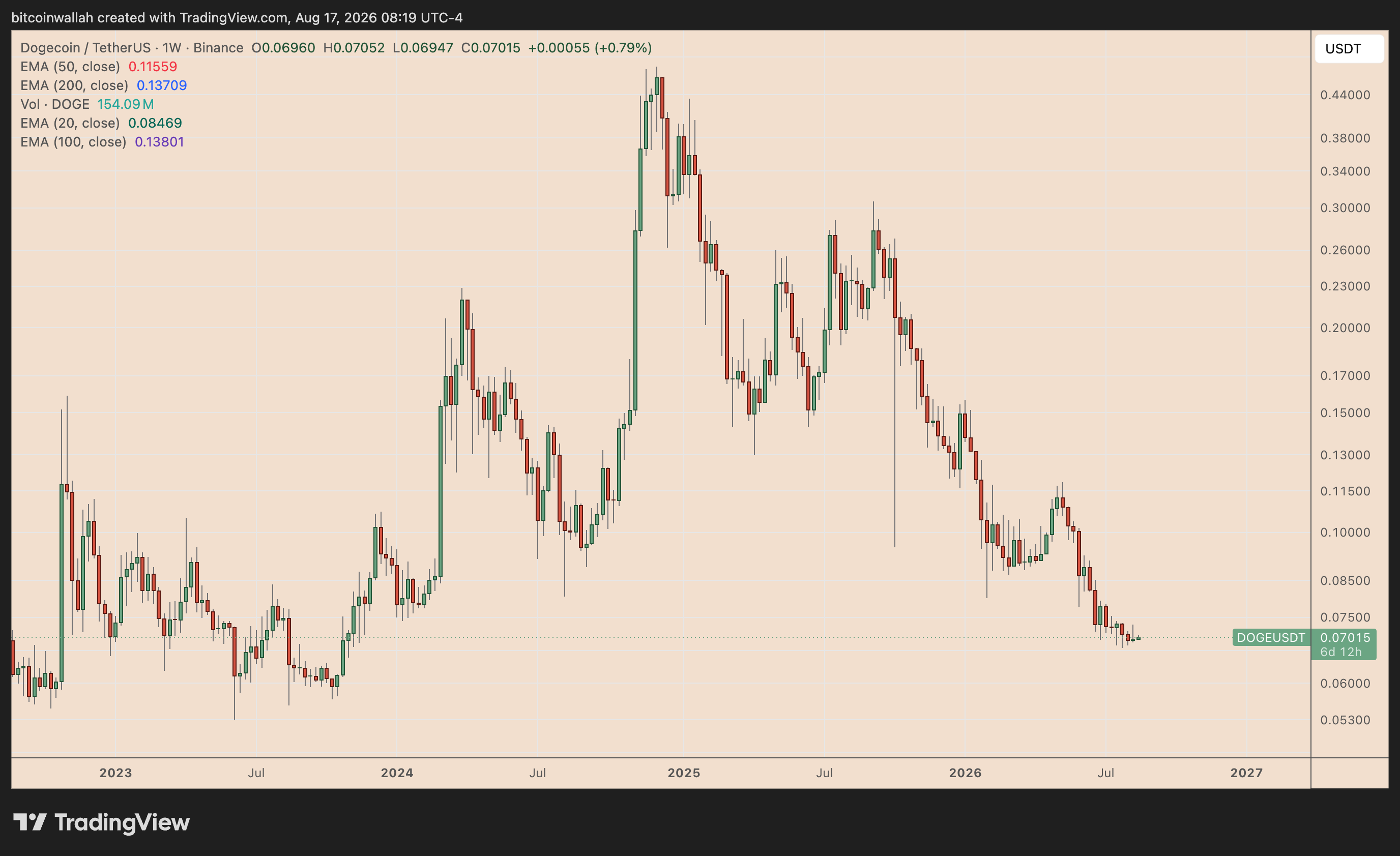
The decline has left DOGE below all of its major long-term exponential moving averages, reflecting persistent selling pressure and weak speculative demand.
But Dogecoin is now painting a convincing bullish reversal pattern that could put a 130% rebound on the table.

DOGE Falling Wedge Targets $0.16
Dogecoin’s three-day chart shows its price compressing inside what appears to be a falling wedge, formed by two descending trendlines that are gradually converging.
Falling wedges are typically considered bullish reversal structures when price breaks decisively above the upper trendline.
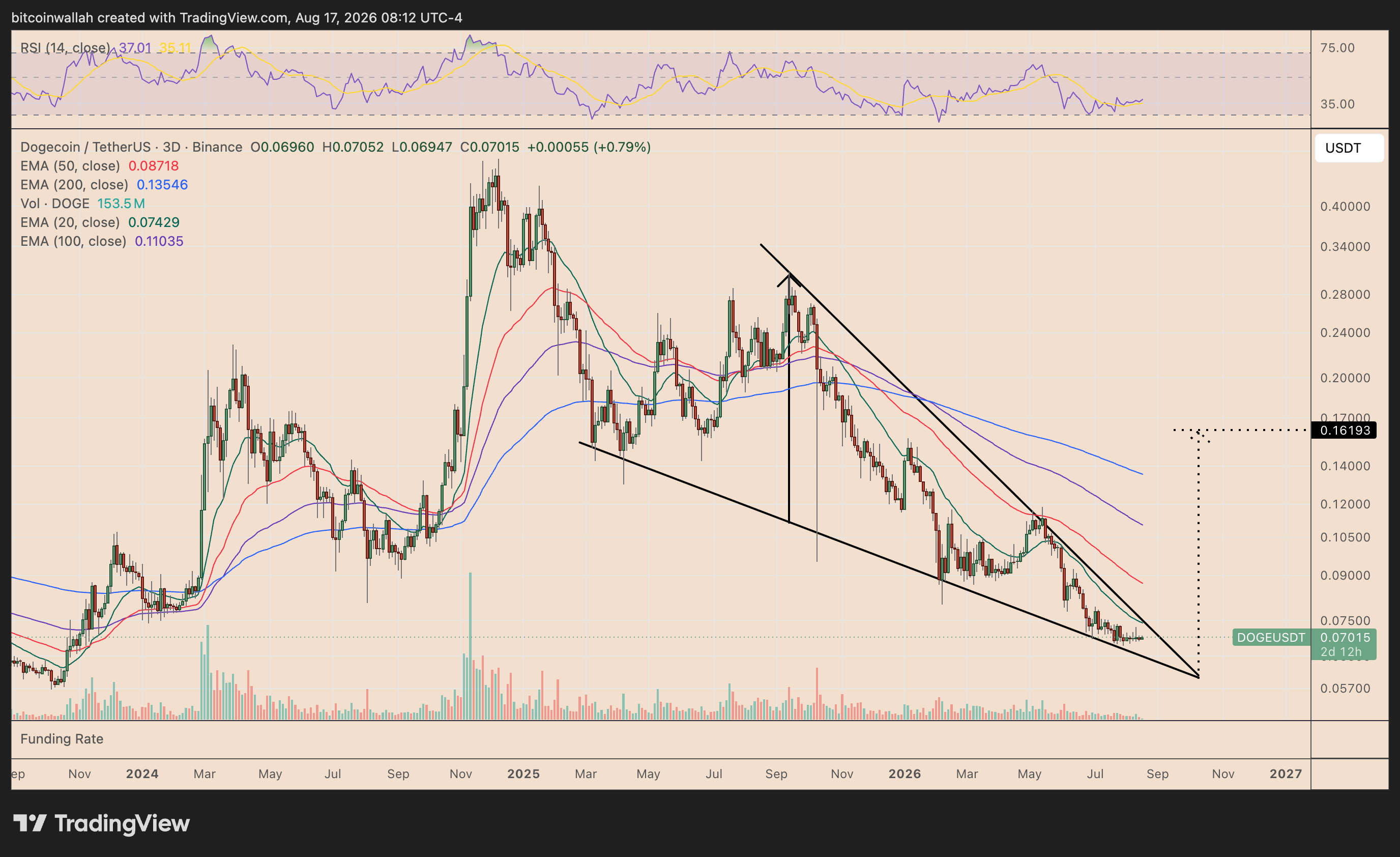
DOGE is currently trading near $0.070, close to the wedge’s lower boundary. Its three-day Relative Strength Index (RSI) has also dropped to around 37, indicating weak momentum without yet entering deeply oversold territory.
The first major hurdle sits near DOGE’s 20-period EMA (green) at $0.0743. A decisive breakout above the wedge resistance and this EMA could strengthen the reversal case.
DOGE would then face its 50-period EMA (red) near $0.087, followed by the 100-period EMA (purple) around $0.110 and the 200-period EMA (blue) near $0.135.
The wedge’s broader upside target sits around $0.16–$0.162, approximately 130% above current prices.
Conversely, a breakdown below the wedge’s lower trendline could expose DOGE to another decline toward the $0.057–$0.060 area.
Dogecoin Price Forecast
Every new Dogecoin analysis as it publishes, today's technical signal and key levels, live price — on one page.
See all Dogecoin forecastsWhy Has Dogecoin Underperformed?
Dogecoin’s weakness may partly reflect something it had in abundance during its 2021 boom: Elon Musk hype.
A 2023 study examining Musk’s crypto-related posts found statistically significant abnormal returns and higher trading volumes following his comments, with the price effect particularly strong for Dogecoin-related posts.
DOGE has not enjoyed the same sustained Musk-driven attention cycle during its latest downturn.
Meanwhile, speculative attention has increasingly moved toward prediction markets, giving retail traders another high-volatility venue outside memecoins.
Kalshi, Polymarket and Polymarket US generated a record $50.59 billion in combined trading volume in July, up 7.8% from June. Kalshi alone processed about $37.7 billion, while Polymarket US volume jumped 54% month over month.
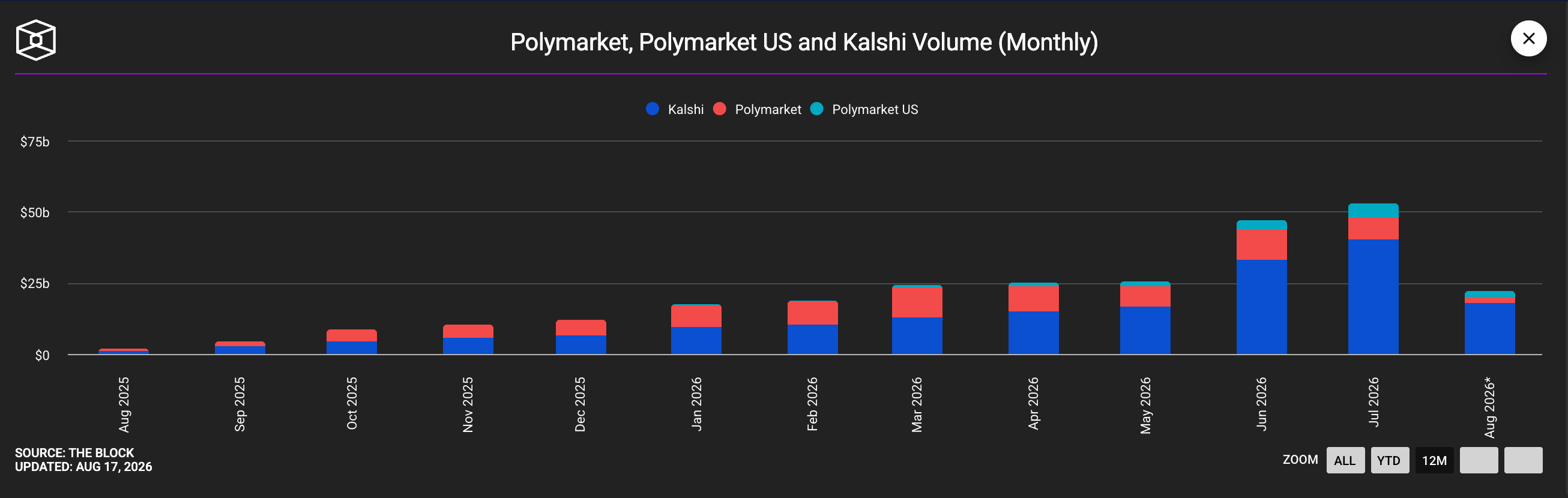
Pew Research noted that prediction-market trading volume has risen dramatically since mid-2025.
The data highlights growing competition for the same speculative capital and attention that once helped fuel Dogecoin’s explosive rallies.