AI displacement jitters abate as markets eye President Trump’s 2026 State of the Union Address. US stock futures advanced during the Asian session on Wednesday, February 25, following the previous day’s rebound, but remain exposed to a period of uncertainty.
USD/JPY hovered near 156 after hawkish Fed Minutes and fading bets on an April BoJ rate hike triggered a recovery from the February 12 low of 152.267. While the Nikkei 225 rallied 1.44% in early trading on February 25, the weaker USD/JPY continues to fuel yen carry trades into US risk assets.
While markets remain exposed to rising geopolitical risks and AI displacement fears, ongoing bets on an H1 2026 Fed rate cut continue to support a bullish medium-term outlook for US stock futures.
Below, I’ll outline the key market drivers, the medium-term outlook, and the technical levels traders should watch.

Bank of Japan Rate Hike Bets Fade
USD/JPY rallied 0.81% on February 24, briefly climbing to a two-week high of 156.279 before easing back to close at 155.894. The pair held onto its gains in early trading on February 25, rising to 155.907.
This week, reports of Prime Minister Takaichi raising concerns about the Bank of Japan tightening monetary policy tempered expectations of an April rate hike. Meanwhile, the Fed’s hawkish Minutes and robust US economic indicators cooled bets on a June Fed rate cut, signaling wider-than-expected rate differentials in favor of the US dollar. Wide rate differentials would continue to drive capital into US risk assets via yen carry trades.
Dow Jones Price Forecast
Every new Dow Jones analysis as it publishes, today's technical signal and key levels, live price — on one page.
See all Dow Jones forecasts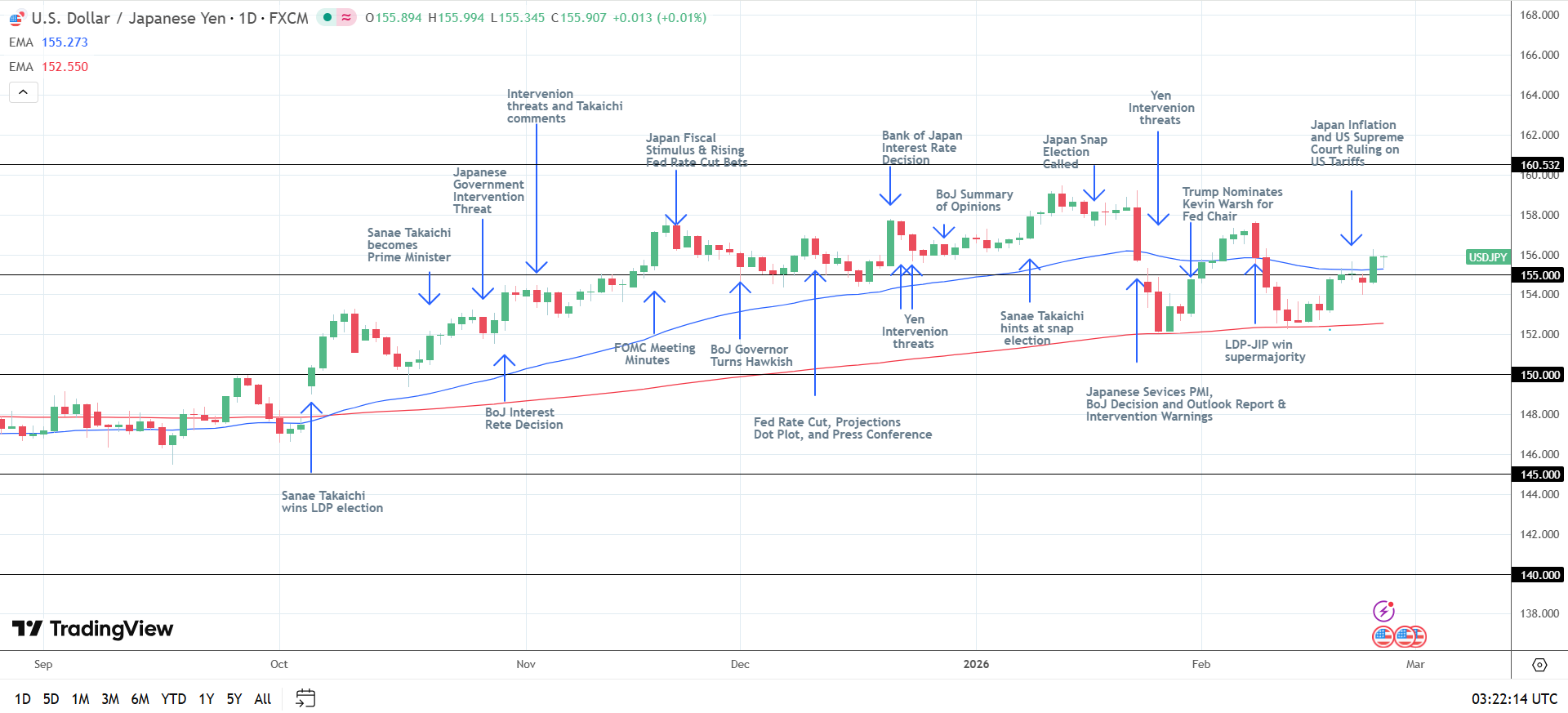
Trump Tariffs and the Fed in Focus
US futures advanced during the Asian session on February 25. The Dow Jones E-mini gained 38 points, while the Nasdaq 100 E-mini and the S&P 500 E-mini climbed 71 points and 11 points, respectively.
Later in Wednesday’s session, Fed speakers may influence expectations of a June Fed rate cut. FOMC members’ insights into inflation, the labor market, and the timeline for rate cuts will be key for near-term market trends.
According to the reports, the probability of a June Fed cut fell from 54.3% on February 23 to 49.6% on February 24. Despite the latest numbers, markets expect two Fed rate cuts in 2026, with a year-end target rate of 3.00%-3.25%. Fed rate cuts remain crucial to the bullish medium- to longer-term outlook for US stock futures.
Key Technical Levels for Dow Jones, Nasdaq 100, and S&P 500
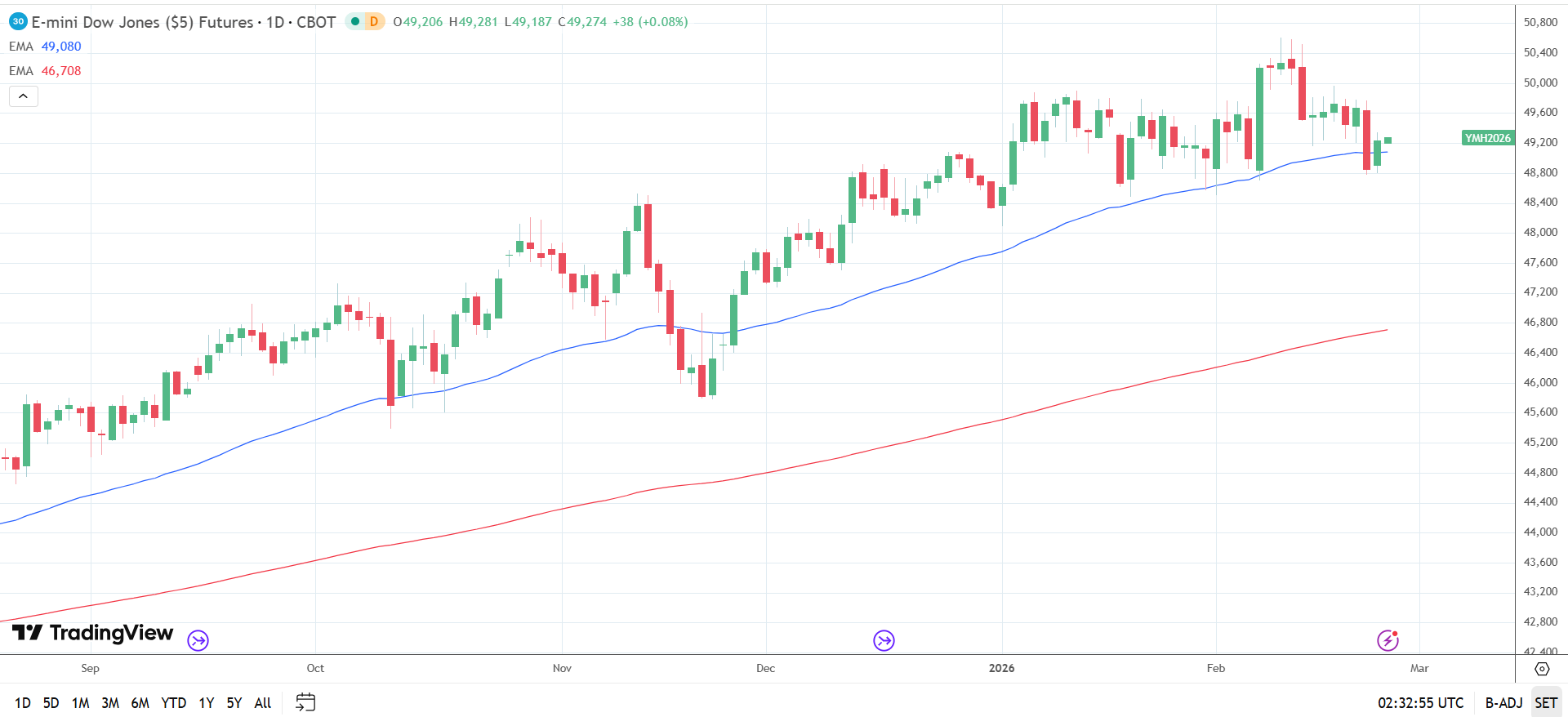
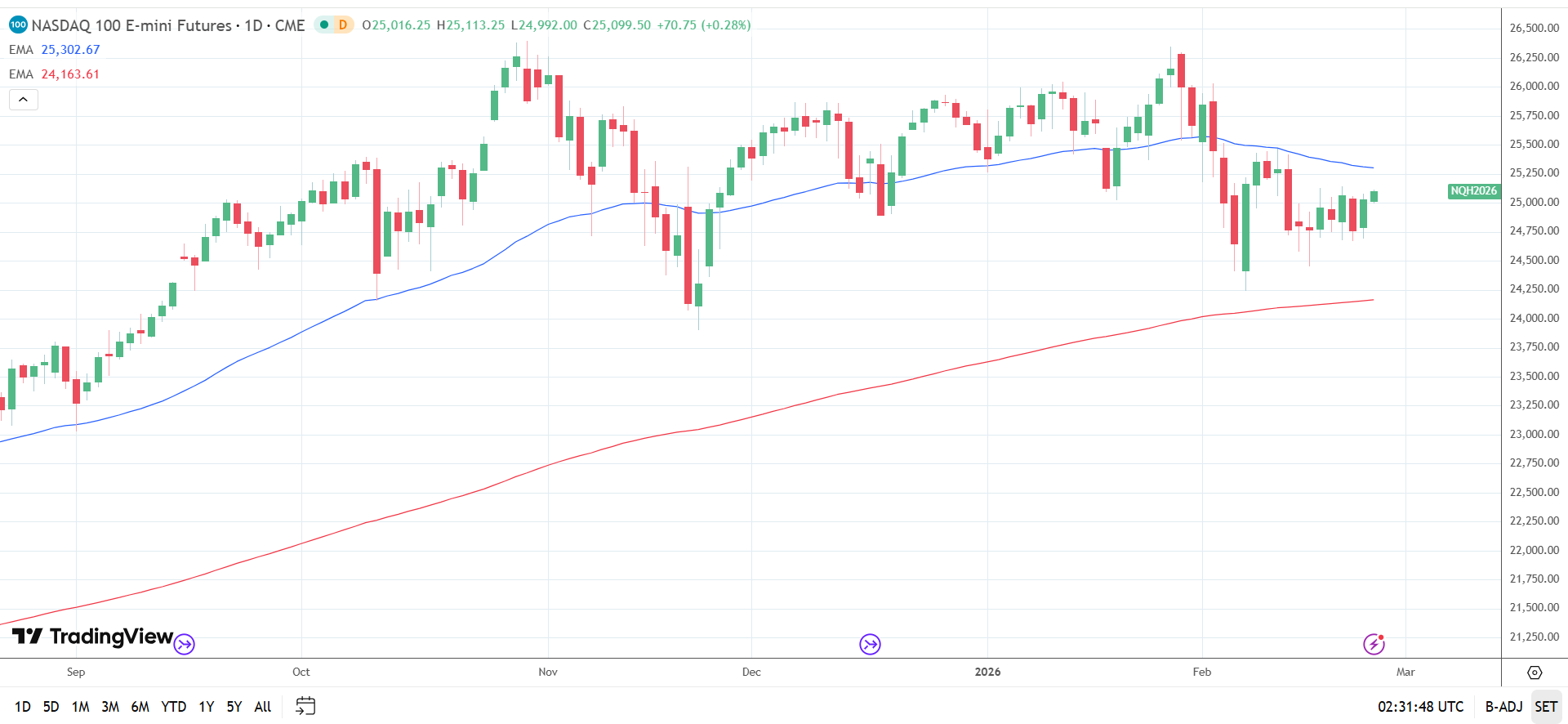
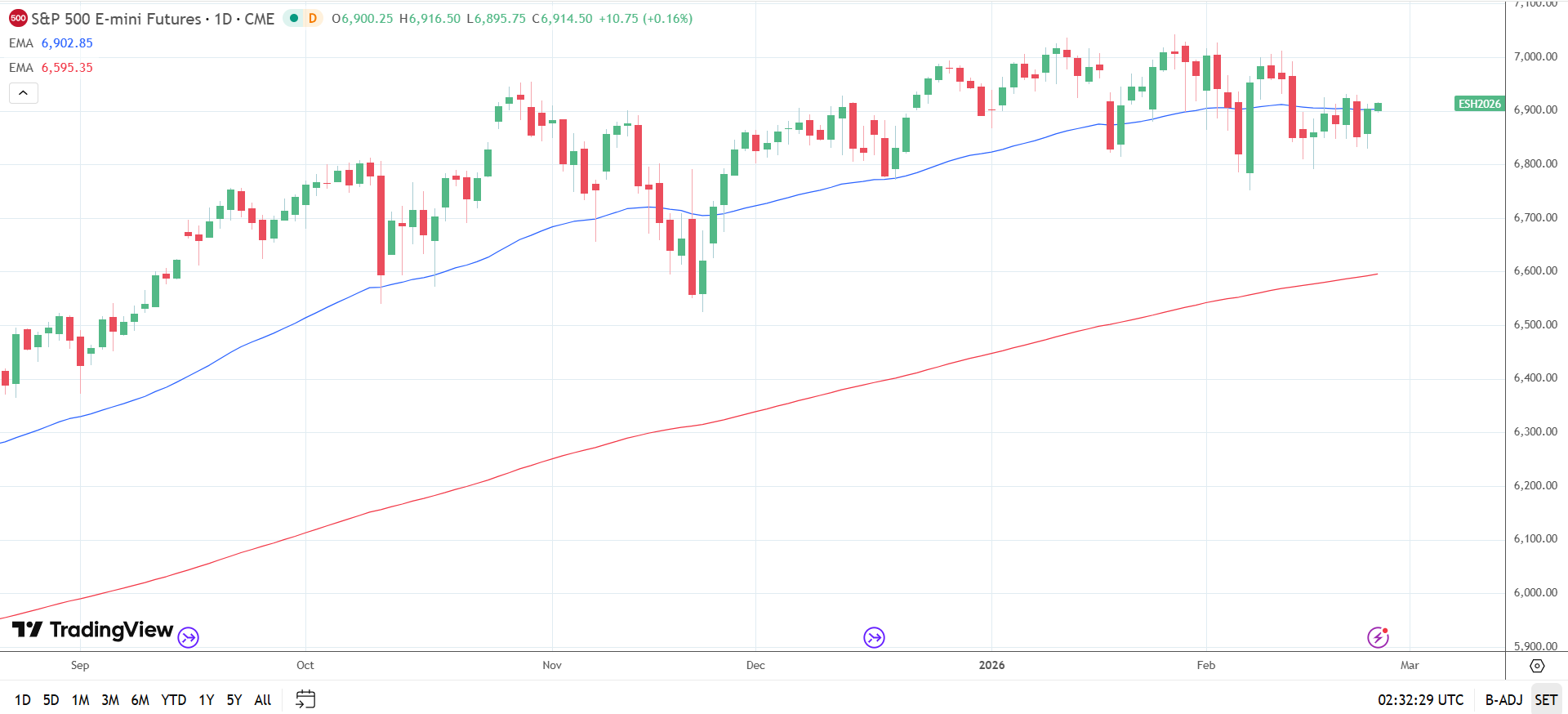
Following the latest rebound, the Dow Jones E-mini and the S&P 500 E-mini trade above their 50-day and 200-day EMAs. The EMA positions indicate a bullish bias. However, the Nasdaq 100 E-mini remained below its 50-day EMA, while holding above its 200-day EMA. The EMA positions signal a bearish near-term bias, but a bullish longer-term outlook.
The technicals broadly support a cautiously bullish near-term outlook. Rate cut hopes align with the longer-term technicals and the bullish medium-term projection.
Near-term trends hinge on Trump’s tariff policies, US economic indicators, central bank chatter, and geopolitical risk in the Middle East. Key levels to monitor include:
Dow Jones
- Resistance: the February 10 record high of 50,611 and then 51,000.
- Support: the 50-day EMA (49,080) and then 48,500.
Nasdaq 100
- Resistance: the 50-day EMA (25,303), and then the October 30 record high of 26,399.
- Support: 25,000, 24,500, and then the 200-day EMA (24,164).
S&P 500
- Resistance: 7,000 and then the January 13 high of 7,036.
- Support: the 50-day EMA (6,903), 6,750, and then the 200-day EMA (6,592).
Outlook: US Economic Indicators and the Fed Key to Bullish Sentiment
In my opinion, the short-term price outlook remains cautiously bullish. Meanwhile, ongoing expectations of a June Fed rate cut reinforce the bullish medium-term outlook. These favorable fundamentals align with longer-term technicals for US stock futures.
However, several events would likely derail the bullish medium-term outlook, including:
- A US-Iran conflict.
- The Bank of Japan announces a higher-than-expected neutral interest rate (hawkish: potentially 1.5%-2.5%). Narrowing rate differentials could trigger a yen carry trade unwind as seen in mid-2024. Reduced liquidity would weigh on US risk assets. Such a scenario would invalidate the cautiously bullish short-term outlook.
- US economic data and the Fed cool rate cut bets.
Conclusion: Bullish Bias Remains Intact
In summary, expectations of multiple Fed rate cuts in 2026 and a cautiously hawkish BoJ support the medium-term outlook for US stock futures. However, a BoJ or Fed pivot to a more hawkish stance would weigh on sentiment. Importantly, expectations of multiple Fed rate cuts in 2026 will likely hinge on an H1 2026 rate cut, underscoring the significance of incoming US indicators for risk appetite.
Despite the lingering risk of yen carry trade unwinds and a potential US-Iran conflict, US stock futures may target new highs if the Fed greenlights a June cut. Lower borrowing rates would boost market liquidity, countering yen carry trade unwind drains, supporting a bullish longer-term outlook.
Follow our live coverage and consult the reports for real-time market updates.