
Trump’s Fed Chair Pick Set to Drive Dollar Direction
The U.S. Dollar is edging higher against a basket of major currencies early Friday as traders await President Trump’s choice to replace Federal Reserve Chair Jerome Powell. Despite the announcement due early in the U.S. trading session, uncertainty remains over Trump’s selection. Former Fed Governor Kevin Warsh leads prediction markets, though BlackRock’s fixed income chief Rick Rieder and National Economic Council director Kevin Hassett continue garnering attention.
At 09:08 GMT, the DXY is trading 96.498, up 0.336 or +0.35%. According to CNBC, Trump indicated the pick is “somebody that could have been there a few years ago.” Warsh was in the running back in 2017 when Trump ultimately nominated Powell.
Warsh Emerges as Moderate Hawk
Based on latest reports, Trump is expected to announce Kevin Warsh as his Fed Chair nominee this morning. Experts view Warsh as moderately hawkish but with recent dovish rhetoric. According to Ainvest analysts, he’s “less dovish than Hassett but more dovish than Waller,” creating a balanced position. Markets see him as the “independence candidate,” hawkish on inflation and skeptical of political pressure, according to Fortune.
For the dollar, currency strategists told Yahoo Finance that Warsh is considered “a little bit less dovish than perhaps Kevin Hassett,” which has already pushed the dollar higher. His historical opposition to quantitative easing and preference for tighter monetary policy suggests a stronger dollar environment ahead.
Alternative Candidates Present Dovish Risk
Rieder represents the most dovish option. He advocates for the Fed to target a neutral rate closer to 3%, signaling a faster pace of rate cuts to boost market liquidity. CNBC reports he has expressed support for Fed independence and seems unlikely to take marching orders from Trump. His dovish stance would likely weaken the dollar through lower rates and increased liquidity.
Hassett is viewed as dovish and close to Trump, raising independence concerns. According to CNBC, 76% of Fed survey respondents believe the next Fed chair will be more dovish than Powell, with concerns that Hassett would be “quicker to cut rates.” High-level Trump advisors pushed back on his candidacy over concerns he’s “too close to the president,” threatening Fed credibility.
EUR/USD Price Forecast
Every new EUR/USD analysis as it publishes, today's technical signal and key levels, live price — on one page.
See all EUR/USD forecastsTechnical Picture Shows Consolidation
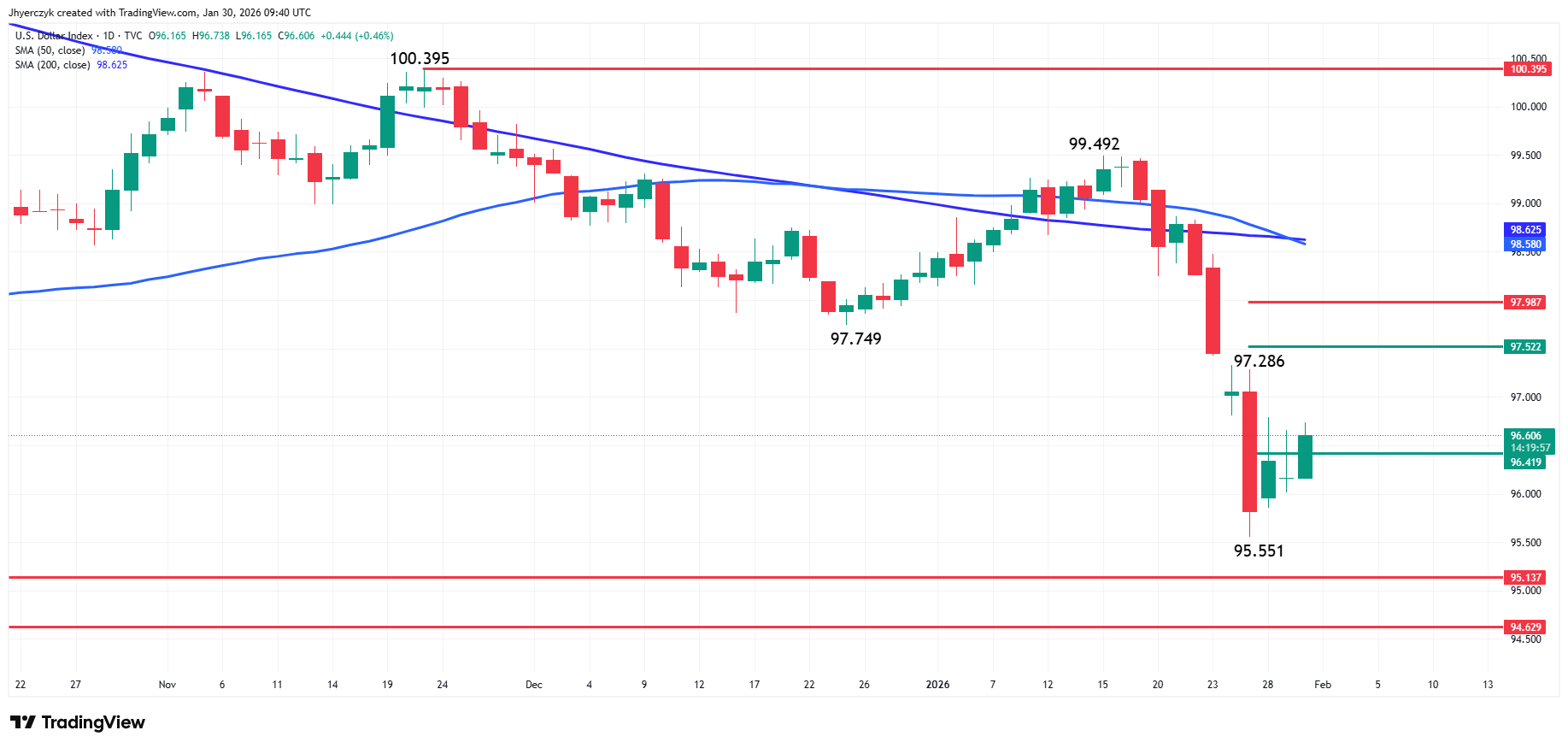
The trend remains down as measured by the daily swing chart and the 50 and 200-day moving averages. However, the DXY appears oversold following the steep sell-off from 99.492 on January 15 to 95.551 on January 27—nearly a 4% decline in just eight trading sessions. Since reaching that low, prices have consolidated inside Tuesday’s wide range at 97.286 to 95.551, straddling the mid-point at 96.419 for three sessions.
Market Forecast: Bullish on Warsh Nomination
Trader reaction to 96.419 will set the tone technically on Friday, but direction will primarily be influenced by Trump’s Fed Chair pick. The moderately hawkish Kevin Warsh should put upside pressure on the greenback, supporting a bullish short-term outlook. A surprise Rieder selection could weigh on the dollar, while Hassett’s proximity to Trump may trigger intraday volatility around Fed independence concerns. The path of least resistance favors dollar strength if Warsh is confirmed.
More Information in our Economic Calendar.