


Ethena (ENA) could rally fivefold over the next few months as improving global dollar liquidity revives demand for the protocol’s USDe synthetic dollar, according to Arthur Hayes, the co-founder of the defunct crypto exchange BitMEX.
Arthur Hayes Calls ENA a Potential “Quick 5X”
In his Aug. 11 essay Yen-quake, Hayes described ENA as a beaten-down crypto asset capable of delivering outsized returns if Bitcoin enters another liquidity-driven rally.
He argued that USDe has suffered primarily because falling Bitcoin prices have compressed the yields available from the crypto basis trade.
For the unversed: Ethena generates part of USDe’s yield through delta-neutral positions that can benefit from futures basis and perpetual funding rates.
When those yields shrink, however, investors have less incentive to accept centralized-exchange counterparty and smart-contract risks when relatively safer US Treasury bills offer comparable returns.
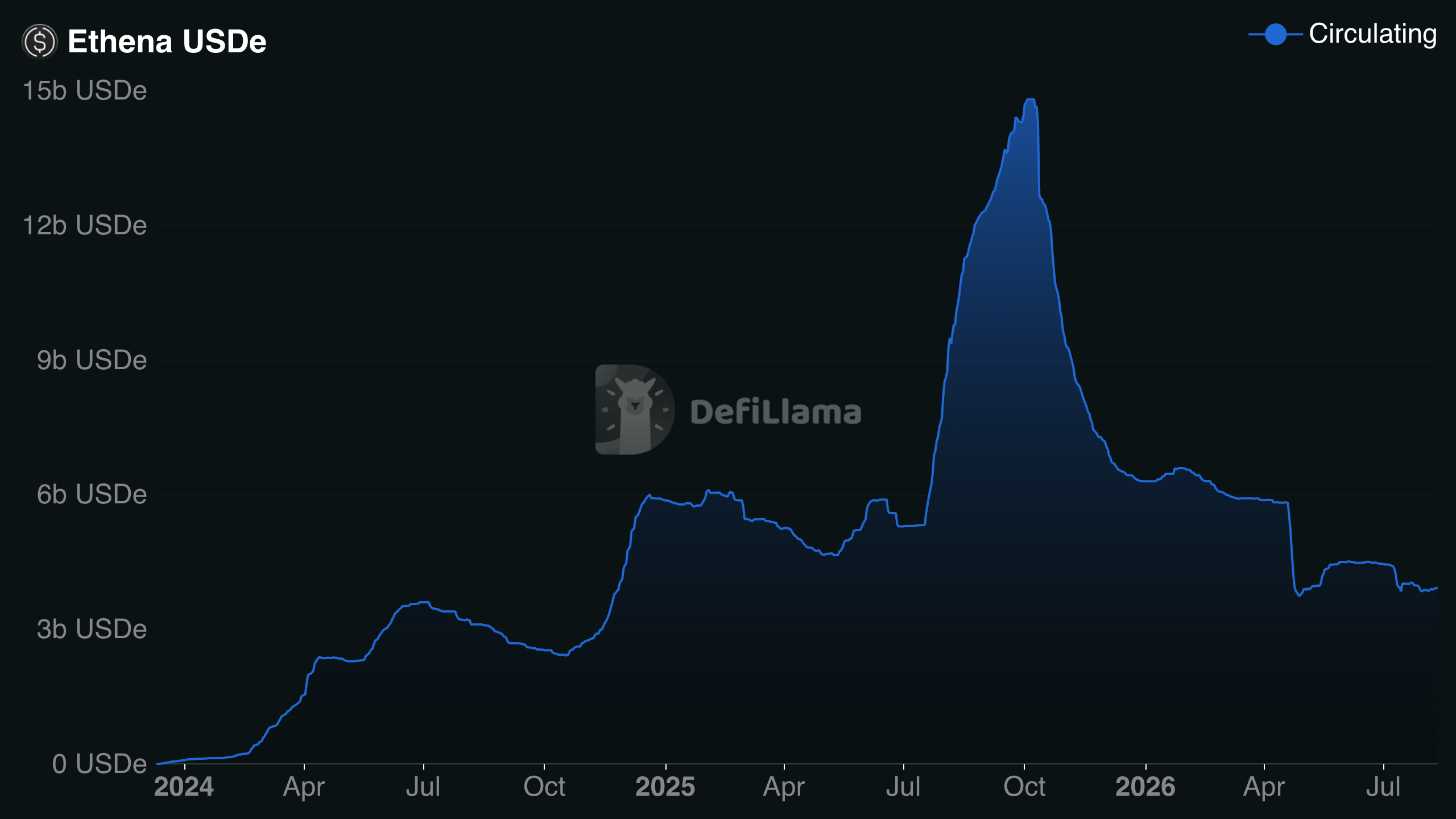
USDe’s circulating supply has consequently fallen roughly 75% from its peak, while ENA has declined more than 90%. That weakness, according to Hayes, could reverse quickly if Bitcoin starts rising again.
Even modest growth in dollar liquidity could push BTC higher, widening crypto basis yields and making USDe more attractive again. Fresh capital flowing into USDe could subsequently improve sentiment around Ethena and lift ENA from its depressed valuations.
Hayes called ENA a potential “quick 5x over the next few months,” while saying the token could eventually deliver gains of 5–10 times from current levels.
Fed Liquidity Expansion Is Central to Hayes’ ENA Bet
Hayes’ bullish ENA outlook depends heavily on his broader macro thesis involving Japan and the US Federal Reserve.
He expects US and Japanese policymakers to potentially expand the Fed’s Foreign and International Monetary Authorities, or FIMA, repo facility to help strengthen the Japanese yen.

Under his scenario, Japan could repo some of its massive US Treasury holdings to the Fed in return for freshly created dollars, then sell those dollars for yen.
Hayes estimates that the Japanese government and GPIF together hold roughly $1.37 trillion in US Treasuries that could theoretically provide collateral for such transactions.
An expansion of FIMA usage would therefore increase the Fed’s balance sheet and inject additional dollar liquidity into financial markets. He expects Bitcoin to be among the major beneficiaries of such liquidity growth.
For ENA, the resulting chain reaction would look roughly like this:
Fed liquidity rises → Bitcoin rallies → crypto basis yields increase → USDe yields improve → USDe demand rebounds → ENA gets repriced higher.
Conversely, Hayes highlighted ENA’s lack of token buybacks as a weakness, limiting direct value capture for token holders. More importantly, the anticipated FIMA changes have not happened yet.
That makes his projected ENA rally largely conditional on the liquidity catalyst actually materializing.
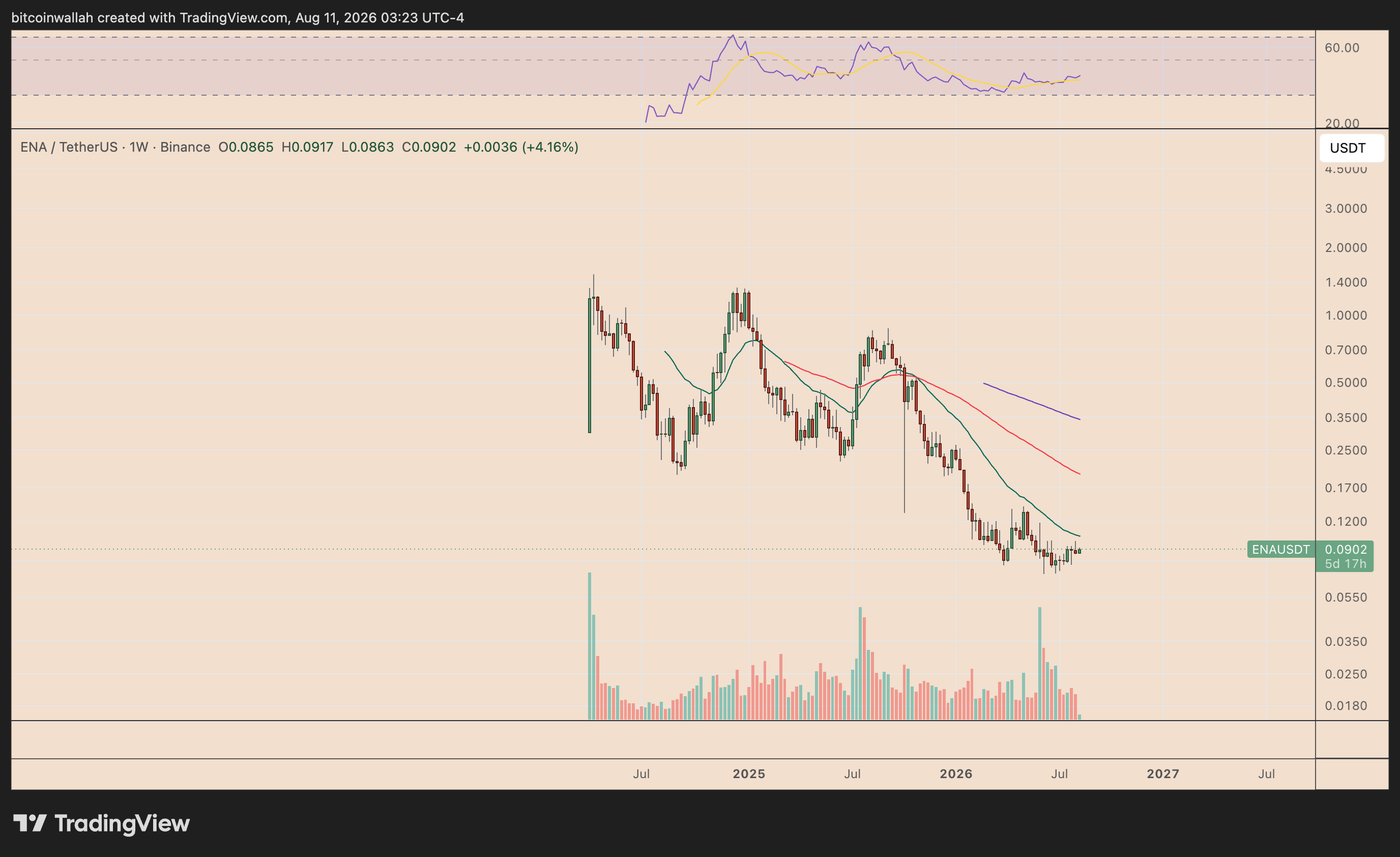
ENA Broadening Wedge Targets $0.15
ENA is consolidating inside what appears to be a broadening wedge, raising the possibility of a rebound toward the pattern’s upper trendline near $0.14–$0.15.
The token was trading around $0.09 as of Aug. 11, but must first reclaim its 20-week EMA near $0.103 to strengthen the bullish setup. A decisive move above the EMA could open the path toward the wedge resistance, implying roughly 65% upside from current levels.
Conversely, rejection at the 20-week EMA could send ENA back toward the wedge’s lower trendline near $0.07–$0.08.