
Ethereum’s native token, Ether (ETH), is showing signs of upside exhaustion ahead of the Federal Reserve’s key rate decision on Wednesday.
ETH/USD was steady near $2,300 after falling 3.25% from its weekly high of around $2,390, as traders locked in profits. Escalating US-Iran war tensions and rising oil prices added to the cautious tone.
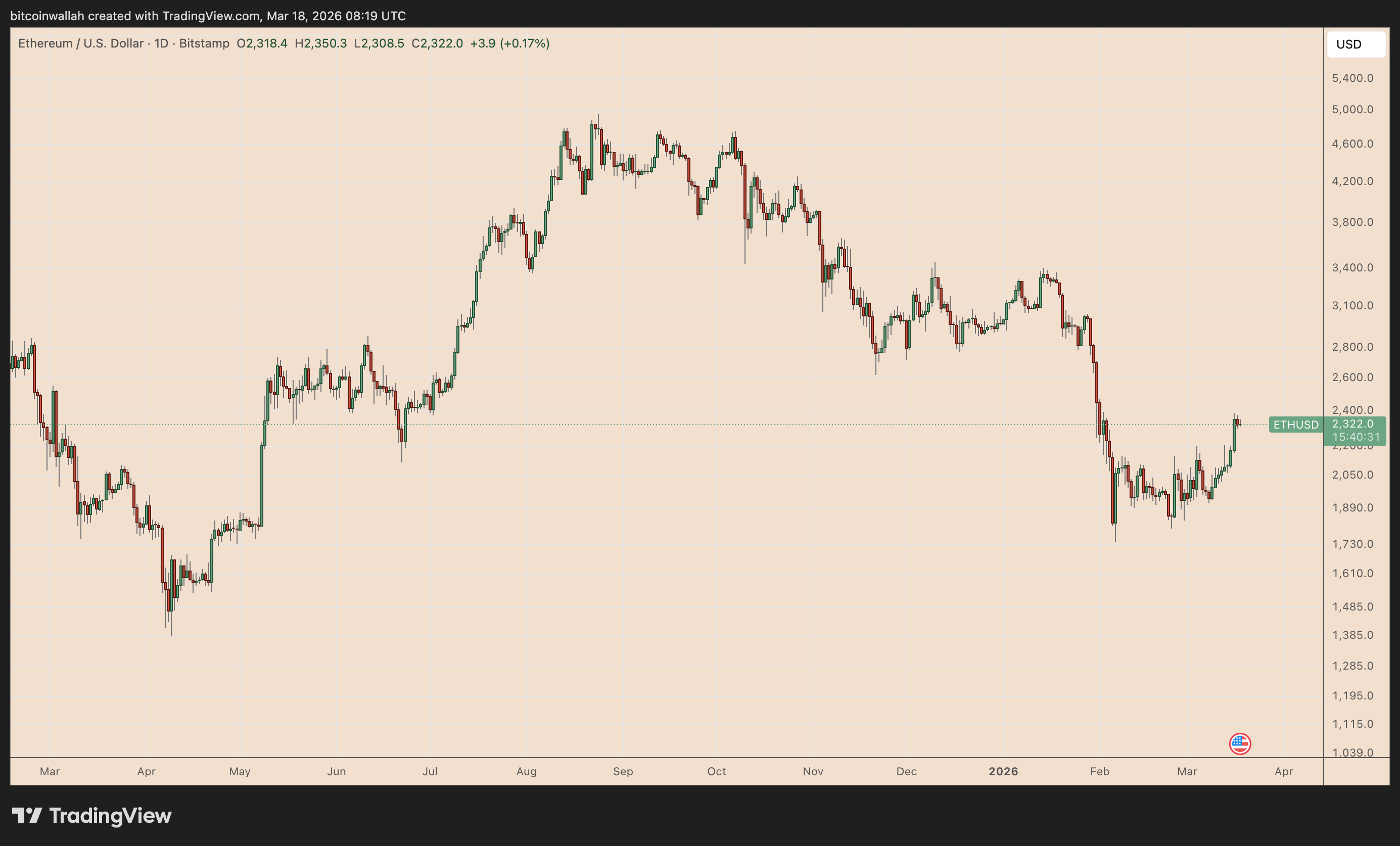
Ether now risks deeper losses in the days ahead if its post-FOMC pattern from the past 12 months repeats.

ETH’s FOMC Fractal Signals Repeated Downside Risk
Ethereum has declined after seven of the last eight Federal Open Market Committee meetings, establishing one of the clearest macro-driven fractals in crypto.
The pattern remains consistent: ETH stabilizes or rebounds ahead of the decision, then reverses sharply once the outcome and forward guidance hit the market.
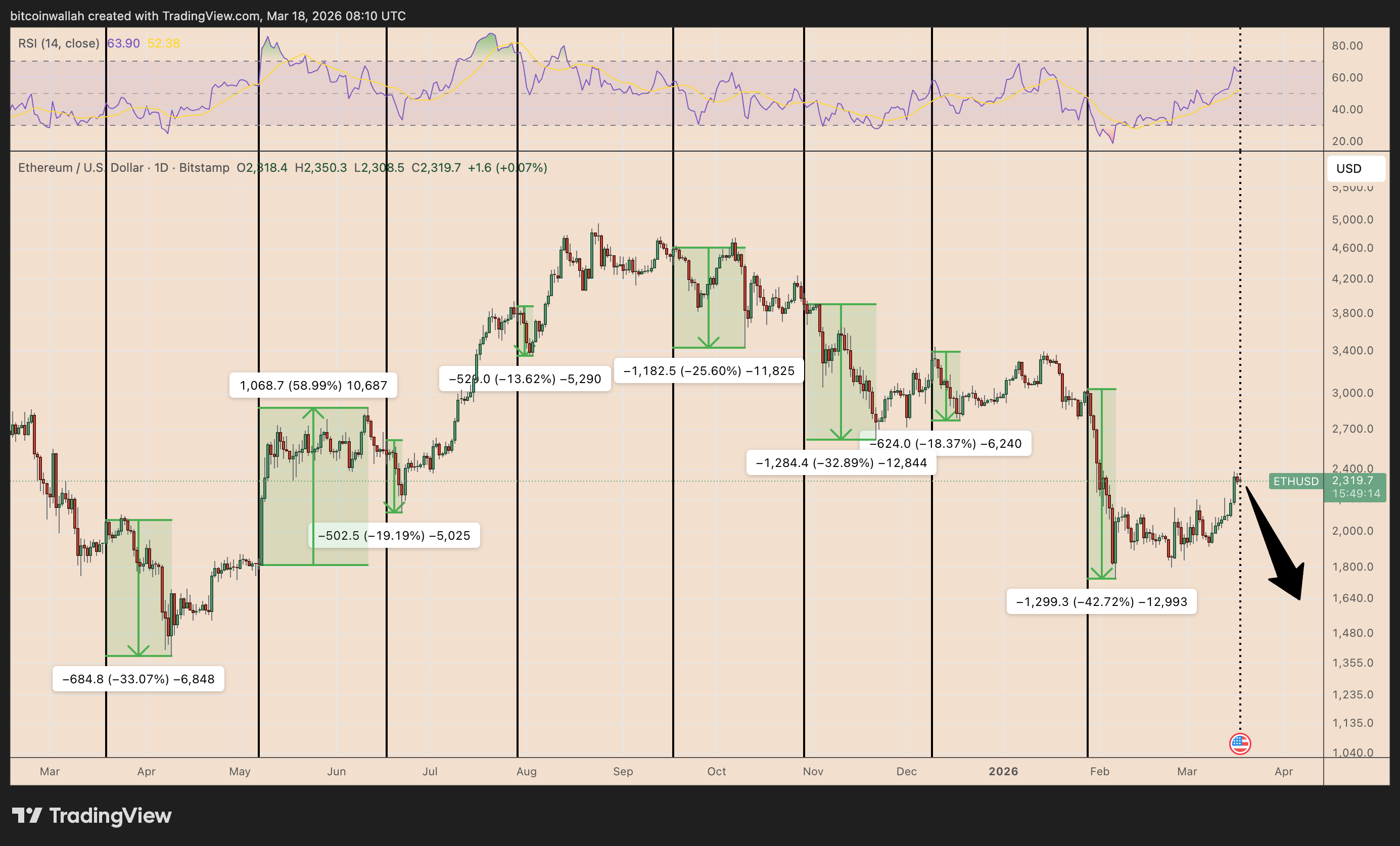
Typical post-FOMC drawdowns ranged between 13% and 26%, while deeper deleveraging phases pushed losses toward 33%–42%.
These declines reflect liquidity resets rather than isolated technical failures, with traders unwinding leveraged positions and repricing interest rate expectations.
That risk remains visible in Ethereum’s futures market. As of Wednesday, roughly $2.52 billion in long positions faced liquidation if ETH falls below $2,000, according to liquidation heatmap data by CoinGlass.
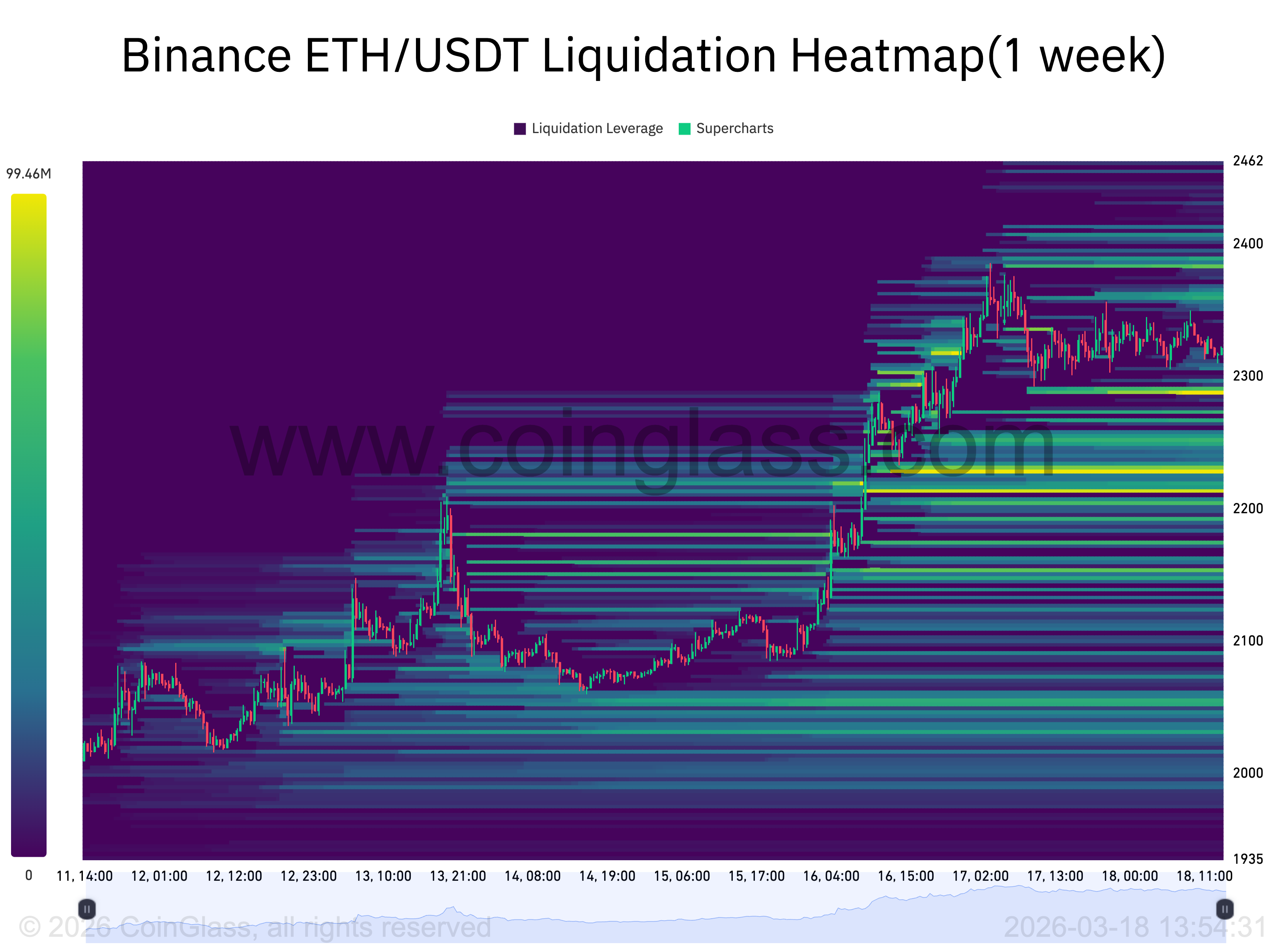
By comparison, short liquidations below that level were clustered at less than $600 million.
In simple terms, far more bullish bets than bearish bets would get wiped out on a move lower, leaving ETH vulnerable to a sharper downside cascade if selling pressure builds.
Ethereum Price Forecast
Every new Ethereum analysis as it publishes, today's technical signal and key levels, live price — on one page.
See all Ethereum forecastsRate Decision Odds Leave Little Room for Bullish Surprise
Markets expect the Federal Reserve to hold rates steady, putting focus on the dot plot and Jerome Powell’s guidance. The real risk lies in forward expectations, not the decision itself.
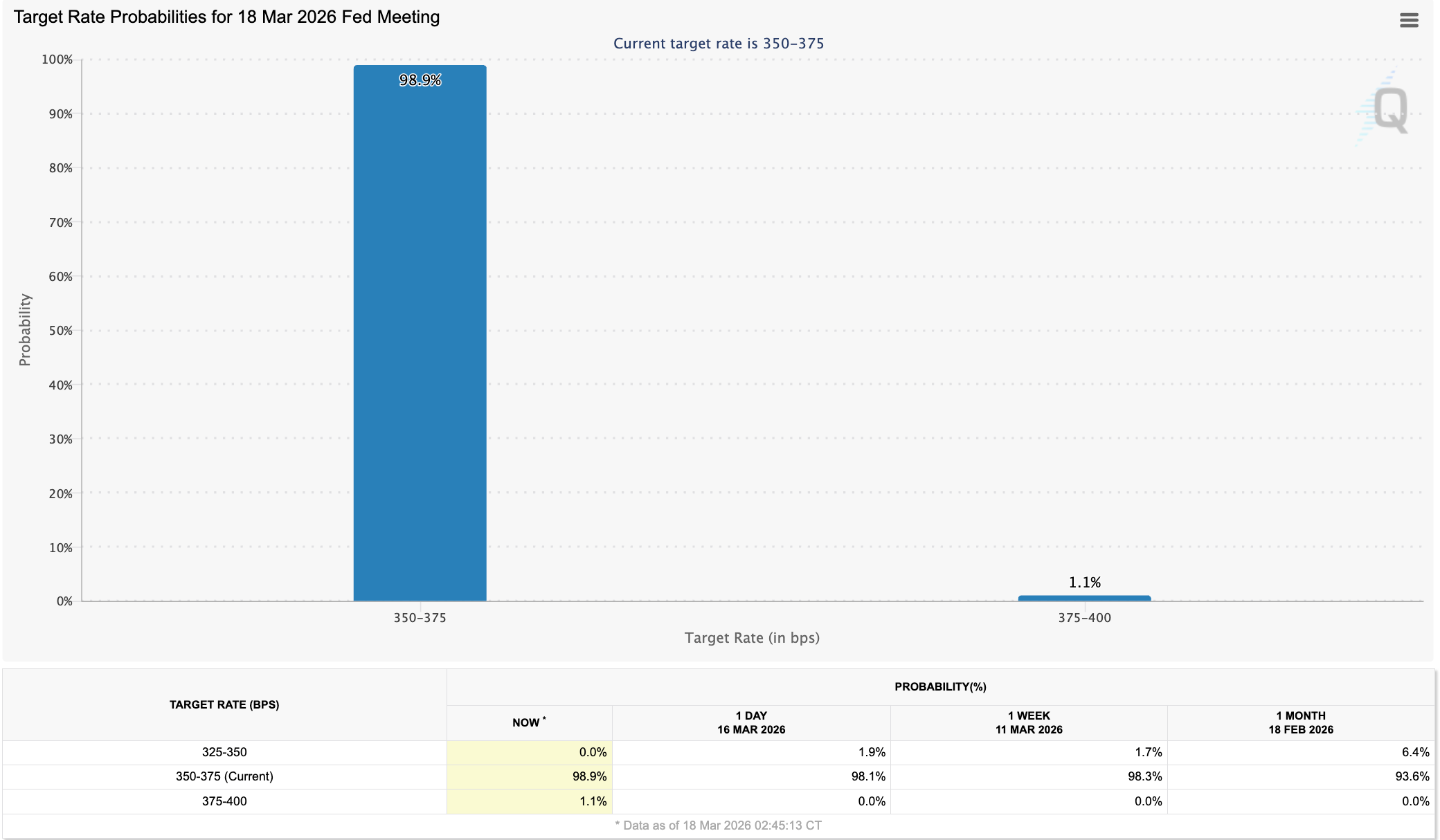
Rising oil prices and geopolitical tensions have pushed traders to scale back rate-cut bets, reinforcing a “higher for longer” outlook.
That backdrop caps upside for Ethereum. A hawkish hold likely triggers risk-off flows, while only a clear dovish shift could break the bearish pattern.
The setup mirrors prior cycles. ETH has rebounded from sub-$1,800 to around $2,300, but the move lacks strong follow-through. RSI is already near overbought levels, a combination that has previously led to post-FOMC pullbacks.
ETH Technicals Signal Key $2,100 Retest Level
Ethereum’s short-term technicals remain cautiously bullish despite macro risks. The price is approaching a key resistance zone near $2,100, which aligns with the upper boundary of its ascending trendline structure.
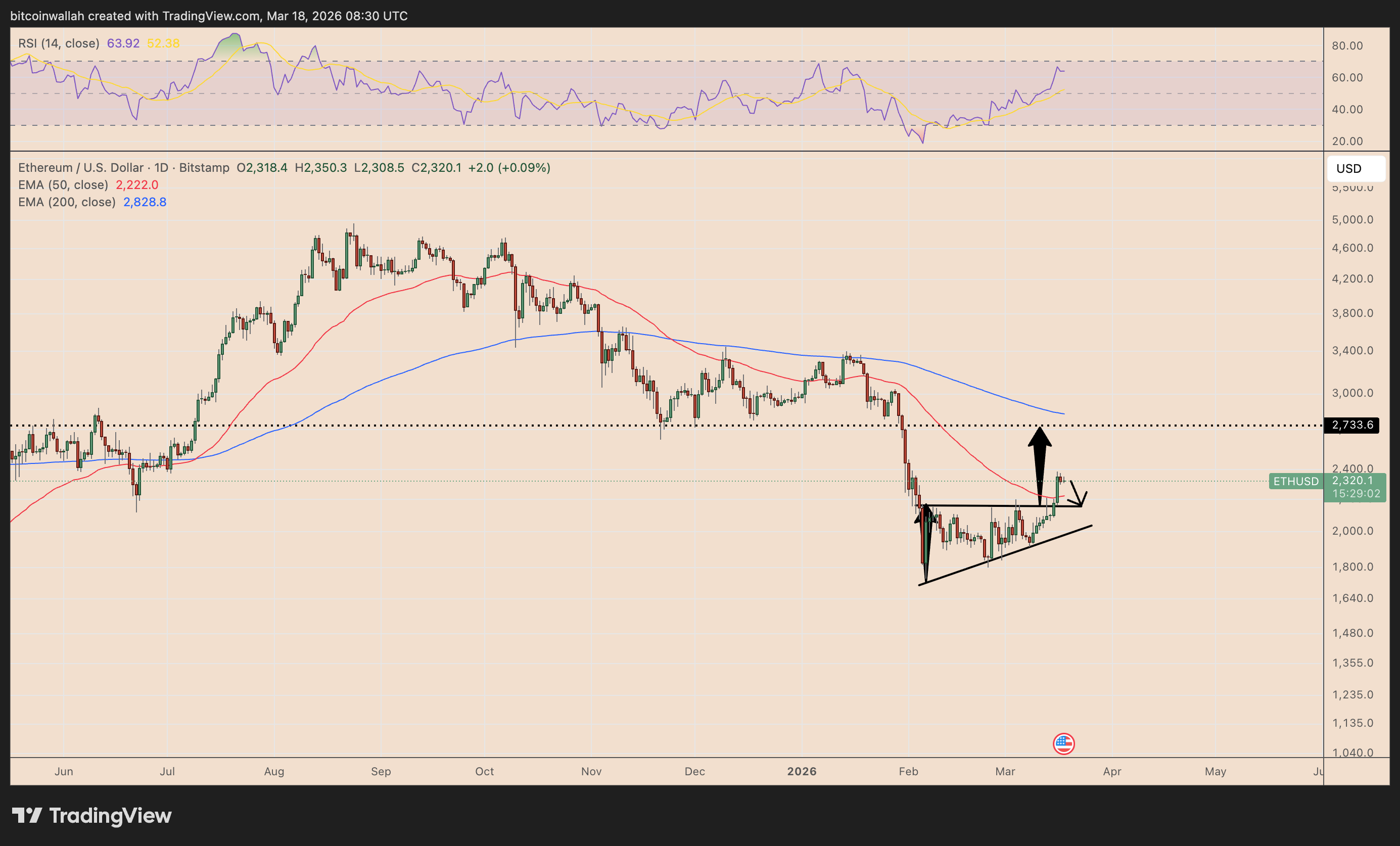
A successful breakout above this level could confirm continuation and open the path toward the next major resistance near $2,700, based on the pattern’s measured move.
However, failure to hold above $2,100 would weaken the setup. A rejection from this zone could push ETH back toward the trendline support near $2,000, keeping the broader recovery at risk.