Ethereum’s native token, Ether (ETH), enters May under mounting pressure as a convergence of technical, macro, and on-chain signals points to rising selloff risks.
For instance, a key resistance cluster is capping upside, while escalating US–Iran tensions are driving oil higher and tightening global liquidity conditions. At the same time, weakening derivatives demand, fragile whale support, and bearish on-chain divergences suggest ETH may struggle to hold current levels.
These five factors raise the likelihood of a deeper pullback. Let’s examine them in detail.
ETH Risks 20% Drop A Key Resistance Caps Upside
From a technical perspective, Ether’s rebound is running into a dense resistance cluster on the weekly chart, including the 20-week EMA (green), the 200-week EMA (blue), and the 0.618 Fibonacci retracement level, all aligning with the $2,340 mark.
This confluence has historically acted as a strong supply zone, and the latest rejection suggests upside momentum is fading.
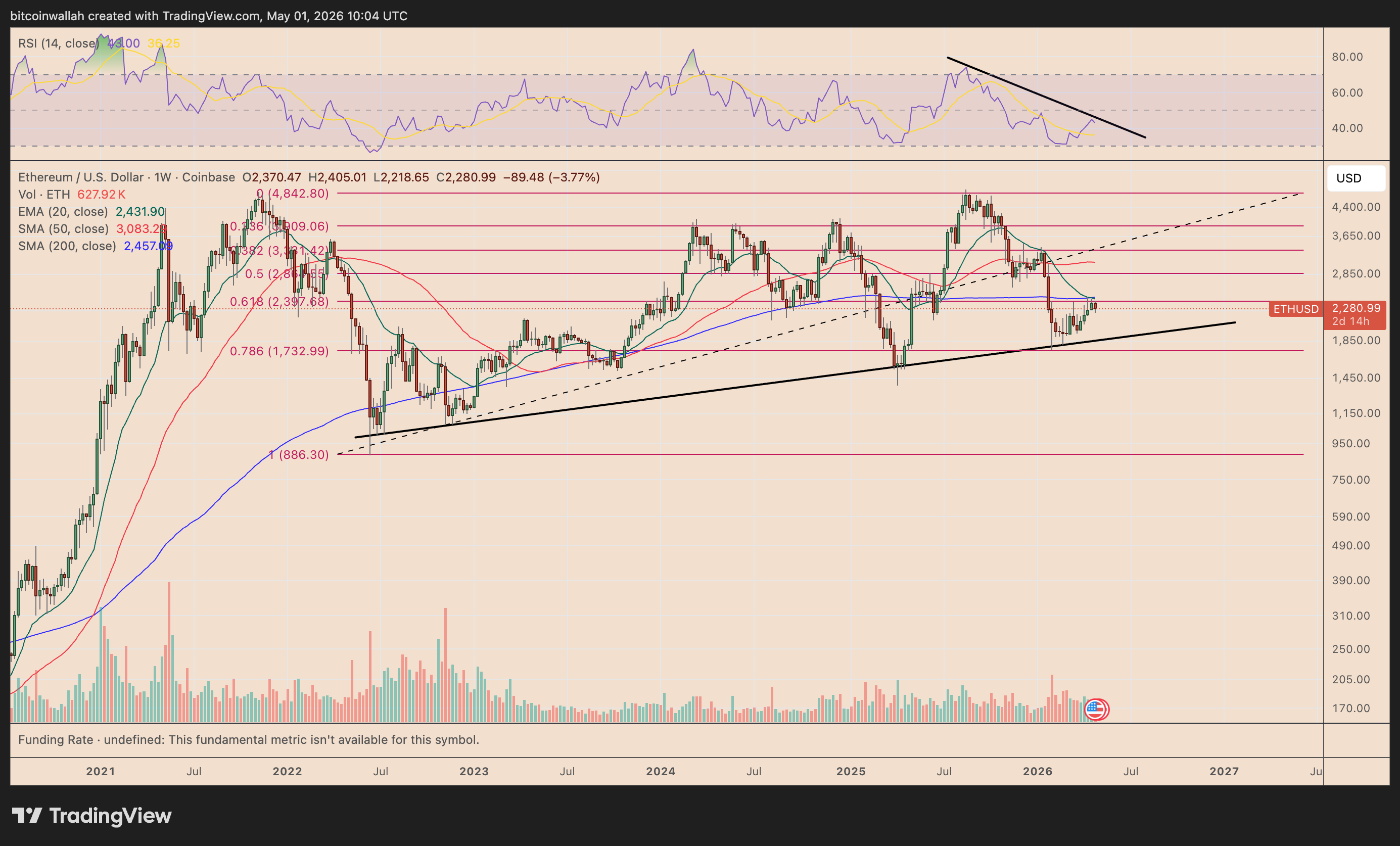
If selling pressure persists into May, ETH could extend its pullback toward the rising multi-year trendline support, which aligns closely with the 0.786 Fibonacci level near $1,730–$1,850. Such a move would imply a roughly 20% decline from current levels.
A breakdown below this support zone would risk a deeper correction, while reclaiming the EMA cluster would be required to revive bullish continuation toward the $2,800–$3,000 range.
The relative strength index (RSI) is also trending below the midline, indicating weakening bullish momentum despite recent attempts to recover.
Ethereum Price Forecast
Every new Ethereum analysis as it publishes, today's technical signal and key levels, live price — on one page.
See all Ethereum forecastsOil Shock Adds Macro Pressure to ETH
The bearish technical setup is forming against a worsening macro backdrop.
US President Donald Trump vowed to maintain a naval blockade on Iran and was briefed by commanders on further military options. Iran’s speaker of parliament, Mohammad Bagher Ghalibaf, warned the blockade would push oil prices higher and said it must be lifted before new talks can begin.
That standoff has kept markets focused on a longer conflict. Deutsche Bank analysts said oil prices have continued rising as investors see “no sign of any peace talks” and price in a more prolonged confrontation.
For ETH, higher oil prices can revive inflation fears, delay rate-cut expectations, and lift demand for the US dollar. That typically weighs on risk assets, including crypto.
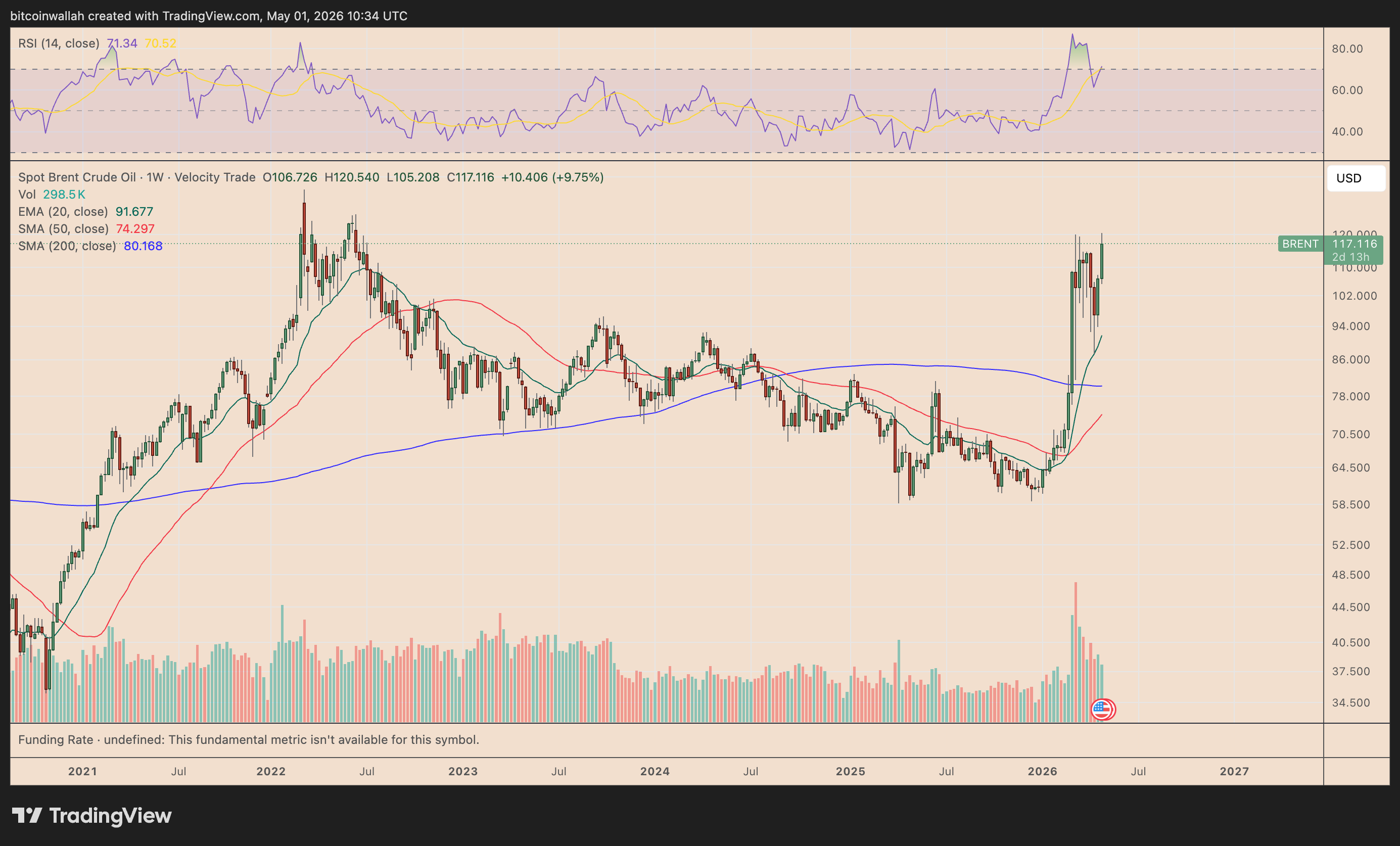
It also explains renewed weakness in emerging-market stocks and currencies, as oil-importing economies face higher trade deficits and tighter financial conditions.
For Ether, the risk is straightforward: if oil-driven inflation keeps yields elevated and liquidity expectations weak, traders may have less reason to chase a breakout above the $2,340 resistance cluster.
That could strengthen the case for a May pullback toward the $1,730–$1,850 support area.
ETH Cost Basis Breakdown Puts $2,000 in Play
Glassnode data adds another layer to ETH’s downside risk. Ether is trading near the realized price of 10,000–100,000 ETH wallets (orange), currently around $2,228, a key cost-basis level for larger holders.
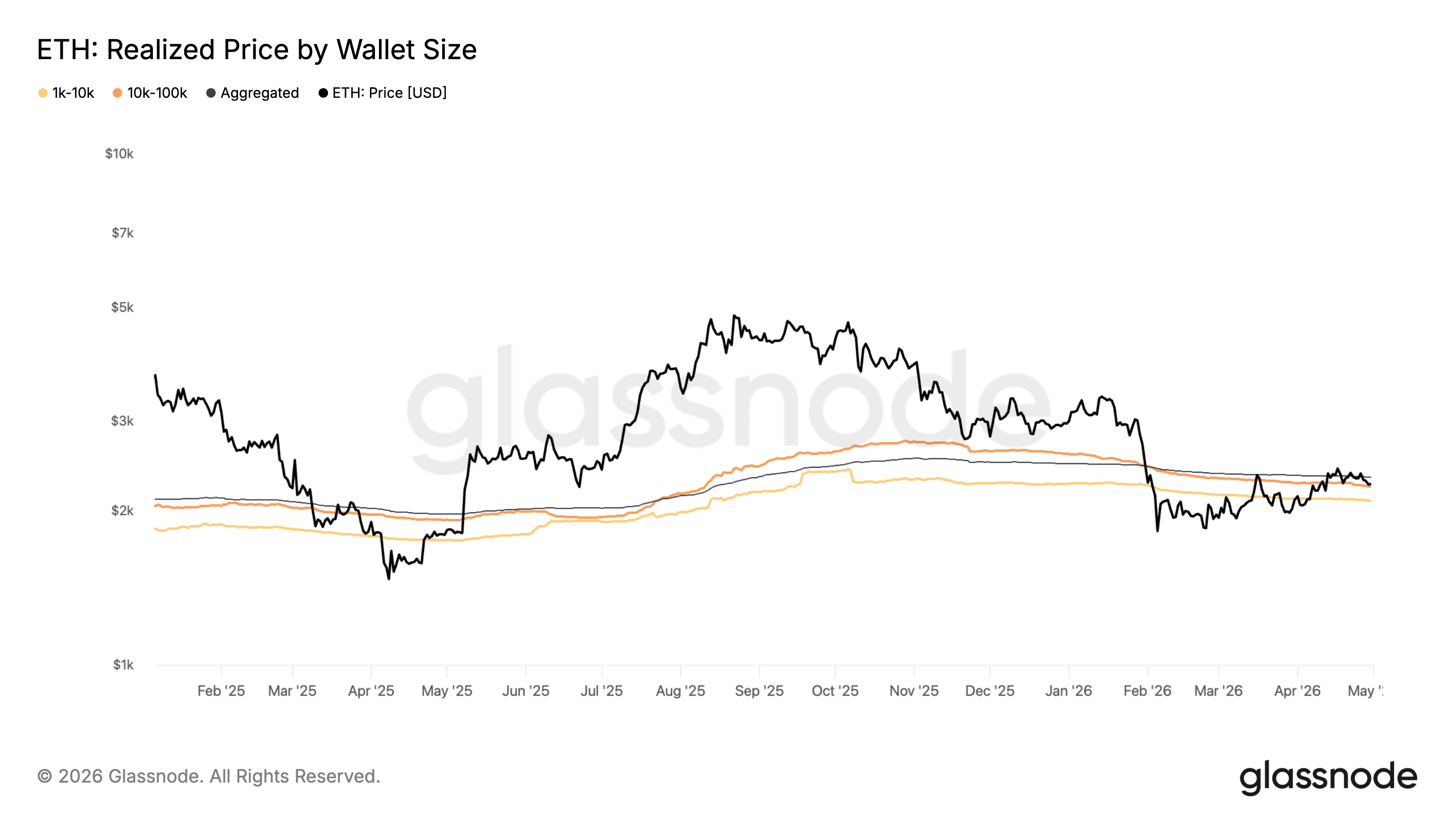
A decisive break below that zone could signal that big wallets are moving into losses, increasing the risk of capitulation or reduced dip-buying. In that scenario, ETH could slide toward the $2,000 area, near the realized price of 1,000–10,000 ETH wallets (yellow).
That downside case may strengthen if US–Iran tensions keep oil elevated, inflation fears alive, and risk appetite weak.
Binance ETH Supply Ratio Signals Delayed Dip Risk
Ethereum’s Binance exchange supply ratio has fallen sharply toward 0.029, a level that has often appeared ahead of ETH price bottoms, according to CryptoQuant data.
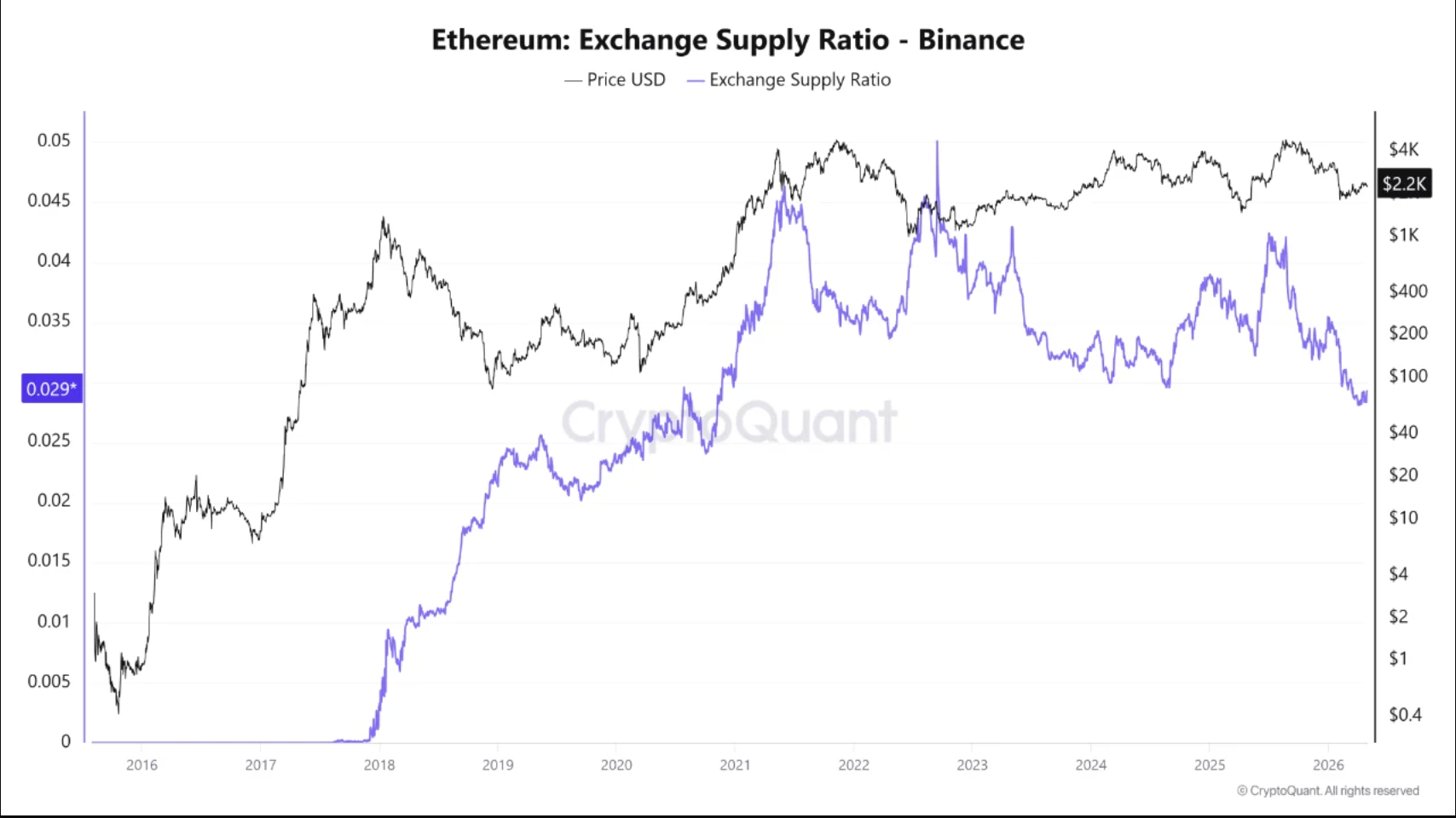
In other words, the ETH price may decline further in May.
Normally, a falling exchange supply ratio suggests fewer coins are available for sale, reducing spot selling pressure and supporting a bottoming phase. This time, however, ETH’s price remains relatively elevated near $2,200, creating a divergence between lower exchange supply and price action.
“This increases the likelihood of a delayed downward move,” said CryptoQuant analyst PelinayPA, adding:
“One possible reason is that the market is being artificially supported. Especially with the influence of derivatives, the price may remain resilient for a while longer. However, such divergences typically do not last long.”
Weak Derivatives Demand Adds To ETH’s Downside Risks
Ethereum’s derivatives data on Binance points to fading demand, reinforcing the bearish outlook for May.
The 30-day Open Interest (OI) Z-score has slipped to around -0.91, with total OI near $4.99 billion, below its $5.31 billion average. This suggests traders are pulling back exposure, likely due to rising macro uncertainty tied to US–Iran tensions and higher oil prices.
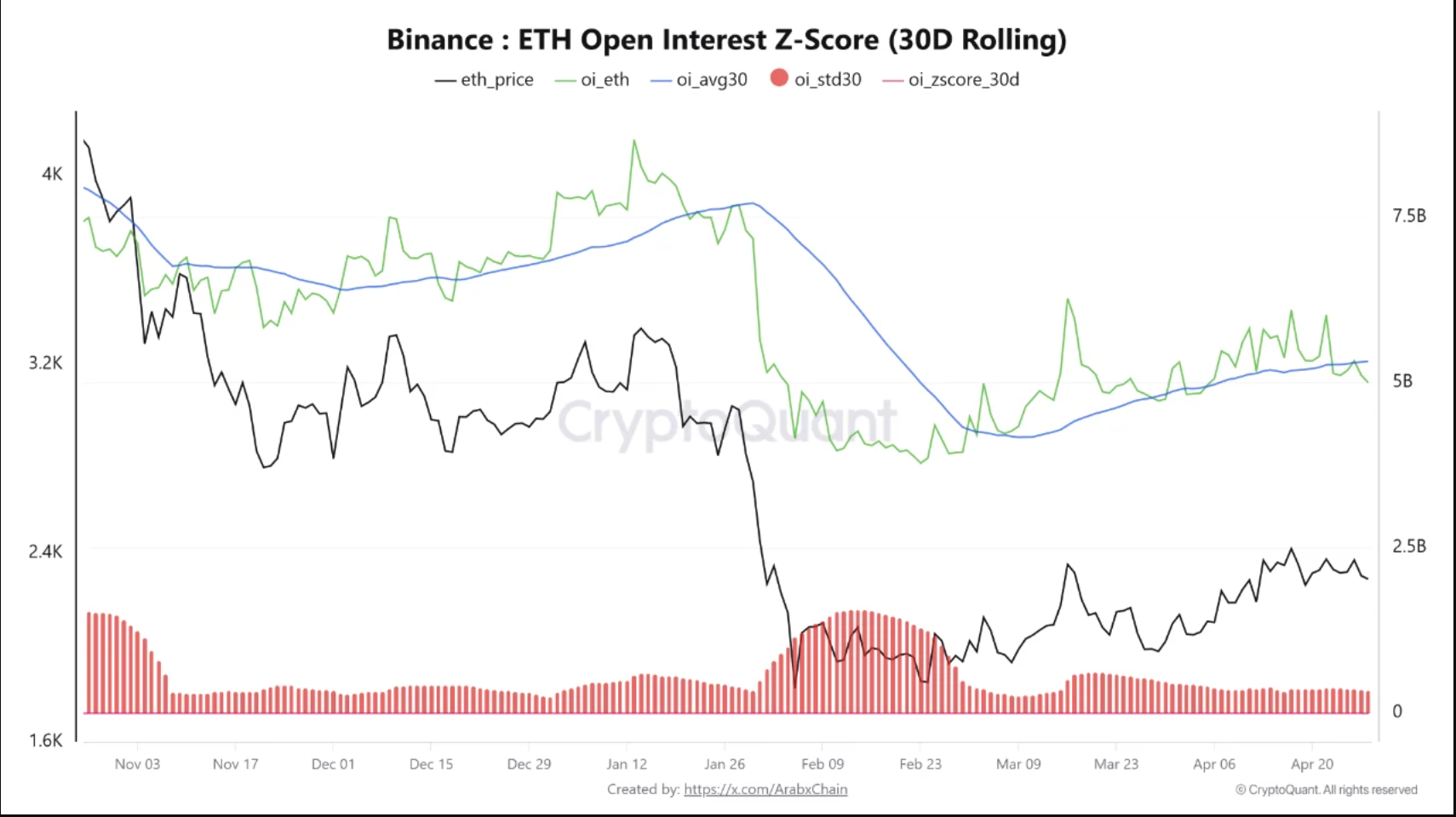
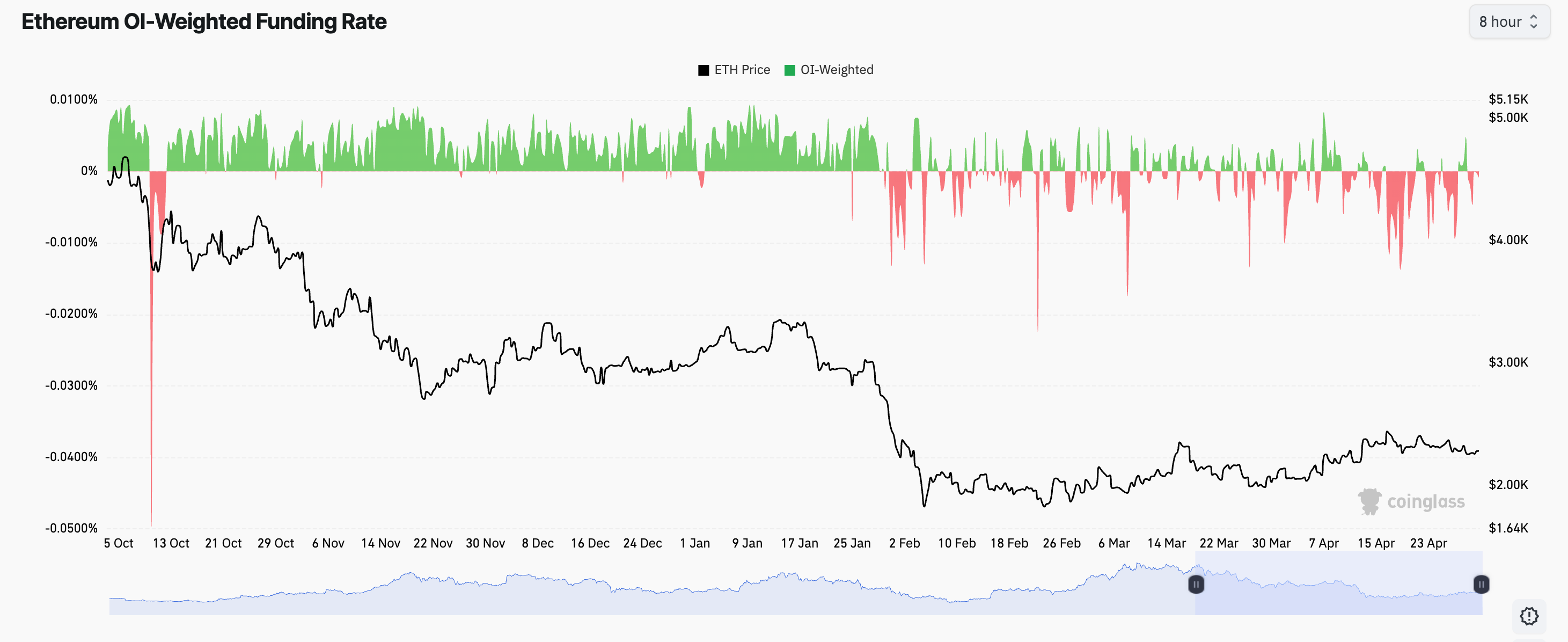
Historically, such conditions, declining open interest alongside negative funding, reflect weakening market conviction and reduced liquidity support during rebounds. ETH may struggle to sustain upside attempts without fresh capital entering the market.