Gold (XAU) prices increase above $5,000 following softer inflation figures and lower US Treasury yields. In my opinion, the mixed macro environment of resilient job growth, sticky core inflation and declining yields creates the backdrop for a period of consolidation. These consolidations are considered positive signs for the precious metals sector. This article presents labour market trends, Fed policy expectations, technical price structure and cross market signals to understand the next move in gold.

Labour Market Strength, Sticky Inflation, and Fed Policy Outlook
Labour Market Strength but Mixed Underlying Signals
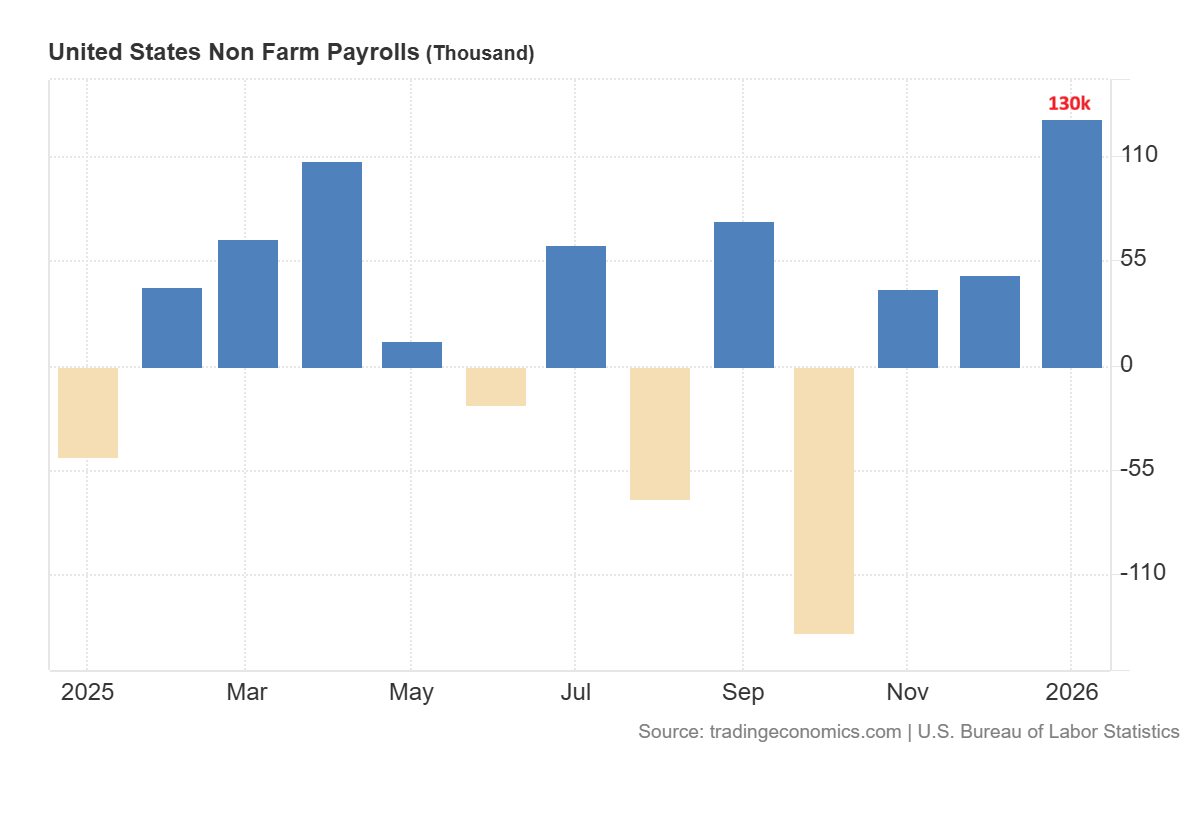
The recent US jobs data shows a strong macro environment that makes the future of monetary policy. The chart below shows that the economy added 130,000 jobs, which is higher than expected estimate of 70,000.
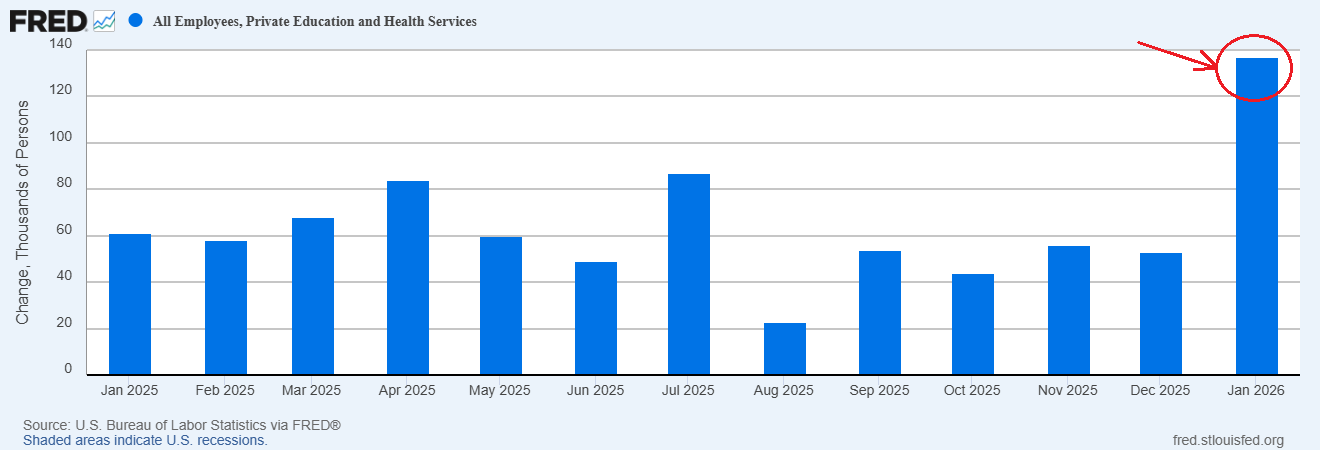
However, these gains in jobs were uneven with the private education and health services alone contributing 137,000 new jobs. This focus casts doubt on the extent of demand in labour and implies that certain economies are fragile despite the strength of the headlines.
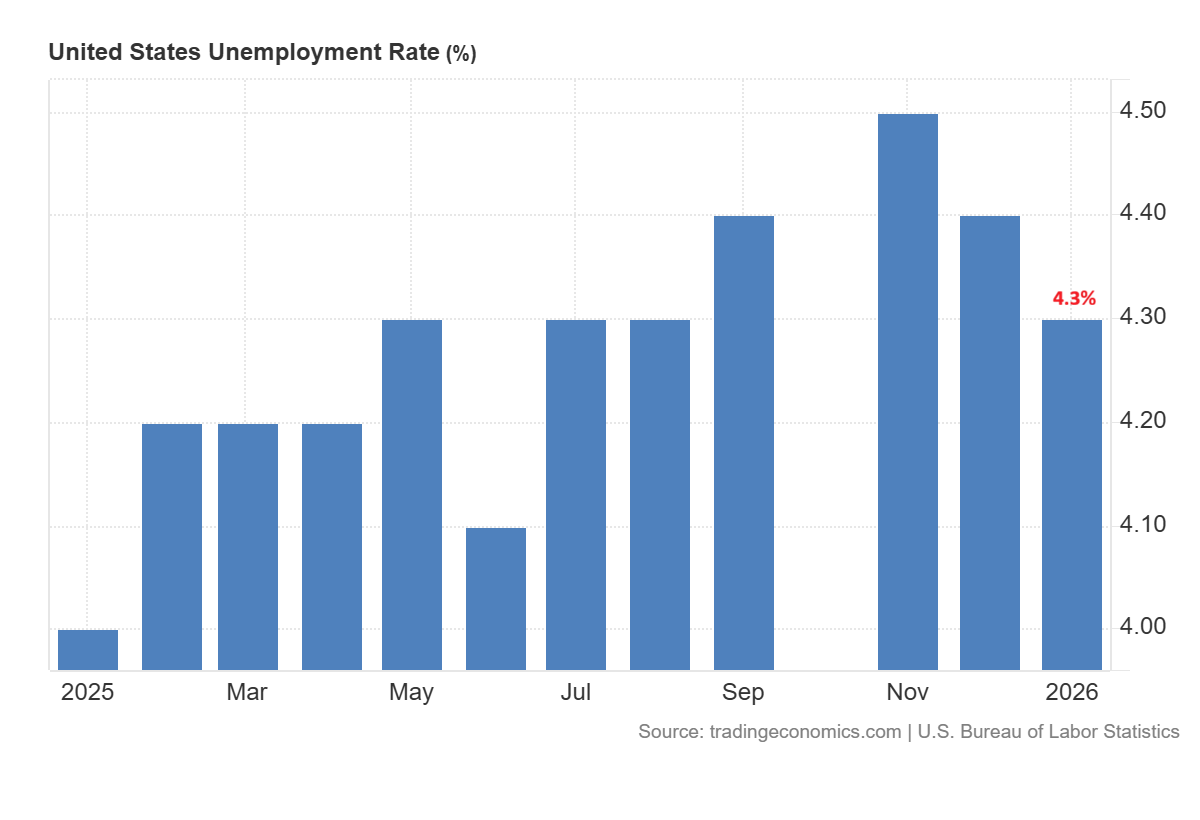
The unemployment rate was reduced to 4.3% as shown in the chart below. But the household survey response rate decreased to 64.3% because of unfavourable weather. This creates some degree of uncertainty about the actual picture of the labour market.
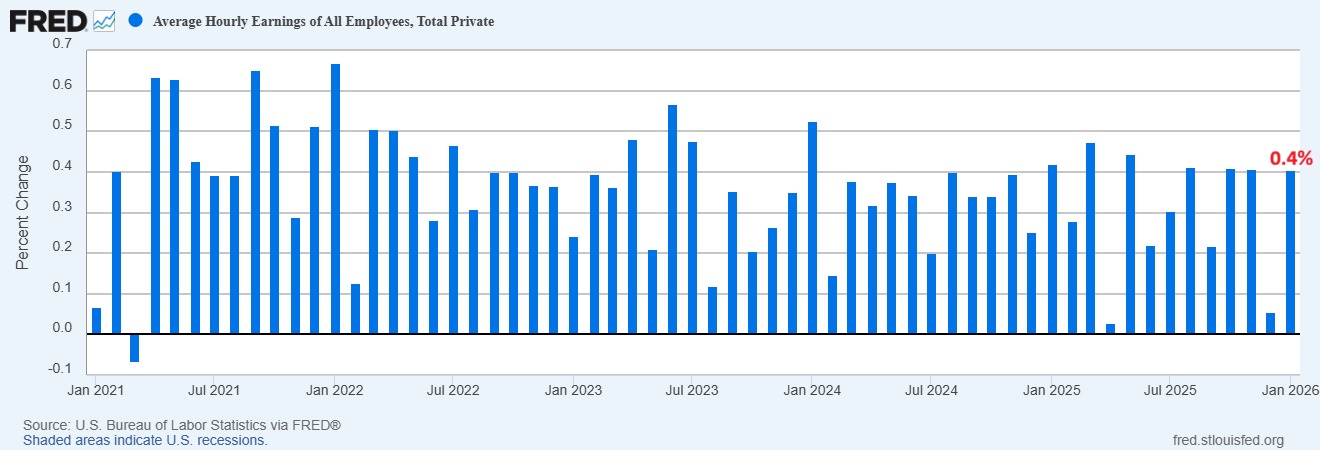
On the other hand, average hourly earnings increased by 0.4% in January as shown in the chart below. This translates into a brisk annualized rate of 4.8%. These figures show that there are underlying wage pressures that have not been fully cooled down and could continue to keep core inflation sticky.
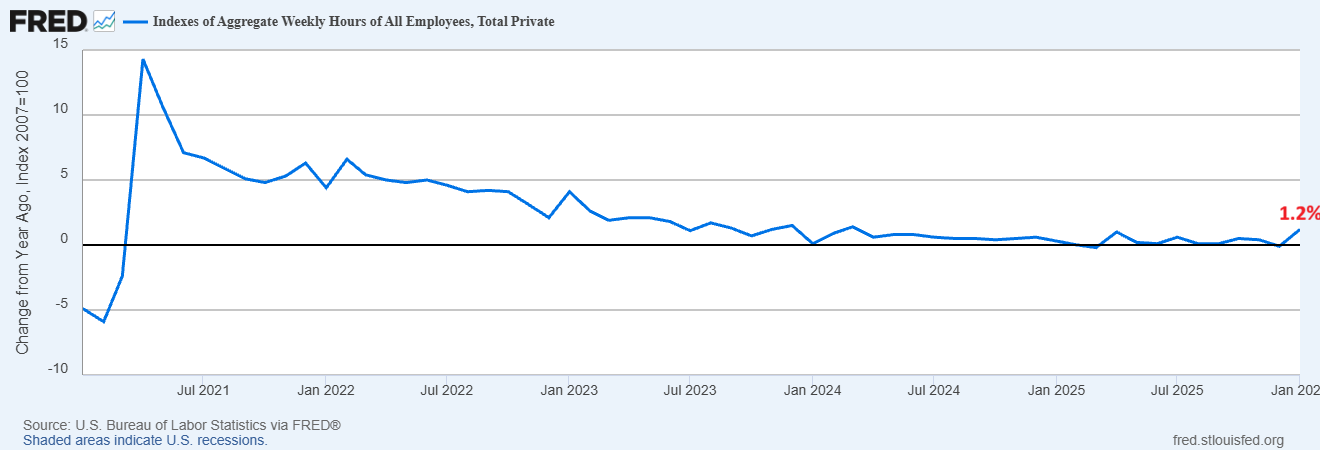
At the same time, aggregate weekly hours worked showed weaker growth trend of only 1.0% over the past 12 months. As per the chart below, the trend is towards a weakening but is slowly recovering since April 2021 peak.
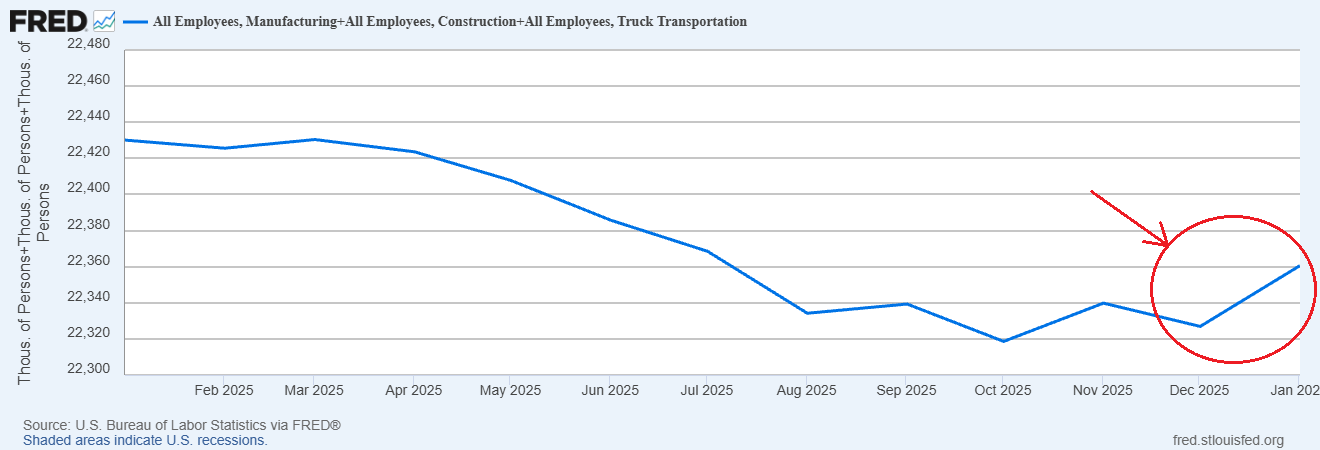
The employment in cyclical sectors increased in January 2026 which was mostly due to nonresidential construction for AI data centres. This increase suggests that investment themes drive employment growth rather than cyclical expansion.
Gold Price Forecast
Every new Gold analysis as it publishes, today's technical signal and key levels, live price — on one page.
See all Gold forecastsFed Policy Implications and Gold Supportive Market Signals
These data suggest that economy is neither weak enough to pressure imminent easing nor strong enough to indicate robust acceleration. This balance has important implications for the Federal Reserve policy.
A better than expected jobs report with tight labour market conditions gives the Fed enough reasons to postpone rate cuts in first half of 2026. Policymakers will look for further evidence that disinflation is well and truly established before easing. According to the Fedwatch tool, the Fed is likely to maintain the interest rate with 90% if probability at the 18 March 2026 meeting.
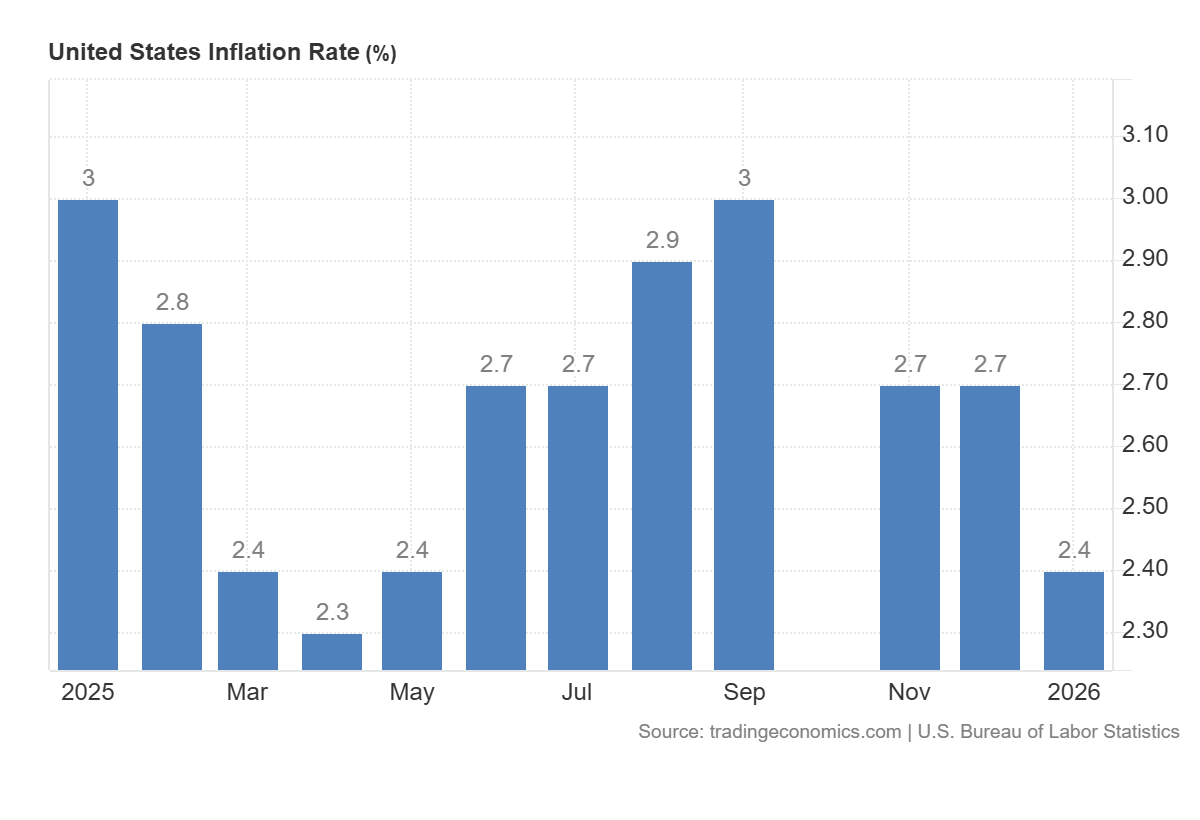
According to the data from BLS, the inflation peaked at 3% last year in September 2025. The January readings of 2.4% indicate progress, but core CPI is still sticky at 2.5% YoY. As a result, markets show 51% chance of a 25 basis points rate cut in June, which reflects a cautious policy stance rather than an aggressive easing cycle.
However, the dynamics of financial markets are beginning to favour bullion. The chart below shows that the U.S. Treasury yields dropped to 4.06%. At the same time, the U.S. Dollar Index lost about 0.85% on the week to trade around 96.88.
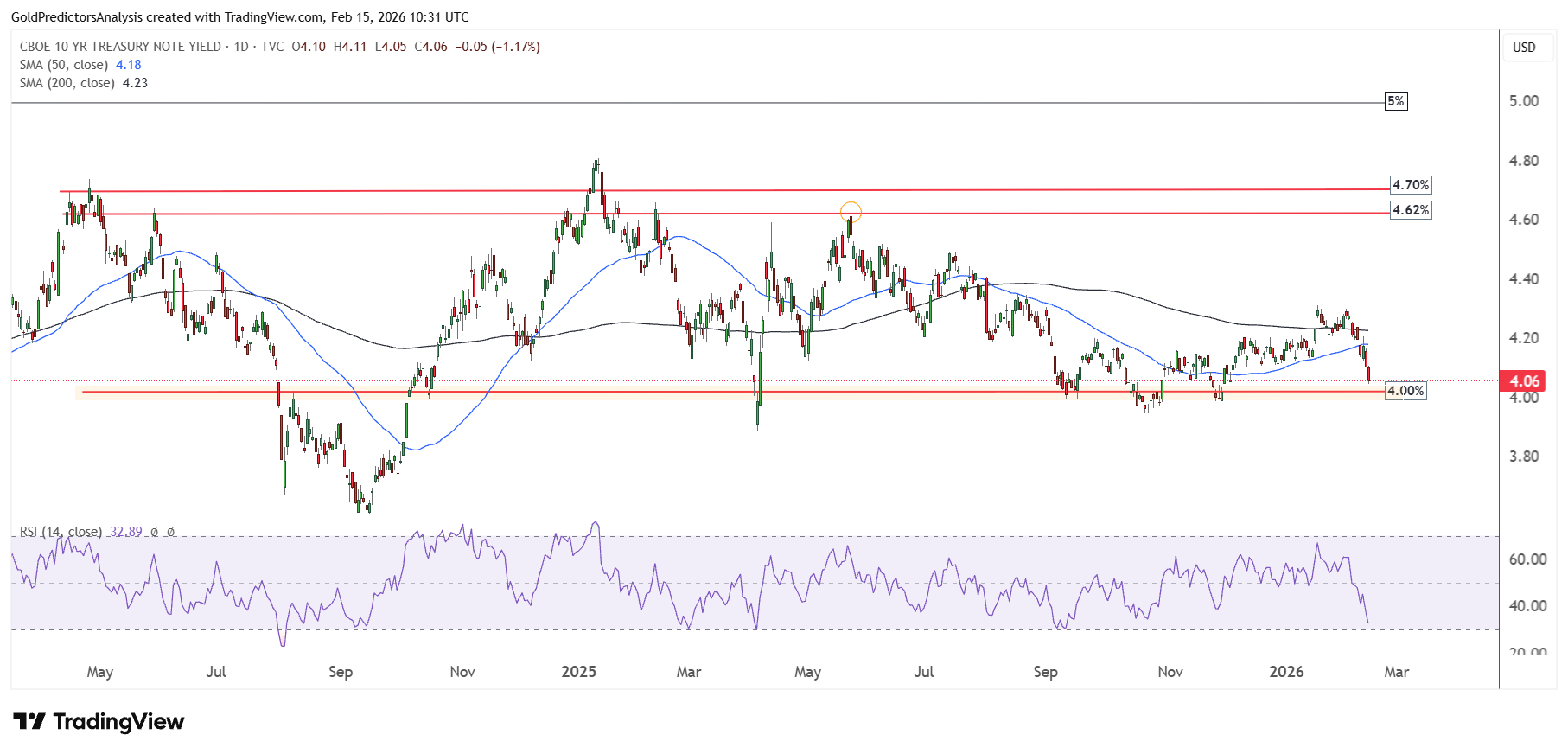
The weakness in the US treasury yields and US dollar points to strength in gold. Therefore, the gold price has rebounded above $5,000 to maintain the bullish trend.
Gold Technical Structure Points to Consolidation Below $5,600
The chart below shows that gold reached the target of $5,400 and dropped to $4,400. The chart shows consecutive patterns of ascending triangle formation from April to August 2024, April to August 2025, and then October to December 2025. All of these triangle patterns have resulted in a strong $900 to $1,000 move after the breakout.
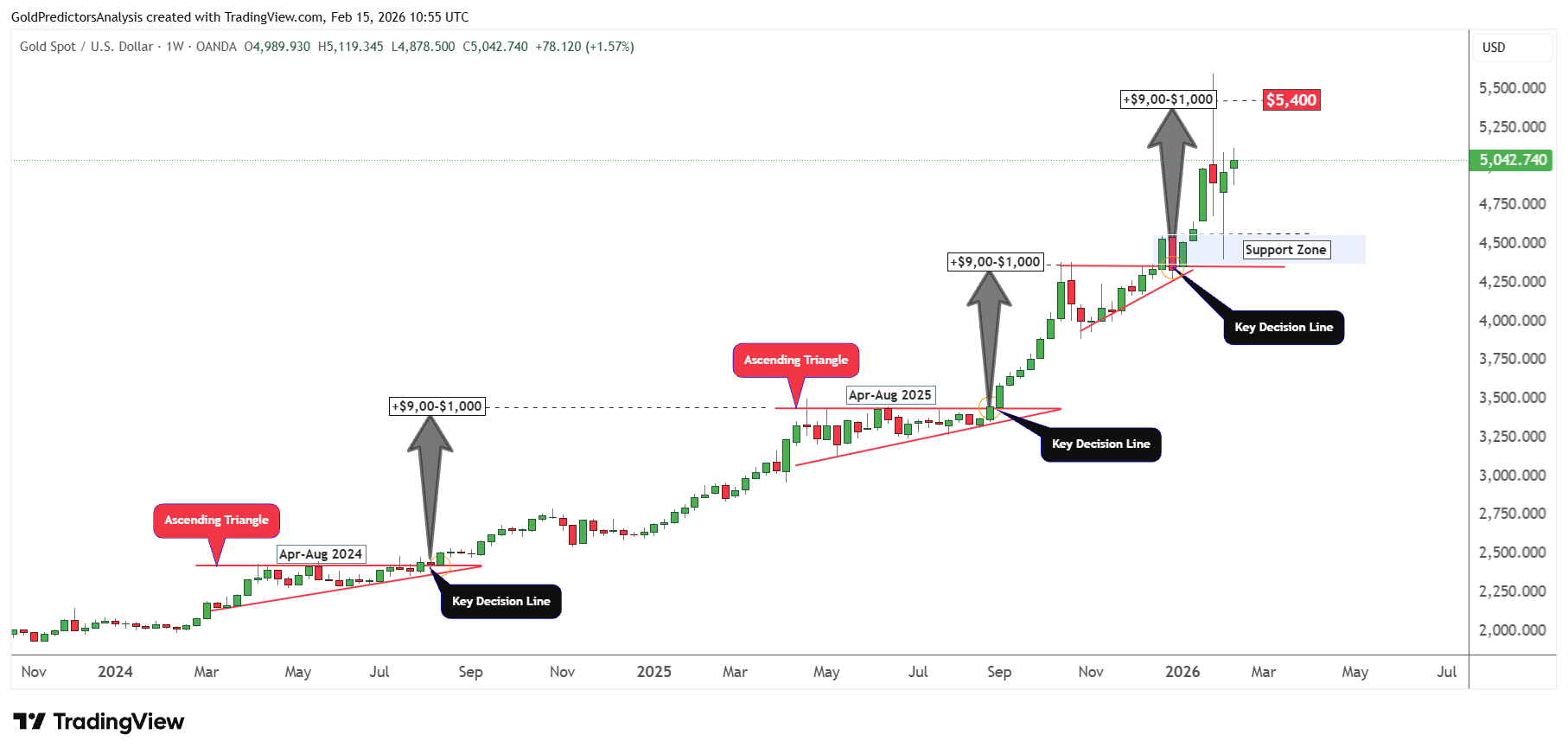
Similarly, the short formation of ascending triangle from October to December 2025 indicated a quick move after the breakout from $4,400. However, when the price reached $5,400, it spiked above this level but quickly reversed back to form strong support at $4,400, which was the support of the previous triangle.
However, the emergence of a bullish hammer above $4,400 indicates that the price will likely keep the bullish move. Based on these patterns, the price will likely form another bullish price pattern below $5,600, which will result in the next bullish move. Therefore, consolidation below $5,600 will develop before the next breakout. This pattern indicates that the next breakout from $5,600 will likely take gold prices above $6,000 in the next few months.
This bullish price action is also observed on the weekly chart below. The patterns show that the price broke the ascending broadening wedge pattern at $4,500. After the breakout, the price spiked to $5,600. However, the drop from $5,600 to $4,400 has halted at the ascending broadening wedge line.
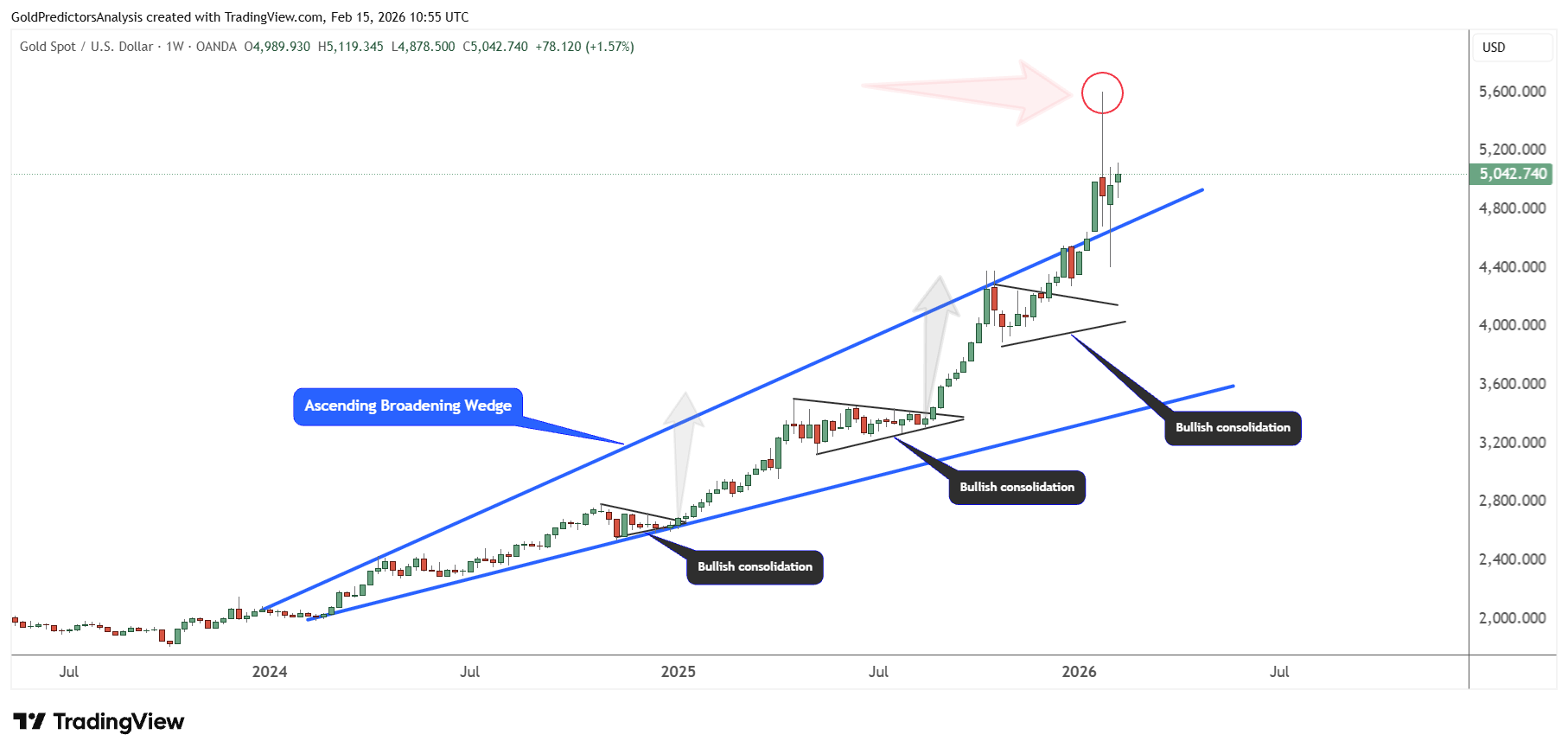
This indicates that the price has entered a new phase of growth, which will likely keep gold prices higher. This breakout from the ascending broadening wedge pattern indicates that gold will have more volatile moves in the next run.
Cross-Market Signals from US Stocks Confirm Strength in Gold
The US stock market tends to move in the opposite direction to gold because investors move money depending on risk sentiment and interest rate expectations. When equities are weak or there are uncertainties, investors seek safety and transfer funds to gold which helps to keep its price high.
This dynamic is observed in the US stock market recently as the S&P 500 dropped from the resistance of 7,000, while the Dow Jones Industrial Average dropped below the key support of 50,000. The drop in Bitcoin and US Treasury assets further rotates the investments from the risk assets to safe haven assets. This shift in capital allocation historically benefits gold, especially when equity volatility increases and confidence in growth stocks weakens.
This rotation is also observed on gold to S&P 500 ratio chart below. The chart shows that the ratio has broken from the key level of 0.65 in January 2026. This breakout in ratio has introduced strong volatility. This volatility indicates that gold prices will continue to rise during next few months.
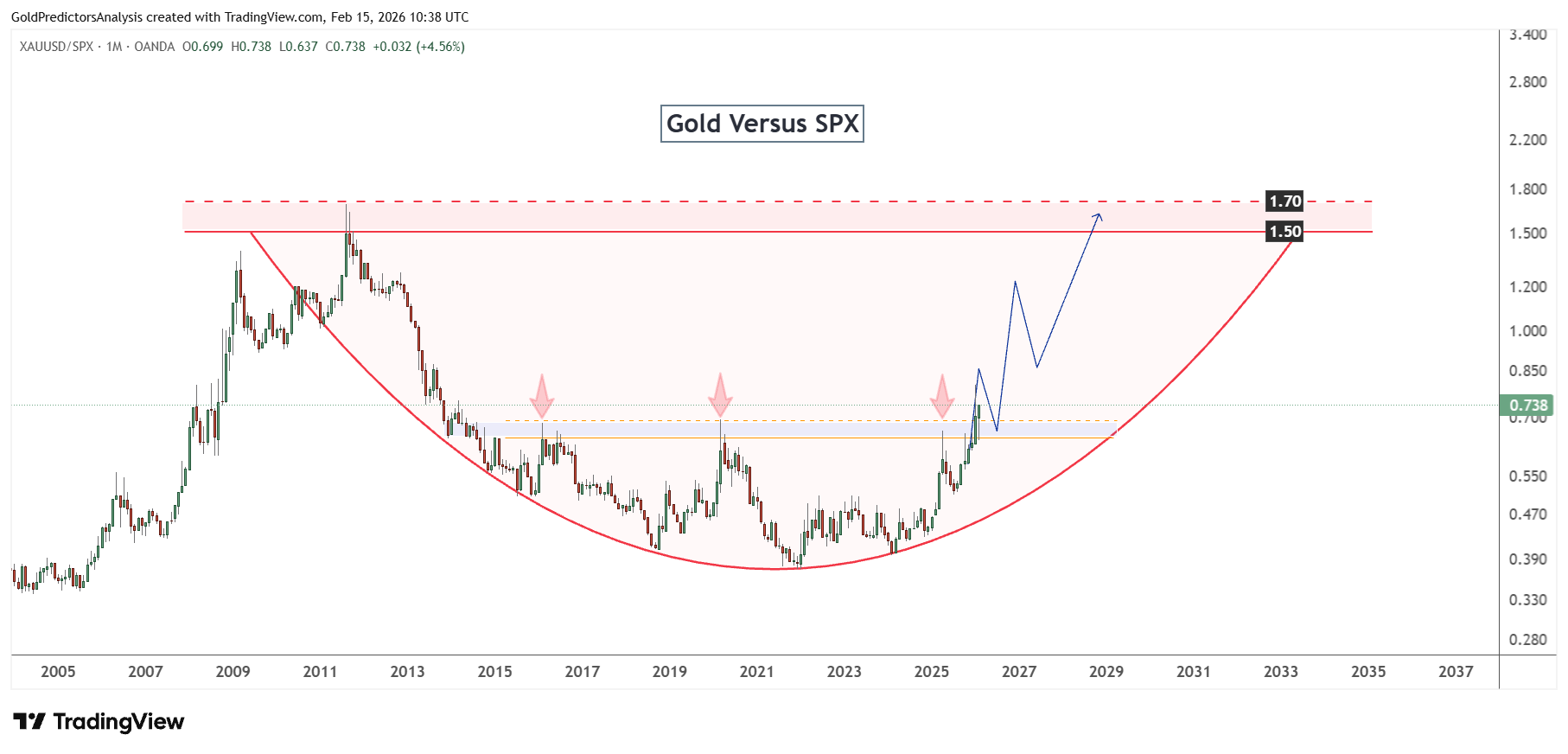
This breakout indicates that the ratio will continue to rise toward 0.87. However, any correction back toward 0.66 will be considered a new buy signal for gold. This construction in ratio within cup pattern points to a strong move toward 1.50 to 1.70.
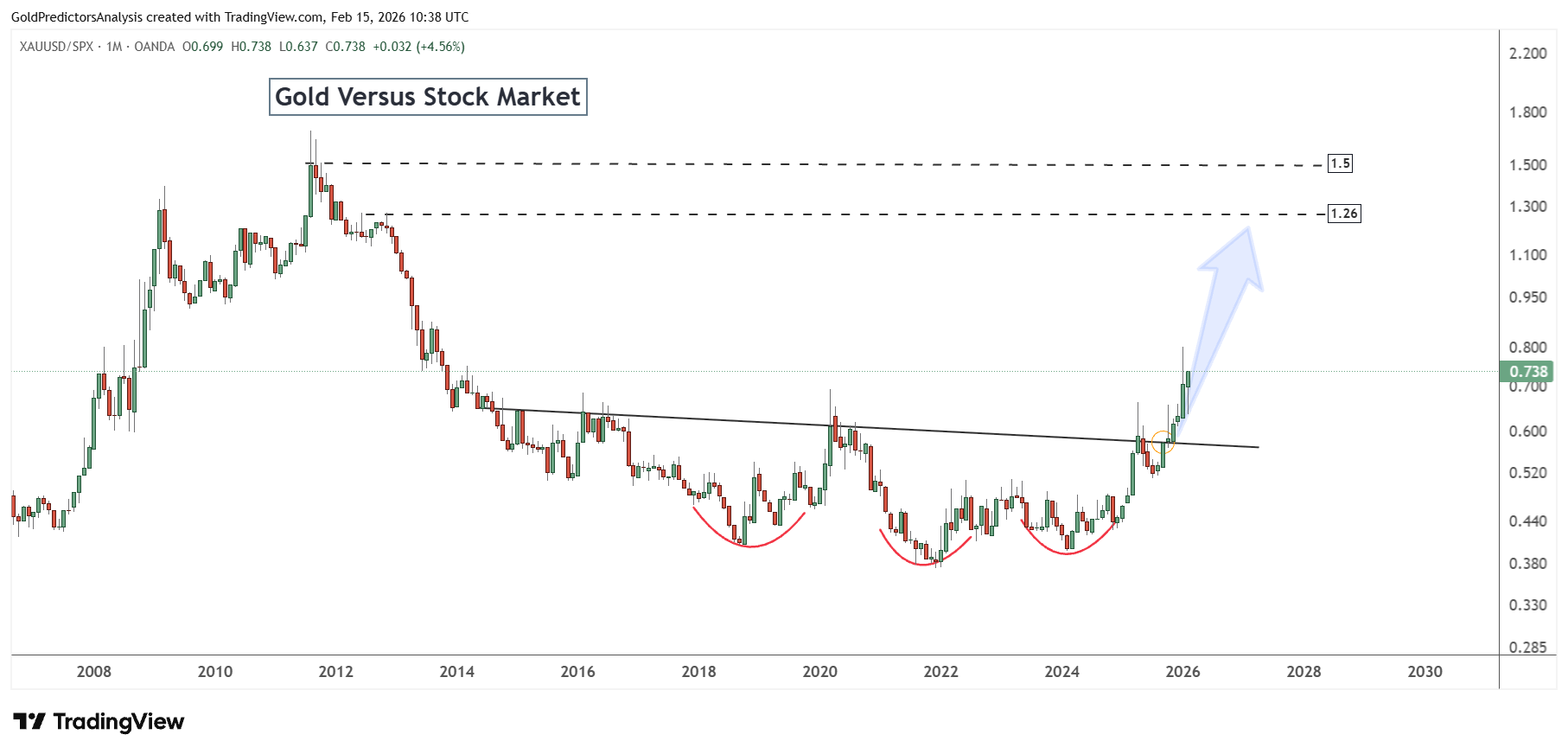
This bullish construction is also observed on the chart below, which shows a strong triple bottom formation. These bullish patterns broke at 0.55. This indicates that the breakout was already developed in October 2025. Therefore, recent consolidation in ratio indicates price stabilisation in gold, which may introduce an upside breakout.
Conclusion
In conclusion, strong job growth of 130,000 and unemployment at 4.3% gives the Fed room to delay rate cuts. This leads to the conclusion that policy easing will most likely be slow process rather than an immediate one.
At the same time, a drop in US yields, a weaker dollar and weakness in equity markets drive investors into safe-haven assets. From technical perspective, gold is constructive after holding strong support around $4,400 and consolidating below $5,600. In my opinion, this phase of consolidation will set the stage for another breakout above $5,600.
However, the market may form a constructive pattern before the next breakout. On the other hand, a break below $4,400 will invalidate the bullish outlook and indicate further downside before the next move higher.