



Gold Closes the Week at $4749.69 as Ceasefire, CPI and Fed All Pull in Different Directions
Spot Gold (XAUUSD) closed the week ending April 10 at $4749.69, up $72.94 or 1.56%. It wasn’t a clean move in one direction. Gold got pushed around all week by jobs data, a ceasefire, a hot CPI report and Fed minutes that didn’t help the bulls. The fact that it still closed higher says something about the underlying bid.

Jobs Data and Yields Put Early Pressure on Gold
The week started with gold under pressure. Strong U.S. jobs data from the prior Friday pushed Treasury yields higher and took near-term rate cut expectations off the table. Higher yields mean higher opportunity cost for holding gold and the market felt that early in the week.
Ceasefire Gave Gold the Opening It Needed
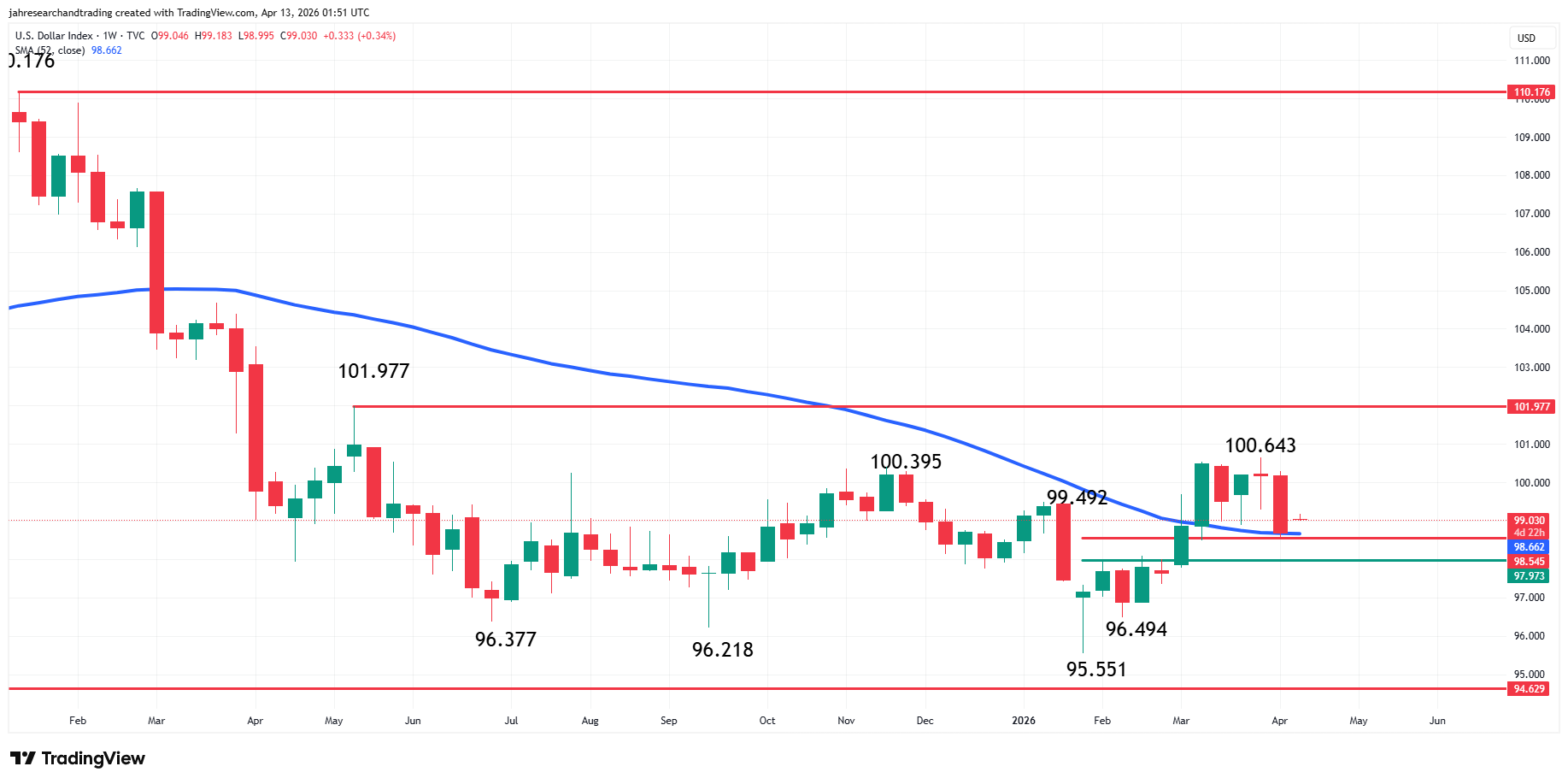
Midweek the picture changed. The temporary ceasefire between the U.S. and Iran eased immediate oil supply fears, crude pulled back and the U.S. Dollar Index softened with it. That’s the setup gold needed. A weaker dollar brought in buyers and gold moved higher. The ceasefire didn’t solve anything permanently but it was enough to shift sentiment for a few sessions.
CPI Complicated Everything
Friday’s March CPI report was the wildcard. The headline came in at 0.9% month over month and 3.3% year over year. Energy prices surged 10.9% on the month and 12.5% year over year, accounting for nearly three quarters of the total monthly increase. For gold that’s a mixed signal. Higher inflation is normally a tailwind for the metal. But when inflation is being driven by an oil spike the Fed can’t control with interest rates, the reaction is more complicated. It raises inflation expectations without necessarily opening the door to rate cuts.
Fed Minutes Reinforced the Cautious Stance
The Fed minutes backed that up. Policymakers raised their inflation outlook citing higher oil prices and signaled they’re staying cautious. With WTI pushing back toward and above $100 after Iran talks broke down, the Fed has every reason to hold rates where they are. Elevated rates and a stronger dollar are headwinds for gold and that’s the environment heading into next week.
Gold Price Forecast
Every new Gold analysis as it publishes, today's technical signal and key levels, live price — on one page.
See all Gold forecastsWhat’s on the Calendar for the Week of April 17
PPI, regional Fed surveys and consumer sentiment are the key reports. Together they’ll shape the inflation and growth narrative going into the next Fed decision. Watch PPI closely. If producer prices are running hot on top of the CPI number, the rate cut conversation moves further out and gold faces more resistance.
Weekly Forecast
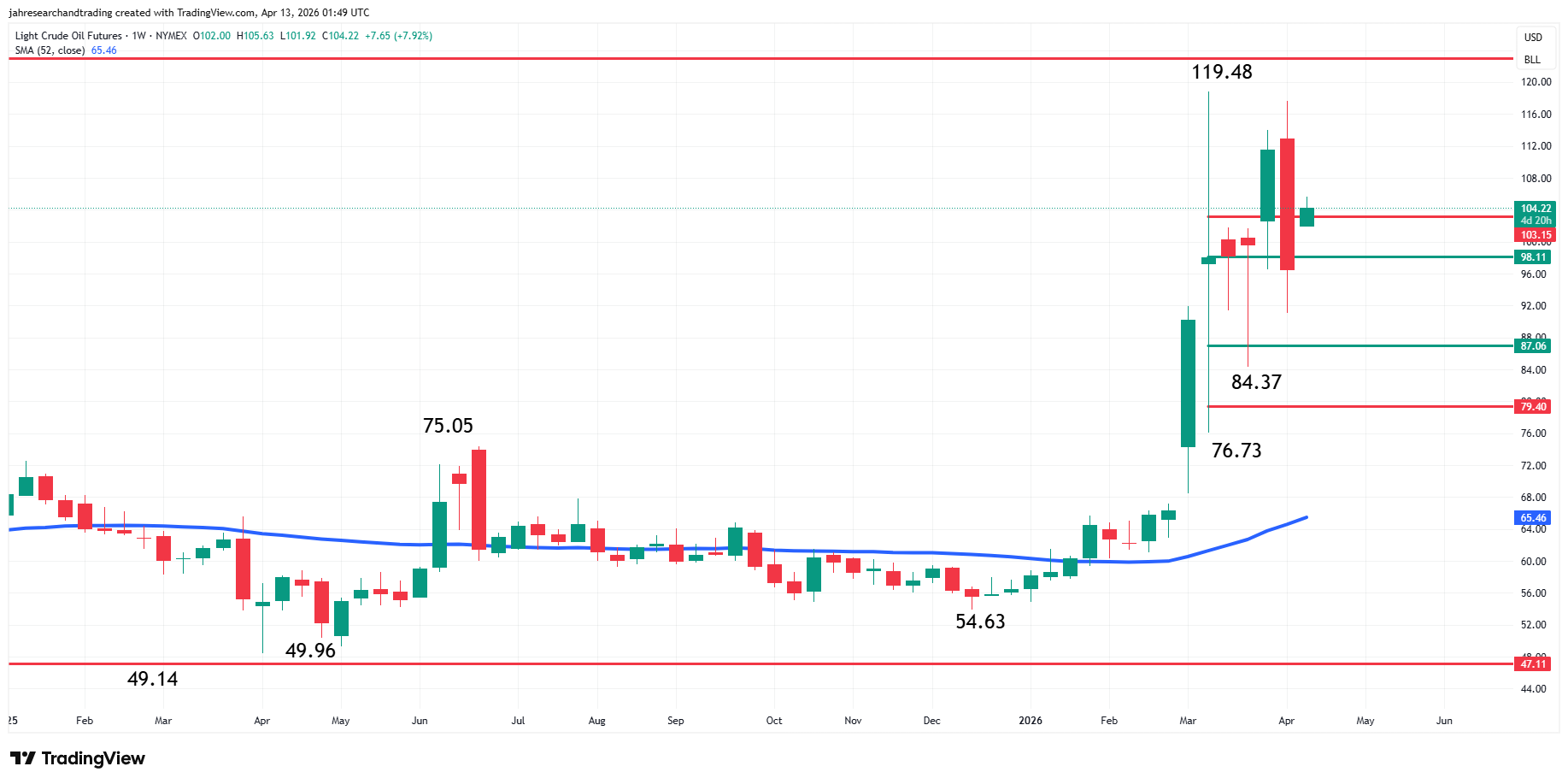
My short-term view is slightly bearish. Oil is back above $100 after the Iran talks broke down and that keeps inflation risk elevated. A stronger dollar and the prospect of rates staying higher for longer are both working against gold near current levels. Geopolitical risk is still there and it provides a floor but I expect sellers to step in on rallies heading into the April 17 close. The setup favors fading strength rather than chasing it.
Technical Outlook
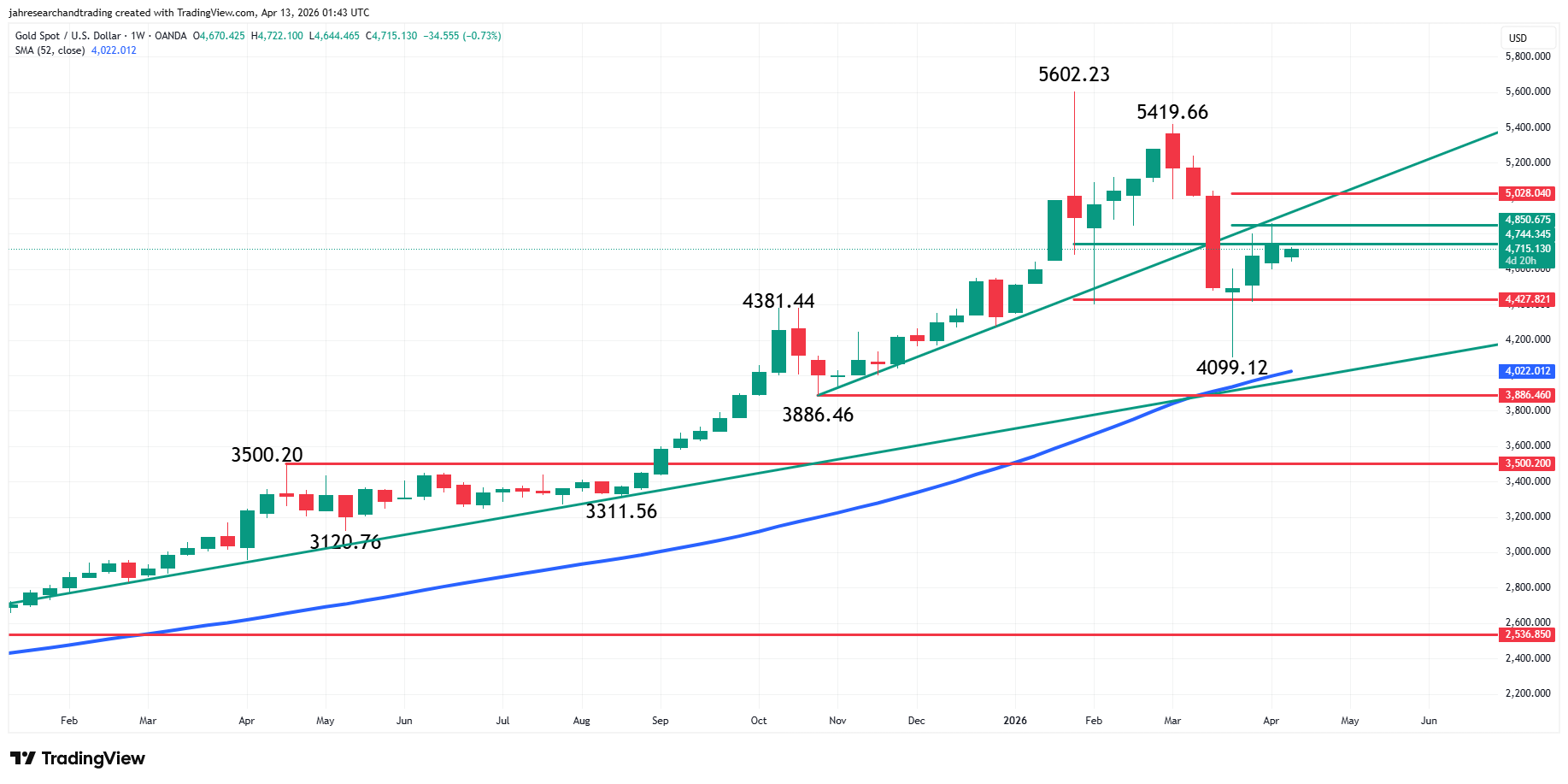
The weekly swing chart shows that gold is still in an uptrend, but still under pressure following the closing price reversal tops at $5602.23 and $5419.66.
The range it is working with is $3886.46 to $5602.23. The market is currently sitting inside its retracement zone at $4744.35 to $4427.82, suggesting a balance trade.
The new short-term range is $5419.66 to $4099.12. Its retracement zone at $4850.68 to $5028.04 is a key resistance area.
A sustained move over $4744.35 will be a sign of strength, but we could be looking at a labored rally until buyers can overcome the short-term 61.8% level at $5028.04.
The inability to overcome $4744.35 in a meaningful way will indicate the presence of a major seller. If buyers give up on the long side, prices could collapse below 61.8% at $4427.82. This will open the door to perhaps a retest of the recent bottom at $4099.12 and the 50-day moving average at $4021.93.
I think the major bias to the upside will remain intact unless bottoms like $3886.46 fail to hold. Buy the dip seems to still be the strategy with investors looking for good entry prices and value, rather than just taking offers using the FOMO outlook as guidance.
More Information in our Economic Calendar.


