Chips Crashed While the Rest of Tech Found a Floor
Semiconductor stocks broke down hard Tuesday and took the Nasdaq Composite with them. The broader selloff that started Monday narrowed into a chip-specific rout by midday while bargain hunters stepped into some of the mega-cap names that absorbed the worst damage the day before. The Nasdaq Composite dropped 1.4%, erasing roughly $680 billion in market value. The index is now down nearly 5% from its early June peak.
The divergence underneath the headline number is the story. Chips are getting sold. Software is catching a bid. Some of the largest tech names are stabilizing. This is the chip trade unwinding while the rest of the market sorts out where the money goes next.

The SOX Dropped 6.3% and Memory Led the Damage
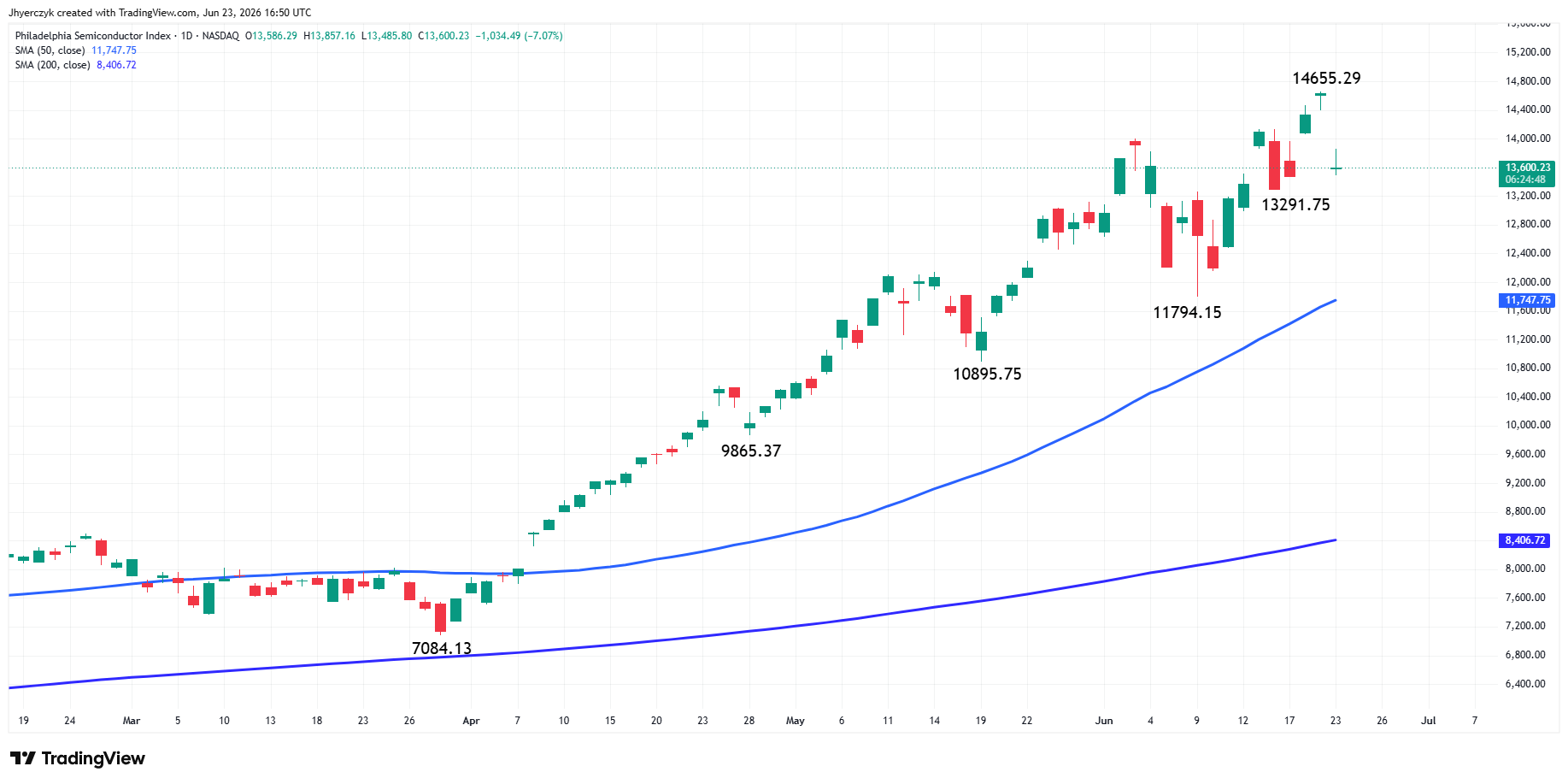
The Philadelphia Semiconductor Index fell 6.3% as memory chipmakers that were the best performers on the S&P 500 this year led the entire complex lower. South Korean memory names posted steep declines during the Asian session and the selling carried straight into the U.S. open without a pause.
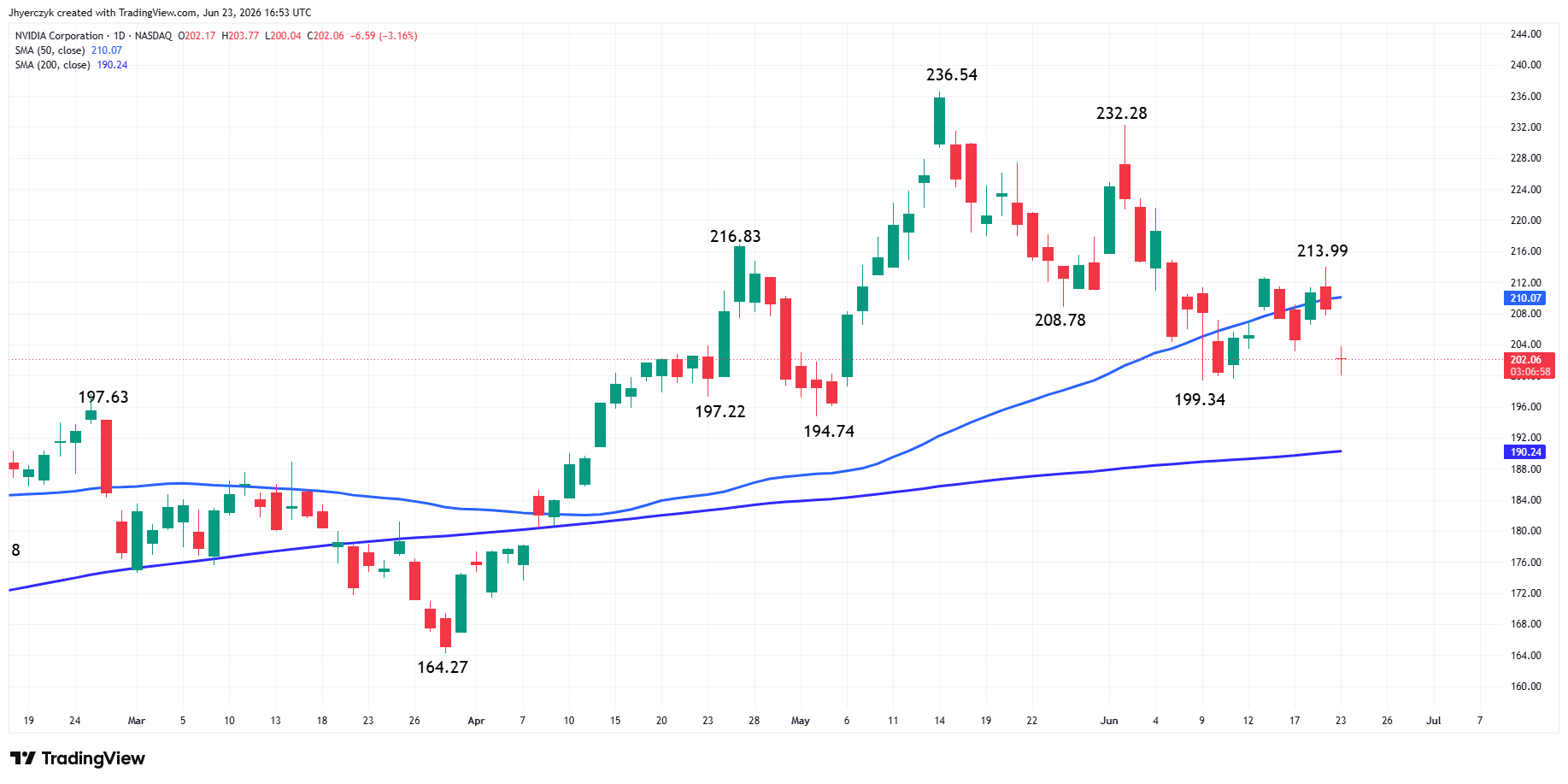
Nvidia slipped 2.6% and its market cap dropped below $5 trillion. Nvidia and Tesla were the heaviest drags on the Nasdaq Composite. The concentration of money in a handful of chip names powered the rally earlier this year and that same concentration is making the exit painful. The flows that drove the trade up are running in the other direction now and it does not take much of a sentiment change to move prices hard when the positioning is this crowded on one side.
Expectations of tighter monetary policy under Federal Reserve Chair Kevin Warsh are adding pressure on top of the unwind. Rate-sensitive growth stocks were already vulnerable after last week’s hawkish hold and the chip trade is taking the brunt of it.
SpaceX Broke Its IPO Price Then Bounced
SpaceX fell as low as $147.11 Tuesday morning, dropping below its opening-day price of $150 for the first time since the debut. The market cap briefly slipped below $2 trillion. By 14:40 GMT the stock had recovered to $157, up 1.7% on the session.
Dow Jones Price Forecast
Every new Dow Jones analysis as it publishes, today's technical signal and key levels, live price — on one page.
See all Dow Jones forecastsThe stock has lost more than $600 billion in market cap since last Wednesday’s peak. SpaceX announced a bond offering earlier this week. Shares are still more than 10% above the $135 IPO price but the decline from the post-debut highs has been the kind of correction that shakes out the money that came in on excitement and did not have a price target.
Stocks in the News
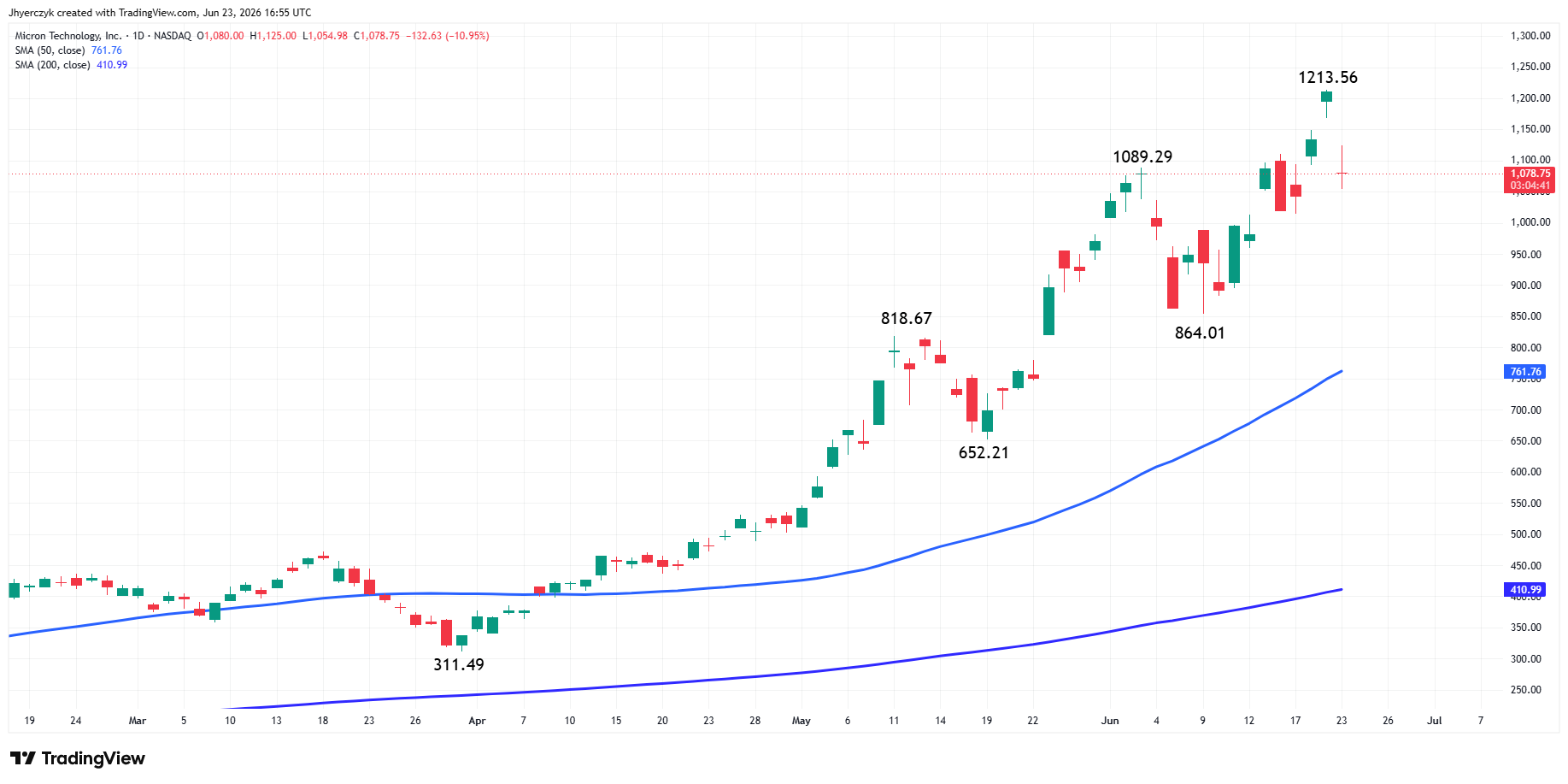
Micron fell 9% ahead of Wednesday’s after-the-close earnings report. SanDisk dropped 12% and Western Digital lost 11% as memory led the SOX lower.
Microsoft gained more than 2% and Apple added 0.8% as bargain hunters rotated into names that already went through their correction earlier this year. Alphabet was down just 0.4% after Monday’s 5% drop. Workday and Salesforce both moved higher.
Daily Nasdaq Composite Index (IXIC) Technical Analysis
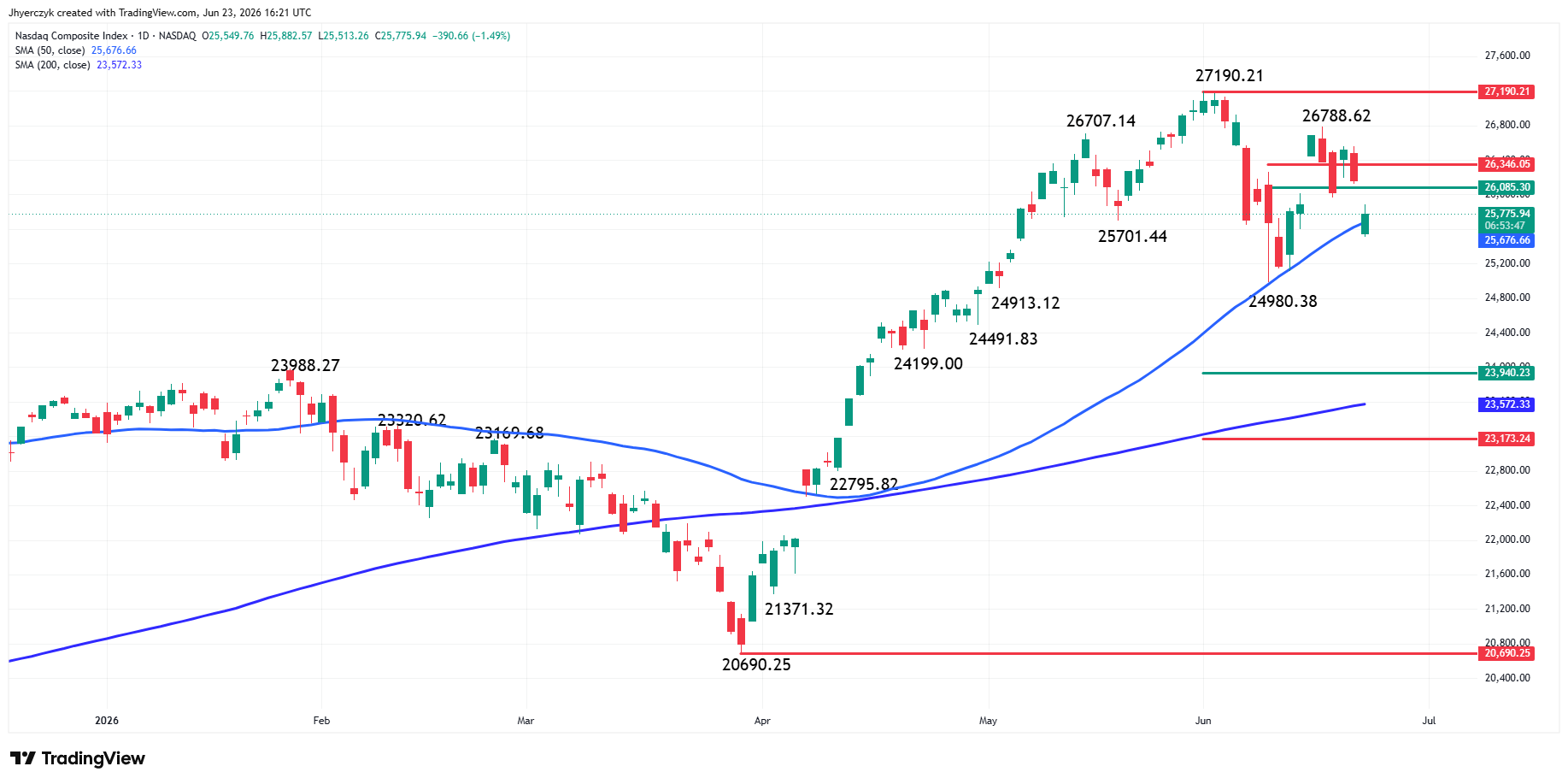
The Nasdaq Composite Index is sharply lower at the mid-session on Tuesday after gapping key retracement zone support at 26085.30 to 26346.05. This zone is new resistance.
The selling pressure was intense enough to drive the index through the 50-day moving average at 25676.57. This is a major development because the 50-day MA has been controlling the trend since April 8. Furthermore, it was successfully tested on June 9 and June 11.
A sustained move under the 50-day MA will signal increasing selling pressure. This will put the swing bottom at 24980.38 on the radar. This price is the trigger point for an acceleration to the downside. The primary objective of this bearish move will be a 50% to 61.8% retracement zone at 23940.23 to 23173.24. Inside this zone is the 200-day moving average.
Recovering and sustaining a rally over the 50-day MA will indicate the return of buyers. There first objective is to overcome and sustain a rally over 26346.05.
Trader reaction to the 50-day MA at 25676.57 will determine the direction into the close on Tuesday. A close below it will open the door to further selling pressure on Wednesday. Holding above it could fuel a late session recovery rally, but not necessarily a higher close. What we should know by the end of the session is how investors view the importance of the 50-day MA and its impact on the trend.
What to Watch
Micron reports Wednesday after the close and the timing could not be worse for the bears or better for anyone looking to buy the dip. The SOX just dropped 6.3% and memory names led the damage. If Micron’s numbers show AI-driven demand is still running, Tuesday’s chip selloff starts looking like a gift. The bargain hunters who showed up in mega-cap tech Tuesday were not afraid to buy the dip and they will move into chips on a strong Micron print.
The 50-day moving average on the Nasdaq Composite has held every test since April. Tuesday’s session drove through it for the first time. Whether the index closes above or below it by the bell is the difference between a shakeout and a trend break, and the market will know before Wednesday’s open.
More Information in our Economic Calendar.