
Oil and Natural Gas Fundamentals Reflect Steady Supply and Seasonal Demand
Oil markets are supported by continued discipline from OPEC+ alongside growing non-OPEC+ supply, especially in the U.S. shale plays. Refinery utilization remains elevated to support demand for transportation and petrochemical feedstocks. There have been small draws in inventories of oil storage, reflecting a balance in the supply and consumption of oil during the summer driving season in major consuming markets. Oil market in the U.S. has not seen significant change for a few weeks. Operational inventories at Cushing continue to hold working inventories at minimum levels. Oil product markets, gasoline and distillates have shown steady, strong demand during this summer period as economic activity supports fuel consumption.
Natural gas supply remains strong with the latest production setting new records. Dry gas output remains strong, fueled by oil and gas production as well as dedicated gas production. After some maintenance in the spring, LNG export facilities are operating near capacity with LNG facilities feeding into global demand.
Natural gas storage, the U.S. continues its normal injection rate, and working natural gas is in a healthy position as a percentage of its historical storage average. Electricity markets continue to experience normal patterns with strong and weak demand areas based on weather conditions, and strong industrial demand is consistent. This overall picture demonstrates a healthy balance in the natural gas market as the U.S. is exporting incremental natural gas production.

Natural Gas Futures Rise to $3.154 – Ascending Channel Maintains Bullish Momentum on the 4H Chart
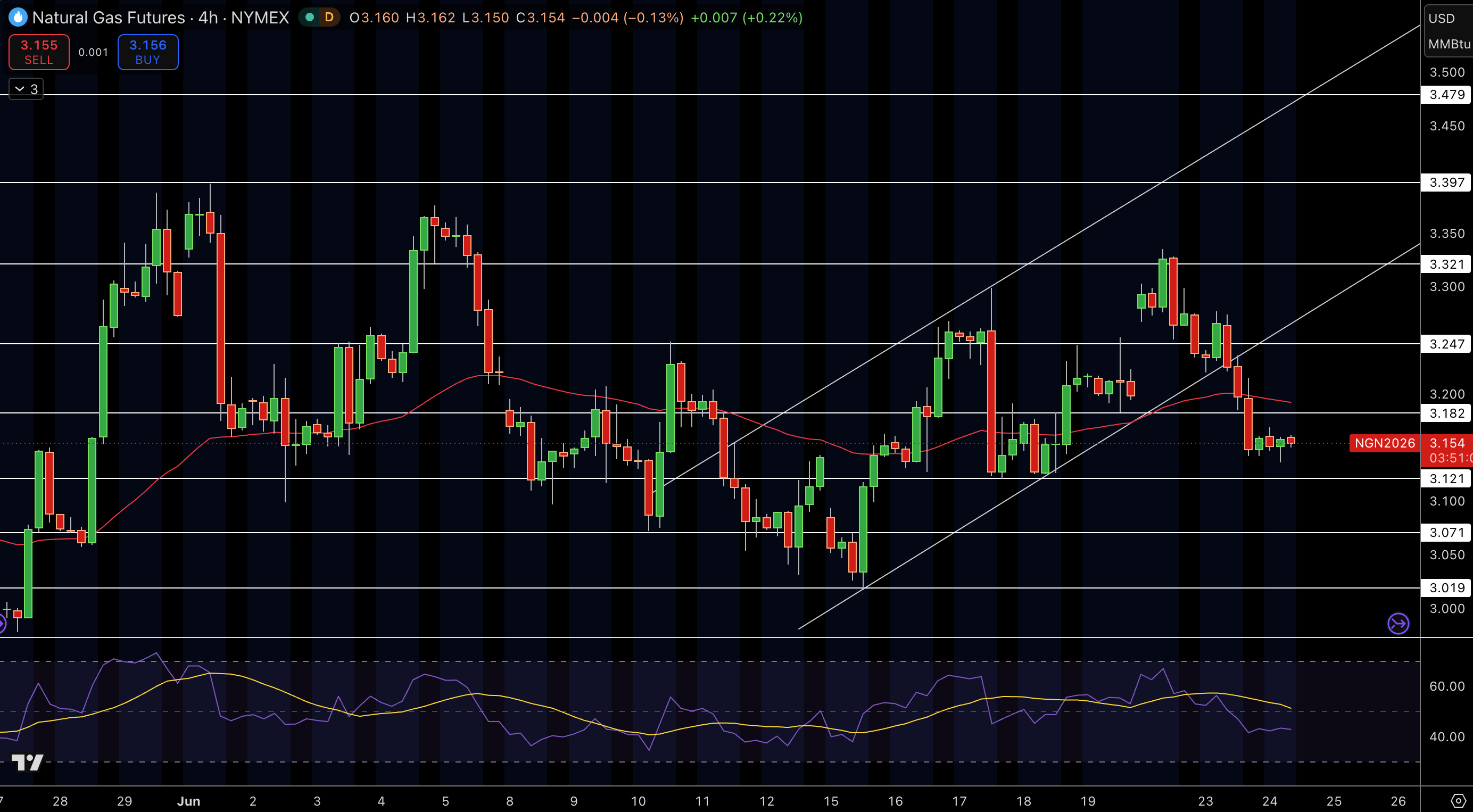
Trading at $3.154 on the 4H NYMEX chart, Natural Gas keeps the mixed candles above the 50 period moving average near $3.12 and still inside a well-defined ascending channel. The bullish wicks off the $3.099 swing low shows the continued buying interest on the dips while the RSI is at about 52 and volume profile identifies $3.10 as a strong support pivot.
The price targets at the Fibonacci extension are located at $3.247-3.321 with the trend structure remaining bullish above $3.099 and the higher highs higher lows continues to favor buyers on the pullbacks.
Trade Idea: Buy at $3.154, targeting $3.247, with a stop-loss at $3.10.
WTI Crude Oil Dives to $72.72 – Triangle Breakdown Signals Continued Bearish Pressure on the Daily Chart
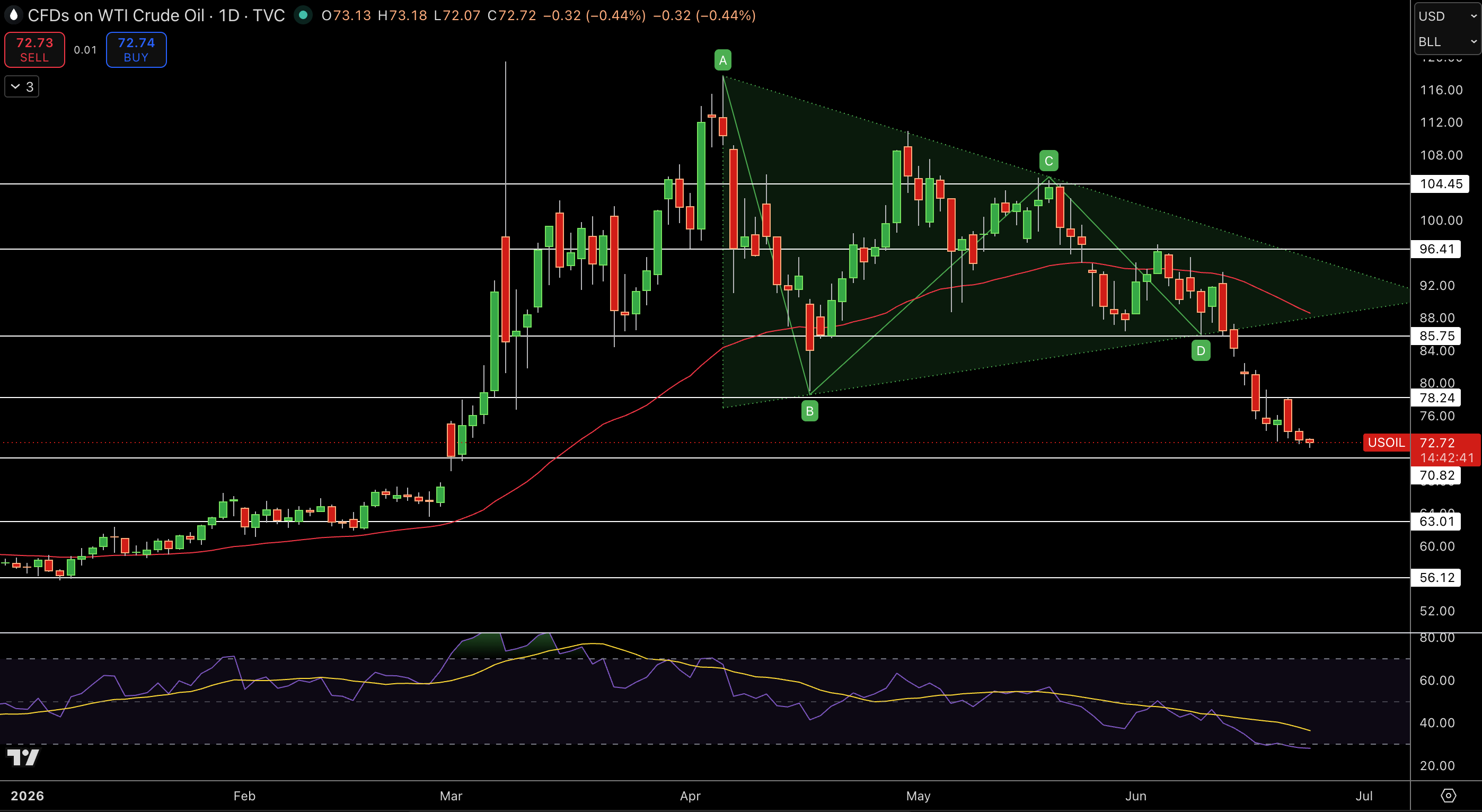
Trading at $72.72 on the daily time frame, WTI Crude Oil sees strong bearish continuation candles punching through triangle support close to $85.75 from 50-period moving average rejection. The large bearish engulfing candles coupled with a string of lower highs from the $104.45 swing high is proof of increased seller sentiment, and the price is moving fast to the $70.82-$63.01 Fibonacci extension level.
Natural Gas Price Forecast
Every new Natural Gas analysis as it publishes, today's technical signal and key levels, live price — on one page.
See all Natural Gas forecastsThe RSI sits at below 40 with downward momentum, and the volume profile identifies $78-85 as a failed fair-value area where sellers have reestablished authority, with the price remaining below a downward trend line. With the trend structure staying bearish below $85.75 within the broader downward trend channel from $116, the structure is bearish below $85.75 in a descending channel from $116 while the lower highs lower lows continues to favor the sellers.
Trade Idea: Sell at $72.72, targeting $70.82, with a stop-loss at $75.00.
Brent Crude Oil Holds $76.32 – Descending Channel Support Encourages Stabilization on the 4H Chart
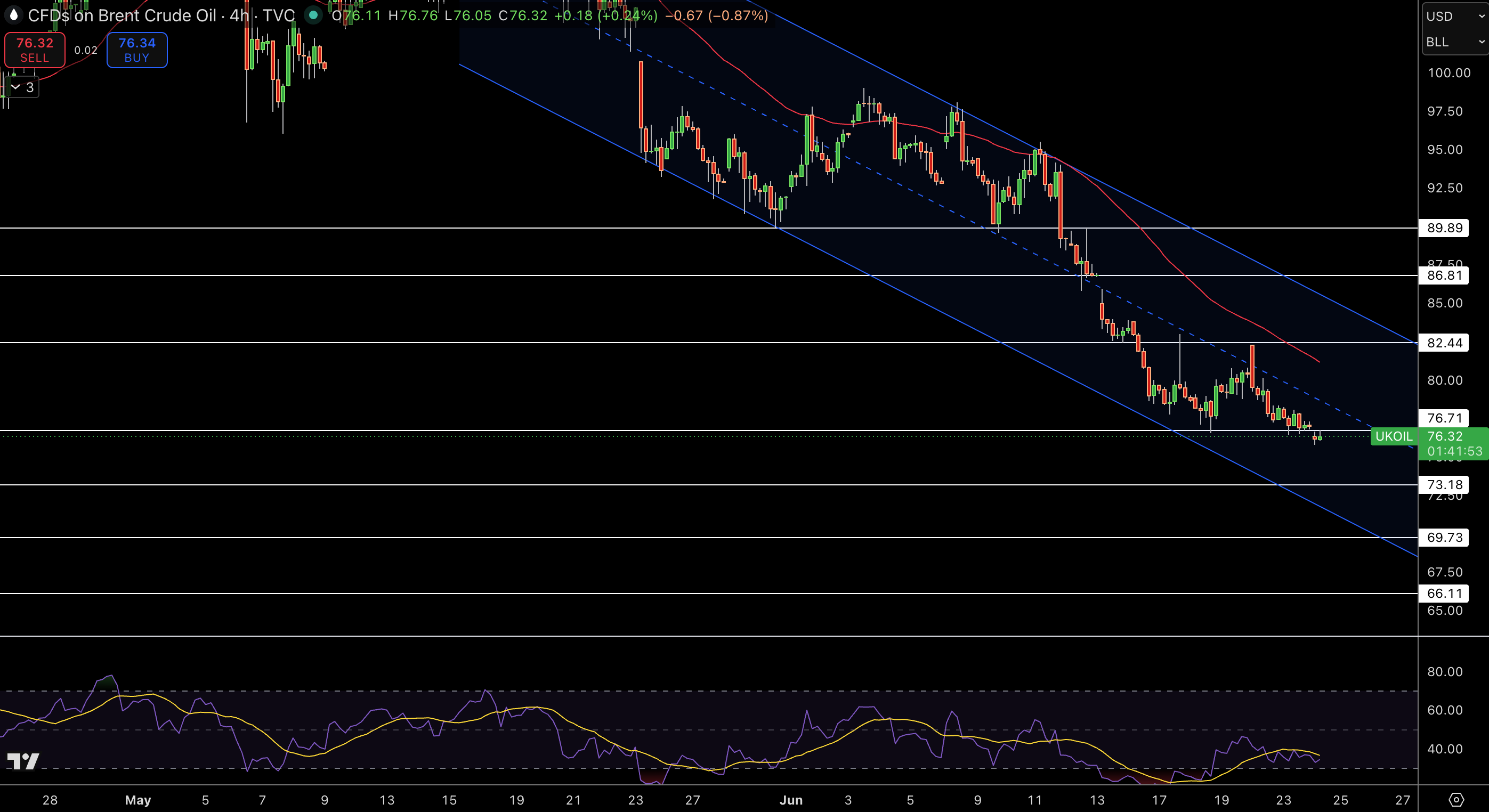
Brent Crude Oil is trading at $76.32 on the 4H chart and mixed candles have hit the trend line of the descending channel at approximately $76.71 from 50 period moving average rejection near $85.63. The bullish wicks show that buying interest is coming in at support and capping down-side, while the RSI is at about 50 and the volume profile identifies $78-80 as an upcoming fair value area with the next resistance zone at $82.44-$85.00.
With the price still within the structure and neutral to bullish above the support of the trend channel within the larger descending channel, the structure remains bullish above the trend channel support with higher lows attracting buyers on pull backs.pport despite the broader downtrend, with higher lows continuing to attract buyers on pullbacks.
Trade Idea: Buy at $76.32, targeting $82.44, with a stop-loss at $75.00.