Buyers Took the S&P 500 to a Record Close
The S&P 500 closed at a record high Friday after July payrolls contracted and traders pulled back their bets on a September rate hike. The labor report was weak where it counted. Hiring fell, wages cooled and the participation rate dropped. Treasury yields followed the hike odds lower and growth stocks took the bid.
Technology, consumer discretionary and materials led the session. Energy was the weakest sector as crude oil pulled back on progress toward a Hormuz agreement. The bulls are holding above the 50-day moving average with earnings, lower oil and a fading rate case all working in their favor. The bears still have inflation and a Federal Reserve that has not backed off its concerns about prices.
The S&P 500 finished at 7,757.64, up 47.68 points or 0.62%. The index gained 3.58% for the week, its strongest weekly performance since mid-April. This was not a defensive move.
Daily S&P 500 Index (SPX) Technical Analysis
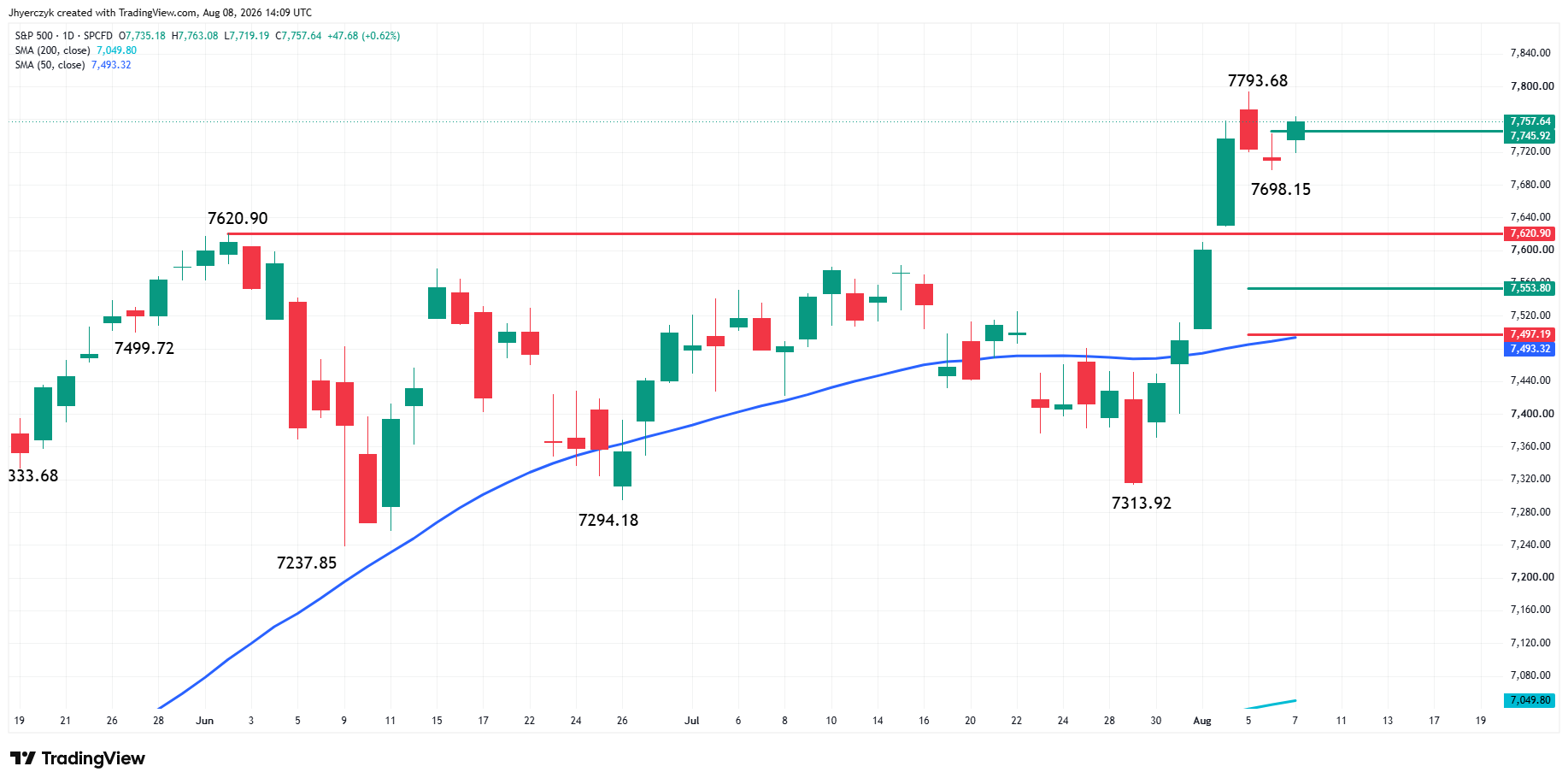
The S&P 500 Index traded in a tight range on Friday, but still managed to post its best-ever close. The main trend is up according to the swing chart. A trade through 7793.68 will signal a resumption of the uptrend. The nearest two-day or main bottom is at 7313.92, so the uptrend is safe for now.
A new minor bottom was formed at 7698.15. A trade through this level will change the main trend to down and shift momentum to the downside. If this creates enough downside momentum, we could see a break into the former top at 7620.90. Watch for a technical bounce on the initial test because old tops can become new bottoms.
The short-term range is 7313.92 to 7793.68. If the 7620.90 fails to hold as support, then look for a full-blown correction into the short-term range’s retracement zone at 7553.80 to 7497.19. The latter forms a potential support cluster with the 50-day moving average at 7493.32.
Payrolls Contracted and Hike Odds Dropped Fast
S&P 500 Price Forecast
Every new S&P 500 analysis as it publishes, today's technical signal and key levels, live price — on one page.
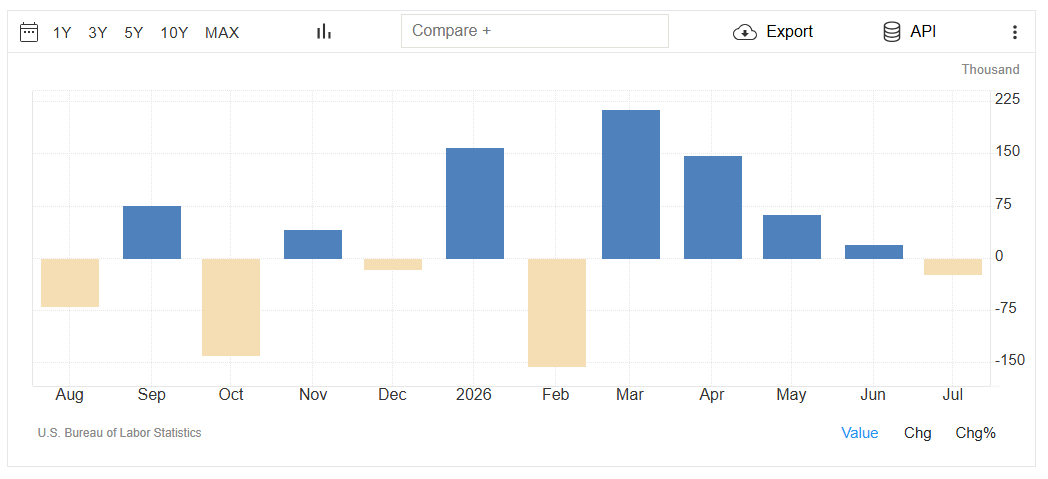
See all S&P 500 forecastsNonfarm payrolls fell by 23,000 in July. The Street was looking for an 80,000-job gain, and the prior two months got revised lower on top of it. That is the weakest labor print in months, landing right when the hawks were building their case for September.
The unemployment rate ticked down to 4.1% from 4.2%, but that came from workers dropping out of the labor force, not from stronger hiring. Average hourly earnings rose 3.2%, missing the 3.5% estimate. That is not a clean bill of health for the economy, but it pulls the legs out from under the argument that the labor market is too hot to leave alone.
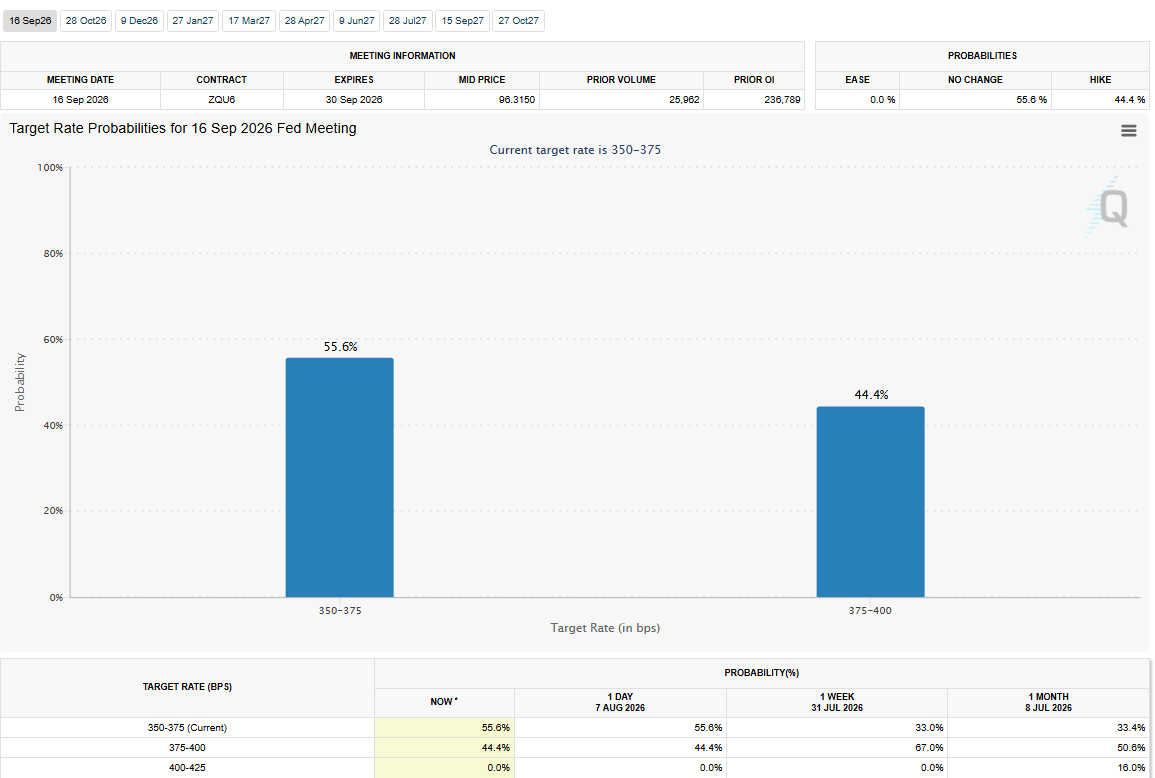
Rate markets repriced fast. September hike probability dropped to about 44% from 55% the session before and 67% a week earlier. Nobody is pricing a cut. The trade is that the Fed has a harder time selling another hike when the economy just lost jobs.
The inflation problem has not gone away. But the labor side of the argument took a hit Friday and the equity market treated it as permission to buy.
Crude Staying Low Removes the Fed’s Excuse
Oil helped the equity trade from the supply side. Progress toward a possible Iran agreement has kept crude below last week’s highs and pulled energy cost pressure out of the rate debate. The arrangement is not finished and normal tanker traffic through the Strait of Hormuz has not come back.
That leaves crude as the biggest risk hanging over the stock market next week. Any headline that puts the agreement in doubt sends oil higher, rebuilds inflation expectations and drags Treasury yields back up with it.
For now, the market is trading the best-case version. Lower oil gives the Fed room to wait. The payroll miss gives it a reason. That combination is why growth led the session Friday and energy sat at the bottom of the sector board.
85% Beat Rate Keeps Sellers on the Sideline
Earnings kept Friday’s rally from becoming a pure rate repricing. Of 436 S&P 500 companies reporting through Friday, 85.1% beat estimates, well above the long-term average. The AI spending concerns have not gone away, but strong results are taking the pressure off and keeping buyers engaged.
Technology climbed 1.25% on the session. Consumer discretionary gained 1.34%. Materials added 1.52%. The sectors that ran Friday had the earnings behind them to back it up, and that is what separates this from a rally built on nothing but lower rate expectations.
SpaceX Ran 15.8%, Trade Desk Dropped 21.9%
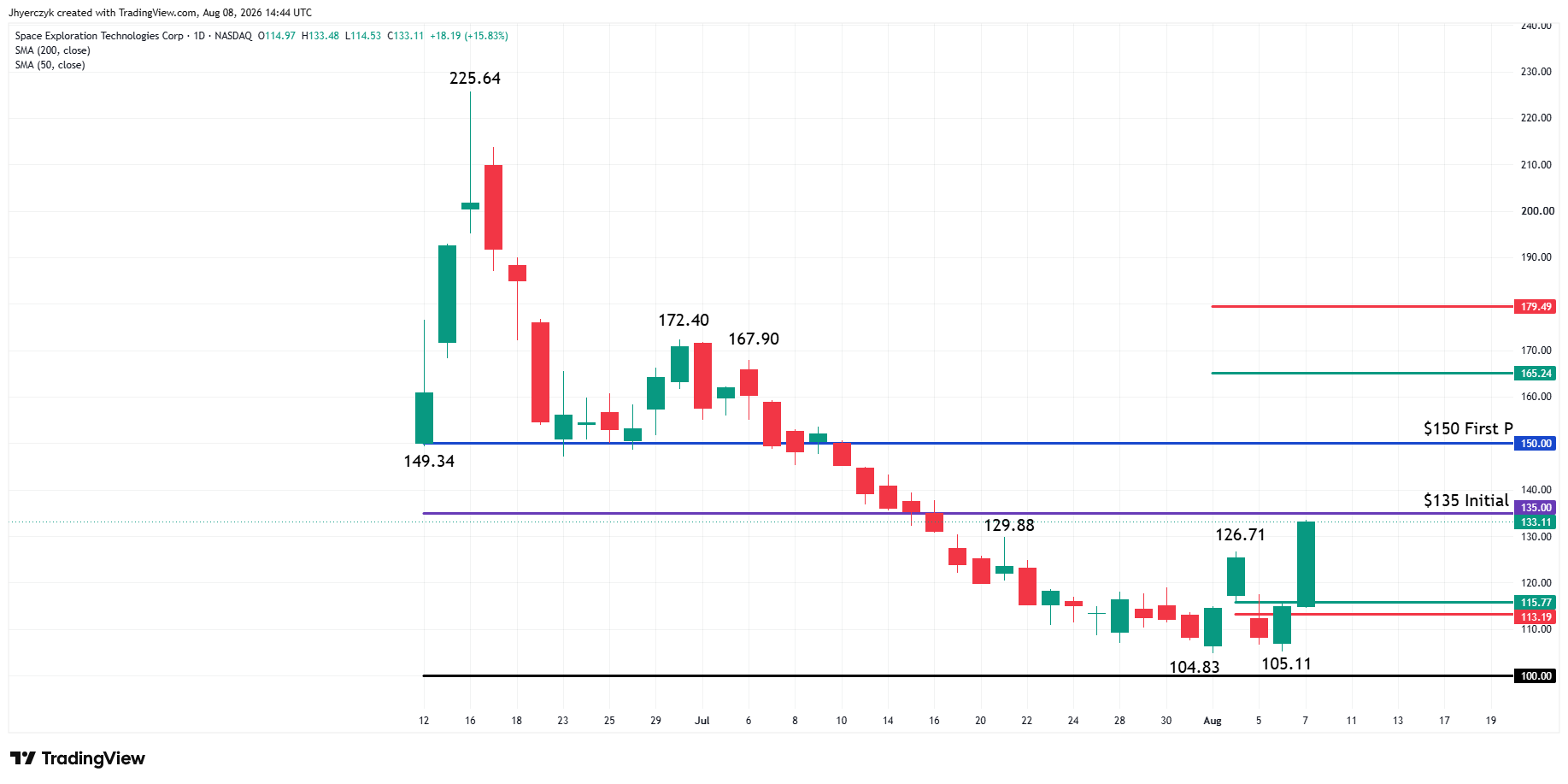
SpaceX surged 15.8% after the first lockup expiry passed without the heavy selling traders feared. Atlassian jumped 35.3% on a beat and stronger forward guidance. Microchip Technology rose 13.9% on upbeat numbers. Airbnb gained 17.4% after topping revenue estimates and Palantir added more than 10%.
The Trade Desk dropped 21.9% after guiding third-quarter revenue below expectations. Strong results are getting rewarded in this market. Guidance that falls short gets sold hard and fast.
What to Watch
Friday’s record close came out of a clean repricing in the rate market. Payrolls contracted, wages cooled, participation fell and the September hike case lost its footing. The question next week is whether crude stays contained and whether Fed officials accept what the jobs data is telling them. If oil holds below last week’s highs and yields stay down, the rally has room to keep running. If Hormuz progress stalls or policymakers push back on the rate repricing, the growth names that led Friday will be the first to give it back.
The uptrend is intact and the S&P 500 is extending off a record close with the 50-day moving average well below as a floor. The minor bottom at 7698.15 is the level that keeps the current momentum structure alive. The bulls have control going into next week, but they need lower oil, lower yields and continued earnings strength to hold it.
More Information in our Economic Calendar.