Bearish Breakdown Raises Correction Risk
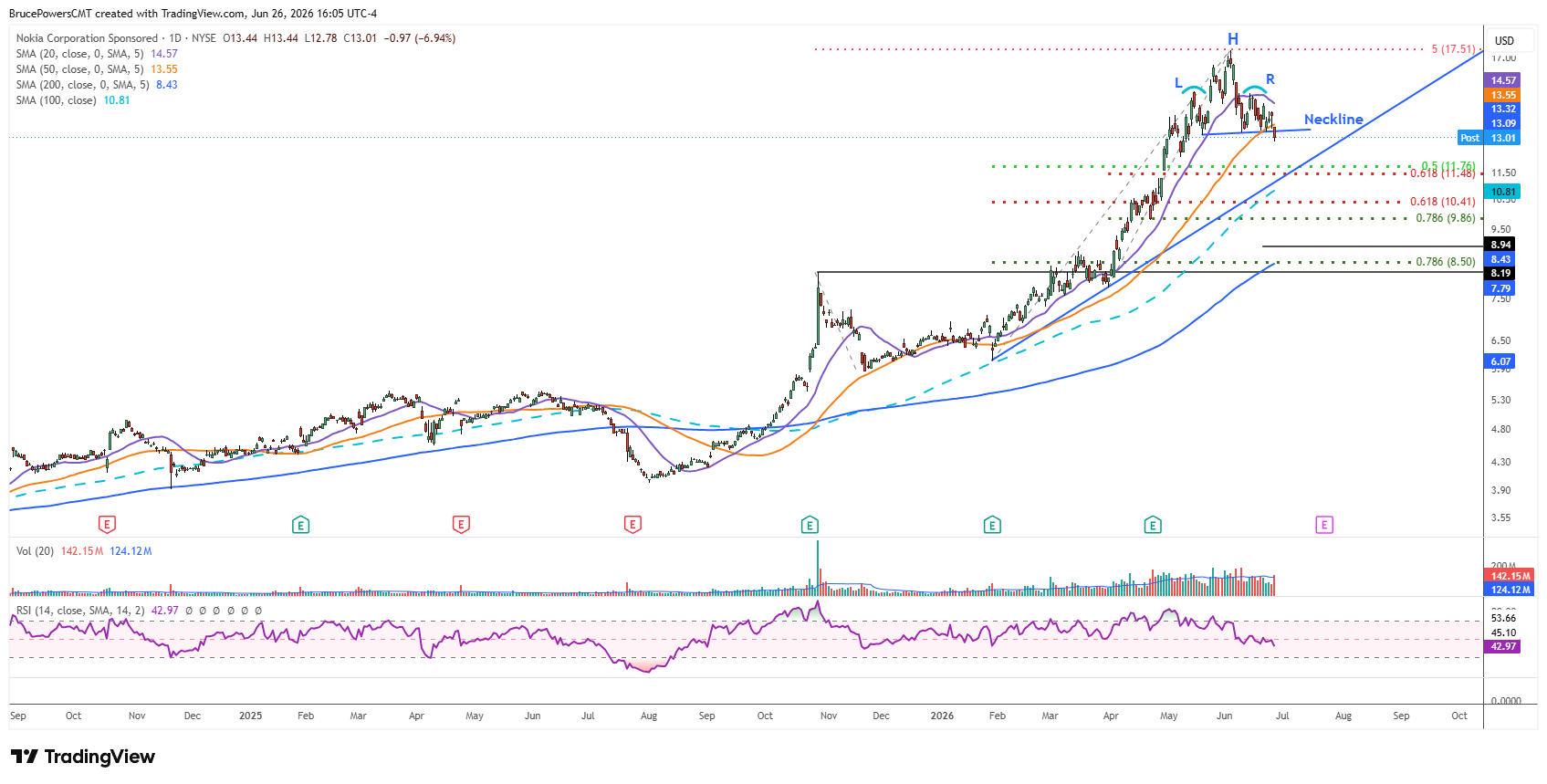
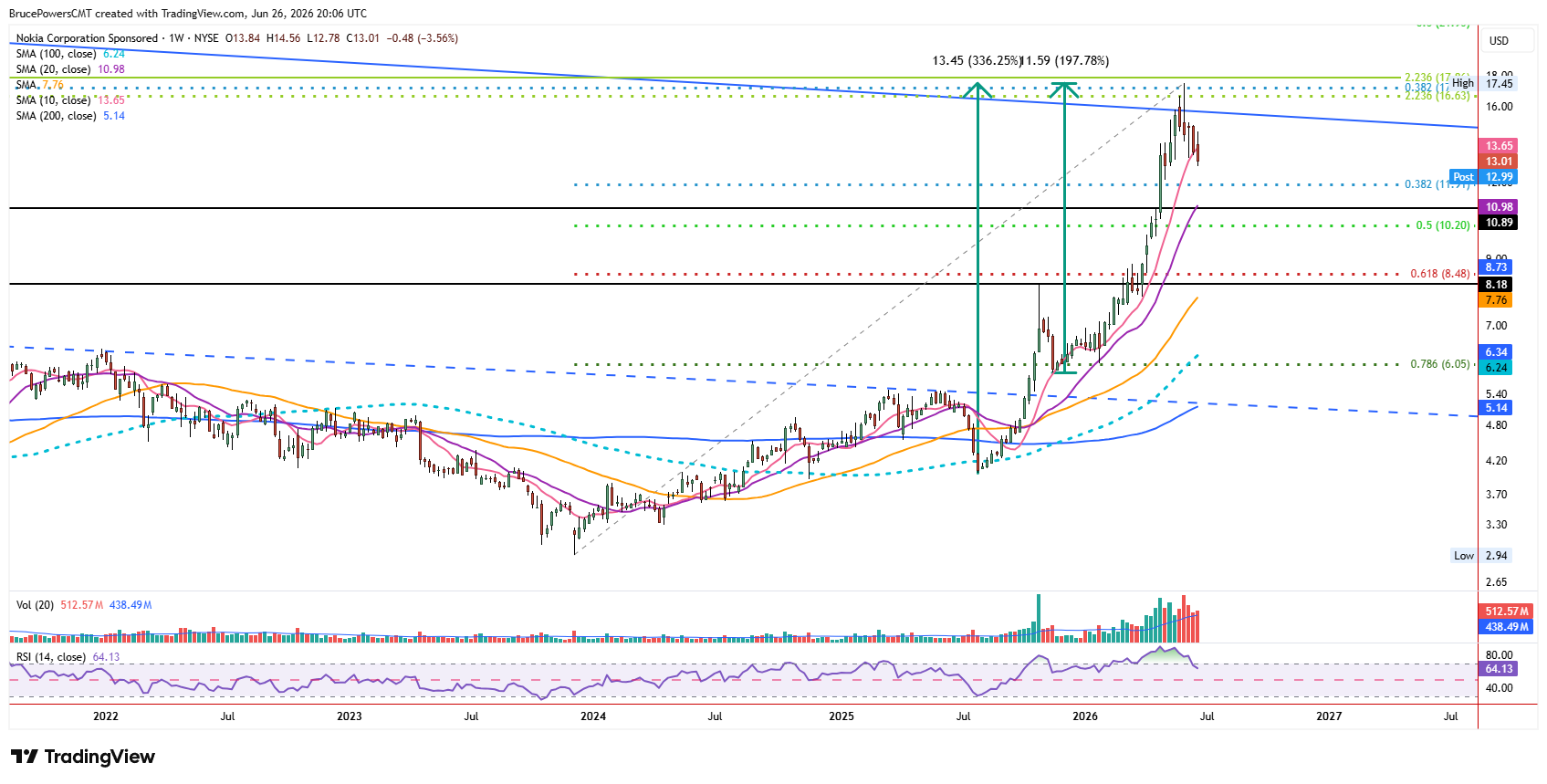
Nokia Corporation (NOK) stock triggered a bearish reversal from a classic head and shoulders topping formation on Friday, coinciding with a break below the 50-day moving average. This dual breakdown increases the likelihood of a deeper bearish correction following the stock’s advance to a a multi-year high of $17.45 three weeks ago. Sellers subsequently took back control during the weak, forming a weekly bearish shooting star candlestick pattern, which hinted at the potential for a more serious bearish correction.
Resistance at the trend high was reinforced by the confluence of several technical resistance indicators, including a Fibonacci retracement, a Fibonacci extension target, a Fibonacci projection, and a long-term downtrend line. Given the bearish market reaction following the high and Friday’s new bearish signals, the probability has increased that key lower target levels may be tested as the stock retraces part of its prior sharp advance.

Measuring the Downside Opportunity
NOK has been a strong performer. At the June 3 high of $17.45, the stock was up by around 198% from the November swing low, approximately 336% from the July 2025 swing low, and around 170% from the end of 2025. The bearish reversal signal from the head and shoulders pattern triggered with a drop below $13.22 and it was confirmed by both a weekly and daily close beneath that level.
A potential downside target estimated from the topping pattern suggests a decline to around $8.94. That would put NOK near the 200-day moving average, currently near $8.43, and the prior trend high of $8.19 from 2025. Before reaching the objective, however, the uptrend line and 100-day moving average near $10.81 represent an important potential low or intermediate support zone that has a strong likelihood of being tested first.
Resistance Levels to Watch
If a short-term rebound develops, prior support could instead act as resistance, with initial upside tests targeting the neckline of the head and shoulders formation near $13.22 or the 50-day moving average near $13.55. Friday’s high of $13.44 marks the first area of short-term resistance, while a rally above Thursday’s high of $14.16 would increase the risk that the bearish topping pattern fails. Until buyers reclaim those key resistance levels, Friday’s dual breakdown below both the head and shoulders neckline and the 50-day moving average keeps the focus on lower support targets and reinforces the dominant bearish outlook.