AI Supply Chain Lifts Russell 2000 to Record
The Russell 2000 hit a new all-time high at 3046.49 on Wednesday and couldn’t hold it, settling at 3012.59, down 11.78 or -0.39%. Pre-holiday volume was thin and the pullback looked like profit-taking, not a change in direction.
Up nearly 22% since January. Best first half since 1991. This index was dead money for years while mega-cap tech ran away from everything else, and a move like that doesn’t come from rotation alone.

Daily Russell 2000 Index Technical Analysis
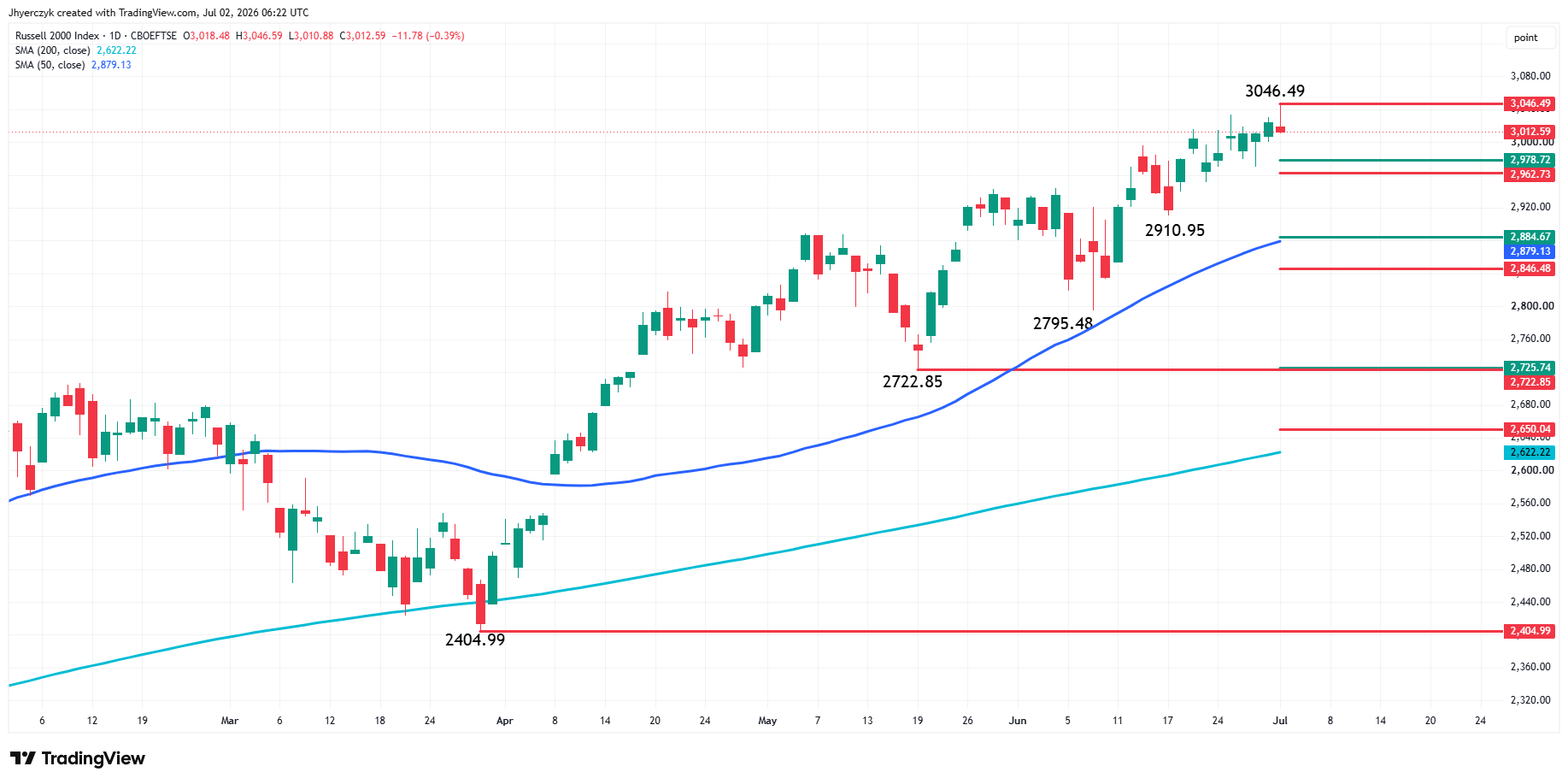
The Russell 2000 Index hit an all-time high at 3046.49 before settling lower for the session. Technically, the index formed a potentially bearish closing price reversal top, but the light pre-holiday volume and profit-taking may have been behind the move rather than outright short-selling.
A trade through 3046.49 will signal a resumption of the uptrend according to my swing chart indicator. The trend will weaken on a trade through the last swing bottom at 2910.95, but I don’t think the main trend will actually change to down until 2722.85 is violated.
On Wednesday, the Russell 2000 Index settled at 3012.59, down 11.78 or -0.39%.
Minor retracement zone support is at 2978.72 to 2962.73 and 2884.67 to 2846.48. The latter forms a support cluster with the 50-day moving average at 2879.13.
The long-term support zone is 2725.74 to 2650.04. It forms a support cluster with the main bottom at 2722.85 and the 200-day moving average at 2622.22.
Until sellers start taking out the swing bottoms at 2910.95, 2795.48 and 2722.85 or cross to the weak side of the moving averages, traders are likely to remain in “buy the dip” mode.
Chip Stocks Took 16 of the Top 50 and That Concentration Is the Trade
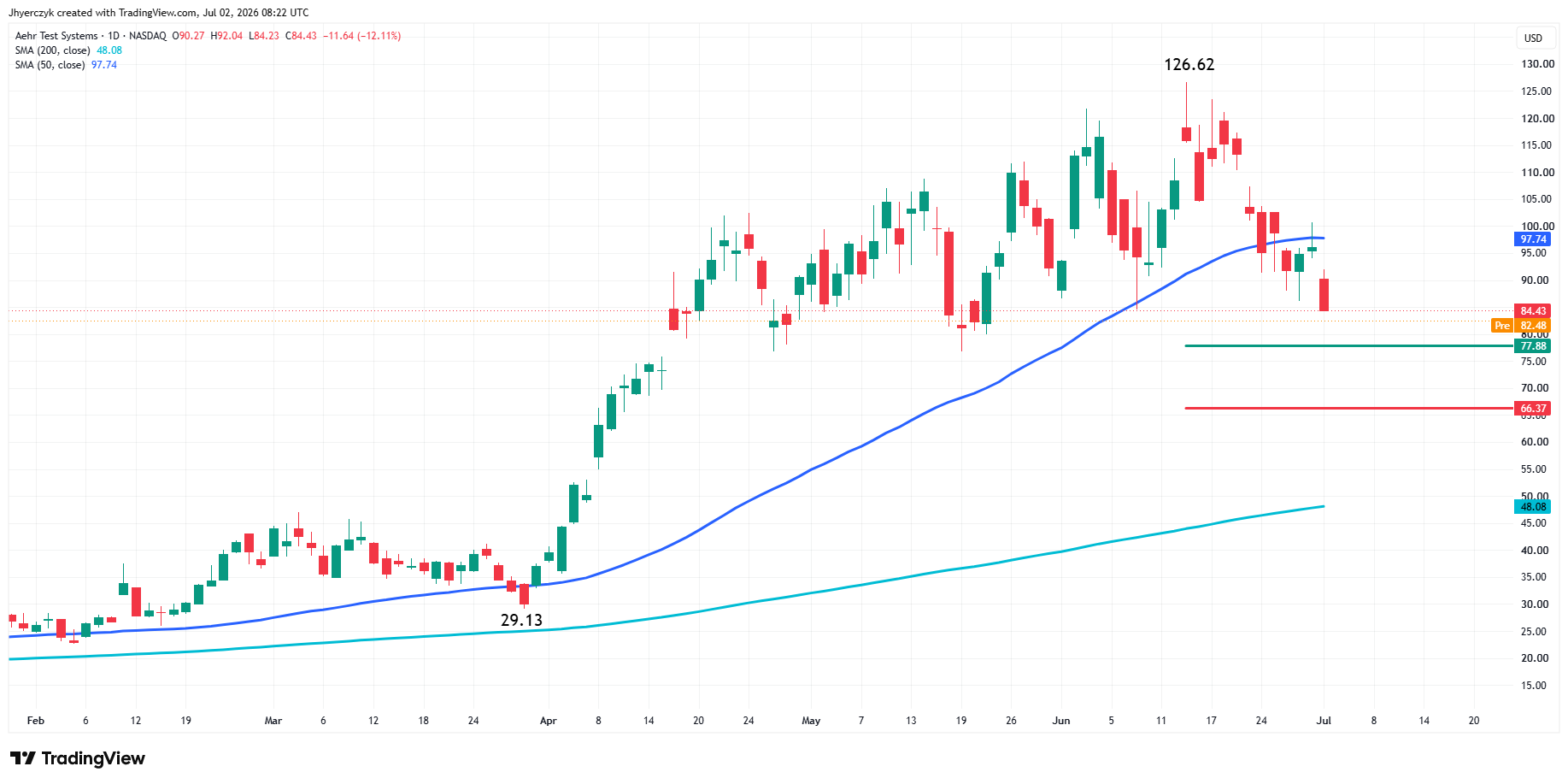
Sixteen semiconductor names in the Russell 2000’s top 50 this year. Aehr Test Systems, Ichor Holdings, MaxLinear, all up more than 400%. Nearly a third of the index’s best performers sitting in one industry is not broad-based anything. That is a concentrated bet on AI capex and nothing else.
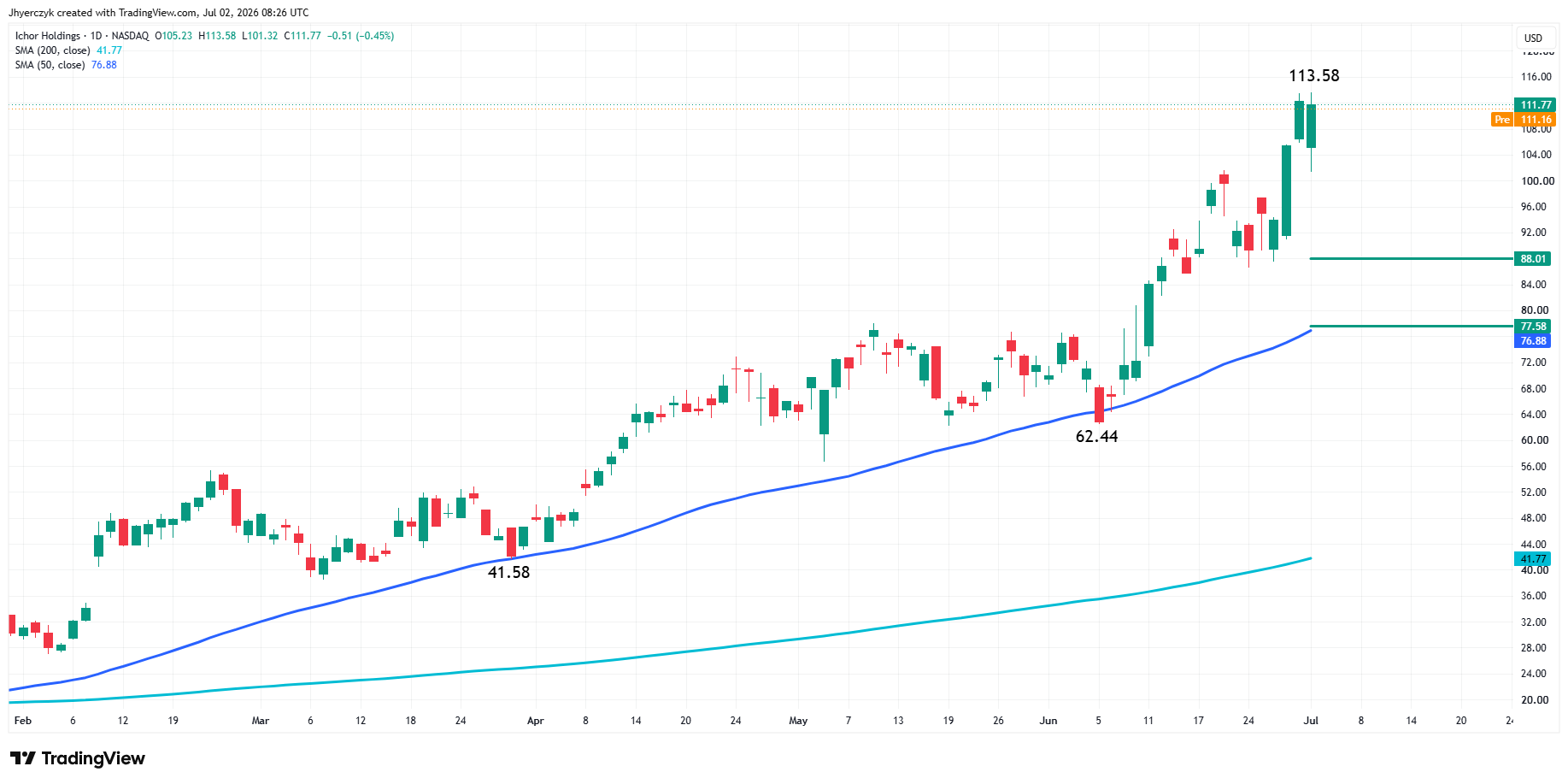
First half, it worked because every major cloud provider kept raising spending guidance and the orders kept flowing. But that kind of concentration turns on you fast. One buyer pulls back on chip orders and the same names that carried this index to a record are the ones dragging it lower. Traders in the Russell 2000 at these levels are in the AI spending cycle whether they meant to be or not.
38% Earnings Growth Is Doing the Heavy Work
LPL Financial has consensus Russell 2000 earnings growth at 38% for 2026. That number was 23% in January. A 15-point revision in six months is what finally brought institutional money off the sidelines, not the valuation gap that had been sitting there for years.
Pharma and biotech deals are picking up again and the tax incentives on equipment spending are real money. Those buyers don’t care about Nvidia’s order book. They are in the Russell 2000 for completely different reasons, and the index’s heavy domestic weighting gives them a risk profile that looks nothing like the large-cap names tied to overseas revenue. Secondary to the earnings revision, sure. But 16 chip stocks carrying a third of the top 50 is a concentration problem, and anything that brings in capital from outside that one trade makes the index less fragile going into July.
Going into July, quarterly results will settle whether the revision holds. Companies confirming the estimates gives the catch-up trade legs into the back half of the year. But guidance coming down reopens the same valuation gap that attracted the money in the first place, because this entire move was priced off accelerating earnings, not a cheap multiple.
One More Hike Puts Q4 Profits at Risk
Bank of America put a number on it. Every additional 25-basis-point rate increase cuts Russell 2000 operating earnings by roughly 2%. Small caps carry the most refinancing risk in the equity market and Bank of America thinks the expected Q4 profit acceleration is where that risk shows up first.
The Fed meets July 28-29. Rates are expected to hold but inflation and labor data between now and then could change that fast. Five years of rising borrowing costs pinned this index while large caps ran without it. The whole second-half case depends on that being over. If rates have peaked, the earnings story has room to play out. If the Fed raises rates, that Q4 acceleration is what gets repriced before anything else.
What to Watch
That 38% earnings growth estimate is carrying the entire trade right now and second-half reporting will either confirm it or reject it. There really is no middle ground for an index that rallied 22% on the revision alone in my opinion. Those numbers start slipping and the money that rotated in from large-cap tech rotates right back out. Nobody is sticking around for a valuation argument. The Fed meeting in late July is right after the start of earnings season. Inflation and labor data before that meeting will decide whether rates hold or whether another hike reprices Q4 profits before a single company reports.
On Wednesday, the index formed a potentially bearish closing price reversal top on thin volume, which normally gets attention, but pre-holiday profit-taking muddies that signal. I’m not reading too much into it. A trade through 3046.49 clears the reversal top and reaffirms the uptrend. Until sellers start cracking swing bottoms and moving averages, dip buyers own this market.
More Information in our Economic Calendar.