
Dollar Volatility Takes Centre Stage thanks to Geopolitics & Fed Pricing Worries
The US Dollar Index is taking a wild ride because of ongoing tensions in the Middle East which are making investors think about where to hide their cash. Just when you thought things were calming down a bit, Washington’s mixed signals have come back on the table – which is why we’ve seen the dollar jump up again after a brief dip earlier in the week.
Of course, all this has added to worries about inflation caused by oil prices – which are now making folks think that the Federal Reserve might just hold off on easing up, especially after some pretty solid US data on employment and retail activity came in.
Now we’re all eyes on those jobless claims, ISM services and payrolls to see if they’ll confirm that the Fed’s going to keep rates high for longer.

Euro’s Under Pressure from Energy Costs and Politics
The euro is still super sensitive to rising energy costs. The fact that the region imports so much of its energy and is prone to slowing growth isn’t helping one bit. And it’s not just energy costs – ECB officials are getting a bit worried about the whole outlook, and investors are now rethinking just how likely a rate hike is going to be because of all the persistent price pressure.
Recent PMI data shows some pretty uneven economic momentum right across the region.
Sterling’s Got a Tough Job on its Hands with Stagflation & Policy Uncertainty
The British pound’s trying to navigate some pretty sticky inflation alongside some very weak signs that growth is slowing down. Meanwhile the Bank of England is still keeping a steady hand on policy, but that’s only added to the expectation that they might have to tighten up – though all that’s being put on hold by some pretty significant political uncertainty and a whole lot of data releases coming up.
Dollar Index Holds Trendline Support, Momentum Rebuilds
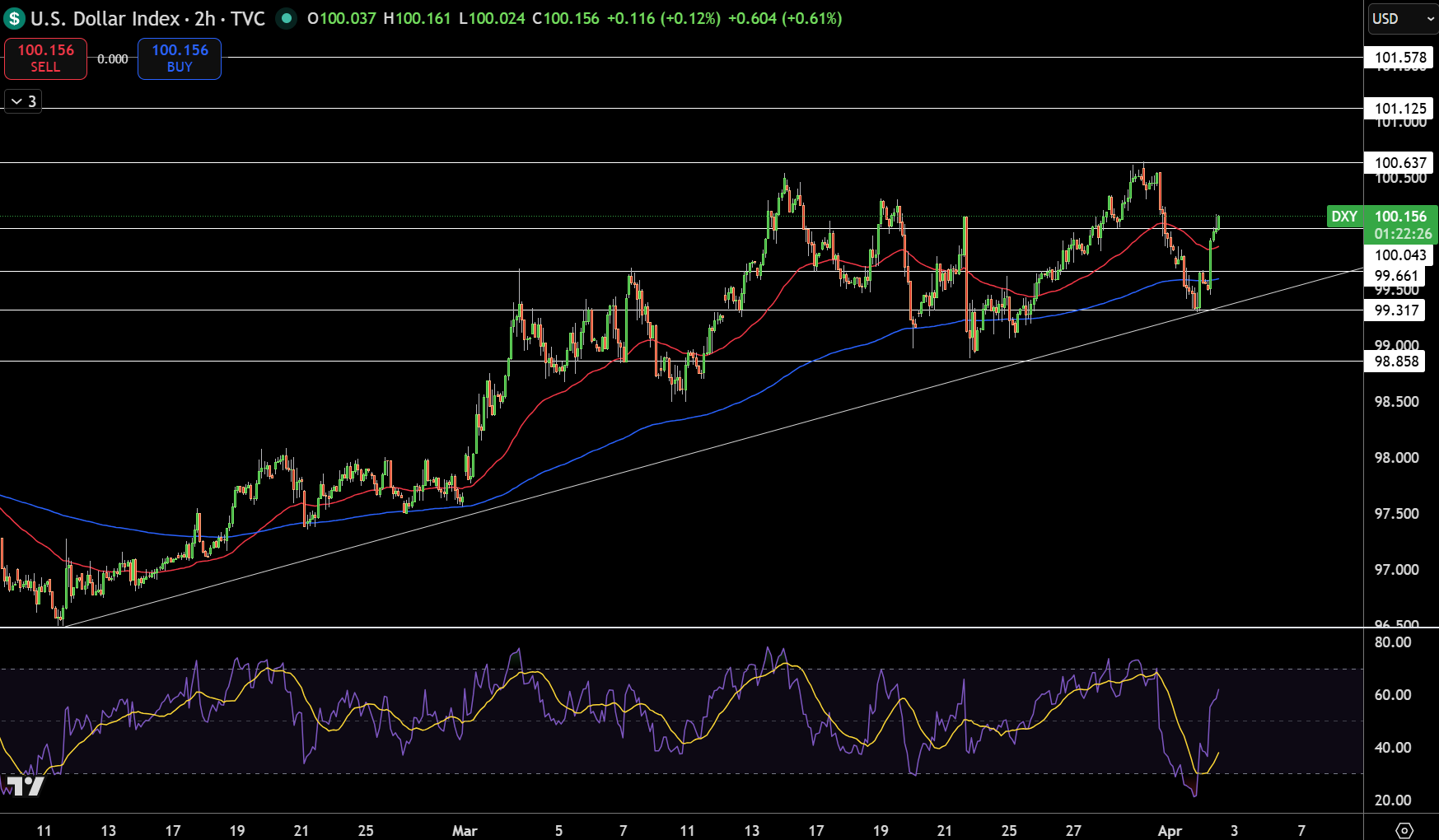
The US Dollar Index ($100.15) is now rebounding from that ascending trendline support near $99.30, and that’s looking pretty good for the bulls given the higher low structure we’re seeing. Price is now back above the 50 day SMA, while the 200 day SMA near $99.00 continues to act as a solid buy trigger for the dollar.
GBP/USD Price Forecast
Every new GBP/USD analysis as it publishes, today's technical signal and key levels, live price — on one page.
See all GBP/USD forecastsThose last few bullish candles are telling us that the buyers are starting to come back after that pullback from $100.60 resistance. The RSI has bounced from oversold territory up towards 50, and that’s giving us a pretty good sense that momentum is starting to come back to the dollar. If price can break above $100.60 we could see a visit to $101.12, but if $99.60 doesn’t hold then we could be looking at a deeper correction.
Trade idea : Buy above $100.60, aiming for $101.10 with a stop loss just below $99.60.
GBP/USD Weakens Below Fib Support as Downtrend Resumes
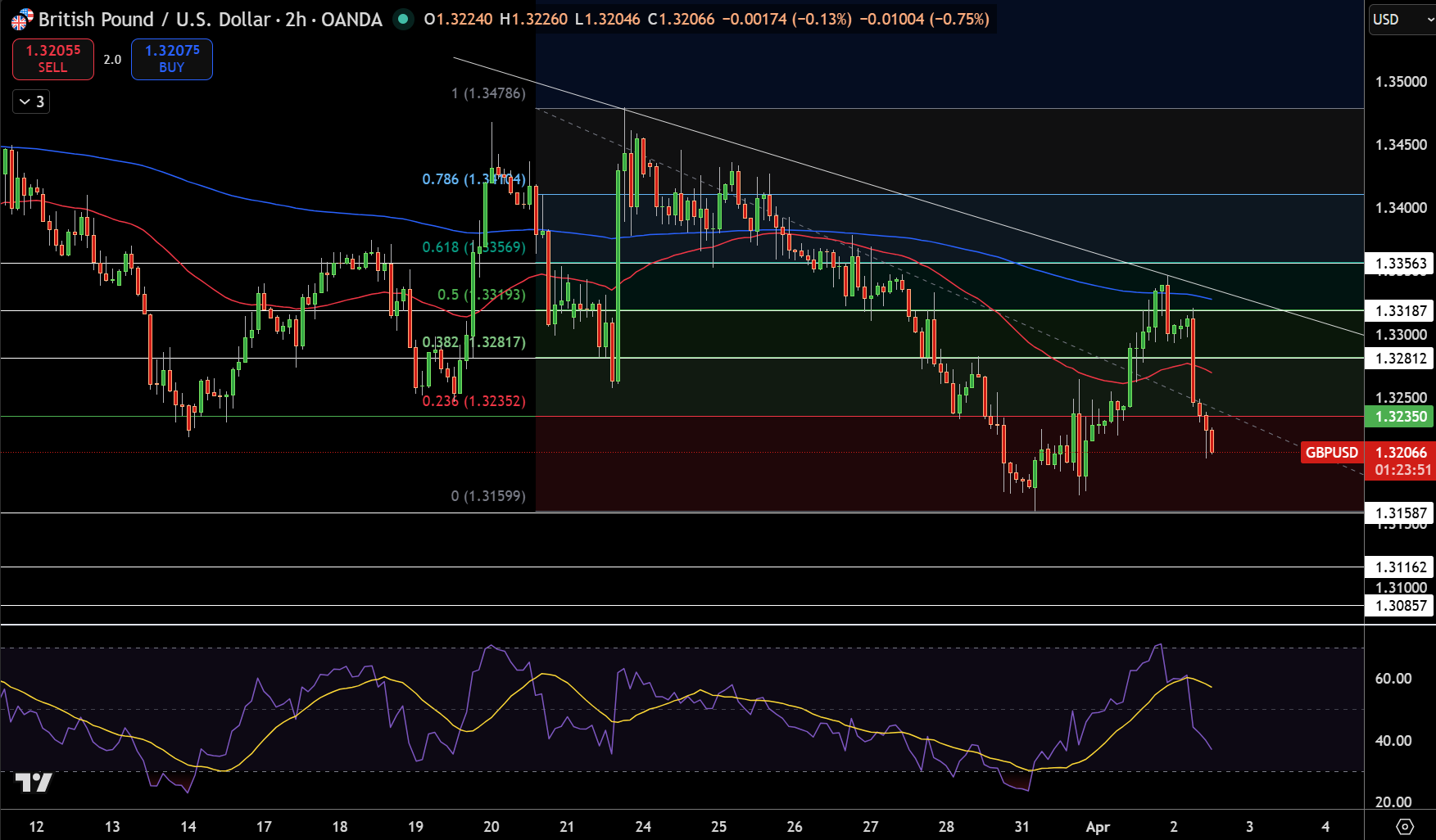
GBP/USD ($1.3206) has now fallen through that 0.5 Fibonacci level near $1.3318 and slipped under the 50 day SMA – that’s just what we want to see for a bearish continuation in a descending channel. The last few bearish candles are showing us a pretty clear downward intent, especially after getting rejected near the 0.618 level.
Now the price is making its way towards some support at $1.3159, and if this selling keeps going we could see further downside towards $1.3116. The 200 day SMA near $1.3356 continues to be a major hurdle for any sort of recovery, and the RSI has dropped right down towards 40, telling us the bears are really starting to get on top.
Trade idea : Sell below $1.3200, aiming for $1.3116 with a stop loss just above $1.3280.
EUR/USD Breaks Lower as Supply Zone Caps Upside
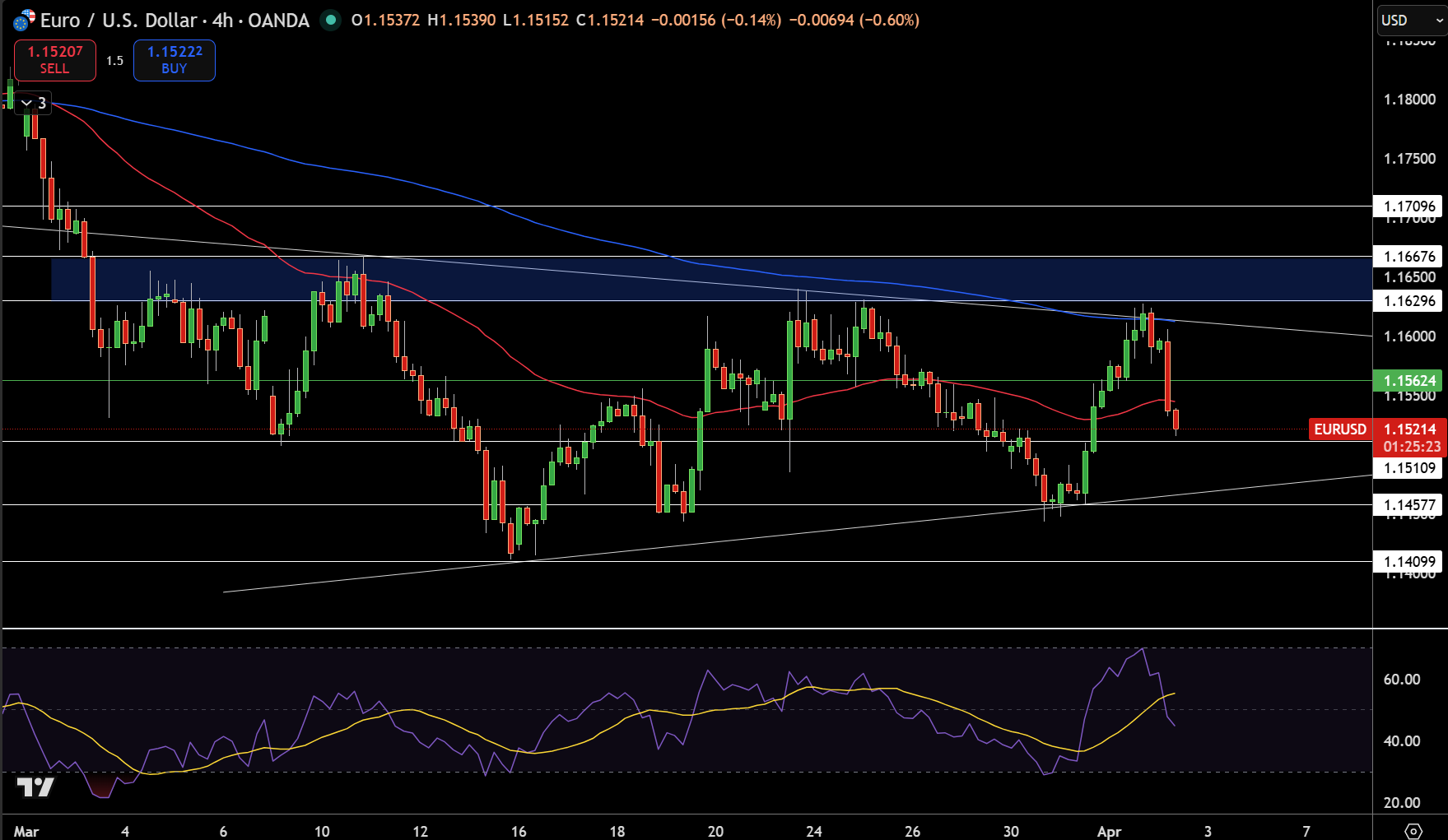
EUR/USD ($1.1521) just can’t seem to keep its gains going against a crucial supply zone around $1.1630-$1.1670 – you see those long upper wicks on the charts – that’s the market telling us the bulls are losing steam. Price has just slipped under the 50 day SMA and is now testing some support at $1.1510, with the overall trend still looking pretty weak given the descending trend line and 200 day SMA.
The RSI has started to roll over towards 45, and that’s telling us that the momentum is starting to fade. If price can break below $1.1510 look for some key support levels around $1.1457 and $1.1409 coming into play. If we do see a recovery above $1.1560 we could see another test of that supply zone.
Trade idea : Sell below $1.1510, aiming for $1.1457 with a stop loss just above $1.1560.