
US Dollar News: Fed Meeting and Key Data Take Centre Stage
The U.S. dollar, euro and British pound are heading into a pivotal week ahead of the Federal Reserve’s July 29-30 meeting where rate-holders will be watching the Fed’s stance on inflation and future rate cuts rather than the forecasted hold. The meeting comes amid several other data releases with market implications on the trajectory of monetary policy into 2026, including second quarter GDP, June core PCE inflation (the Fed’s preferred inflation metric) and July non-farm payrolls. Data released this week show that the US economy has held up well with June retail sales increasing 0.2%, the control group increasing 0.4%, and initial jobless claims dropping to 208,000, their lowest since April.
The euro is holding ground following the European Central Bank’s hold last week when it kept its deposit rate unchanged at 2.25%. Policymakers signalled that inflation is returning broadly to its 2% goal but remain data-dependent in nature. ECB president Christine Lagarde stated that they were not guiding markets toward a certain path, and that future actions will be based on forthcoming inflation and growth figures. Traders will now turn to the eurozone’s GDP and inflation releases this week for insight on what’s coming next.
Sterling is being pulled forward by expectations regarding the Bank of England, which is widely anticipated to maintain Bank Rate at 3.75% at its next meeting. This week, focus will fall on UK mortgage approvals, consumer credit and business surveys, with policymakers navigating between easing inflationary pressures and stubborn wage growth, alongside a gradually softening employment market. These releases will dictate whether the BoE will be able to cut rates later this year, or if it must maintain higher interest rates for longer.

US Dollar Index (DXY) Technical Analysis: Bulls Eye Break Above $101.65
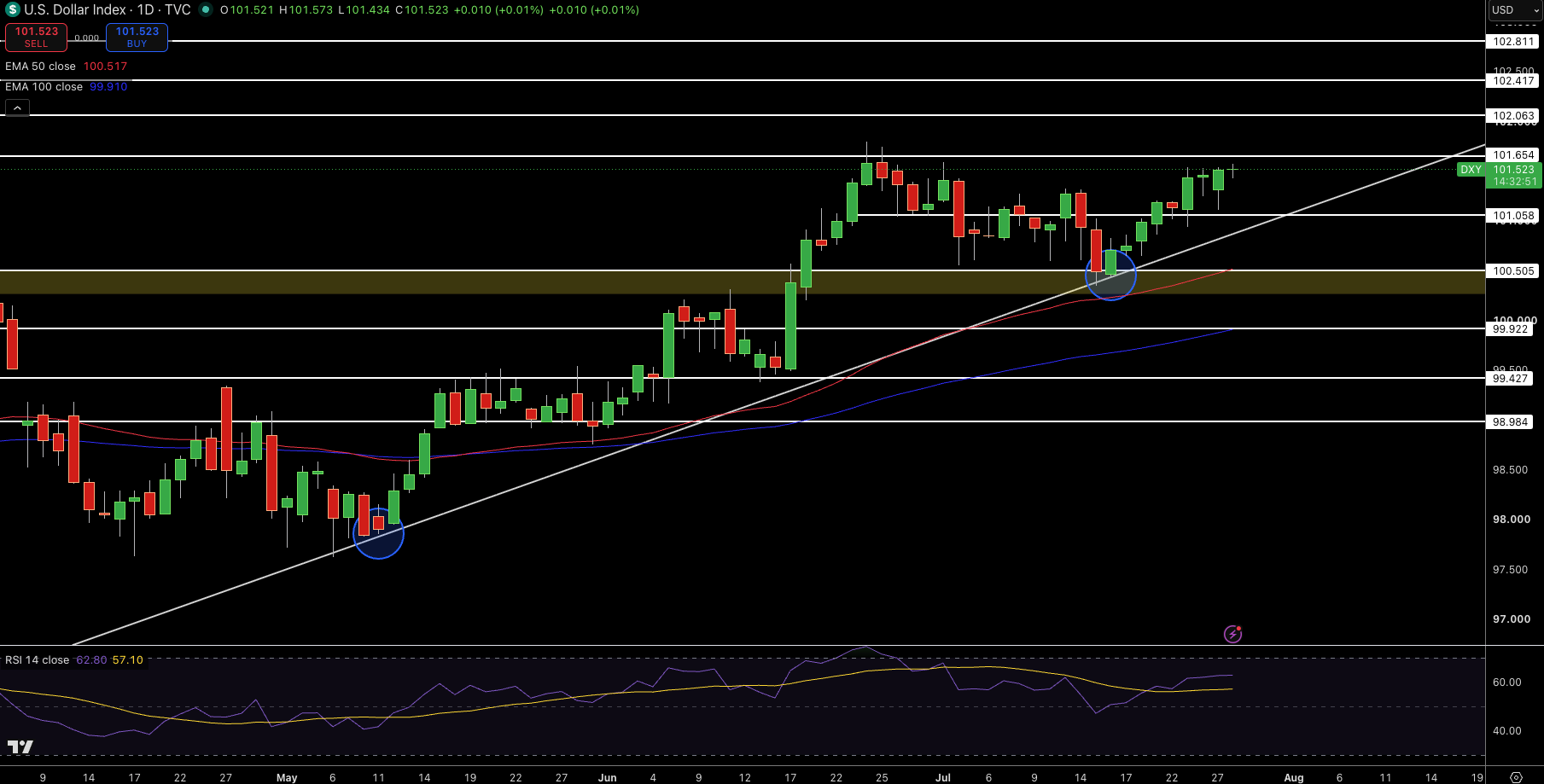
The U.S. Dollar Index continues to trade within a well-defined uptrend, holding above both the rising trendline and the 50-EMA ($100.52). Price is currently trading around $101.52, while remaining comfortably above the 100-EMA ($99.91). RSI has climbed to around 63, indicating bullish momentum without yet reaching overbought territory.
Immediate resistance is located at $101.65, followed by $102.06 and $102.42. Initial support stands at $101.06, with stronger support at $100.50 and $99.92.
The broader outlook remains bullish while DXY holds above $101.06. A sustained breakout above $101.65 would expose $102.06, while a break below $100.50 would weaken the uptrend and shift focus toward $99.92.
GBP/USD Technical Analysis: Sterling Tries to Stabilise Above $1.3260 Support
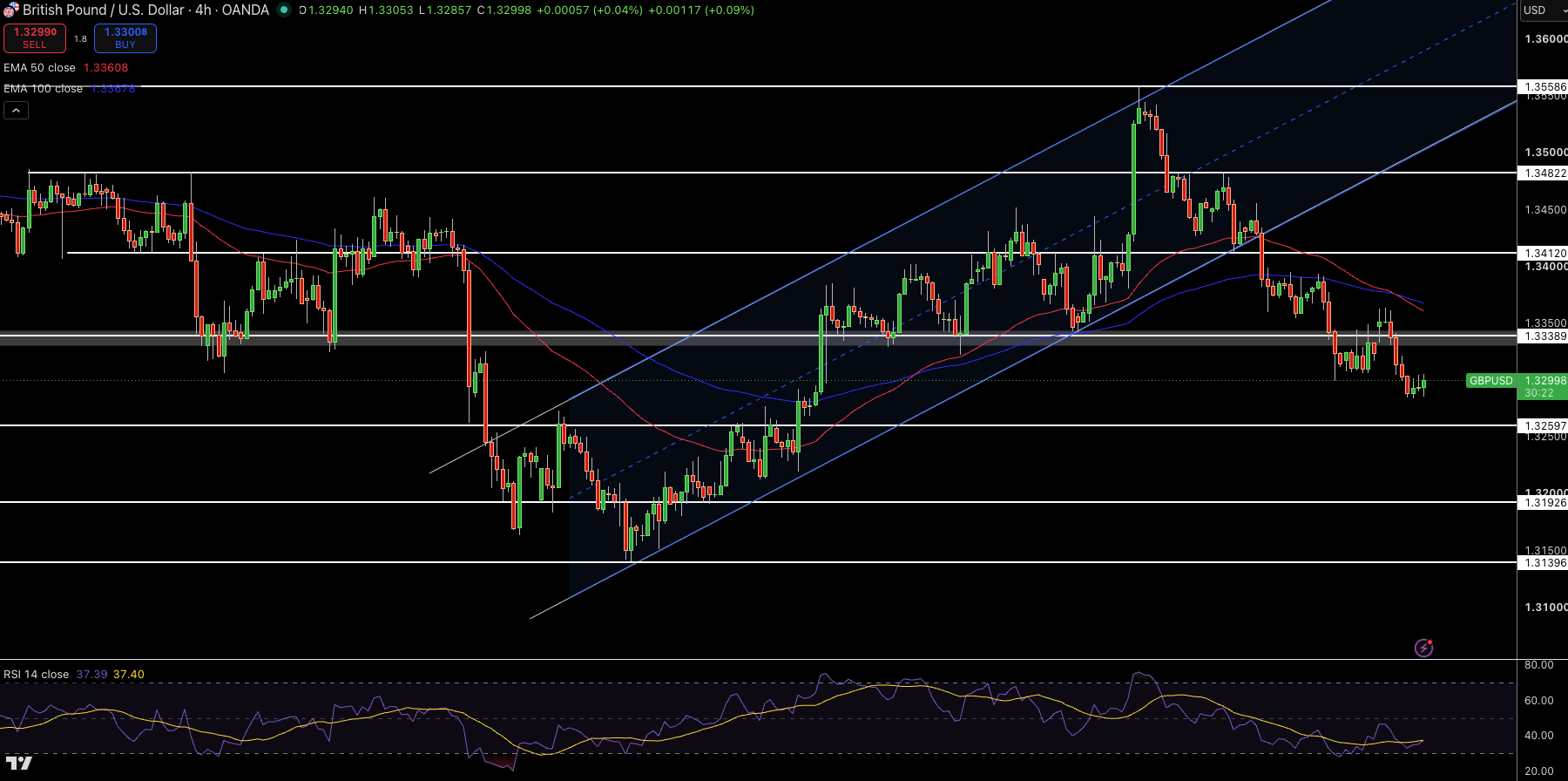
GBP/USD is attempting to stabilise after an extended decline, trading near $1.3300. However, the pair remains below both the 50-EMA ($1.3361) and 100-EMA ($1.3368), keeping the broader trend tilted to the downside. RSI has recovered slightly to around 37, suggesting bearish momentum is easing but remains dominant.
GBP/USD Price Forecast
Every new GBP/USD analysis as it publishes, today's technical signal and key levels, live price — on one page.
See all GBP/USD forecastsImmediate support is found at $1.3260, followed by $1.3193 and $1.3139. Resistance is located at $1.3339, with stronger hurdles at $1.3412 and $1.3482.
The short-term outlook remains cautious while GBP/USD stays below $1.3339. A break below $1.3260 would expose $1.3193, while a move back above $1.3339 could trigger a corrective recovery toward $1.3412.
EUR/USD Technical Analysis: Bears Remain in Control Below $1.1409
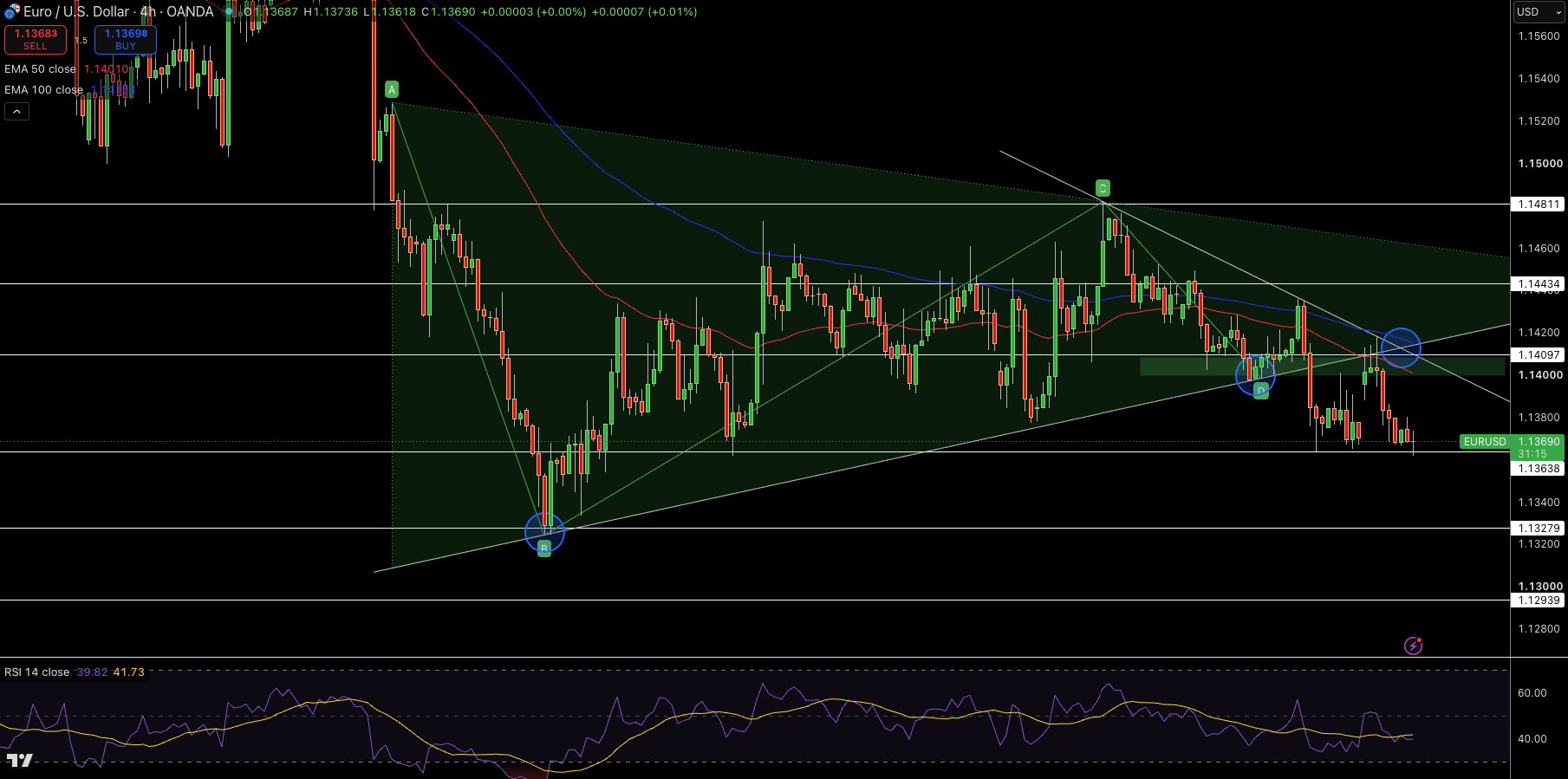
EUR/USD remains under bearish pressure after failing to reclaim the broken triangle support and both key moving averages. The pair is trading near $1.1369, below the 50-EMA ($1.1401) and 100-EMA ($1.1418), while RSI around 40 reflects weak momentum with room for further downside.
Immediate support is located at $1.1364, followed by $1.1328 and $1.1294. Initial resistance stands at $1.1409, with stronger barriers at $1.1443 and $1.1481.
The short-term bias remains bearish while EUR/USD trades below $1.1409. A decisive break beneath $1.1364 could accelerate losses toward $1.1328, whereas a recovery above $1.1409 would be the first signal that buyers are regaining control.