After seeing the stellar returns of the S&P 500 Index, over the past 3 years, everyone, including myself, thought that there would have been some sort of capitulation in the markets. We were all wrong, thus far. The US markets and the global markets have been moving in a very positive trend. This has been powered by AI infrastructure, shifting supply chains and corporate reform in Asia. Indeed, while rates are still here and there’s geopolitical tension around, a continued global leadership cycle is taking shape.

The $755 Billion Physical AI Infrastructure Play
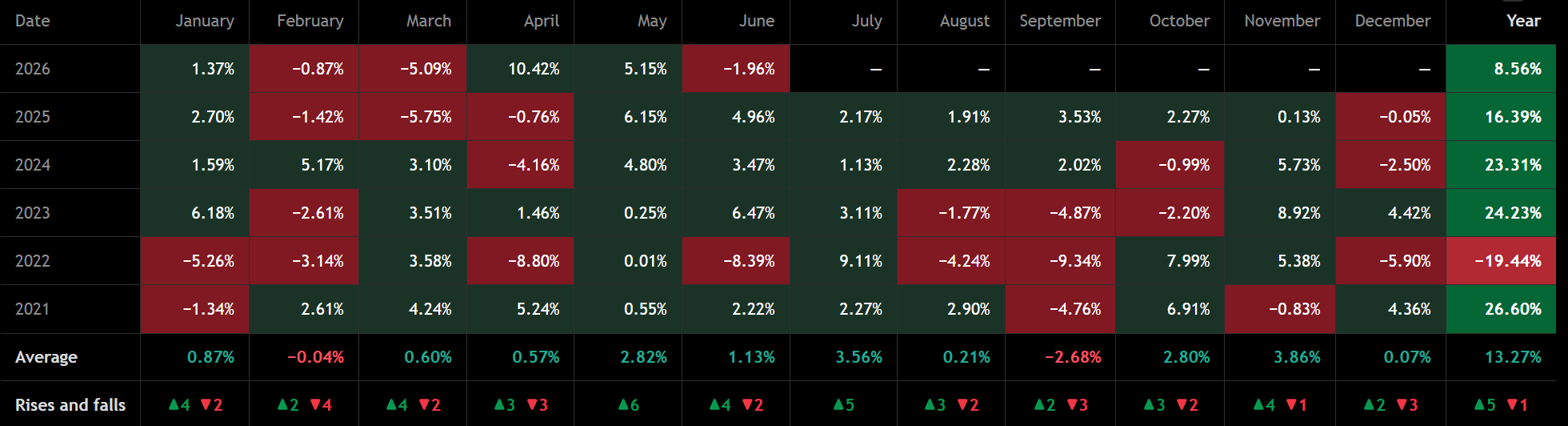
Judging from what’s happening, we’ve moved past the software speculation phase of AI. I think that we have gone into a massive physical capital expenditure cycle. Firms are positioning for their tangible assets and even more resilient supply chains. Global hyperscalers such as Alphabet, Amazon, Meta, Microsoft and Oracle are projected to deploy approximately $755 billion in capex this year. This is an 83% increase year on year.
This is to favour improved power grid capacity which is vital for the energy intensive compute workloads of LLMs. Also, high performance facilities are needed, that is specialized data processing real estate. Moreover, liquid cooling systems are required for next-gen high density silicon. This has become a revenue catalyst for the physical AI supply chain. Specifically in Malaysia we are seeing this, where the country has become a global hub for advanced chip packaging and testing. There is Vietnam as well. That country is the primary destination for high end electronics assembly as manufacturers de risk from mainland China.
Diverging Global Policies
The global economy is looking K-shaped more than ever.
The 2026 Expansion Reveals A Starkly K-Shaped Macroeconomic Reality
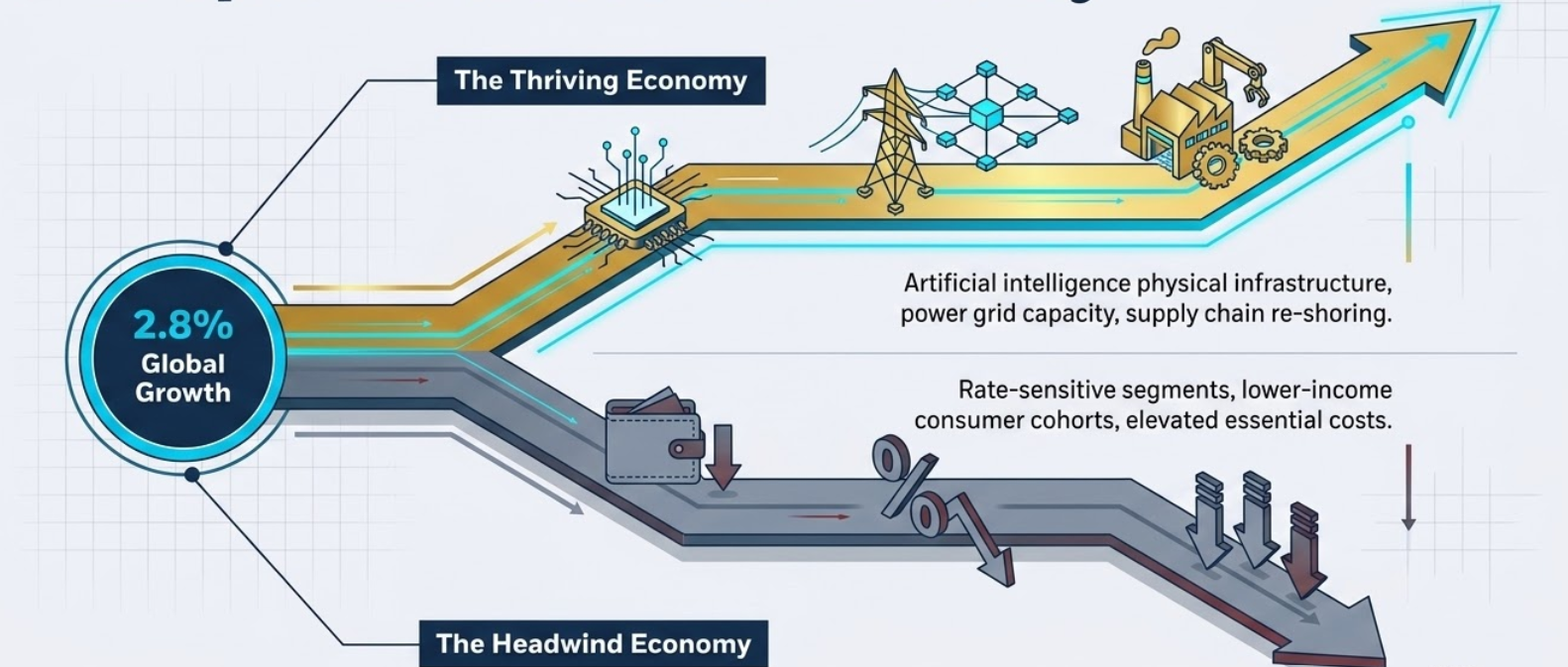
While tech driven sectors are thriving, rate sensitive segments are being squeezed by a tax on consumer wallets through elevated energy prices. This energy driven inflation has caused some divergence in policies.
Geopolitical Friction In The Middle East Places A Stubborn Floor Under Global Inflation
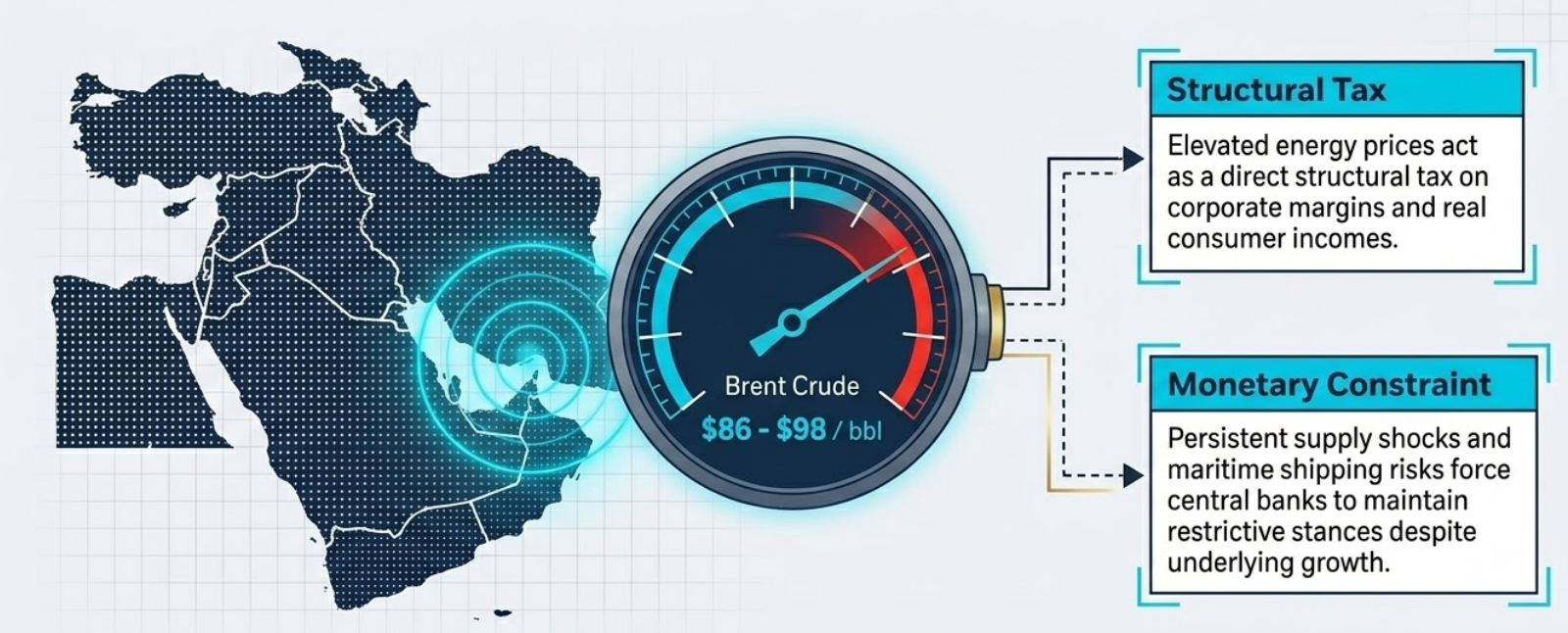
In the US the new Fed Chair Kevin Warsh held rates steady at 3.5% to 3.75% to combat the resilient inflation. While across the pond, the ECB has been forced to hike into a low growth environment as Eurozone inflation hits 3.2%.
| Central Bank | Benchmark Rate | Core Inflation | 2026 GDP Projection |
|---|---|---|---|
| Fed | 3.5% to 3.75% | 2.9% | 2.25% to 2.6% |
| ECB | 2.25% | 3.2% | 0.8% |
| BoE | 3.75% | 2.8% | 1.4% |
The Korea Discount
By taking a global equity exposure, you tend to get a more diversified geographic exposure. By doing so from time to time you tap into certain country happenings. One such opportunity is the structural inflection point occurring in South Korea.
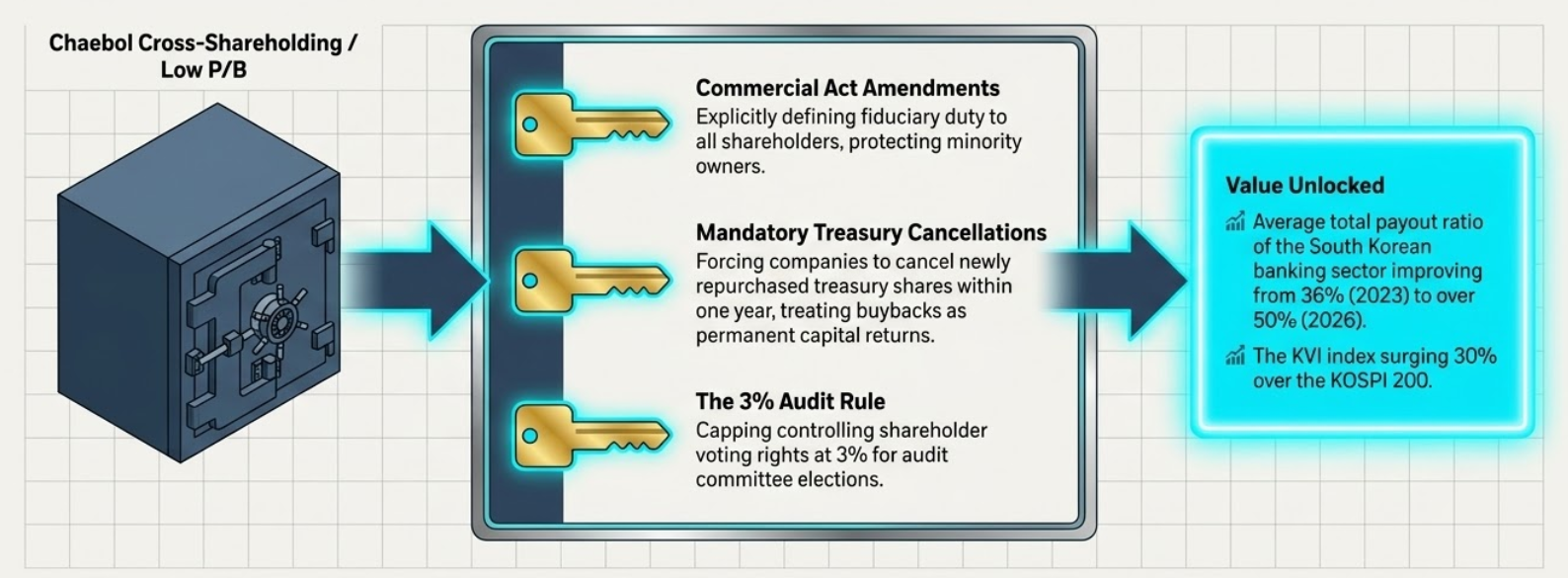
Historically 70% of Korean companies have been trading below book value due to opaque governance. This is known as the Korean Discount. But in 2026, mandatory minority shareholder protections came through the Commercial Act Amendments. From this we saw the Korea Value-Up Index (KVI), which tracks companies meeting strict capital efficiency and governance standards, outperform the KOSPI 200 by 30%. This performance could be attributed to the capping of controlling shareholder voting rights at 3% for audit elections. Also, there were revisions to the Commercial Code which now require companies to permanently cancel repurchased treasury shares within one year, treating buybacks as true capital returns.
The ACWI Preference
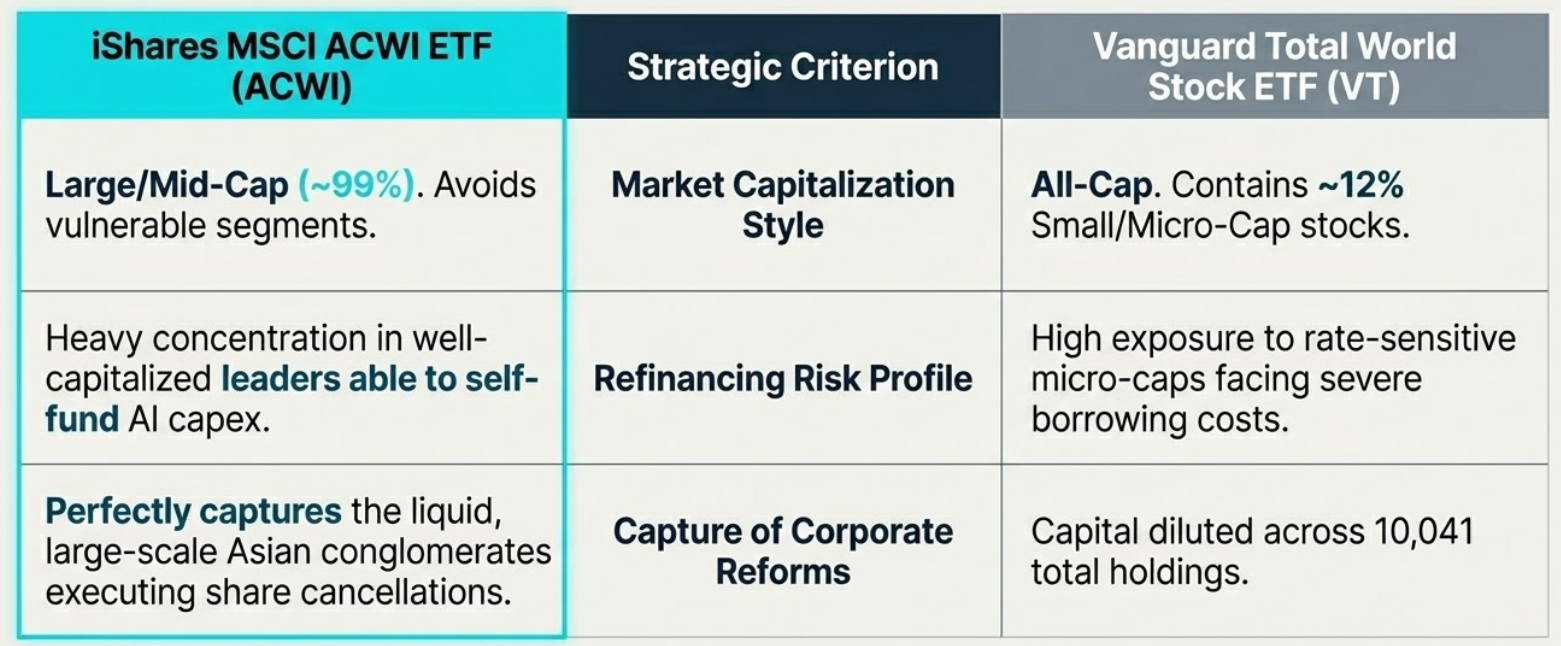
When choosing to get global access I prefer the ACWI ETF. While ETFs such as VT, the Vanguard Total World Stock Index offers broad exposure with over 10,000 holdings and $95.3 billion in AUM, the All Country World Index (ACWI) has a concentrated focus on $32.3 billion AUM and 2,239 mid to large cap leaders that provide superior quality.
One instance for favouring ACWI is the current interest rate environment. In a rising interest rate world, VT’s 12% exposure to small caps gives refinancing risk. ACWI’s large cap focus prioritizes companies with internal cash flows to fund the majority of their growth. vAlso the $755 billion AI buildout is a giant cap game. ACWI’s weighting ensures capital is deployed into the hyperscalers and industrial leaders from all over the globe. Moreover, the reform capture opportunities are real. The governance gains in Japan and Korea are most impactful for the large conglomerates that dominate the ACWI.
Why Large/Mid Cap Focus Outperforms All Cap In A Higher For Longer Regime
THE TA of ACWI
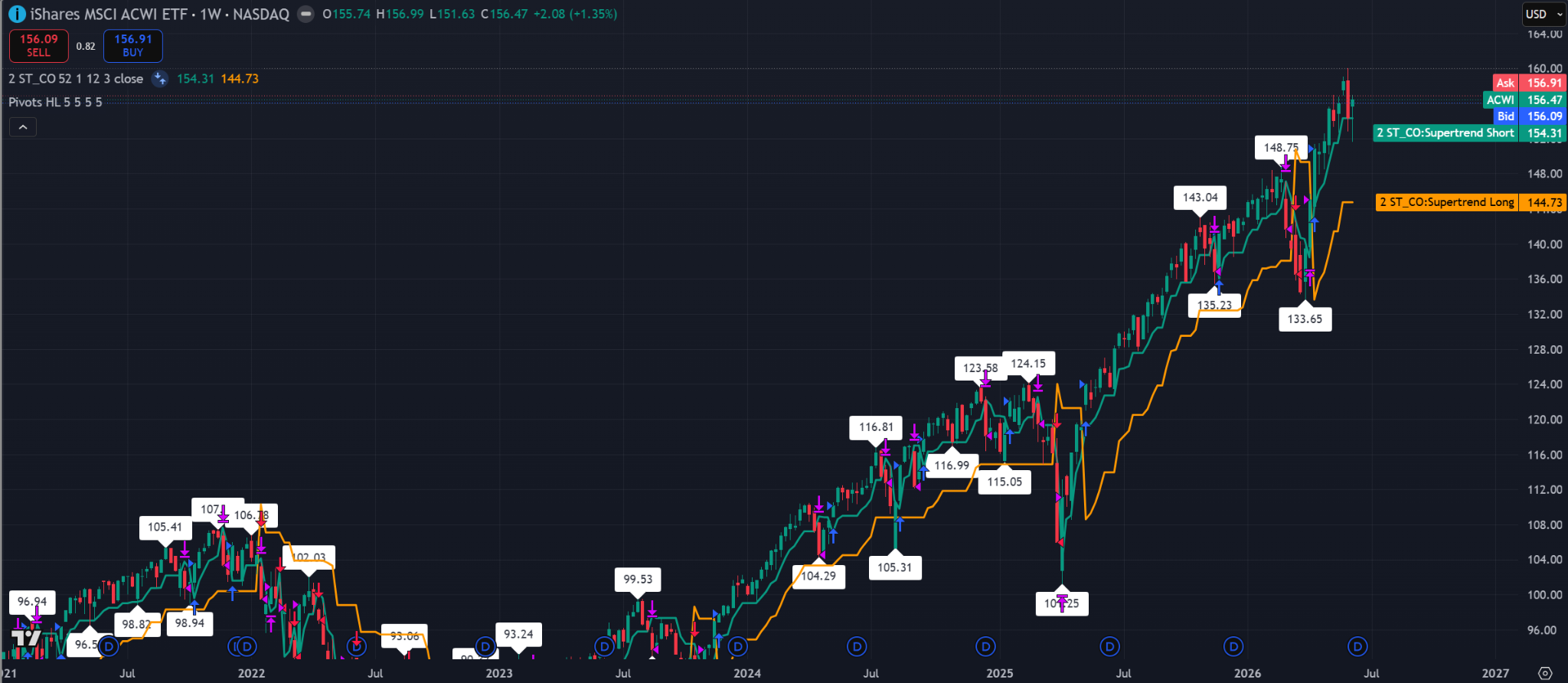
We see the ACWI firmly above the dual Supertrend indicators on the weekly chart. The ETF broke back above the Supertrends since mid April and the short Supertrend has acted as support over the last couple of weeks. Expectations are for the Supertrend line to act like a springboard to push the ACWI back to all time highs.
ACWI Weekly Chart Showing Global Equity Momentum Building
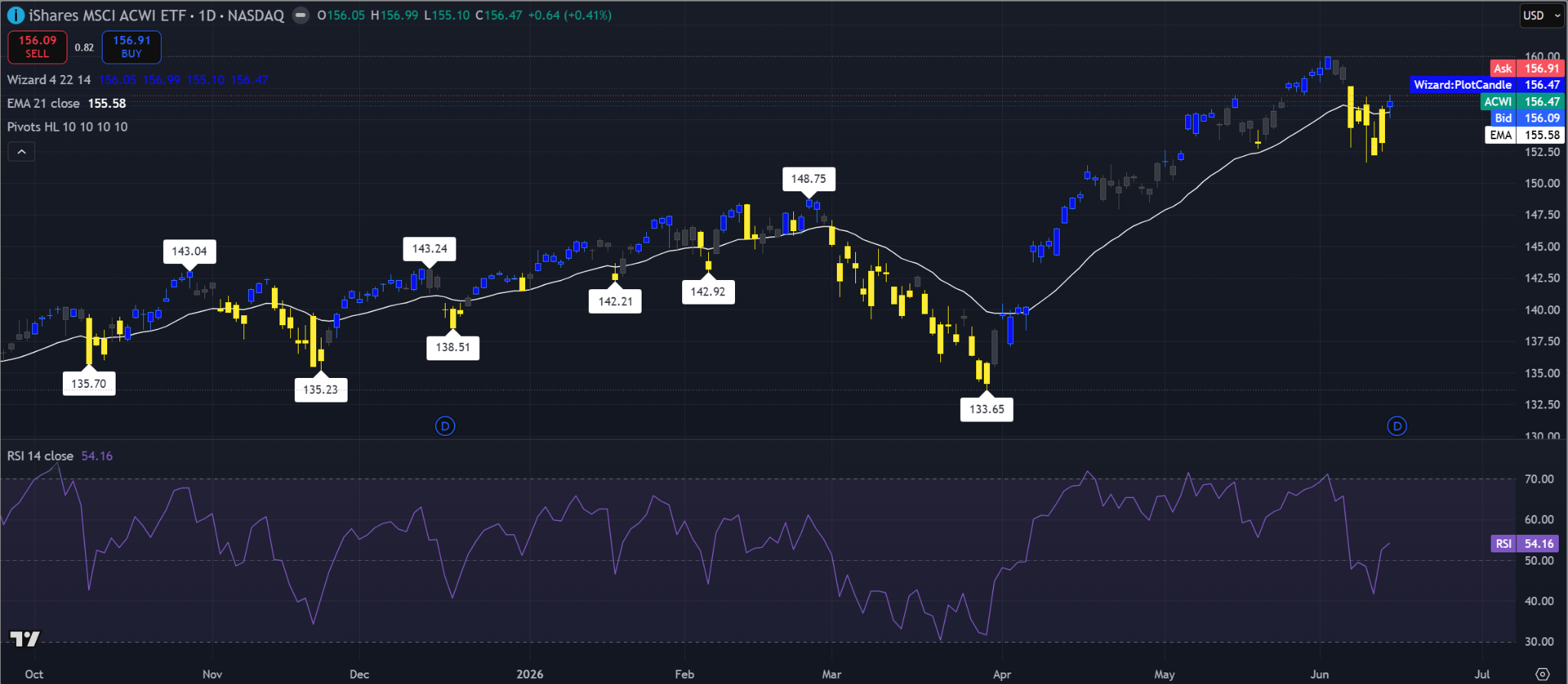
Tightening the view to the daily chart we see the signal of the bearish divergence of the RSI. While the ACWI was increasing the RSI was trending lower, a sign of waning momentum. From there the ETF pulled back below the 21-EMA. This pullback appears to have been quickly exhausted as price got back above the 21-EMA with a positive trend flip on the RSI. This is leading me to believe that there will be a retest of all time highs from ACWI sooner rather than later.
ACWI Daily Chart Back Above Trend Support
The Verdict
Through buying the ACWI would own the broader infrastructure, reform and earnings cycle now taking shape across regions. I believe that the ETF is a compelling way to participate in this global leadership shift while maintaining a diversified, liquid, high quality portfolio.