


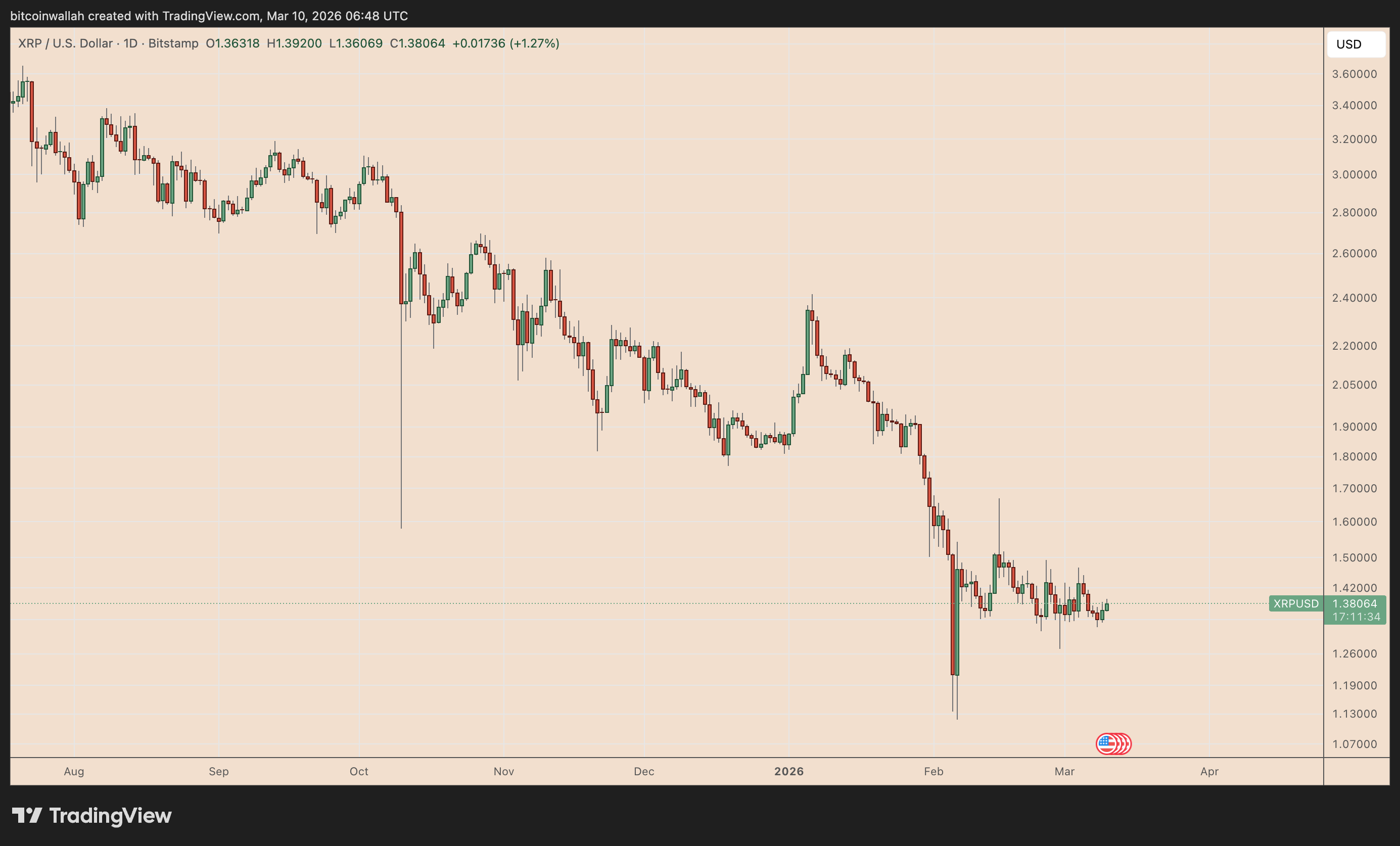
XRP (XRP) climbed toward $1.40 after President Donald Trump said the Iran war could be resolved “very soon,” easing fears of a prolonged oil shock and lifting risk appetite across global markets.
On Tuesday, March 10, XRP/USD rose about 2.3% to $1.39 in early Asian trading, tracking gains in equities and the broader crypto market as oil prices pulled back sharply. The rebound extended a relief move that began Monday, when Trump’s comments prompted traders to unwind some of the stagflation bets tied to the conflict.
Still, Wall Street investors sold into the move by reducing exposure to XRP-linked ETF products, signaling limited confidence in the token’s upside holding for long.
Oil prices remain elevated despite the latest pullback, keeping inflation risks alive and limiting investors’ appetite for riskier assets.
Goldman Sachs warned that higher energy costs could lift US consumer inflation in the coming months, reinforcing fears that sticky CPI may keep financial conditions tighter for longer.
Let’s examine these top XRP news headlines of the day.
Oil Pullback Eases Pressure on XRP
XRP rose with the broader crypto market after President Donald Trump said the Iran war could be “over soon,” prompting traders to unwind part of Monday’s panic trade.
Asian equities rebounded sharply on March 10, while Brent crude swung lower after briefly spiking above $119 the previous day. MSCI’s Asia-Pacific index outside Japan rose 2.8%, Japan’s Nikkei gained 2.7%, and Brent at one point fell as much as 11% before trimming losses.
That move matters for XRP because oil has become the main macro transmission channel for the war.
When crude surges, traders raise inflation expectations, push rate-cut bets further out, and reduce exposure to risk assets such as crypto. Monday’s oil spike triggered an inflation scare in bond markets, while traders pushed expectations for the first Fed cut out to July.
The relief trade, however, still looks fragile. Iran’s military pushed back against Trump’s optimism and signaled that it would keep fighting, which means markets may keep swinging with every new headline on oil flows and the Strait of Hormuz.
Ripple Price Forecast
Every new Ripple analysis as it publishes, today's technical signal and key levels, live price — on one page.
See all Ripple forecastsXRP Funds See Outflows Despite the Bounce
XRP’s price rebound did not translate into stronger institutional conviction.
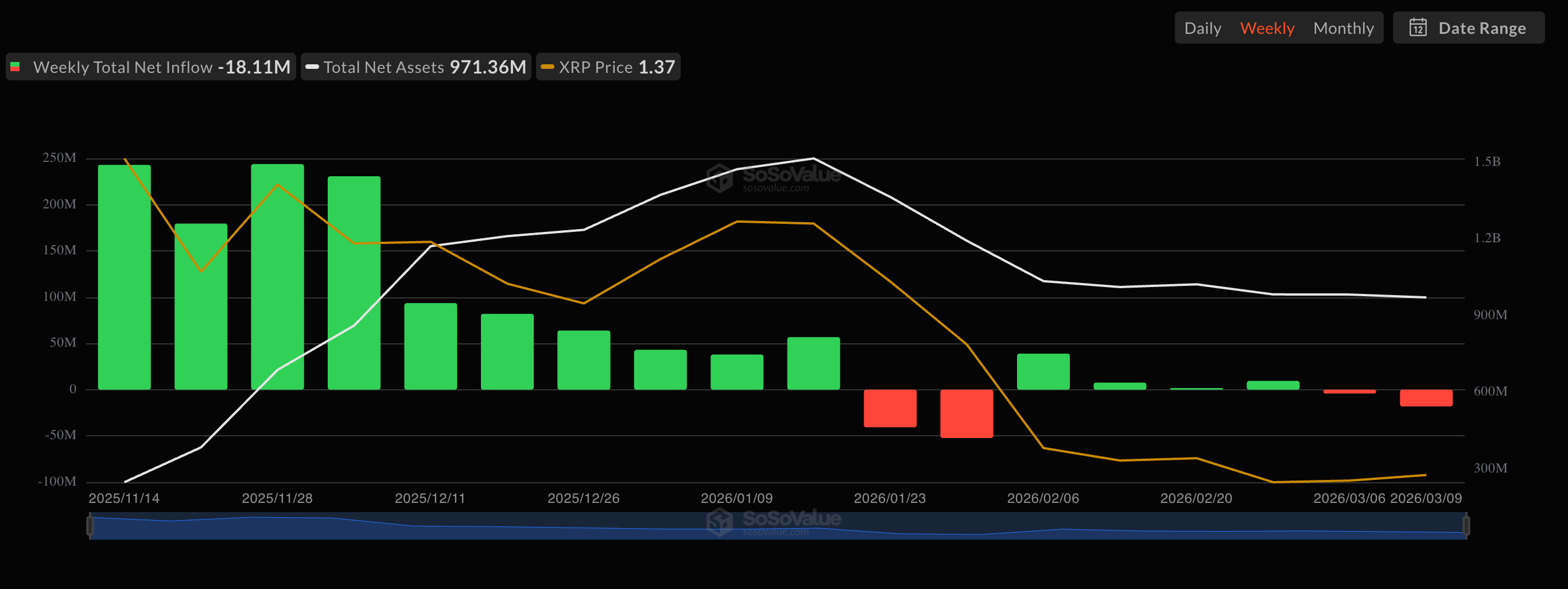
CoinShares reported on March 9 that XRP investment products recorded $30.3 million in weekly outflows, making XRP the only major digital asset to post meaningful withdrawals during the period.
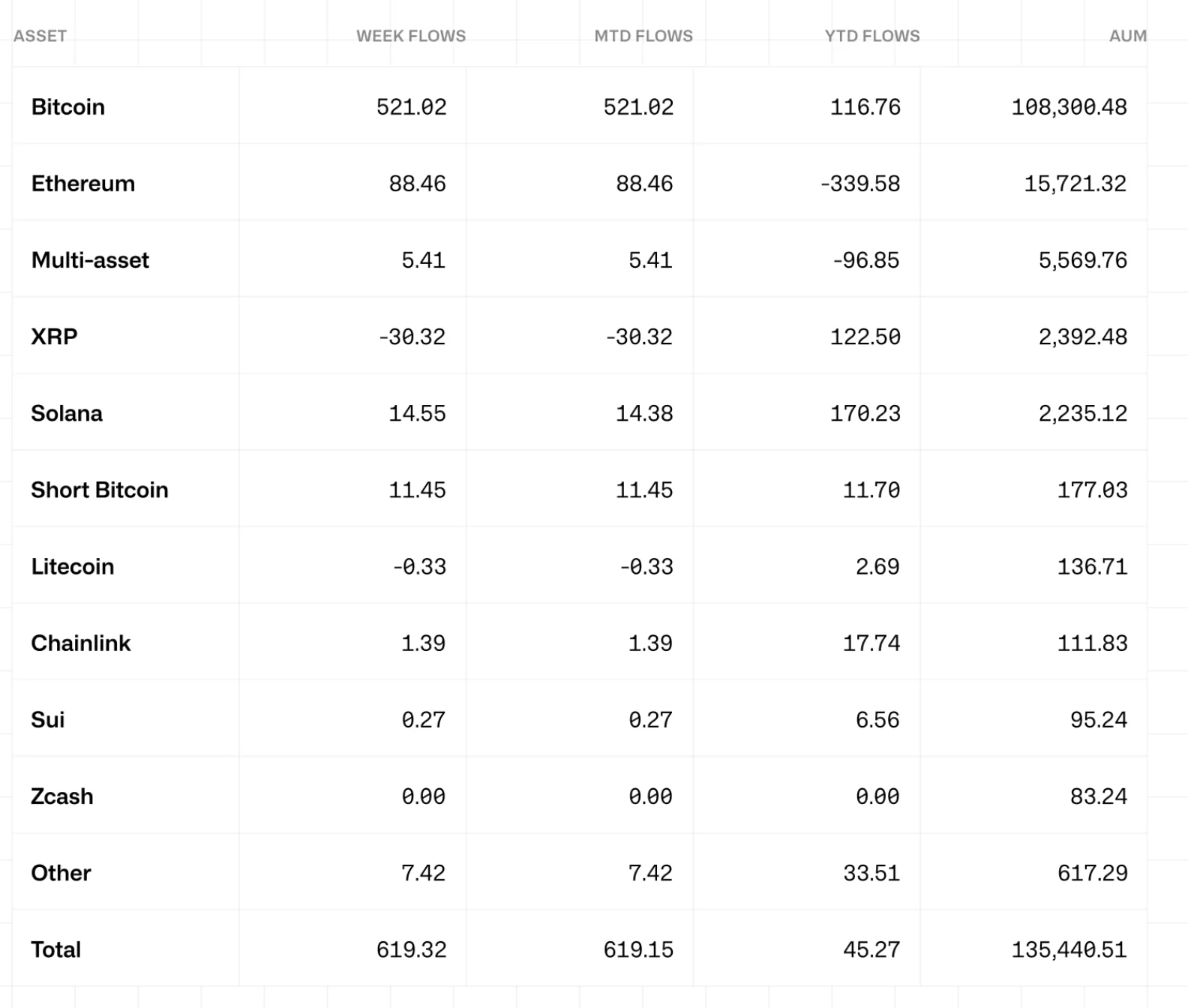
By contrast, digital-asset products overall attracted $619 million of inflows, led by Bitcoin at $521 million, Ethereum at $88.5 million, and Solana at $14.6 million.
The outflows continued this week. SoSoValue data shows that XRP ETFs have witnessed withdrawals worth $18.11 million week-to-date.
Goldman Sachs Warns the Oil Shock Could Reignite Inflation
Goldman Sachs warned that the oil shock could soon feed directly into US inflation if prices stay high.
Economists Jessica Rindels and Pierfrancesco Mei said geopolitically driven spikes often fade when traders view supply disruptions as temporary, but a longer-lasting surge would have a clearer macro impact.
They estimate that a sustained 10% rise in oil prices would add about 28 basis points to U.S. headline CPI. In that scenario, if crude rises by $10 and holds those levels for three months, year-over-year headline inflation could climb from 2.4% in January to 3.0% by May.
XRP Traders Are Heavily Betting on Price Decline
Binance derivatives data shows that many XRP traders still expect lower prices.
Open interest rose to $225 million on March 9 from about $210 million, showing that traders added fresh leveraged positions. At the same time, perpetual CVD remained deeply negative at approximately -$2.75 billion, indicating that aggressive selling pressure in futures markets remained dominant.
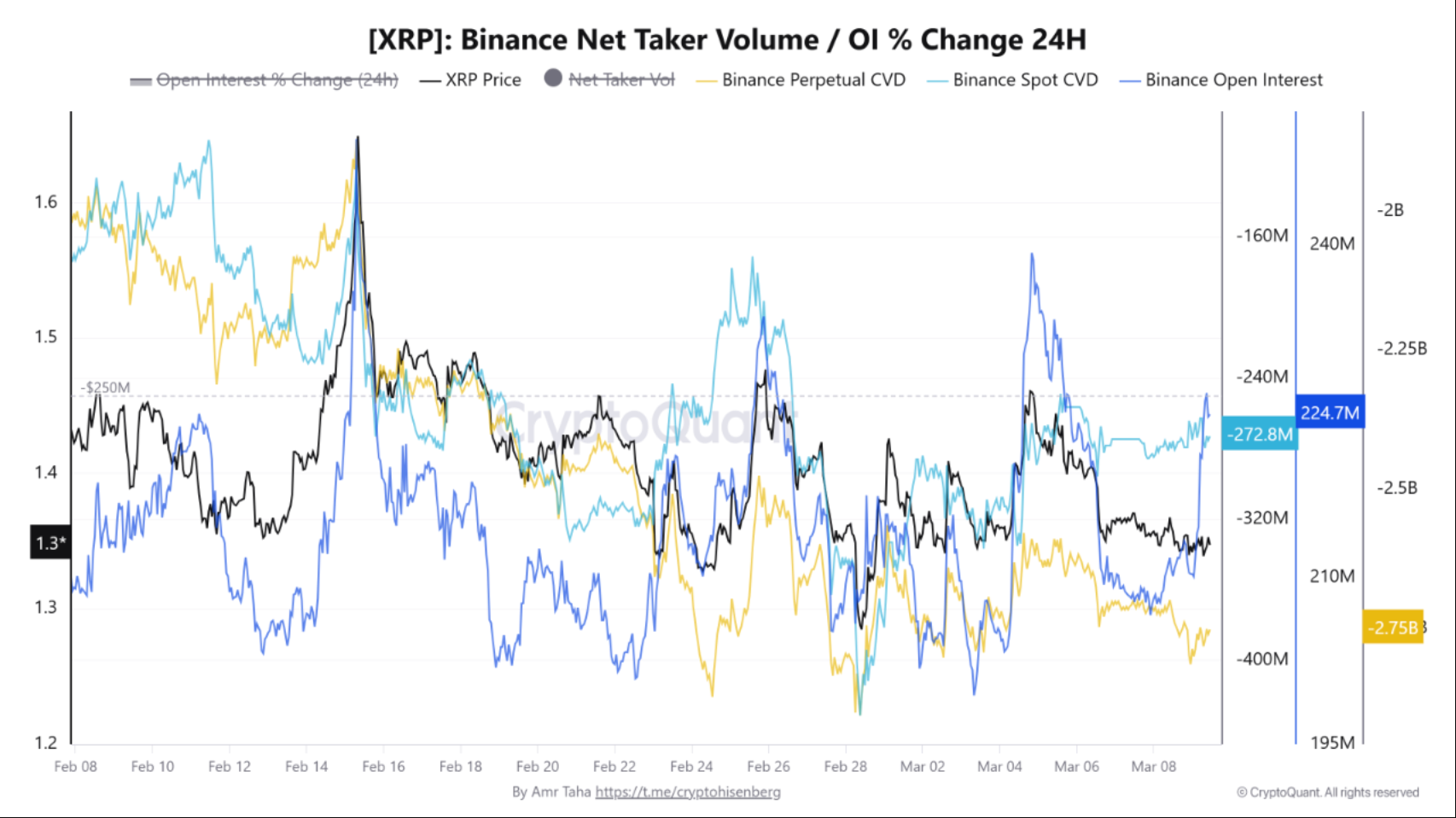
That combination usually points to a bearish setup: traders open more contracts while takers continue to hit the sell side, signaling growing conviction on further downside.
In other words, leveraged players appear more willing to bet against XRP than chase its recent rebound.