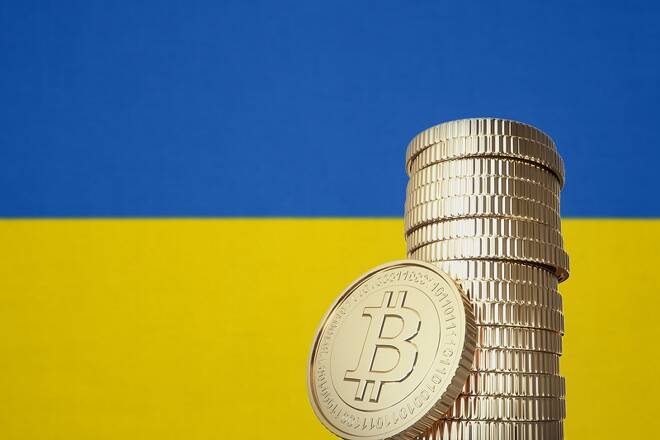
With the growing tensions along Ukraine’s borders, non-governmental agencies in Ukraine have started accepting Bitcoin donations.

The report noted that some of these funds have been spent providing the Ukrainian army with medical supplies, drones, and other military equipment. Some of these organizations are also affiliated with the government. This shows that nation-states might also be turning to crypto for fundraising.
One of the projects the crypto funds is being used for is developing a facial recognition app that can be used to identify Russian spies and machinery.
With Russia assembling over 100,000 forces on Ukraine’s borders, the threat of war has become more prominent in recent weeks. But international organizations and world powers are calling for calm and looking to avoid escalation of conflicts.
It also stated that crypto fundraising to these organizations increased by 900% in 2021. This represents a massive uptick in the number of organizations using crypto for fundraising to bypass censorship.
Bitcoin Price Forecast
Every new Bitcoin analysis as it publishes, today's technical signal and key levels, live price — on one page.
See all Bitcoin forecastsCrypto Donations on the Rise
In recent times, banks and other centralized financial institutions have censored payments and donations to organizations that don’t align with the dominant interests.
Recently in Canada, GoFundMe blocked donations to the Freedom Convoy Campaign with a promise to return the over $9 million raised to the contributors.
This has forced some of the protest organizers to use Tallycoin for crowdfunding. Tallycoin is a platform that allows donations in Bitcoin with the promise of being censorship-resistant. So far, donations have surpassed more than 14 Bitcoin.
Previously, Russian-backed forces in Ukraine have also received crypto donations. According to available reports, Pro Russian separatists in Ukraine received crypto during the early days of the conflicts. A particular campaign, “Save Save the Donbass”, collected at least 68 bitcoins from 2014 to 2016.