
Bitcoin (BTC) fell alongside US stock futures on Monday after President Donald Trump threatened tariffs on eight countries that resisted his plans to acquire Greenland.
The top cryptocurrency slipped by over 1.80% to below $91,920, invalidating an ascending triangle setup that had projected a price boom above $100,000 as of last week.
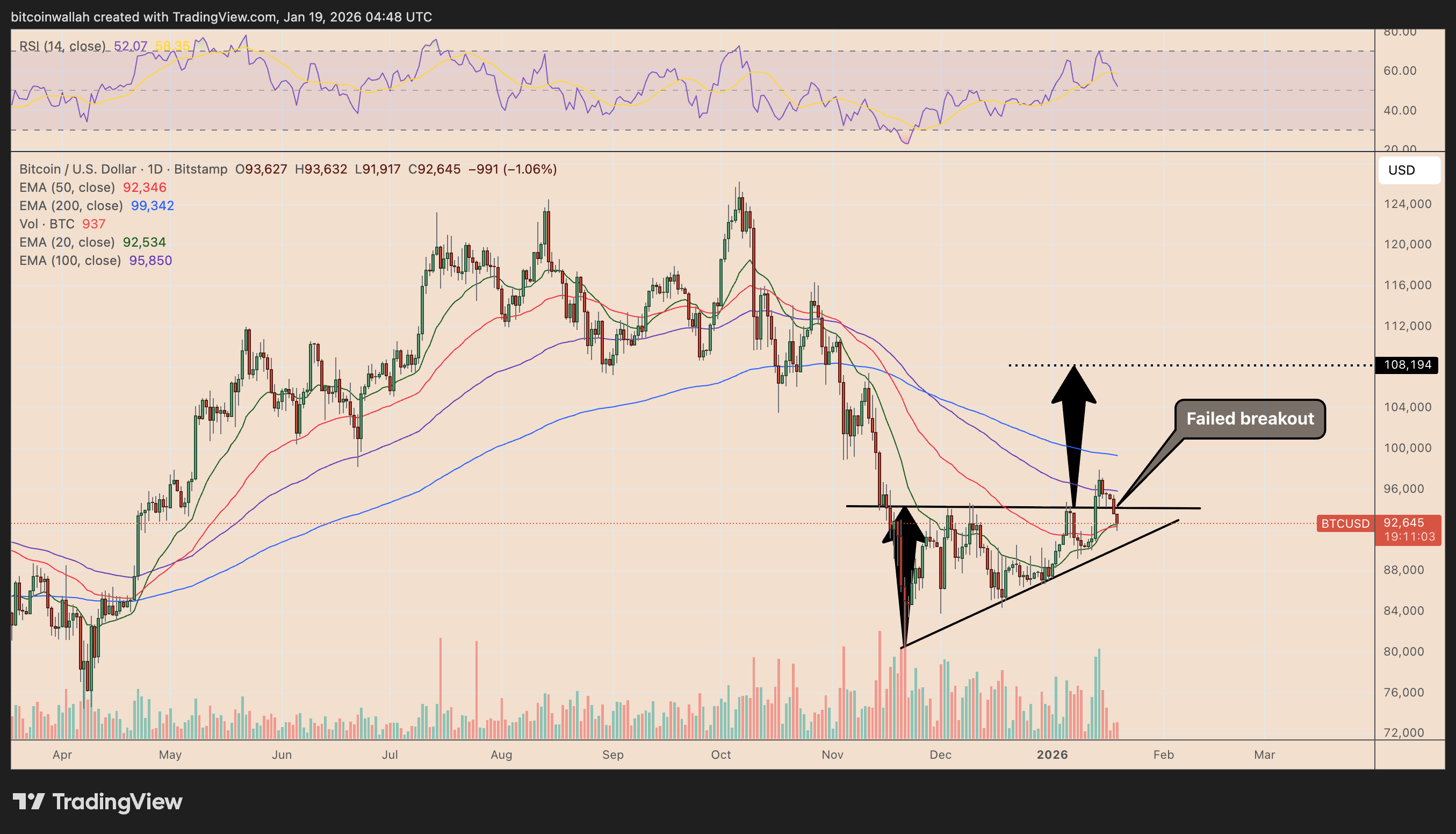
Nasdaq 100 contracts dropped 1.2% in the same period, while gold and silver rose, indicating a growing risk-off mood among investors.
“US markets closed today, so investors are expressing their macro positions through BTC,” noted analyst Nic, adding:

“If we fall below $90,000 before market open tomorrow, ETF holders may also start dumping.”
Bitcoin Rising Wedge Scenario Increases Bearish Odds
Bitcoin appeared to be carving out a rising wedge on the daily chart, a structure that often signals weakening upside momentum within corrective rebounds.
Price continued to print higher lows, but the slope of the advance remained shallow as BTC struggled to reclaim key moving averages clustered near the $95,000–$100,000 zone.
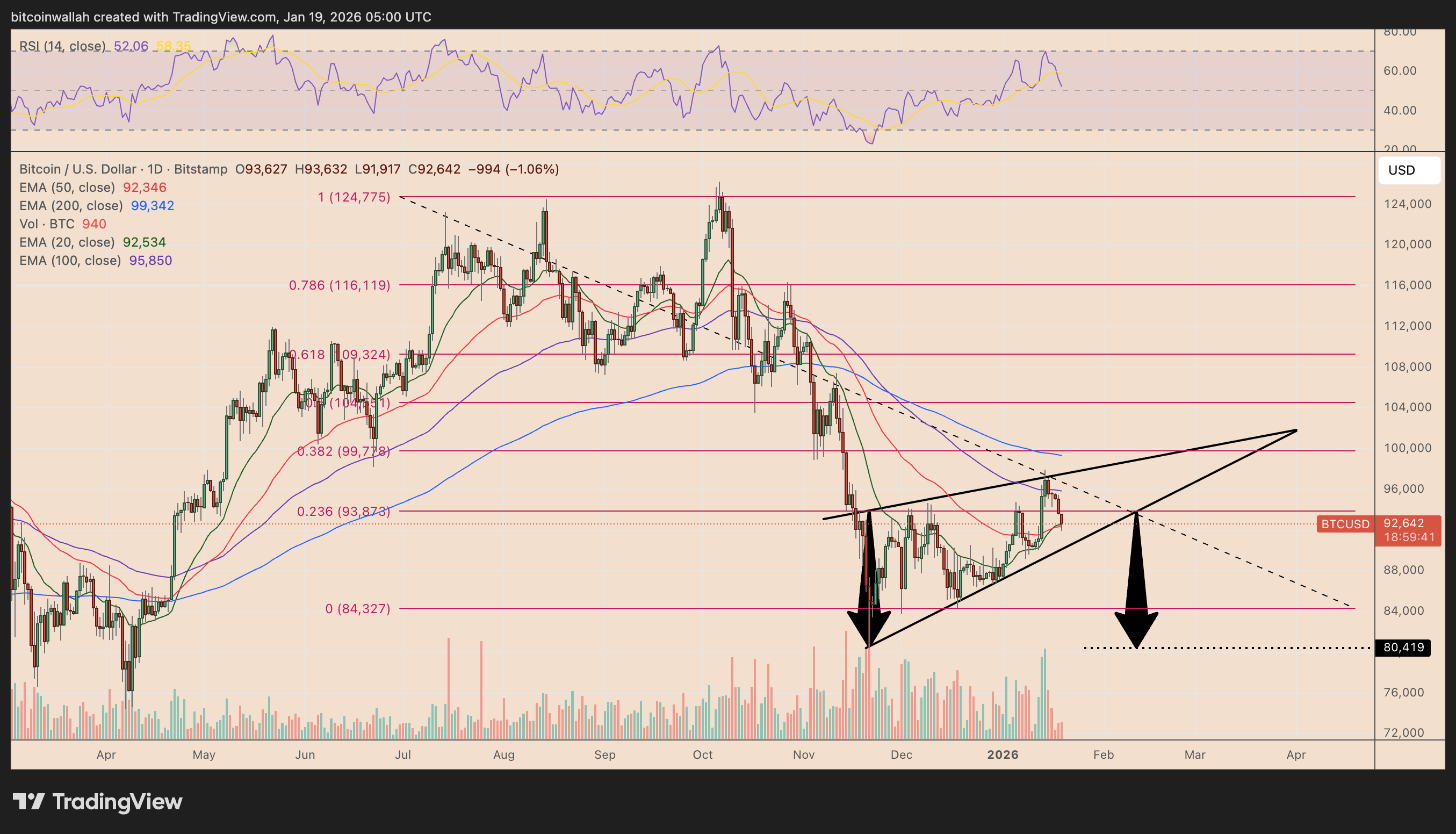
At the same time, the wedge formed beneath a declining trendline drawn from Bitcoin’s November peak, reinforcing overhead supply. Momentum indicators reflected the loss of strength, with RSI failing to push decisively above its mid-range despite repeated attempts.
If confirmed, a breakdown below the wedge’s lower trendline would have exposed BTC to a deeper pullback toward the $84,000–$80,000 support region. This area previously acted as a demand floor during the December sell-off.
Conversely, a bounce from the wedge’s lower trendline could enable a short-term rebound toward the upper trendline, aligning with the $99,780-100,000 area.
Traders must revisit the structure for a potential breakout above the upside zone, which would invalidate the breakdown setup altogether, instead rekindling the ascending triangle setup with the $107,000 breakout target.
Bitcoin Price Forecast
Every new Bitcoin analysis as it publishes, today's technical signal and key levels, live price — on one page.
See all Bitcoin forecasts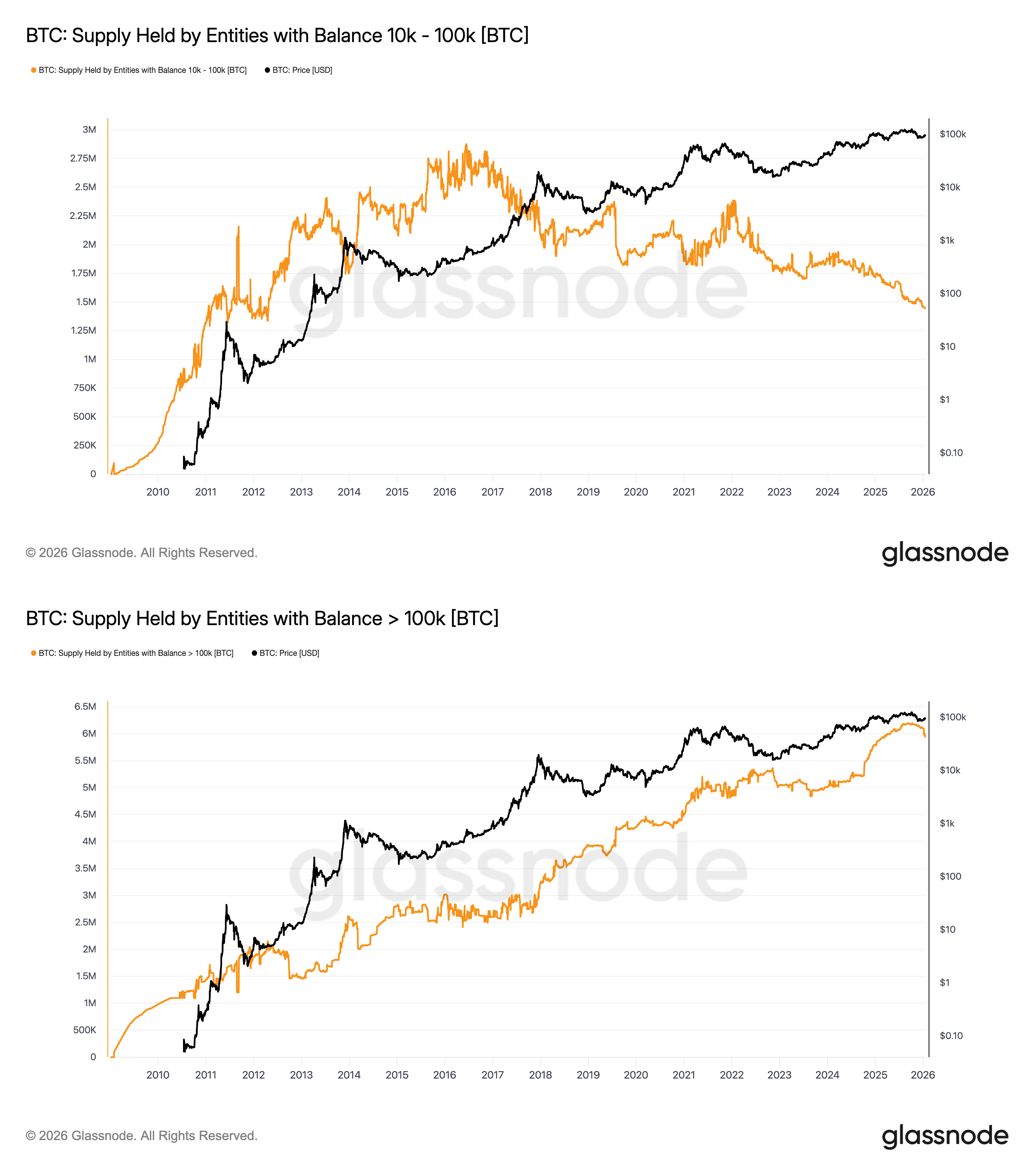
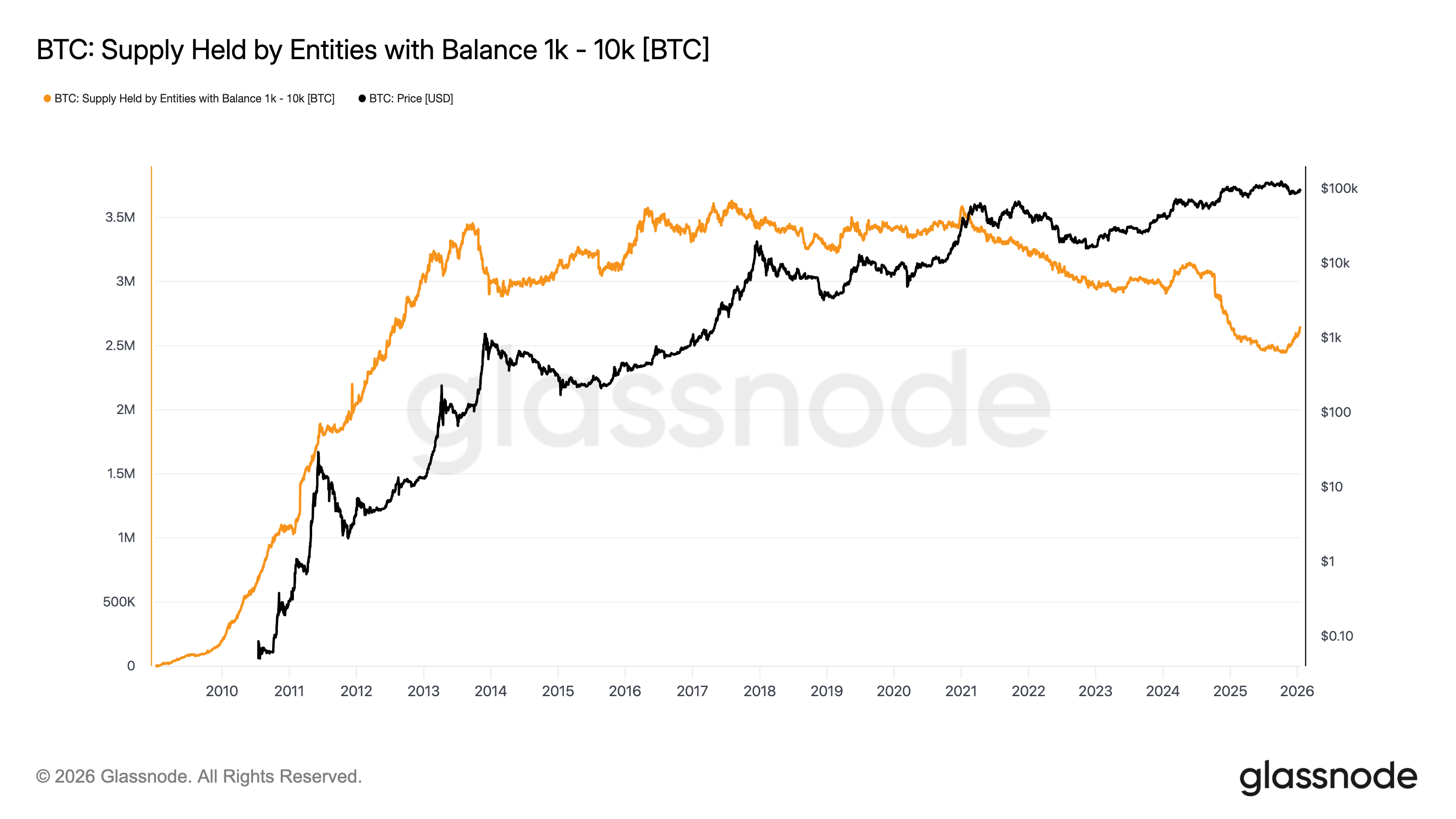
This imbalance mattered technically. The wedge developed beneath declining resistance while larger holders trimmed exposure, weakening upside follow-through.