
The logic was relatively straightforward: frontier AI models were extraordinarily expensive to train and operate, but the companies capable of building the most powerful systems could charge a premium for access to them. Today, that core assumption is being put to the test.
Chinese companies are producing increasingly capable open-weight models at dramatically lower costs, while U.S. technology companies are stepping up their own efforts to develop alternatives. The shift could make AI cheaper and more widely accessible, potentially accelerating adoption. But it could also undermine one of the most important pillars supporting the valuations of America’s leading private AI companies just as they approach the public markets.
Anthropic has already confidentially filed for an IPO, while OpenAI has also filed confidentially for a U.S. listing. Reuters reported that OpenAI could target a valuation of up to $1 trillion, while Anthropic was valued at $965 billion in its latest private funding round. More recent investor expectations have pushed Anthropic’s potential IPO valuation even higher.
For investors, therefore, the open-model revolution is not simply a technology story. It is a question of whether the economic moat around frontier AI can survive falling model prices and increasingly credible alternatives.

Open-Source Models Are Narrowing the AI Gap Between the U.S. and China
The biggest strategic change is that the AI race is no longer being defined solely by who can build the most powerful closed model. Increasingly, the competition is also about who can distribute capable AI most cheaply and efficiently.
Chinese companies have made significant progress on this front. Moonshot’s Kimi K3, for example, is a 2.8 trillion-parameter open-weight model that The Wall Street Journal reported was approaching the performance of leading U.S. systems. Z.ai’s GLM-5.2 has similarly gained attention for coding and agentic capabilities while being offered at a fraction of the cost of leading U.S. models.
This matters because open-weight models change the economics of AI. Rather than paying a provider every time a model processes information, businesses can download the model weights, deploy them on their own infrastructure and customize them for specific applications. The result can be lower inference costs, greater control over sensitive data and less dependence on a single AI provider.
That is increasingly attractive to businesses confronting rapidly rising AI bills. OpenAI responded earlier this summer by cutting the price of its smaller GPT-5.6 models, with the price of its Luna model falling 80%. The move illustrates the pressure that lower-cost alternatives are already placing on the economics of proprietary AI.
China’s advantage is therefore not necessarily that its models are universally superior. Rather, the country is demonstrating that AI performance can improve rapidly while costs decline. Alibaba is even moving toward commercial monetization of open models, suggesting that “open” AI does not necessarily mean “non-commercial” AI.
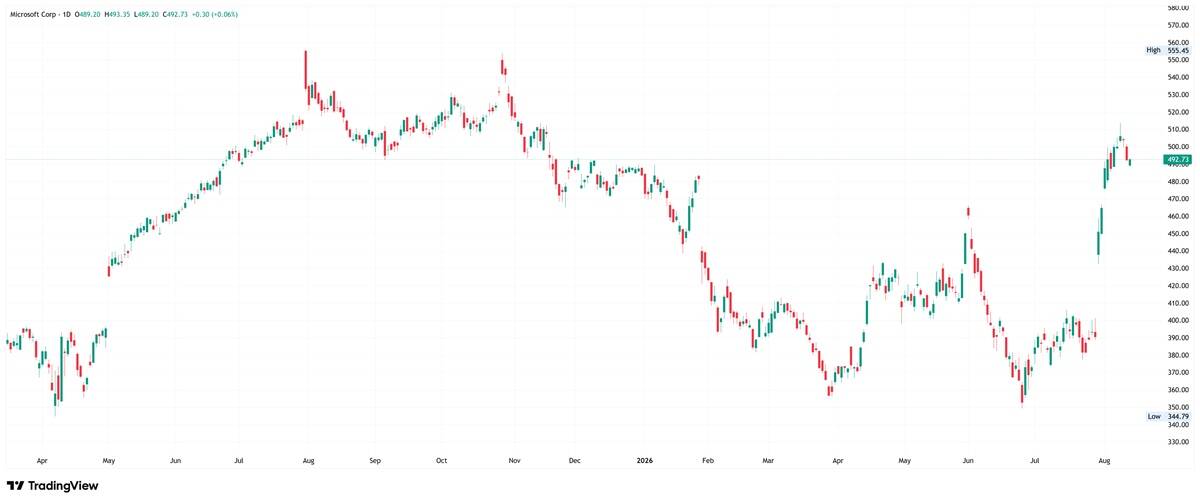
All that has triggered a reaction in the U.S. In July, Nvidia, Microsoft, Meta, IBM, Palantir and other technology companies backed an industry letter urging policymakers to avoid premature restrictions on open-weight models. The argument is increasingly strategic: widely available American AI could accelerate adoption, strengthen the domestic ecosystem and prevent China from establishing a global advantage through cheaper technology.
Meta has subsequently intensified its open-weight strategy, while Nvidia is developing a new generation of Nemotron models designed to compete with leading open systems. Reuters reported that Nvidia is working on a model family potentially reaching at least one trillion parameters.
For the U.S. AI industry, this creates a paradox. Open models could weaken the business models of OpenAI and Anthropic, but they could simultaneously strengthen America’s broader position in the AI race by making the technology cheaper and more widely deployable.
Why Open Models Could Hurt OpenAI and Anthropic Valuations
The central investment risk is commoditization.
OpenAI and Anthropic are being valued not only for the revenue they generate today, but for their ability to maintain a technological advantage that supports premium pricing and enormous future growth. If sufficiently capable models become widely available for free or at very low cost, investors could begin questioning whether that advantage represents a durable competitive moat.
This is particularly important because the economics of frontier AI are unusual. Training increasingly sophisticated models requires enormous amounts of computing power, while inference costs remain significant as customers use AI systems at scale. The companies therefore need both strong demand and sufficient pricing power to justify their infrastructure and research spending.
Open-weight models attack that pricing power from below.
A company may not need the absolute best AI model to switch providers. If an open model is 90% or 95% as capable for a fraction of the price, it may be economically rational for businesses to use it for coding, customer service, document analysis, internal knowledge management or other routine tasks.
That distinction could become crucial for investors. OpenAI and Anthropic may retain an advantage at the technological frontier, but the financial value of that advantage depends on how much customers are willing to pay for it.
The threat is already visible in pricing. OpenAI’s recent cuts show that even closed-model developers are having to respond to customer sensitivity around AI expenditure. At the same time, Chinese models such as GLM-5.2 and Kimi K3 are putting pressure on the assumption that U.S. models can remain substantially more expensive simply because they are more advanced.
This creates a potentially uncomfortable scenario ahead of the IPOs. If model prices decline faster than usage increases, revenue growth could remain strong while gross margins disappoint. Investors may then shift from asking how quickly AI revenue is growing to asking how much profit each dollar of AI revenue can ultimately generate.
That would be a significant change in the valuation framework.
The IPO Test: Growth Versus Economic Moat
For Anthropic and OpenAI, the public-market debate could therefore become less about whether AI is transformative and more about who captures the economic value created by that transformation.
Anthropic’s IPO could become a particularly important test. The company’s latest private valuation was already close to $1 trillion, while more recent expectations have reportedly placed its potential public valuation around $2 trillion. OpenAI, meanwhile, could seek a valuation of up to $1 trillion.
At such valuations, investors will need evidence that frontier-model leadership can translate into durable margins rather than simply spectacular revenue growth. There are several reasons the threat from open models may nevertheless be manageable.
First, the most advanced models can retain a meaningful performance advantage, particularly for sophisticated enterprise workloads. Second, companies may prefer closed providers because they offer reliability, security, technical support and integrated applications. Third, deploying an open model internally is not free: businesses still need computing capacity, engineers, cybersecurity controls and maintenance.
Most importantly, AI could follow the path of open-source software. The model itself may become increasingly commoditized while value migrates toward infrastructure, cloud computing, applications, data, distribution and specialized services. That could actually benefit companies such as Nvidia, Microsoft and Meta, even if it makes the economics of pure frontier-model developers more difficult.
For investors, the crucial question is therefore not whether open AI wins or closed AI wins. It is where the profits move if open models become good enough for most workloads.
What Traders Should Watch
The coming IPOs will provide a real-time test of that thesis. Investors should focus on model pricing, inference costs, enterprise customer growth and gross margins alongside headline revenue growth. A rapid decline in the cost per token would be positive for AI adoption but potentially negative for the valuation of companies whose business models depend on charging premium prices for access to proprietary models.
The competitive gap between U.S. and Chinese models will also be critical. If Chinese open-weight models continue approaching the frontier while maintaining a substantial cost advantage, the pressure on OpenAI and Anthropic could intensify. Conversely, if U.S. companies successfully develop competitive open models, the threat could become an opportunity for the broader American technology ecosystem.
The most important investment distinction may ultimately be between AI adoption and AI monetization. Open models can accelerate the first while undermining the second for companies selling access to proprietary intelligence. That is the fundamental risk facing OpenAI and Anthropic as they approach the public markets.
Their technological lead helped justify extraordinary private valuations. But if increasingly capable AI becomes abundant, cheap and customizable, investors may begin asking whether the scarcity that created those valuations is disappearing.
Sources: Reuters, CNBC, The Wall Street Journal