US stock futures edged higher on Thursday, February 12, after the previous day’s mixed session. Economic data and US-China trade relations lifted sentiment.
January’s delayed US jobs report signaled a resilient labor market, suggesting robust economic momentum early in Q1 2026. While the numbers cooled bets on an H1 2026 Fed rate cut, the report wasn’t hot enough to shut the door on a June cut. Furthermore, the jobs report boosted growth optimism.
Meanwhile, market optimism that the US and China will extend the trade war truce ahead of President Trump’s meeting with China’s President Xi added to the positive sentiment.
Crucially, expectations of an H1 2026 Fed rate cut and improving US-China relations support a medium-term outlook for US stock futures.
Below, I’ll outline the key market drivers, the medium-term outlook, and the technical levels traders should watch.

US Administration Hints at Extending Trade War Truce
Improving US-China trade relations has fueled speculation about the US and China extending the existing trade war truce. President Trump and President Xi previously met in October 2025, agreeing to a truce of up to one year. The truce sent the Nasdaq 100 to an October 30 all-time high of 26,399.
Notably, Chinese exports to the US have fallen sharply since President Trump imposed tariffs on goods from China. Nevertheless, China removed restrictions on rare earth minerals and boosted imports of US soybeans, easing US-China trade tensions.
CN Wire reported on growing optimism about a truce extension, stating:
“The US and China are set to extend their trade truce by up to a year when Presidents Donald Trump and Xi Jinping meet in Beijing in early April, sources said. The agreement, first struck in Busan last October, rolled back tariffs and export controls, with China resuming US soybean purchases. Trump seeks tangible deliverables ahead of November’s midterms, while China stresses Taiwan as a “red line,” urging adherence to the one-China principle, according to Ambassador Xie Feng.”
The latest report follows US Treasury Secretary Scott Bessent’s positive remarks about US-China relations, reinforcing expectations of an April agreement.
Dow Jones Price Forecast
Every new Dow Jones analysis as it publishes, today's technical signal and key levels, live price — on one page.
See all Dow Jones forecastsUS Labor Market and the Fed in Focus
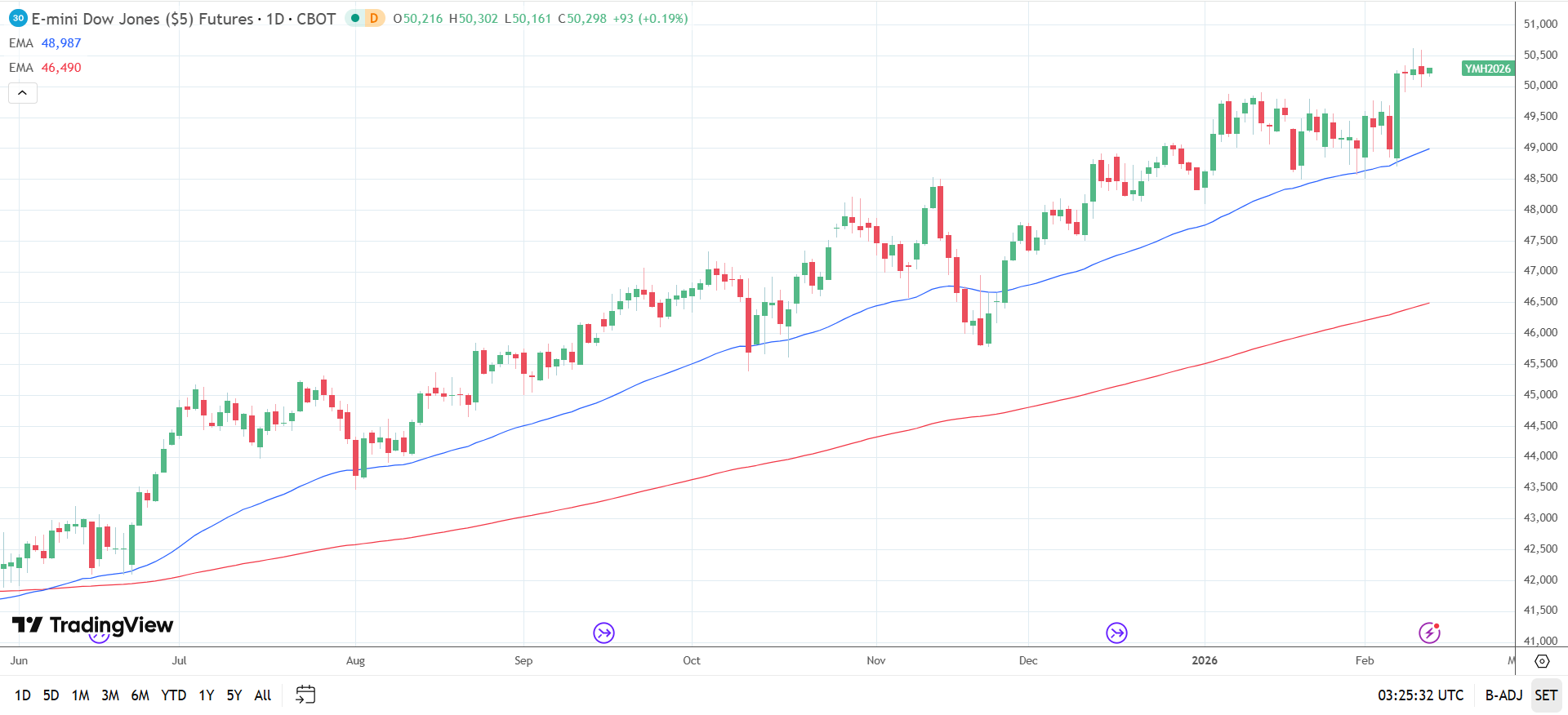
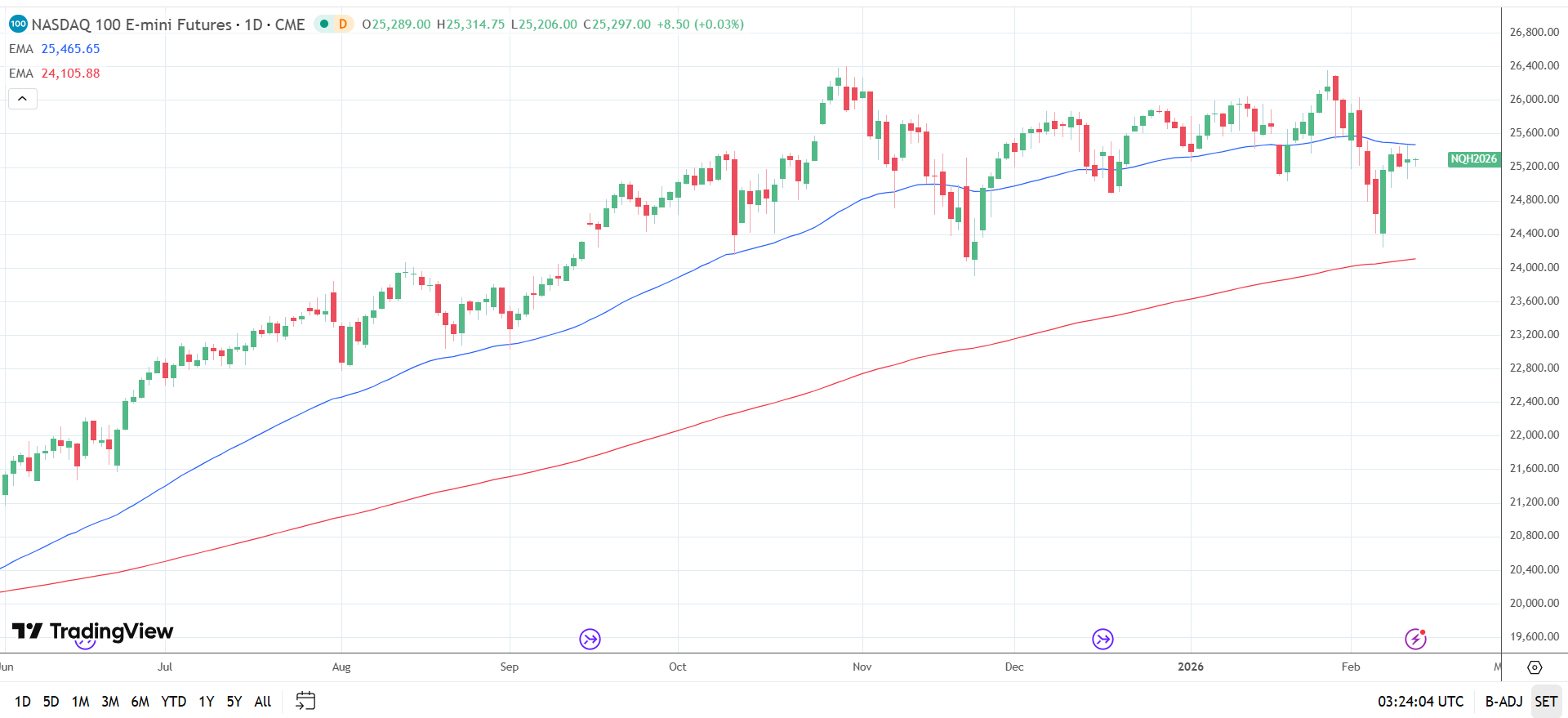
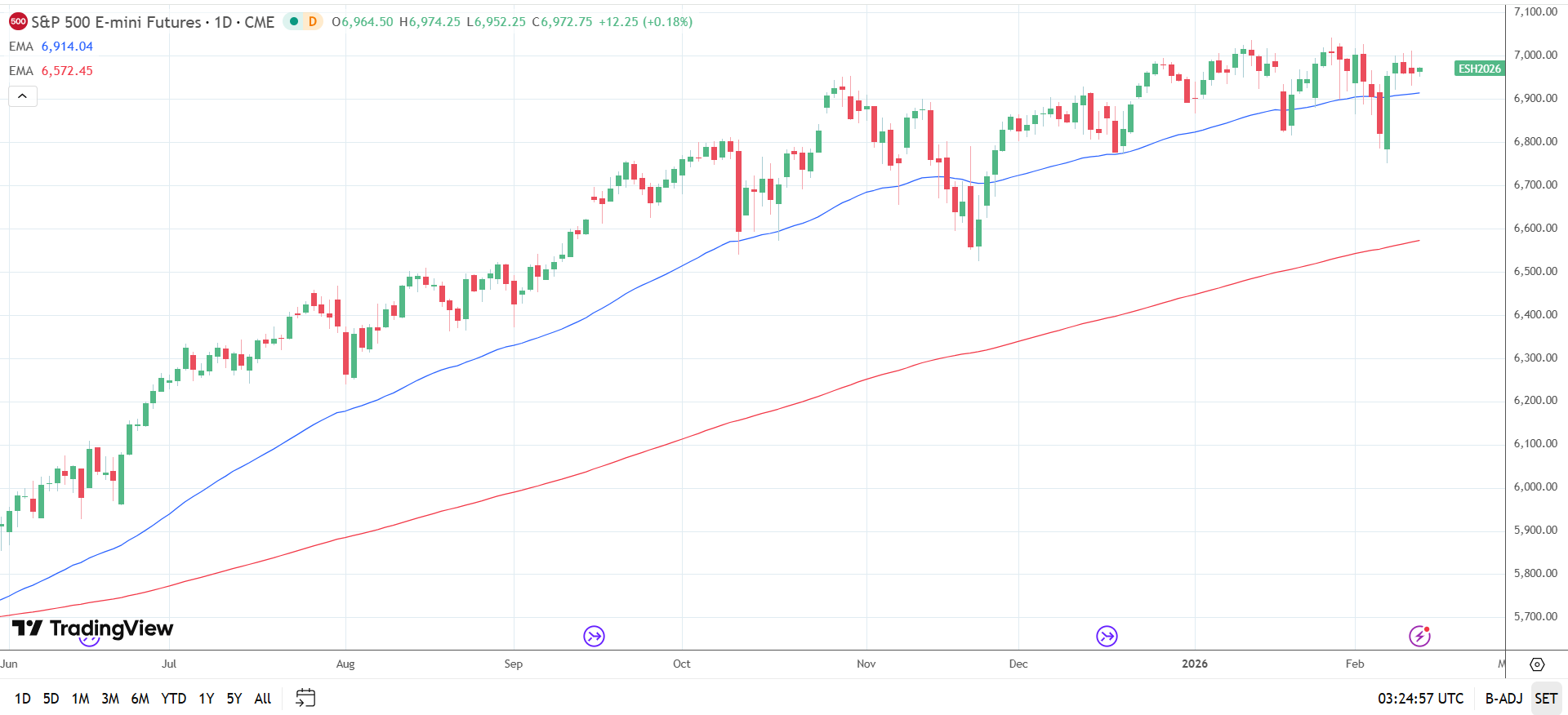
US futures advanced during the Asian session on February 12. The Dow Jones E-mini gained 93 points, while the Nasdaq 100 E-mini and the S&P 500 E-mini climbed 9 points and 12 points, respectively.
Later on Thursday, US labor market data will fuel speculation about an H1 2026 Fed rate cut following the hotter-than-expected US jobs report. Economists expect initial jobless claims to drop from 231k (week ending January 31) to 222k (week ending February 7).
A lower jobless claims reading would cool bets on an H1 2026 Fed rate cut and weigh on demand for risk assets. For context, tighter labor market conditions may lift wages and consumer confidence, boosting private consumption. Typically, a pickup in consumer spending fuels demand-driven inflation, indicating a less dovish Fed policy stance.
January’s jump in nonfarm payrolls, lower unemployment, and steady wage growth dampened expectations of an H1 2026 rate cut, underscoring the significance of labor market data on sentiment.
According to the CME FedWatch Tool, the probability of a March Fed rate cut slid from 20.1% on February 10 to 5.4% on February 11. Meanwhile, the chances of a June cut fell from 75.2% to 57.6%.
Beyond the data, traders should closely monitor FOMC members’ speeches. Views on the labor market, inflation, and monetary policy will also influence risk appetite.
Key Technical Levels for Dow Jones, Nasdaq 100, and S&P 500
Despite Thursday morning’s gains, the Nasdaq 100 E-mini continued to trade below its 50-day EMA, while remaining above its 200-day EMA. The EMA positions indicated a bearish near-term, but bullish longer-term outlook. Meanwhile, the Dow Jones E-mini and the S&P 500 E-mini held above their 50-day and 200-day EMAs, signaling a bullish bias that aligns with positive fundamentals.
Near-term trends will hinge on US economic data, central bank chatter, earnings, and geopolitical risks. Key levels to monitor include:
Dow Jones
- Resistance: the February 10 record high of 50,611 and then 51,000.
- Support: the 50-day EMA (48,987), and then 48,500.
Nasdaq 100
- Resistance: the 50-day EMA (25,466), 26,000, and then the October 30 record high of 26,399.
- Support: 25,000, 24,500, and then the 200-day EMA (24,106).
S&P 500
- Resistance: the January 13 high of 7,036.
- Support: the 50-day EMA (6,914) and then the 200-day EMA (6,573).
Outlook: Fed Rate Cut Bets Support Bullish Sentiment
In my opinion, the short-term price outlook remains cautiously bullish. Meanwhile, bets on an H1 2026 Fed rate cut reaffirm the bullish medium-term outlook. These positive fundamentals align with longer-term technicals for US stock futures.
However, several events would derail the bullish medium-term outlook, including:
- Rising geopolitical risks.
- The Bank of Japan announces a higher-than-expected neutral interest rate (potentially 1.5%-2.5%). Narrowing rate differentials could trigger a yen carry trade unwind as seen in mid-2024. Reduced liquidity would adversely impact US risk assets. Such an event would invalidate the cautiously bullish short-term outlook.
- US economic indicators dampen Fed rate cut bets.
- Corporate earnings and outlooks miss consensus.
Conclusion: Bullish Bias Remains Intact
In summary, expectations of multiple Fed rate cuts, robust corporate earnings, and a cautiously hawkish BoJ reinforce the medium-term outlook for US index futures. Multiple Fed rate cut bets remain contingent on the Fed reducing rates in H1 2026. While the US data largely ruled out a March cut, a June rate cut remains on the table.
Despite the ongoing risk of yen carry trade unwinds, US stock futures are likely to target new highs if the Fed hints at a more dovish policy stance. Importantly, Fed rate cuts could offset the effects of yen carry trade unwinds. The longer-term positive impact of lower borrowing costs on profitability and stock valuations may prove more influential on risk appetite than short-term liquidity issues.
Follow our live coverage and consult the economic calendar for real-time market updates.